Not a rebrand. Not just a new handle.
Names are political. They always have been. Who gets to name you, spell you, pronounce you, decide how you’re recorded, that’s never neutral. So making the decision to change mine isn’t cosmetic. It’s a personal and political act, and I want to explain it properly:
I’ve changed my name from Pugh back to ap Huw, the original Cymraeg patronymic meaning “son of Huw.” I’m a proud South Londoner, but of Welsh descent, and this name is part of reconnecting with that heritage. It isn’t a quirky rebrand, it’s a refusal.
Cymru was conquered by England, not united with it. Edward I crushed Welsh independence in 1282-83, seized land from Cymry nobles and handed it to English settlers, and built a ring of castles to enforce it. That was just the start. Over the next few centuries, English legal and administrative pressure, especially the Laws in Wales Acts of 1535-42, pushed Cymru away from its own naming traditions and towards English style fixed surnames. Patronymics like ap Huw, got contracted down into Pugh. Not overnight, but as one small casualty of a country slowly being administered out of its own identity.
What happened to Cymru wasn’t a one off. Centuries before Britain built an overseas empire, the tools and tactics of that empire were already being tested there: dismantling native law and replacing it with English law, building fortresses to enforce occupation, administering a people out of their own culture and language. Many historians argue Wales was effectively the training ground for a colonial and imperial system that England and Britain went on to inflict, at far greater and even more violent and brutal scale, across Ireland and then across huge parts of the world. Empire was not a benign project. It was violent, extractive, and built on the subjugation of entire peoples, and I say that plainly, without pride or nostalgia for any of it.
To be clear; what happened to Cymru is not comparable to the transatlantic slave trade or to the colonial violence inflicted on Black and Indigenous peoples and people of colour across the world. That was a different order of horror, involving the ownership of human beings, mass death, and the deliberate destruction of entire civilisations, and its effects are still very much alive today. What I’m describing with Cymru is a smaller, earlier thread in a much larger and much darker imperial pattern, not an equivalent to it. I’m naming that history because it’s part of understanding how empire operated, not to draw an equivalence that isn’t there.
Even on that smaller scale, what happened to Cymru did real damage. It cut the thread between the Cymry and their own genealogy, their own language, their own sense of who they are. A name isn’t decoration, it’s a record. Mine had been quietly rewritten by a process my ancestors never chose.
As a father, I have a huge responsibility and that shapes not just how I view the world but also how I navigate and move in it. Knowing your history can help give you the tools to shape your future. It’s one thing to let a piece of your history quietly disappear when it only affects you. It’s another to hand that same erasure down to your child as if it were normal, or as if it never happened at all. I want him to know where his name actually comes from, what was done to it and why, and that he has a choice in how he carries his own history forward. It is a privilege to be able to do so, and that feels like a more honest inheritance than a surname that was never really ours to begin with.
So I’m taking it back. Not out of nostalgia, and not to claim an identity I don’t live day to day, but because language death isn’t natural. It’s engineered, sometimes by conquest, sometimes by centuries of bureaucratic pressure. But it can be resisted. Every Cymraeg speaker, every reclaimed name, every bit of Cymraeg spoken out loud pushes back against that.
Cymru isn’t England’s periphery. It’s its own nation, with its own language, its own law, its own history. I’d rather carry a name that tells the truth about my heritage and where my family comes from, than one shaped by centuries of pressure to disappear into someone else’s.
Thank you for reading, and understanding.
Adam ap Huw.
Cymru - hen wlad fy nhadau, a’m calon yn dywod a’th gwynt
(Wales - old land of my forefathers, and my heart in your sands and winds.)
@MillwallFC Brilliant work! Well done to all involved in putting this together and giving us the opportunity to walk down memory lane and relive that season. One of the best moments in my life as a Millwall supporter!!
Not a rebrand. Not just a new handle.
Names are political. They always have been. Who gets to name you, spell you, pronounce you, decide how you’re recorded, that’s never neutral. So making the decision to change mine isn’t cosmetic. It’s a personal and political act, and I want to explain it properly:
I’ve changed my name from Pugh back to ap Huw, the original Cymraeg patronymic meaning “son of Huw.” I’m a proud South Londoner, but of Welsh descent, and this name is part of reconnecting with that heritage. It isn’t a quirky rebrand, it’s a refusal.
Cymru was conquered by England, not united with it. Edward I crushed Welsh independence in 1282-83, seized land from Cymry nobles and handed it to English settlers, and built a ring of castles to enforce it. That was just the start. Over the next few centuries, English legal and administrative pressure, especially the Laws in Wales Acts of 1535-42, pushed Cymru away from its own naming traditions and towards English style fixed surnames. Patronymics like ap Huw, got contracted down into Pugh. Not overnight, but as one small casualty of a country slowly being administered out of its own identity.
What happened to Cymru wasn’t a one off. Centuries before Britain built an overseas empire, the tools and tactics of that empire were already being tested there: dismantling native law and replacing it with English law, building fortresses to enforce occupation, administering a people out of their own culture and language. Many historians argue Wales was effectively the training ground for a colonial and imperial system that England and Britain went on to inflict, at far greater and even more violent and brutal scale, across Ireland and then across huge parts of the world. Empire was not a benign project. It was violent, extractive, and built on the subjugation of entire peoples, and I say that plainly, without pride or nostalgia for any of it.
To be clear; what happened to Cymru is not comparable to the transatlantic slave trade or to the colonial violence inflicted on Black and Indigenous peoples and people of colour across the world. That was a different order of horror, involving the ownership of human beings, mass death, and the deliberate destruction of entire civilisations, and its effects are still very much alive today. What I’m describing with Cymru is a smaller, earlier thread in a much larger and much darker imperial pattern, not an equivalent to it. I’m naming that history because it’s part of understanding how empire operated, not to draw an equivalence that isn’t there.
Even on that smaller scale, what happened to Cymru did real damage. It cut the thread between the Cymry and their own genealogy, their own language, their own sense of who they are. A name isn’t decoration, it’s a record. Mine had been quietly rewritten by a process my ancestors never chose.
As a father, I have a huge responsibility and that shapes not just how I view the world but also how I navigate and move in it. Knowing your history can help give you the tools to shape your future. It’s one thing to let a piece of your history quietly disappear when it only affects you. It’s another to hand that same erasure down to your child as if it were normal, or as if it never happened at all. I want him to know where his name actually comes from, what was done to it and why, and that he has a choice in how he carries his own history forward. It is a privilege to be able to do so, and that feels like a more honest inheritance than a surname that was never really ours to begin with.
So I’m taking it back. Not out of nostalgia, and not to claim an identity I don’t live day to day, but because language death isn’t natural. It’s engineered, sometimes by conquest, sometimes by centuries of bureaucratic pressure. But it can be resisted. Every Cymraeg speaker, every reclaimed name, every bit of Cymraeg spoken out loud pushes back against that.
Cymru isn’t England’s periphery. It’s its own nation, with its own language, its own law, its own history. I’d rather carry a name that tells the truth about my heritage and where my family comes from, than one shaped by centuries of pressure to disappear into someone else’s.
Thank you for reading, and understanding.
Adam ap Huw.
Cymru - hen wlad fy nhadau, a’m calon yn dywod a’th gwynt
(Wales - old land of my forefathers, and my heart in your sands and winds.)
Like why do you need to be in parliamentary poltics for your work to be legitimate, like why is that seen as the end goal???? Why can’t grassroots mass mobilisation be the end goal!
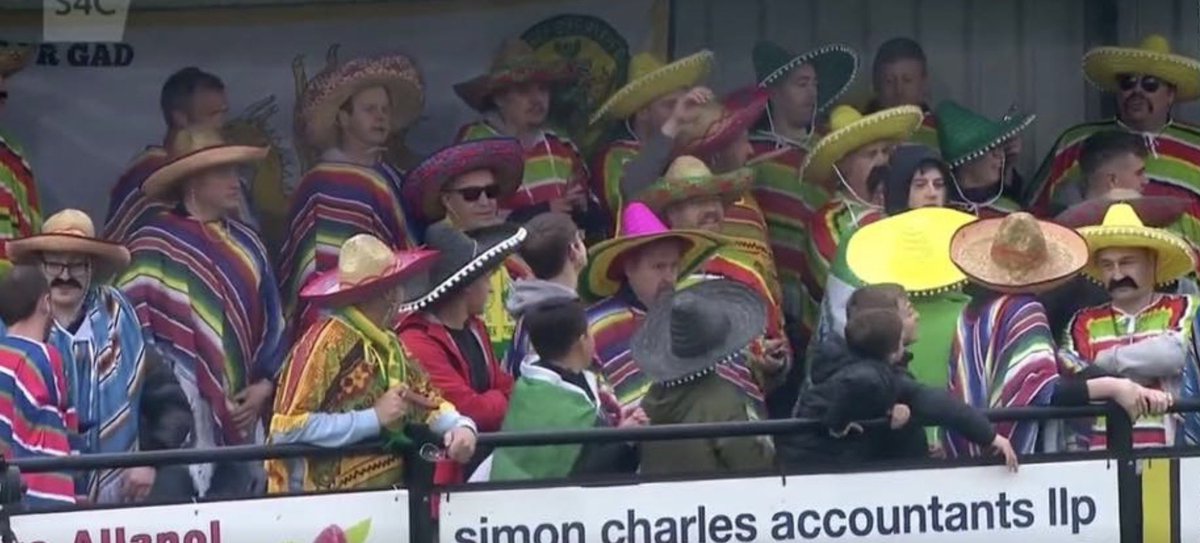
For anyone who says supporting Mexico on Sunday as Welshmen is just us being ‘bitter’
Well the Cofis have long felt and identified with the wonderful people of Mexico 😉🤣 🇲🇽 💚💛
A petition has launched calling to 'use Cymru not Wales as the official name for our nation, along with one name only for our place names' to 'reset, rebrand and renew our nation' https://t.co/qGmEYV5Vjv
If we are gonna call offsides for a toe or a shoulder being ahead of the last defender then we should also start allowing goals when any part of the ball has crossed the line. Let’s have some consistency.
I absolutely love this and it’s needed for Cymry football. But at £12.99 a month for an additional subscription in the middle of a cost of living crisis, I’m not sure how affordable this will be for many. I hope they can find a way to revise the price and make it more accessible.
The FAW is excited to unveil Cymru Football TV, the new home for Welsh football streaming 📺🏴
The platform will be the only place to watch every Novira Cymru Premier match live, plus other selected domestic fixtures, Cymru age-group matches and documentaries 🙌