Asalamu alaykum y’all,I’m here to seek help for a young student who just lost her dad and things have been hard on the family,she has a project to do in school, this coming weekend is the deadline 🥹
If Allah has blessed you in any way,pls help,22K is what she needs 🤲
Ejoor🙏
The quality of your life depends on you. Not your father. Not your mother. Not your distant uncles and aunties. Not your guardian. Not your brother or your sister. But you.
I take God beg you,please retweet this for me🙏
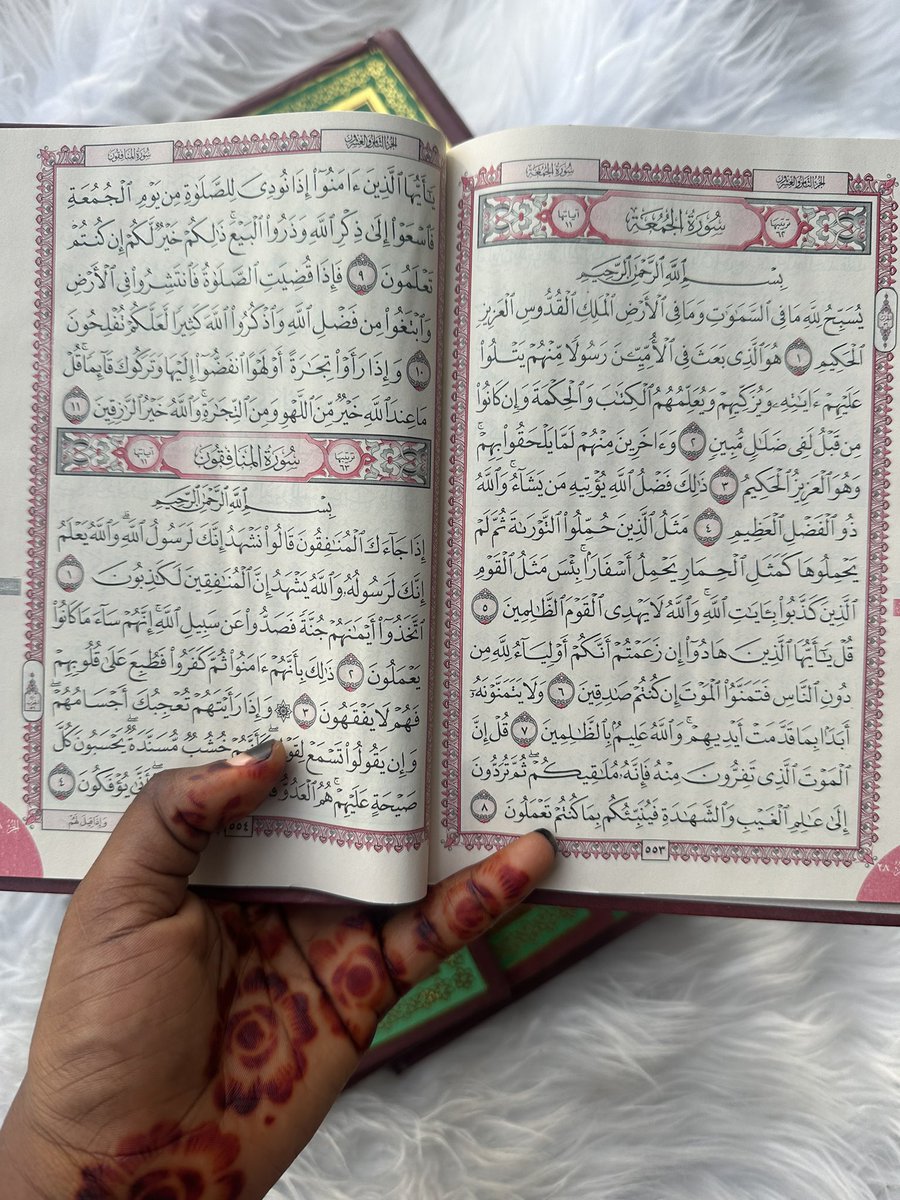
Medium sized split Quran
🔸 makes tilawah easy without carrying the whole Quran
Price: #10,000
To shop, dm or whatsapp https://t.co/do6HspVkV8
How Well Do You Know Africa?
A quiz competition via Youtube Live (Africa Property Hub page) by 8:15pm tonight.
https://t.co/VIH7ogQSFc
Small gift available for top 3 finishers.
Procedure
1. Open the Youtube link above at or shortly before 8:15pm
2. Type https://t.co/rtqGkZ5Y1h on your phone
3. Enter a code to be displayed on the screen on the Kahoot page
4. Register with your name (real name of social media handle - this may be required to prove it's you if you win prize)
4. Once you are in, stay
5. Questions start showing on your screen after we go live
6. Click your answer to each question your the Kahoot page on your phone or system
Somedays, you will do less than you hoped.
Somedays, you will feel like your efforts are not moving as fast as you want.
Somedays, it's regretting your past mistakes.
But every day, remember to be grateful, for therein lies the power to do more.
Pages of the Glorious Qur'ān today, Monday 22/12/25 (1 Rajab 1447AH), Sūrah al-Qamar (54): 28-55 and ar-Raḥmān (55): 1-18, tafakkur verse 55: 1
Theme: ar-Rahmān (The Most Merciful)
{ٱلرَّحۡمَـٰنُ}
"The Most Merciful"
LESSONS:
Ar-Raḥmān is one of Allah's greatest names, derived from the root raḥma (mercy), in the intensive form faʿlān, denoting the utmost degree of mercy, vast, all-encompassing, and inherent to Allah's essence. It signifies Allah as the Possessor of infinite, boundless mercy that extends to all creation, believers and disbelievers, humans and jinn, animate and inanimate, without exception or prerequisite.
This mercy manifests in worldly provisions like rain, sunlight, air, health, and sustenance, granted even before birth or any deed. Classical scholars like Ibn Kathīr and al-Ṭabarī explain that Ar-Raḥmān emphasizes the attribute of mercy as inseparable from Allah's being, while distinguishing it from Ar-Raḥīm, which denotes the active bestowal of mercy, often specific and continuous, particularly for believers in the Hereafter (e.g., forgiveness and Paradise).
The implications are profound: Ar-Raḥmān instills hope, gratitude, and awe, reminding humanity of Allah's universal benevolence despite sins or disbelief. It counters despair, as Allah's mercy "encompasses all things" (Qurʾān 7:156). Unlike Ar-Raḥīm (used for creation, e.g., the Prophet (ṣallāLlāhu 'alayhi wa sallam) in 9:128), Ar-Raḥmān is exclusive to Allah, no creature can be named "Raḥmān." This name fosters humility, encouraging believers to reflect on blessings and respond with thankfulness, while warning against ingratitude.
Ar-Raḥmān appears 57 times in the Qurʾān (explicit mentions, excluding basmalah variations), often paired with Ar-Raḥīm in the basmalah (113 times across sūrahs). Its repetition underscores mercy as central to Allah's introduction of Himself, every sūrah except one begins with it, emphasizing that revelation and guidance stem from compassion. In Sūrat Maryam (19), it occurs 16 times (nearly a third of total mentions), highlighting mercy in stories of prophets like Zakariyyā and ʿĪsā (peace be upon them). The entire Sūrah ar-Raḥmān (55) is titled after it, with the refrain "Which of your Lord's favors will you both deny?" repeated 31 times (addressing humans and jinn in dual form), enumerating blessings to evoke gratitude and warn against denial.
The Prophet Muḥammad (ṣallāLlāhu 'alayhi wa sallam) explained Allah's mercy vividly: "Allah has divided mercy into 100 parts. He kept 99 parts with Himself and sent down one part to earth. From that one part, creatures show compassion to one another, so much so that a mare raises her hoof over her foal lest she harm it" (Ṣaḥīḥ al-Bukhārī and Muslim). The vast mercy (linked to Ar-Raḥmān) is withheld for the Hereafter. He also said Allah is "more merciful to His servants than a mother to her child" (Bukhārī and Muslim). In another narration, when reciting Sūrat ar-Raḥmān, the jinn responded affirmatively to the refrain, outdoing silent human listeners, highlighting how Ar-Raḥmān's mercy extends universally, prompting immediate recognition of blessings.
May invoking Ar-Raḥmān fill our hearts with gratitude and draw His boundless mercy upon us. Āmīn.
Pages of the Glorious Qur'ān today, Monday 1/12/25 (10 Jumādā al-thānī 1447AH), Sūrah al-Shūrā (42): 45-53 and al-Zukhruf (43): 1-10, tafakkur verse 42: 48
Theme: The duty of a Muslim is to admonish, not to police or force Islam upon anyone
{فَإِنۡ أَعۡرَضُوا۟ فَمَاۤ أَ��ۡسَلۡنَـٰكَ عَلَیۡهِمۡ حَفِیظًاۖ إِنۡ عَلَیۡكَ إِلَّا ٱلۡبَلَـٰغُۗ وَإِنَّاۤ إِذَاۤ أَذَقۡنَا ٱلۡإِنسَـٰنَ مِنَّا رَحۡمَةࣰ فَرِحَ بِهَاۖ وَإِن تُصِبۡهُمۡ سَیِّئَةُۢ بِمَا قَدَّمَتۡ أَیۡدِیهِمۡ فَإِنَّ ٱلۡإِنسَـٰنَ كَفُورࣱ}
"But if they turn away - then We have not sent you, [O Muḥammad], over them as a guardian; upon you is only [the duty of] notification. And indeed, when We let man taste mercy from Us, he rejoices in it; but if evil afflicts him for what his hands have put forth, then indeed, man is ungrateful".
LESSONS:
1. As a Muslim or scholar, your job is to deliver the message, not to control people's hearts or lives: Just as the Prophet (ṣallāLlāhu 'alayhi wa sallam) was not sent as a warden over people, today’s Daʿī or Muslim is not responsible for forcing acceptance upon anyone. Our duty is to convey the truth with clarity and kindness, then leave the guidance to Allah. Results are not your burden.
2. Rejection does not mean you failed: When people turn away from your sincere advice, whether family, friends, or others, remember: “If they turn away, We have not sent you over them as a guardian.” Their choice doesn’t diminish the value of your effort; it only confirms their free will.
3. People’s reactions often reveal their own condition, not your method: Many rejoice and praise you when your reminder aligns with their desires or brings them ease, but the moment the same truth becomes uncomfortable or demands sacrifice, they turn ungrateful or hostile. This ingratitude is usually about their hearts, not about how perfectly you delivered the message.
4. Both praise and criticism are tests for the Daʿī: When Allah allows your words to be well-received and you taste the “mercy” of acceptance, likes, and support, stay humble, it’s from Him. When hardship comes (backlash, slander, or being ignored) because of the truth you spoke, remain patient. The real success is consistency, not crowd approval.
5. Never let human ingratitude stop you from advising for Allah’s sake: The verse ends by exposing the common trait: “then indeed, man is ungrateful.” Expect it. People forget your efforts the moment the advice pinches. Keep giving naṣīḥah anyway—because you do it for Allah, not for their applause or permanent gratitude.
In short: Speak the truth clearly, leave the rest to Allah, and protect your heart from both the intoxication of praise and the discouragement of ingratitude. That is the path of every sincere daʿī until the Day of Judgment.
I take God beg you, Please retweet this for me if you come across it on your timeline 🙏🙏🙏
Quality Egypt Abaya
Available to order in sizes and colors
To shop, dm or whatsapp https://t.co/do6HspVSKG
Price :#55,000
PS: available only on order


![IdrisAOni1's tweet photo. Pages of the Glorious Qur'ān today, Monday 1/12/25 (10 Jumādā al-thānī 1447AH), Sūrah al-Shūrā (42): 45-53 and al-Zukhruf (43): 1-10, tafakkur verse 42: 48
Theme: The duty of a Muslim is to admonish, not to police or force Islam upon anyone
{فَإِنۡ أَعۡرَضُوا۟ فَمَاۤ أَ��ۡسَلۡنَـٰكَ عَلَیۡهِمۡ حَفِیظًاۖ إِنۡ عَلَیۡكَ إِلَّا ٱلۡبَلَـٰغُۗ وَإِنَّاۤ إِذَاۤ أَذَقۡنَا ٱلۡإِنسَـٰنَ مِنَّا رَحۡمَةࣰ فَرِحَ بِهَاۖ وَإِن تُصِبۡهُمۡ سَیِّئَةُۢ بِمَا قَدَّمَتۡ أَیۡدِیهِمۡ فَإِنَّ ٱلۡإِنسَـٰنَ كَفُورࣱ}
"But if they turn away - then We have not sent you, [O Muḥammad], over them as a guardian; upon you is only [the duty of] notification. And indeed, when We let man taste mercy from Us, he rejoices in it; but if evil afflicts him for what his hands have put forth, then indeed, man is ungrateful".
LESSONS:
1. As a Muslim or scholar, your job is to deliver the message, not to control people's hearts or lives: Just as the Prophet (ṣallāLlāhu 'alayhi wa sallam) was not sent as a warden over people, today’s Daʿī or Muslim is not responsible for forcing acceptance upon anyone. Our duty is to convey the truth with clarity and kindness, then leave the guidance to Allah. Results are not your burden.
2. Rejection does not mean you failed: When people turn away from your sincere advice, whether family, friends, or others, remember: “If they turn away, We have not sent you over them as a guardian.” Their choice doesn’t diminish the value of your effort; it only confirms their free will.
3. People’s reactions often reveal their own condition, not your method: Many rejoice and praise you when your reminder aligns with their desires or brings them ease, but the moment the same truth becomes uncomfortable or demands sacrifice, they turn ungrateful or hostile. This ingratitude is usually about their hearts, not about how perfectly you delivered the message.
4. Both praise and criticism are tests for the Daʿī: When Allah allows your words to be well-received and you taste the “mercy” of acceptance, likes, and support, stay humble, it’s from Him. When hardship comes (backlash, slander, or being ignored) because of the truth you spoke, remain patient. The real success is consistency, not crowd approval.
5. Never let human ingratitude stop you from advising for Allah’s sake: The verse ends by exposing the common trait: “then indeed, man is ungrateful.” Expect it. People forget your efforts the moment the advice pinches. Keep giving naṣīḥah anyway—because you do it for Allah, not for their applause or permanent gratitude.
In short: Speak the truth clearly, leave the rest to Allah, and protect your heart from both the intoxication of praise and the discouragement of ingratitude. That is the path of every sincere daʿī until the Day of Judgment.](https://pbs.twimg.com/media/G7DveF4WEAAdguQ.jpg)
![IdrisAOni1's tweet photo. Pages of the Glorious Qur'ān today, Monday 1/12/25 (10 Jumādā al-thānī 1447AH), Sūrah al-Shūrā (42): 45-53 and al-Zukhruf (43): 1-10, tafakkur verse 42: 48
Theme: The duty of a Muslim is to admonish, not to police or force Islam upon anyone
{فَإِنۡ أَعۡرَضُوا۟ فَمَاۤ أَ��ۡسَلۡنَـٰكَ عَلَیۡهِمۡ حَفِیظًاۖ إِنۡ عَلَیۡكَ إِلَّا ٱلۡبَلَـٰغُۗ وَإِنَّاۤ إِذَاۤ أَذَقۡنَا ٱلۡإِنسَـٰنَ مِنَّا رَحۡمَةࣰ فَرِحَ بِهَاۖ وَإِن تُصِبۡهُمۡ سَیِّئَةُۢ بِمَا قَدَّمَتۡ أَیۡدِیهِمۡ فَإِنَّ ٱلۡإِنسَـٰنَ كَفُورࣱ}
"But if they turn away - then We have not sent you, [O Muḥammad], over them as a guardian; upon you is only [the duty of] notification. And indeed, when We let man taste mercy from Us, he rejoices in it; but if evil afflicts him for what his hands have put forth, then indeed, man is ungrateful".
LESSONS:
1. As a Muslim or scholar, your job is to deliver the message, not to control people's hearts or lives: Just as the Prophet (ṣallāLlāhu 'alayhi wa sallam) was not sent as a warden over people, today’s Daʿī or Muslim is not responsible for forcing acceptance upon anyone. Our duty is to convey the truth with clarity and kindness, then leave the guidance to Allah. Results are not your burden.
2. Rejection does not mean you failed: When people turn away from your sincere advice, whether family, friends, or others, remember: “If they turn away, We have not sent you over them as a guardian.” Their choice doesn’t diminish the value of your effort; it only confirms their free will.
3. People’s reactions often reveal their own condition, not your method: Many rejoice and praise you when your reminder aligns with their desires or brings them ease, but the moment the same truth becomes uncomfortable or demands sacrifice, they turn ungrateful or hostile. This ingratitude is usually about their hearts, not about how perfectly you delivered the message.
4. Both praise and criticism are tests for the Daʿī: When Allah allows your words to be well-received and you taste the “mercy” of acceptance, likes, and support, stay humble, it’s from Him. When hardship comes (backlash, slander, or being ignored) because of the truth you spoke, remain patient. The real success is consistency, not crowd approval.
5. Never let human ingratitude stop you from advising for Allah’s sake: The verse ends by exposing the common trait: “then indeed, man is ungrateful.” Expect it. People forget your efforts the moment the advice pinches. Keep giving naṣīḥah anyway—because you do it for Allah, not for their applause or permanent gratitude.
In short: Speak the truth clearly, leave the rest to Allah, and protect your heart from both the intoxication of praise and the discouragement of ingratitude. That is the path of every sincere daʿī until the Day of Judgment.](https://pbs.twimg.com/media/G7DveCwXwAEuUtX.jpg)
![IdrisAOni1's tweet photo. Pages of the Glorious Qur'ān today, Monday 1/12/25 (10 Jumādā al-thānī 1447AH), Sūrah al-Shūrā (42): 45-53 and al-Zukhruf (43): 1-10, tafakkur verse 42: 48
Theme: The duty of a Muslim is to admonish, not to police or force Islam upon anyone
{فَإِنۡ أَعۡرَضُوا۟ فَمَاۤ أَ��ۡسَلۡنَـٰكَ عَلَیۡهِمۡ حَفِیظًاۖ إِنۡ عَلَیۡكَ إِلَّا ٱلۡبَلَـٰغُۗ وَإِنَّاۤ إِذَاۤ أَذَقۡنَا ٱلۡإِنسَـٰنَ مِنَّا رَحۡمَةࣰ فَرِحَ بِهَاۖ وَإِن تُصِبۡهُمۡ سَیِّئَةُۢ بِمَا قَدَّمَتۡ أَیۡدِیهِمۡ فَإِنَّ ٱلۡإِنسَـٰنَ كَفُورࣱ}
"But if they turn away - then We have not sent you, [O Muḥammad], over them as a guardian; upon you is only [the duty of] notification. And indeed, when We let man taste mercy from Us, he rejoices in it; but if evil afflicts him for what his hands have put forth, then indeed, man is ungrateful".
LESSONS:
1. As a Muslim or scholar, your job is to deliver the message, not to control people's hearts or lives: Just as the Prophet (ṣallāLlāhu 'alayhi wa sallam) was not sent as a warden over people, today’s Daʿī or Muslim is not responsible for forcing acceptance upon anyone. Our duty is to convey the truth with clarity and kindness, then leave the guidance to Allah. Results are not your burden.
2. Rejection does not mean you failed: When people turn away from your sincere advice, whether family, friends, or others, remember: “If they turn away, We have not sent you over them as a guardian.” Their choice doesn’t diminish the value of your effort; it only confirms their free will.
3. People’s reactions often reveal their own condition, not your method: Many rejoice and praise you when your reminder aligns with their desires or brings them ease, but the moment the same truth becomes uncomfortable or demands sacrifice, they turn ungrateful or hostile. This ingratitude is usually about their hearts, not about how perfectly you delivered the message.
4. Both praise and criticism are tests for the Daʿī: When Allah allows your words to be well-received and you taste the “mercy” of acceptance, likes, and support, stay humble, it’s from Him. When hardship comes (backlash, slander, or being ignored) because of the truth you spoke, remain patient. The real success is consistency, not crowd approval.
5. Never let human ingratitude stop you from advising for Allah’s sake: The verse ends by exposing the common trait: “then indeed, man is ungrateful.” Expect it. People forget your efforts the moment the advice pinches. Keep giving naṣīḥah anyway—because you do it for Allah, not for their applause or permanent gratitude.
In short: Speak the truth clearly, leave the rest to Allah, and protect your heart from both the intoxication of praise and the discouragement of ingratitude. That is the path of every sincere daʿī until the Day of Judgment.](https://pbs.twimg.com/media/G7DveASWgAI1aCj.jpg)




![IdrisAOni1's tweet photo. Pages of the Glorious Qur'ān today, Monday 1/12/25 (10 Jumādā al-thānī 1447AH), Sūrah al-Shūrā (42): 45-53 and al-Zukhruf (43): 1-10, tafakkur verse 42: 48
Theme: The duty of a Muslim is to admonish, not to police or force Islam upon anyone
{فَإِنۡ أَعۡرَضُوا۟ فَمَاۤ أَ��ۡسَلۡنَـٰكَ عَلَیۡهِمۡ حَفِیظًاۖ إِنۡ عَلَیۡكَ إِلَّا ٱلۡبَلَـٰغُۗ وَإِنَّاۤ إِذَاۤ أَذَقۡنَا ٱلۡإِنسَـٰنَ مِنَّا رَحۡمَةࣰ فَرِحَ بِهَاۖ وَإِن تُصِبۡهُمۡ سَیِّئَةُۢ بِمَا قَدَّمَتۡ أَیۡدِیهِمۡ فَإِنَّ ٱلۡإِنسَـٰنَ كَفُورࣱ}
"But if they turn away - then We have not sent you, [O Muḥammad], over them as a guardian; upon you is only [the duty of] notification. And indeed, when We let man taste mercy from Us, he rejoices in it; but if evil afflicts him for what his hands have put forth, then indeed, man is ungrateful".
LESSONS:
1. As a Muslim or scholar, your job is to deliver the message, not to control people's hearts or lives: Just as the Prophet (ṣallāLlāhu 'alayhi wa sallam) was not sent as a warden over people, today’s Daʿī or Muslim is not responsible for forcing acceptance upon anyone. Our duty is to convey the truth with clarity and kindness, then leave the guidance to Allah. Results are not your burden.
2. Rejection does not mean you failed: When people turn away from your sincere advice, whether family, friends, or others, remember: “If they turn away, We have not sent you over them as a guardian.” Their choice doesn’t diminish the value of your effort; it only confirms their free will.
3. People’s reactions often reveal their own condition, not your method: Many rejoice and praise you when your reminder aligns with their desires or brings them ease, but the moment the same truth becomes uncomfortable or demands sacrifice, they turn ungrateful or hostile. This ingratitude is usually about their hearts, not about how perfectly you delivered the message.
4. Both praise and criticism are tests for the Daʿī: When Allah allows your words to be well-received and you taste the “mercy” of acceptance, likes, and support, stay humble, it’s from Him. When hardship comes (backlash, slander, or being ignored) because of the truth you spoke, remain patient. The real success is consistency, not crowd approval.
5. Never let human ingratitude stop you from advising for Allah’s sake: The verse ends by exposing the common trait: “then indeed, man is ungrateful.” Expect it. People forget your efforts the moment the advice pinches. Keep giving naṣīḥah anyway—because you do it for Allah, not for their applause or permanent gratitude.
In short: Speak the truth clearly, leave the rest to Allah, and protect your heart from both the intoxication of praise and the discouragement of ingratitude. That is the path of every sincere daʿī until the Day of Judgment.](https://pbs.twimg.com/media/G7DveJMWwAAemZ-.jpg)


