Egypt drew with Belgium
Morocco drew with Brazil
Cape Verde drew with Spain
Ivory Coast beat Ecuador
African teams always had the talent. They are now more organised, disciplined & play as a team.
And dark horse DRC haven't played as yet!
Could be Africa's year! 💪 ��� 💪
Nakumatt was Kenya’s blue elephant.
A retail empire that sold billions, owed tens of billions, and left creditors staring at a KSh30B crater.
The shelves did not empty because Nakumatt died.
Nakumatt died because the machine behind the shelves had already broken.
Thread 🧵👇🏾
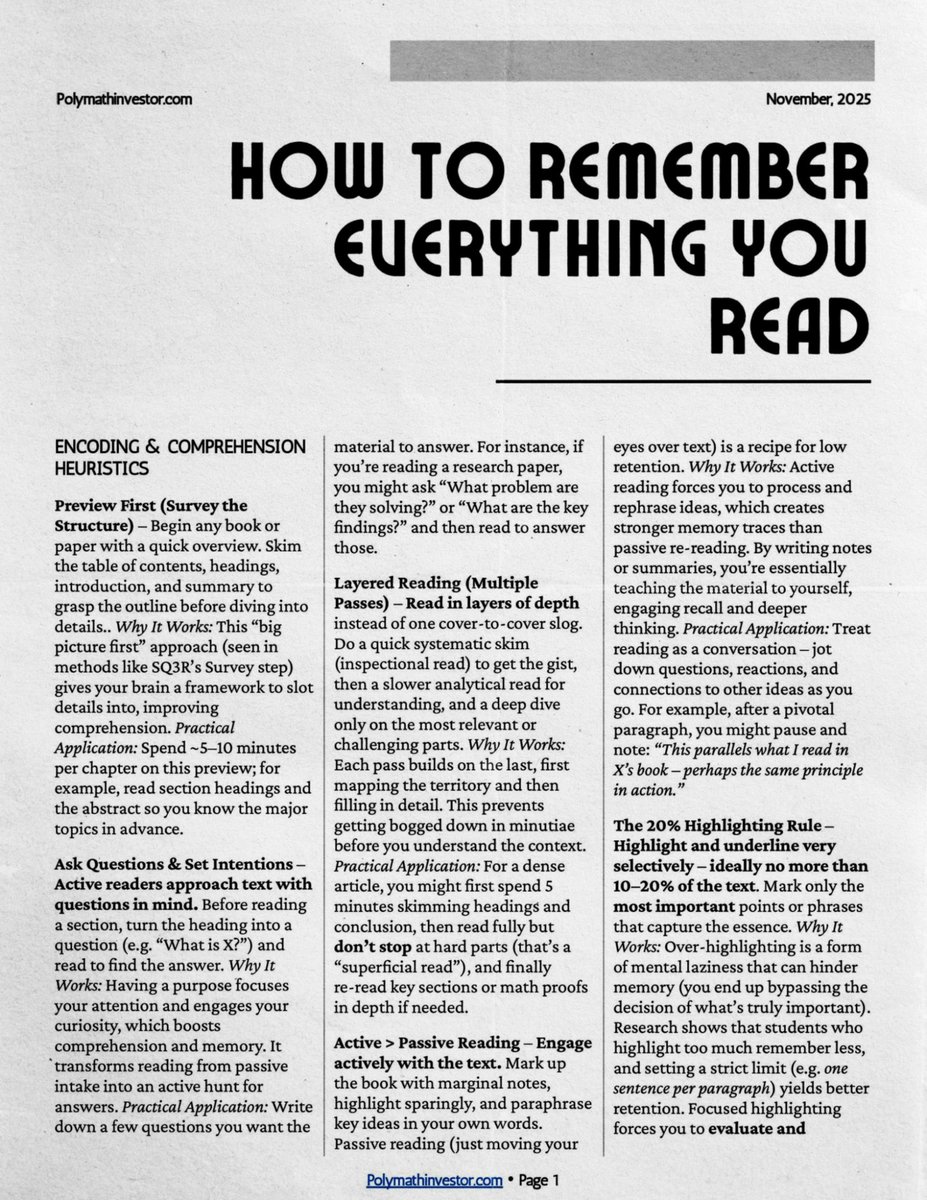
A few months back, I published this guide on how to remember everything you read.
Re-sharing it here for anyone who finds these protocols useful.
(1/11)
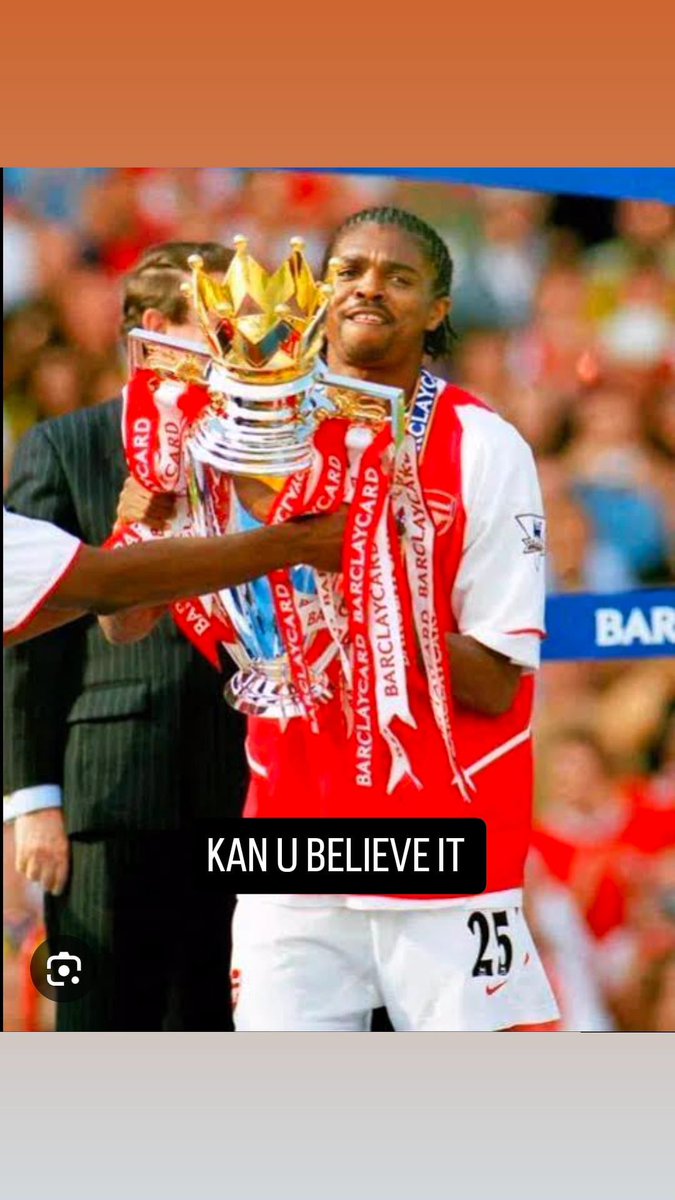
KAN U believe it??? Arsenal Forever. The Gunners worked so hard for this. Difficult but they fought.
Very well deserved. Come on you gunners #congratulations@arsenal#arsenal
Japanese researchers found that pressing a specific point on your wrist for 60 seconds before sleep reduces cortisol by 34% and cuts the time to fall asleep in half.
It's been used in Japanese hospitals for 40 years.
It was never introduced to Western medicine. Read till end 🪡
The people who seem to be enjoying life at 40 are the ones who were deeply uncomfortable at 30. They didn't stumble into financial wellbeing.
They built it systematically over the years—growing alongside their salary and passive incomes. You only see the comfort. You can't see the hardships that paid for it.
Your 256GB Android is "full" again.
You've deleted photos. You've uninstalled apps. You've cleared WhatsApp.
Still full.
Because the real junk lives in folders Android refuses to open. 30GB of it.
I recovered 31GB yesterday. Didn't touch one photo, one chat, one app.
Here's where to find it on Samsung, Xiaomi, Vivo, and OnePlus:
A Persian scholar finished a single math book in 9th century Baghdad that quietly became the foundation for every line of code running on Earth today.
I started reading about him at midnight and could not believe how many things in my daily life trace back to one man.
His name was Muhammad ibn Musa al-Khwarizmi. The book is called The Compendious Book on Calculation by Completion and Balancing.
Every time you say the word algebra, you are saying his book title. Every time someone says the word algorithm, they are saying his name. Both English words come from him. Both are Latin transliterations of Arabic and of his own identity. The man did not just contribute to mathematics. He named it.
Here is the part almost nobody tells you.
Al-Khwarizmi was born around 780 CE in Khwarazm, in what is now Uzbekistan. He moved to Baghdad and worked at a research institution called the House of Wisdom, which during the Islamic Golden Age was the single most important center of learning on the planet. The caliph al-Mamun hired the best mathematicians, astronomers, and philosophers from across three continents and put them in one building with one job. Translate, study, and produce new knowledge.
Al-Khwarizmi finished his book on algebra around 820 CE. The Arabic title contained the word al-jabr, which referred to one of the two operations he used to solve equations. When the book was translated into Latin in the 12th century, the Latin world did not have a word for what he had built. So they kept his Arabic word. Al-jabr became algebra. The discipline was named after a single Arabic word in the title of a single book by a single man.
The deeper insight is what he actually changed about how humans think.
Before al-Khwarizmi, mathematical problems were solved geometrically. You drew shapes. You measured them. You compared areas. The Greeks had built an entire mathematical tradition on visual proofs and physical constructions. It was beautiful and limited. You could not solve a problem you could not draw.
Al-Khwarizmi did something nobody had done before him at this scale. He said you could solve any problem using abstract symbols and rules. You did not need a shape. You needed a procedure. You moved terms across the equation. You cancelled like terms on both sides. You isolated the unknown. He invented the idea that mathematics is a manipulation of symbols according to rules, not a study of physical figures.
That single shift made everything that came afterward possible. Calculus. Differential equations. Linear algebra. Quantum mechanics. None of it works if math is locked inside geometry. He pulled it out.
The second thing he did is the one that changed how the world counted forever. He took the Hindu numeral system from Indian mathematics, refined it, and wrote a book introducing it to the Arab world. That system included the concept of zero as a placeholder, and a positional notation where the value of a digit depends on its location. Roman numerals could not do complex calculation. Hindu-Arabic numerals could.
When his book on numerals was translated into Latin as Algoritmi de numero Indorum, the word Algoritmi was just the Latin spelling of his own name. Europeans started calling the new method "doing algorism," then "running an algorithm." The word for the most important concept in computer science is literally his name in Latin.
The third thing he did is the part that should haunt anyone who works in tech.
His method of solving problems was systematic. Step one, do this. Step two, check that. Step three, if condition A, then do X, otherwise do Y. He wrote down procedures that could be followed by anyone, anywhere, who knew how to read. The procedure did not depend on intuition or genius. It worked because the steps worked.
That is exactly what an algorithm is. A finite, deterministic procedure for solving a problem. He did not just give us the word. He gave us the entire concept of programming a thousand years before there was anything to program.
When Alan Turing built the first abstract model of computation in 1936, when John von Neumann designed the first stored-program computer in 1945, when every engineer at Google, OpenAI, Anthropic, and DeepMind writes code in 2026, they are working in a paradigm that started with one man in Baghdad twelve centuries ago.
The strangest part is what happens when you walk into any tech office in San Francisco or Bangalore or Lahore today. Engineers say the words algebra and algorithm hundreds of times a day. They do not know whose name they are saying. Almost nobody can spell al-Khwarizmi correctly on the first try.
His original Arabic manuscript is preserved at Oxford. His book on Hindu numerals survives only in Latin translation. The Latin version was the textbook that taught medieval Europe how to count.
The man who built the foundation of the AI revolution did not live to see a calculator. He died around 850 CE, a thousand years before the first electric current was sent through a wire. The civilization he built mathematics for collapsed. The library he wrote in burned. His own grave is unmarked.
But every algorithm running on every machine on Earth right now still answers to his name.
KRA has refused to let Java House go.
You definitely know Java House.
Me, I first encountered it in 2015 while hunting for an attachment in the streets of Nairobi.
All along, I thought it was a biig college teaching Java coding. With branches in every corner.
Until my boss asked to meet me there.
I rushed thinking the legend had enrolled for classes.
Only for him to order coffee for me.
Since then, it has been my favourite coffee joint.
Buana ushamba iheshimiwe.
Now,
In 2012, the two founders of Java House had made their kill after running the company for 13 straight years since 1999.
It was time to go to the beach. They sold the company to ECP Africa in Mauritius.
There was no capital gains tax in Kenya then. So the boys left with their money KRA free.
Before ECP bought the company, they knew:
- Kenya changes laws very fast.
- If they bought shares directly in Kenya
- And later sold them
- They could face taxes if laws changed
So they got smart. They set up a shell company in Mauritius. Called it Java House Mauritius Limited. This company is the one that bought Java House Kenya.
So we now have:
- ECP Africa (Mauritius) owning
- Java House Mauritius
- Which owns Java House Kenya
Clean stuff.
Time came to cash out.
ECP Africa remembered it was also owned by ECP fund in Washington DC.
And ECP DC had a subsidiary management company in Kenya called ECP Kenya Limited.
They agreed and tasked ECP Kenya to:
- To study Java house and improve the business to make more valuable on behalf of ECP Africa.
- Decide when to sell it
- Find a buyer
- Negotiate the deal
In short, ECP Kenya was managing the entire investment.
As all this was happening, they are unaware of one dangerous sentence chilling quietly in Kenyan tax law.
It reads:
• Any company managed and controlled from Kenya is a Kenyan resident company.
In 2017, ECP Africa sold Java house Mauritius company to a Dubai mogul for $100M.
- About 10B shillings.
Everything happened in Mauritius. No shares moved in Kenya to trigger anything.
• Deal is closed. 0 tax.
Bahati mbaya, KRA caught wind that Java is gone.
KRA immediately embarked on a fault finding mission.
And in 2022, found that:
- The entire transaction was managed from Kenya
- Through ECP Kenya
They invoked the one dangerous sentence. You remember it?
• Any company managed and controlled from Kenya is Kenyan company.
KRA said:
• This deal is Kenyan
• Tax must be paid in Kenya
Tax demanded: 2.5B
ECP Kenya to pay it.
ECP Kenya ran to the tax appeal tribunal. Tribunal sided with KRA.
ECP Kenya ran to the High Court. They judge looked at the case and asked KRA why it behaved like a bitter ex.
KRA responded: My Lord, imagine educating your wife, then akigraduate she leaves you for a man of her class. How would you feel?
Judge akakubali inauma.
ECP wakaambiwa walipe tax.
Case closed.
Lesson.
• Structure your offshore deal properly.
• Or KRA will structure it for you.
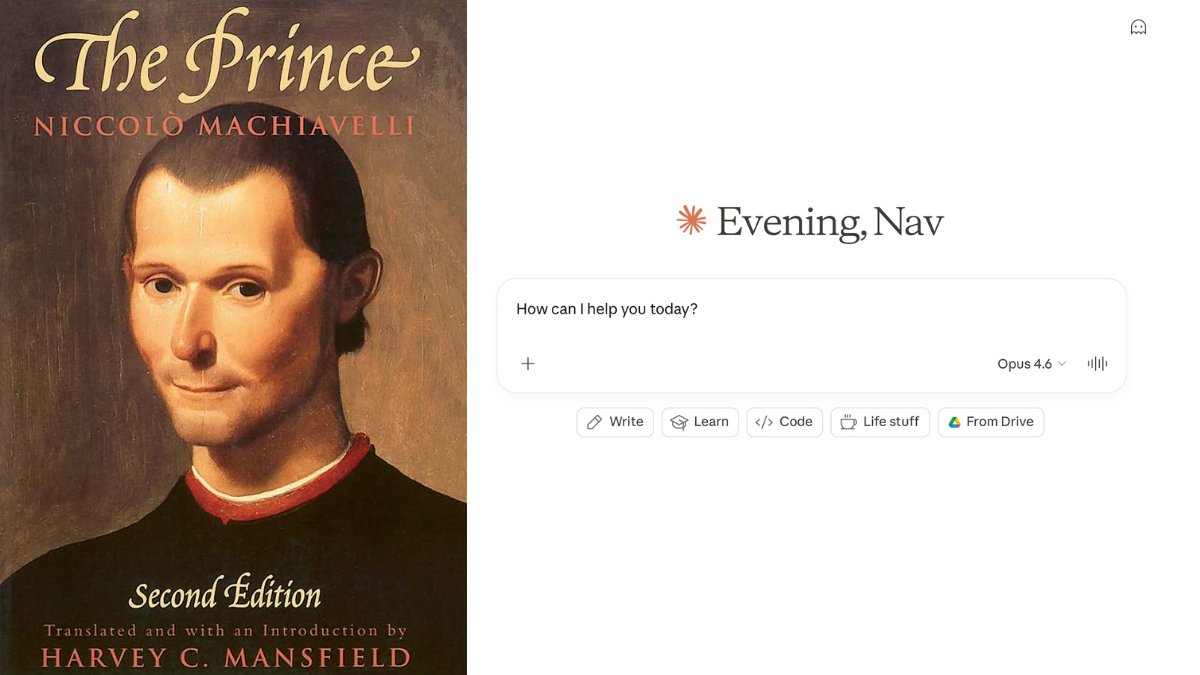
🚨 In 1513, a man was thrown in prison, tortured, and exiled. So he wrote a book about power.
The Catholic Church banned it. Napoleon was caught with a copy in his carriage after his final defeat. Stalin kept it on his bedside table and wrote notes in the margins. Mussolini read it. Kissinger and Nixon used it as bedtime reading.
The book is The Prince by Niccolò Machiavelli. It's 500 years old. It invented the word "Machiavellian." And it's still the most dangerous book on power ever written.
I turned Machiavelli's core strategies into 12 Claude prompts.
You describe any power struggle (office politics, negotiations, competition, leadership) and it gives you the exact Machiavellian counter-move.
Here are all 12:
Arsenal are in fact capable of playing beautiful football. They just don't want to.
I am not joking. And if you keep reading, I will prove it to you.
They in fact are top scorers in the UCL this season with 60% of their goals coming from open play. In the EPL, they are also second on the list of teams that have scored open play goals this season.
Here is something the best players in the world understand that most fans do not. A professional is not trying to show you everything he can do. He is trying to do exactly what the team needs, no more, no less. And the players who have truly figured that out are the ones who last the longest at the top.
Take Casemiro for example. For years at Real Madrid, people called him limited. They said he was a destroyer - a player who just broke things up and passed it simple. But they were missing the point completely. Casemiro was not limited. He was restrained. When you play alongside Toni Kroos and Luka Modrić, two of the most creative midfielders of their generation, your job is to protect them and let them play.
You do not need to attempt ambitious line-breaking passes when Kroos who can do it ten times better than you is sitting ten yards away. The moment Casemiro moved to Manchester United, a squad that needed more from him creatively, he started contributing goals and assists that had never been part of his game at Real Madrid . The ability was always there. The situation just never called for it.
Harry Kane is an even better example because his situation can be numerically measured. For years at Tottenham, Kane was brilliant but he was predictable. He had the rep of a goalscorer. and that was it.
It was José Mourinho that arrived and changed his role and how we saw him completely, allowing him to drop deeper, receive between the lines, and dictate play rather than just finish it. That season Kane topped the Premier League in both goals and assists, and Gary Neville went on television comparing him to Zinedine Zidane.
This was the same Harry Kane people had watched for years. He did not suddenly develop new abilities. Mourinho just gave him a role that required him to reveal the ones he had been sitting on.
And then there is Erling Haaland, who most people still think of purely as a goal machine. If you watch him play for Norway, you will see a completely different player. Without Kevin De Bruyne and Bernardo Silva feeding him chances Haaland creates, drops, links, and carries.
The elite support structure at Manchester City means he does not need to do any of that domestically. So he does not. He conserves that energy and scores multiple goals a season instead. That is simpleprofessionalism.
Now let's talk about Arsenal, because this is where the argument really lands.
People have spent the last two seasons calling Mikel Arteta a pragmatic and ultra defensive manager who cannot coach attractive football. It is one of the laziest takes in modern punditry, and the numbers make it embarrassing. In 2022-23, Arsenal, under Arteta scored a club-record 88 Premier League goals and finished on 84 points, enough to win the title in almost any other season in league history.
Their football that year was fluid, high-pressing, relentless, and genuinely breathtaking at its best. Saka, Martinelli, Ødegaard, and Gabriel Jesus playing together at full tilt was as entertaining as anything in Europe.
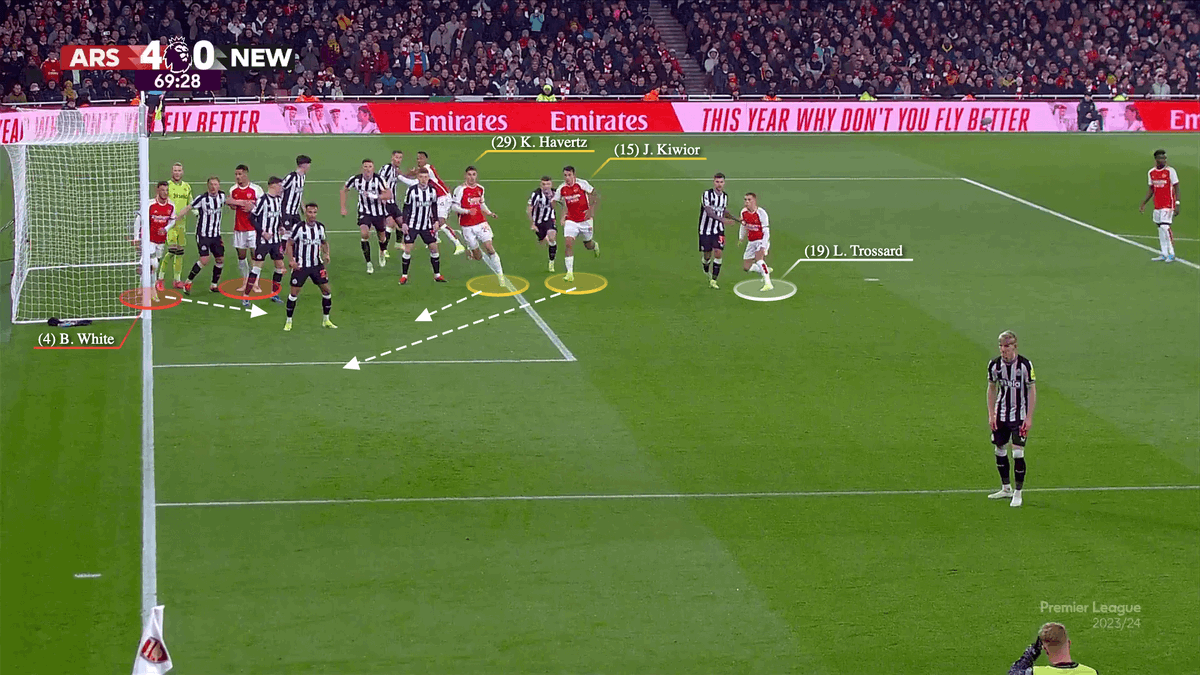
And here is the corner argument, because I want to address that too. People act like Arteta relies on corners because he has run out of ideas in open play. That is completely backwards. Arsenal have scored 33 goals from corners since the 2023/24 season, more than any other Premier League side.
Arteta moved ahead of the curve and deliberately poached set-piece coach Nicolas Jover from Manchester City in 2021, deliberately recruited tall, physically dominant players like Havertz, Rice, Merino, and Calafiori to execute the system, and deliberately built corner routines that opponents still cannot stop after years of studying them.
He himself noted that 27.6% of Arsenal's goals have come from corners, and has expressed frustration that they have not scored even more. That is not someone who cannot do anything else. That is a manager who identified an underexploited source of goals in modern football, built an entire system around maximising it, and deployed it ruthlessly alongside everything else he does.
And when like him, you have had near misses three times, you will find innovative and less risky ways to get the results you need- within the rules. That is what Arteta is doing.
The beautiful football is not gone. Arteta just knows when to use it and when to use something else entirely. That is what champions do.
My name is Ajoje and I am an International Sports Lawyer and FIFA Licensed Agent. I write on the Law and Business of Football- a lot. Repost and Follow if you want to read more posts like this.
The World's Oil Transit Chokepoints 🛢
1. 🌏 Strait of Malacca – 23.7 Million
2. 🌍 Strait of Hormuz – 20.9 Million
3. 🌍 Suez Canal – 8.8 Million
4. 🌍 Bab-el-Mandeb – 8.6 Million
5. 🌍 Cape of Good Hope – 6.0 Million
6. 🇩🇰 Danish Strait – 4.9 Million
7. 🇹🇷 Turkish Straits – 3.4 Million
8. 🌎 Panama Canal – 2.1 Million
📌 Values are in Million barrels per day
📌 Total Oil Consumption in 2023
📌 100.2 Million barrels per day
Source: MUFG via Visual Capitalist
A dolphin wouldn’t stop “checking” her belly on vacation, and a doctor later said it may have saved two lives.
Lena was eight months pregnant and spending a quiet week at a resort, and the highlight of her trip was a supervised dolphin encounter where the animals gently swam up to visitors. She was smiling the whole time, especially when one dolphin drifted close and pressed its head near her stomach the way people describe as “using sonar.”
At first, it felt sweet and almost funny, because the dolphin kept coming back to her even when the trainer tried to redirect it. Then the dolphin’s behavior changed. It became unusually focused, circling her and making short, insistent sounds, and it refused to swim away like it normally would. The caretaker’s face dropped, and he quietly told Lena something he almost never tells guests: the dolphin was acting “off,” and if she felt even slightly unwell, she should go get checked immediately.
Lena brushed it off at first, but she couldn’t shake the feeling, so she went to a local clinic the same day. Within minutes, the doctor’s tone turned serious. Her blood pressure was dangerously high, and she was diagnosed with severe preeclampsia, a pregnancy complication that can escalate quickly and put both mother and baby at risk. The medical team decided the safest option was an early delivery, and her baby arrived prematurely, but safely.
A few weeks later, Lena returned to the resort with her newborn, partly for closure and partly because she couldn’t stop thinking about that moment in the water. When the dolphin swam up again and lingered calmly beside them, Lena held her baby close and whispered, “Thank you,” like she was speaking to the only creature who somehow knew before anyone else did.
Ethiopia 🇪🇹
Late queen Elizabeth and Prince Philip bowed to no one until they met the Ethiopian Emperor, Haile Selassie 1 and his wife, Empress Menen Asfew. They are the only people they have ever bowed to as a Royal couple.