Attention neurosurgeons doing skull-base cases in low- and low-middle-income countries! One of our residents, @Adil_S_M is studying the current capacities for and challenges in these endeavors.
Please take < 10 minutes to complete this survey: https://t.co/CjCN86ERrw
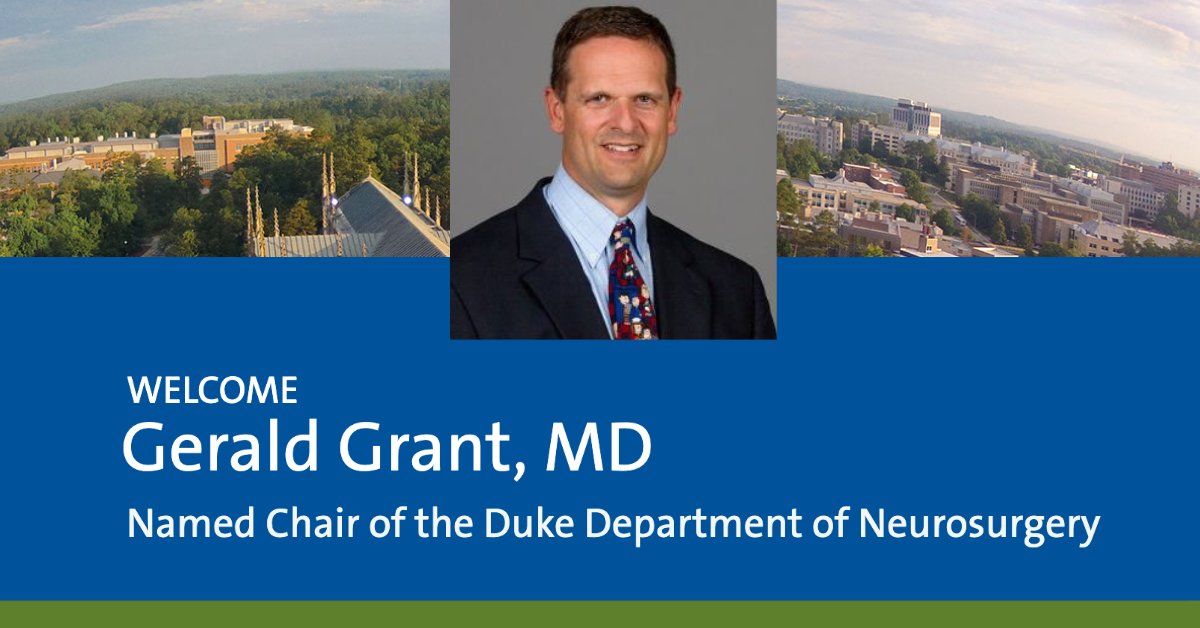
Gerald Grant, MD, an internationally known surgeon-scientist, has been named the new chair of the Duke Department of Neurosurgery, effective April 1, 2022. https://t.co/6cyBYEmjJ4
Thanks Duke CIVM and @Adil_S_M, @NeuroscienceNow for allowing me to redistribute the brainstem atlas with DSI Studio.
The "click-and-view" package is available at https://t.co/BhLMpwrFsT
Our new study is out today in Nature! We demonstrate a brain-computer interface that can turn thoughts about handwriting into text, enabling a person with paralysis to type 18 words per minute – doubling the prior record. 1/3
https://t.co/l3PaBnm0Uv
@andreashorn_@NeuroGabriel@leaddbs@simonoxen Thanks for the interest! This is just the pre-print; we will provide the updated download link with the final version of the paper. Looking forward to your thoughts.
Myth #3 (final in this nerdy series): Retrospective studies can never be used to make causal claims.
In fact, there is an entire field of study based on this idea of "causal inference."
We can only conclude that, *assuming H0 is true*, the probability of seeing the observed data = p. This is not the same as the probability of H0 being false, and does not tell you that HA is true! Can lead to extreme over-interpretation of data, seen ubiquitously (see ref).
Myth #2: if p<0.05 and we reject the null hypothesis (H0), the alternative hypothesis (HA) must be true.
See 👇🏽 for one of the most scathing academic rebukes I've ever seen
On H0 testing: “a potent but sterile intellectual rake who leaves in his merry path a long train of ravished maidens but no viable scientific offspring.” ☠️
Ref: https://t.co/tHYVKBkWkz
Myth #1: Overlapping confidence intervals = statistical insignificance.
Though *non-overlapping* CI’s do = significance, this myth’s twist of logic does not necessarily hold true. Ref: https://t.co/ZCc8TYiPeg
Now diving deeper into data science, I'm re-learning core concepts in stats that (sadly) faded while immersed in the clinical lit. Surprised at how often I misunderstood the numbers. So, I'll humbly share some rediscovered myths.