Lululemon, Fussy, & 20+ other brands trust us to scale their influencer programs.
We onboard 1,000+ new influencers every month.
It works because of the systems we’ve built.
I’ve distilled those systems into a 16-page guide to help you scale in 2025.
👇 Link in comments.
Raw thoughts from our first client creator shoot day.
⚑ Buy-in really matters when you're rolling out new services for the first time.
"Full-service" agencies that outsource all their work has never sat right with me. Not worked for one brand I know. If we're going to offer something, we're going to actually run it ourselves with our team, our standards, our care.
⚑ Building strong influencer relationships is the moat.
Creators flew in for the shoot. Offered up their houses. Gave us massive discounts on rates. None of that is a thing you can buy. It's a function of how you've treated them across the last 12-18 months on the program. The agencies talking about how transactional this space is have set up their programs to make it transactional.
⚑ Meeting ambassadors in person and hearing them talk about a brand they've genuinely used for a year is something else.
Their before-and-after photos. The stories. The way they talk about the product changing how they feel about themselves. You can't fake that on a shoot day. And you can't get it from a creator who was paid £500 to post once 6 months ago.
⚑ The client-agency working relationship is the single biggest predictor of whether a day like this works.
Things go wrong. Always. A lighting setup falls through, a creator runs late, the brief shifts mid-shoot. The brands we have the strongest relationships with don't blink. We solve it together, in real time, with full trust in each other. The ones where the relationship is weaker would spiral on the same small problem.
⚑ Influencer marketers who genuinely understand paid media are few and far between.
The brands we work with are all asking for it. Most of the talent in the space sits firmly on one side or the other (if you think you fit in the middle of that Venn diagram, DM me and I'd love to chat).
A 8-figure brand told my team last week that their affiliate program was broken.
20% of affiliates were supposed to drive 80% of sales.
In their case, the top 20% drove 25%. The remaining 75% was scattered across hundreds of creators each driving a few orders a month.
They were panicking. Felt like they were one ban away from the entire channel collapsing.
Most marketers in this position do the same thing.
Recruit harder. More outbound. More https://t.co/YikxKilCaz higher commission to the top 1%.Run a competition. Throw $5k at whoever drives the most sales this month.All three are wrong.
Here's what almost no brand realises about affiliate distribution:
The 80/20 rule isn't fixed. It's a function of how mature your program is.
In year 1, the curve looks like a bell. Lots of creators each driving small volume. No standout performers yet.
In year 2-3, the curve flattens at the top. A handful of creators consistently outperforming the rest.
In year 3+, you get Pareto. The top 10% drive 90%. The "unicorn" affiliates show up.
You don't recruit your way to the top 10%. You compound your way there.
Here's the actual playbook to get there faster:
⚑ 1. Stop optimising for sales in the first 6 months.
Affiliates who only get rewarded when they drive a sale go quiet when sales don't come. Reward content output instead. "Post 4 pieces, get next month's product on us." Volume builds momentum. Momentum builds the top performers.
⚑ 2. Identify potential unicorns before they perform.
The signal isn't sales. It's posting frequency, content quality, and audience fit. Track these for 60 days. The creators sitting at the intersection of all three are your future unicorns. Invest in them now, not after they've already proven it.
⚑ 3. Build a hybrid layer for proven partners.
Once a creator hits a clear performance threshold (let's say $5k+ in tracked revenue across 3 months), offer them a hybrid. Reduced flat fee, performance bonus, exclusive product access. Now they're invested both ways. The flat fee de-risks them. The performance upside drives them.
⚑ 4. Recruit from your customer base.
The creators most likely to become unicorns already buy your product. They post about you unprompted. They wear it. They talk about it. Find them. Onboard them. They convert at 5-10x the rate of cold creators because they're already believers.
⚑ 5. Stop treating affiliate as a transactional channel.
The brands with the strongest unicorn affiliates treat them like family. They send birthday gifts. They invite them to events. They give them early access. The 0.5% of program spend that goes into relationship building is what creates the unicorns. Not the commission.
The bottom 80% of your affiliate program isn't the problem.
The way you're trying to fix it is.
I'm 21.
In the last 5 years, my team has run influencer programs for some of the biggest consumer brands in the world.
The patterns are clearer than people think.
Here's what an influencer engine actually looks like at $100M+...
⚑ 1. Demand is created upstream, not harvested downstream. Last-click attribution will always understate the channel. Its real job is to expand who considers you and add trust to back that up.
⚑ 2. Attribution is triangulated, not believed. Tracked links, creator codes, post-exposure lift, MMM-style modelling. No single metric is trusted in isolation.
⚑ 3. Incrementality is tested in controlled systems, not ad hoc posts. Geo tests, creator on/off cohorts, paid amplification with and without creator inputs.
⚑ 4. Influencer content is a top-of-funnel asset factory. The highest leverage result is new angles, objections, language, and proof points that feed paid, CRO, lifecycle, and retail.
⚑ 5. Creative ROI matters more than creator ROI. The best teams measure which narratives compound across channels.
⚑ 6. Audience expansion is the real growth unlock. At $100M+ you don't grow by convincing the same buyer harder. You grow by systematically entering adjacent belief systems.
⚑ 7. Creator diversity is a risk-management tool. Different ages, regions, life stages, formats, motivations.
⚑ 8. Throughput is forecastable. If output isn't predictable, spend never scales cleanly.
⚑ 9. All segments are part of one combined system. Celebrity, macro, micro, affiliate, gifting. Modelled together, not as separate tracks.
⚑ 10. Usage rights at scale. Influencer content that can't be reused is wasted leverage. The winners treat creators as production partners, not media placements.
⚑ 11. Measurement shifts from ROAS to contribution margin.
⚑ 12. Investment is timed, not reactive. Planned quarterly. Never unlocked in panic when performance dips.
⚑ 13. Community is a core growth lever, not a side initiative.
⚑ 14. Influencer output feeds omnichannel strategy. Search demand, retail sell-through, paid efficiency, and lifecycle performance all respond to creator activity. Siloed measurement misses all of it.
⚑ 15. Influencer becomes infrastructure. If the channel collapses when one person leaves, it was never built properly. The best programs outlive individuals, platforms, and algorithms.
The brands getting this right are pulling further ahead every quarter.
The rest are still arguing about ROAS.
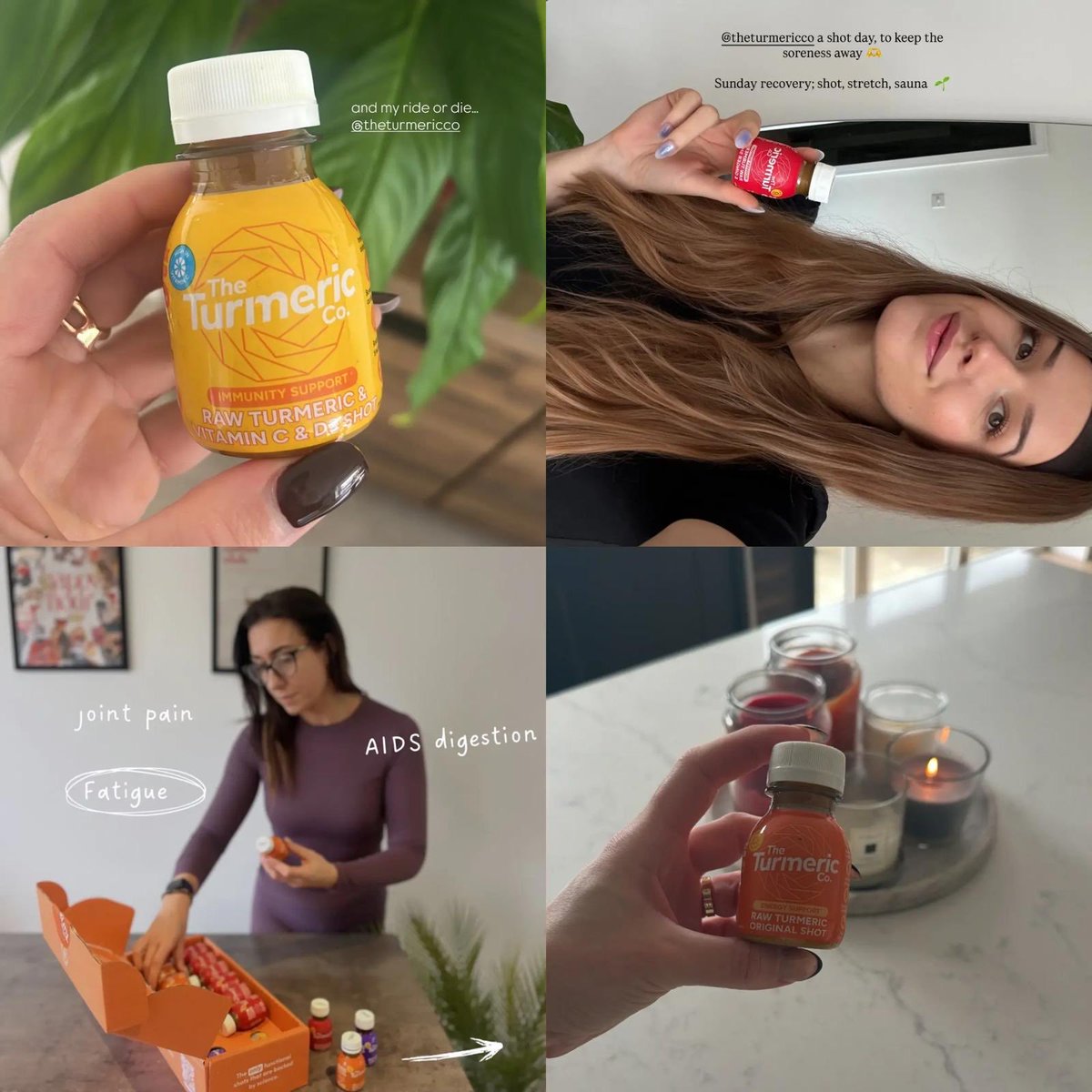
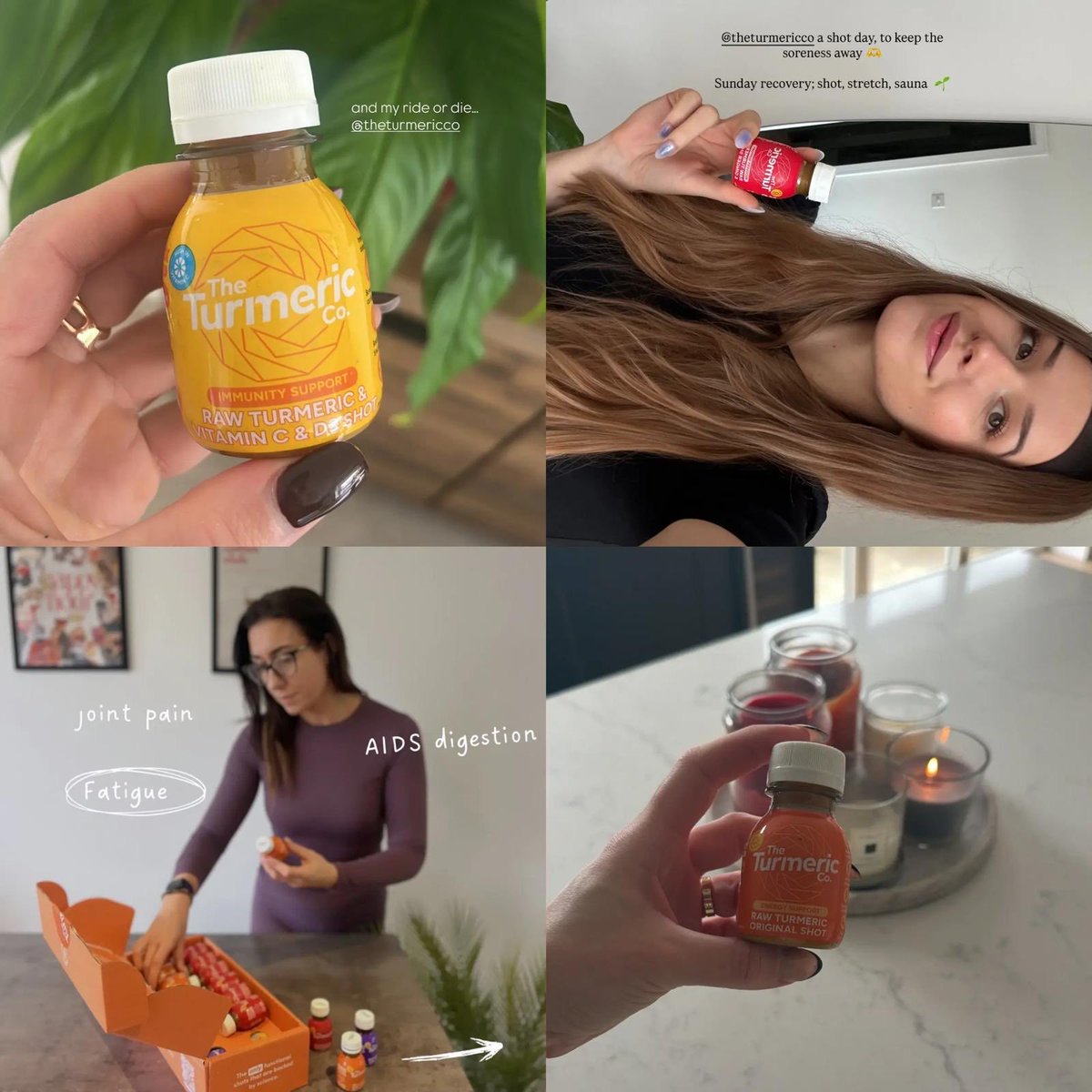
@The Turmeric Co. tagged 4,500+ times by influencers in the last 6 months.
Revealing the 4-part system you can steal.
⚑ 1. Seeded at volume before paying flat fees
→ Before: One-off creator deals. Flat fees. No signal on who actually performs.
→ After: 500 creators seeded in the first 2 weeks. Product cost only. No contracts.
Get the product in the right hands first. Earn the data before spending the budget.
⚑ 2. Looked for positive signal to understand who to work with.
→ Most brands guess which creators convert.
→ We looked for genuine product love + face-to-camera content
Only the creators who showed real signal moved up. Everyone else stayed organic.
⚑ 3. Built a VIP tier on low-cost retainers
→ Took the top performers and locked them into structured deliverables.
→ Fully briefed content (hooks, angles, formats) designed specifically for Meta ads.
→ Regular creatives every month at under £90 per video.
For context, a single briefed UGC video through a traditional agency typically runs £300-500+.
⚑ 4. Ran a continuous optimisation loop
→ Weekly performance reviews. Real-time creative pivots.
→ When early data showed male creators outperforming, we pivoted the creator mix within days.
→ Messaging, hooks, and formats adapted every week based on actual ad performance.
The result: 2,700+ creators seeded, 4,500+ pieces of content, 7M+ impressions.
Cheatsheet:
1- Seed before you spend on creator fees. Volume reveals signal.
2- Use that signal to filter, not gut feel.
3- Lock top performers into low-cost retainers with structured briefs.
4- Optimise weekly. Influencer is a system, not a campaign.
TheTurmeric Co. tagged 4,500+ times by influencers in the last 6 months.
Revealing the 4-part system you can steal.
⚑ 1. Seeded at volume before paying flat fees
→ Before: One-off creator deals. Flat fees. No signal on who actually performs.
→ After: 500 creators seeded in the first 2 weeks. Product cost only. No contracts.
Get the product in the right hands first. Earn the data before spending the budget.
⚑ 2. Looked for positive signal to understand who to work with.
→ Most brands guess which creators convert.
→ We looked for genuine product love + face-to-camera content
Only the creators who showed real signal moved up. Everyone else stayed organic.
⚑ 3. Built a VIP tier on low-cost retainers
→ Took the top performers and locked them into structured deliverables.
→ Fully briefed content (hooks, angles, formats) designed specifically for Meta ads.
→ Regular creatives every month at under £90 per video.
For context, a single briefed UGC video through a traditional agency typically runs £300-500+.
⚑ 4. Ran a continuous optimisation loop
→ Weekly performance reviews. Real-time creative pivots.
→ When early data showed male creators outperforming, we pivoted the creator mix within days.
→ Messaging, hooks, and formats adapted every week based on actual ad performance.
The result: 2,700+ creators seeded, 4,500+ pieces of content, 7M+ impressions.
Cheatsheet:
1- Seed before you spend on creator fees. Volume reveals signal.
2- Use that signal to filter, not gut feel.
3- Lock top performers into low-cost retainers with structured briefs.
4- Optimise weekly. Influencer is a system, not a campaign.
The most common conversation my team has with brands before onboarding isn't about budget.
It's about who owns the influencer channel.
We'll jump on a call and have two people in the room.
One leads brand. Thinks about awareness, content quality, trust, how the product shows up in culture.
One leads performance. Thinks about CPA, ROAS, Meta efficiency, revenue attribution.
Both want influencer to work.
Both have different definitions of what "working" means.
And nobody has decided who owns it.
This isn't a small brands problem.
Some of the biggest names in Health & Wellness we've spoken to have the same thing.
The channel sits awkwardly across two P&Ls, reports into two people, and gets judged on two completely different sets of metrics - often at the same time.
The result? The program never gets properly resourced.
Because whoever does own it feels like they're carrying the cost for someone else's benefit.
Here's the honest breakdown of what influencer actually delivers (and who it belongs to):
Brand gets:
→ Awareness at scale without brand-produced content
→ Cultural credibility through creator voices their audience actually trusts
→ Content volume for owned channels at zero production cost
→ Narrative control across a channel that compounds over time
Performance gets:
→ Raw creator content to feed the ad account through whitelisting
→ A lower-cost testing environment for new angles before paid spend
→ Direct affiliate revenue from the top 15-20% of your creator roster
→ Creative signals that tell you what messaging converts before you scale it
The problem isn't that it serves both.
It's that most brands try to build one program that is judged entirely on either brand or performance metrics - and then wonder why it looks weak on a dashboard.
Pro Tip
↳ Before you build the program, decide: what percentage of this is brand, and what percentage is performance? Then measure each side accordingly.
The brands that scale influencer fastest are the ones where the brand team and performance team are aligned on what they're each getting - and neither is using the other's KPIs to judge success.
For this brand, 75% of Google's AI Overview citations last month went to Instagram Reels.
Google is now pulling creator content to answer branded queries directly in search.
When someone searches your brand or your category, the answer they get isn't from your website. It's from creators talking about you.
Most brands haven't thought about this yet.
They're still measuring influencer by last-click revenue and CPM. Two metrics that completely miss what's actually happening.
30 creators posting about your product per day isn't just a content strategy. It's a narrative strategy. It's the difference between controlling what people find when they search for you - and leaving it to whoever decides to talk first.
This is what volume actually buys you.
Not just impressions. Not just direct sales.
A consistent, searchable, AI-surfaceable body of positive content across the platform that now feeds directly into how Google answers questions about your brand.
We have clients seeing 3,000+ pieces of influencer content per quarter, all positively talking about their brand.
They aren't just winning on Instagram.
They're winning on Google.
I've been building influencer programs for the most ambitious Health & Wellness brands in the world for 5 years, and volume was always the argument I made on commercial grounds - CPM, content cost, affiliate revenue. This adds a whole new dimension to it.
It's the same reason Augmentum Media is built around consistency and scale over one-off campaigns.
Most brands are still treating influencer like a campaign channel.
The ones who get this are building something that compounds well beyond the feed.
I've audited 100+ influencer programs in the last 12 months.
And it's the same story every time.
The brand team and the performance team both want influencer to work.
They just can't agree on what "working" means.
Brand wants reach, authentic content, and creators who feel like genuine advocates.
Performance wants affiliate revenue, Meta creative, and a CPA they can put in a board deck.
Both are right. And most programs are failing both of them simultaneously.
That's the real problem.
Any influencer program that hasn't decided whether it's a brand channel, a performance channel, or both (with a clear strategy for each) is just generating content with no engine behind it.
Real compounding requires both working together.
So I built the Influencer Program Health Audit.
24 checkpoints across four sections:
→ Discovery — is the right system in place?
→ Brand — is influencer actually building the brand or just producing posts?
→ Performance — is the channel driving measurable growth?
→ Attribution — can you defend this channel internally when the budget conversation comes?
The same framework my team uses when we take over a program that's stuck.
And the same one behind programs hitting sub-$4 CPMs, 1,000+ content assets per month, and $100k/mo+ in affiliate revenue alone.
Comment "AUDIT" and I'll send it over.
(We need to be connected for me to DM you.)
CEO: Our influencer spend isn't showing up in the numbers. I want to cut it.
CMO: It's showing up. You're just not looking in the right places.
CEO: The dashboard says otherwise.
CMO: The dashboard is only capturing last-click. Someone sees an influencer post on Tuesday, searches our brand on Thursday, and buys on Friday. Last-click gives the credit to Google.
CEO: So influencer did the work and Google got the credit?
CMO: Every time. And it's not just search. We ran a post-purchase survey last quarter. 34% of new customers said they first heard about us through a creator. None of that shows up in our attribution tool.
CEO: Why not?
CMO: Because they didn't click a link. They watched a video, remembered the brand, and came back later. The influencer touched them. The tool missed it.
CEO: That sounds convenient for influencer marketers.
CMO: It would - if the survey data wasn't directionally consistent every single month. The number doesn't move. That's signal, not noise.
CEO: So what are we actually measuring?
CMO: Three things. Direct attribution from links and codes - that's the floor, not the ceiling. An assisted conversion model that multiplies tracked clicks by a realistic CVR. And the post-purchase survey to validate both.
CEO: And when you layer all three?
CMO: The channel is performing. The problem isn't the channel. The problem is we've been judging it on one model that was built for search, not influence.
CEO: What would you need to prove it beyond doubt?
CMO: Six months of consistent data across all three models. And to stop cutting the budget every time last-click looks flat.
CEO: Fair enough. But if the numbers don't move in six months?
CMO: Then we cut it. But right now, we're making a $500k decision based on incomplete data.
Year 1: our first client paid us £100.
Year 4: swipe to see just some of the brands we're building for in 2026.
The gap between those two sentences is the part people don't see.
It's the clients who took a chance on two teenagers with no case studies and no track record.
It's every hour reinvested back into the team, the systems, and the service - before we could afford to.
It's the obsession with delivery that meant most of our growth has come from referrals, not outreach.
We've never once grown by cutting corners on what we do for the brands we work with.
Every time the business grew, the first question was always the same: how do we make the service better?
Better systems. Better people. Better results.
That's still the question today.
The logos are just proof that the answer keeps working.
I snuck into Sambhav's room at night, connected Claude to his Fathom and analysed 4 years of his client and sales calls at Augmentum.
Here are the 8 most common questions DTC brands ask about influencer seeding & affiliate programs (our signature).
#1. How do I find the right influencers for my brand?
A: Stop scraping lists. Filter by niche, engagement quality, and audience demographics first. Then vet manually - check comment quality, content consistency, and whether their audience actually buys things. Volume of discovery matters less than quality of fit.
#2. How do I write outreach that actually gets replies?
A: Short, personal, and human. Segment by niche then write to your ideal influencer to achieve "personalisation at scale". Lead with the product benefit for them, not the brand pitch. For your ideal influencers use DM for the first touch, email for the follow-up. Avoid anything that reads like a template - influencers get hundreds of these a week.
#3. How many influencers should I seed and at what follower count?
A: For a new program, start with 100+ per month minimum - anything less and you don't have enough data. Follower count is less important than audience fit. We seed 10k-250k regularly and see strong results across that range.
#4. How do I get influencers to post if I've sent product?
A: You don't "get" them to post. You build a relationship that makes them want to. Personalised outreach, a great unboxing experience, and genuine follow-up communication are your levers. The goal isn't 100% posting, it's finding the ones who actually like the product.
#5. What commission rate should I offer affiliates?
A: Start at 10-15% for most Health & Wellness products, or 20-30% for new customer acquisition programs on subscription products. The rate matters less than the activation - affiliates don't post because of commission, they post because of momentum, community, and recognition.
#6. How do I keep affiliates posting after the first month?
A: Most programs die at 30-45 days because brands onboard and disappear. Monthly activations (competitions, bonus commission windows, product drops, challenges) are what keep creators posting. Affiliates sometimes don't need more motivation. They need a reason to act now.
#7. How do I know if my affiliates are actually driving incremental sales?
A: If your affiliate revenue scales directly up and down with your paid media spend, it's almost certainly cannibalising. Real incrementality shows up in branded search lift, lower Meta CPMs, and affiliate sales holding steady when paid cools off.
#8. Should I start with seeding or go straight to paid partnerships? (low AOV physical product)
A: Almost always start with seeding. It costs a fraction of paid, tells you who actually converts, and builds the relationship that makes paid partnerships cheaper and better.
What questions do you have? I'll answer them below.
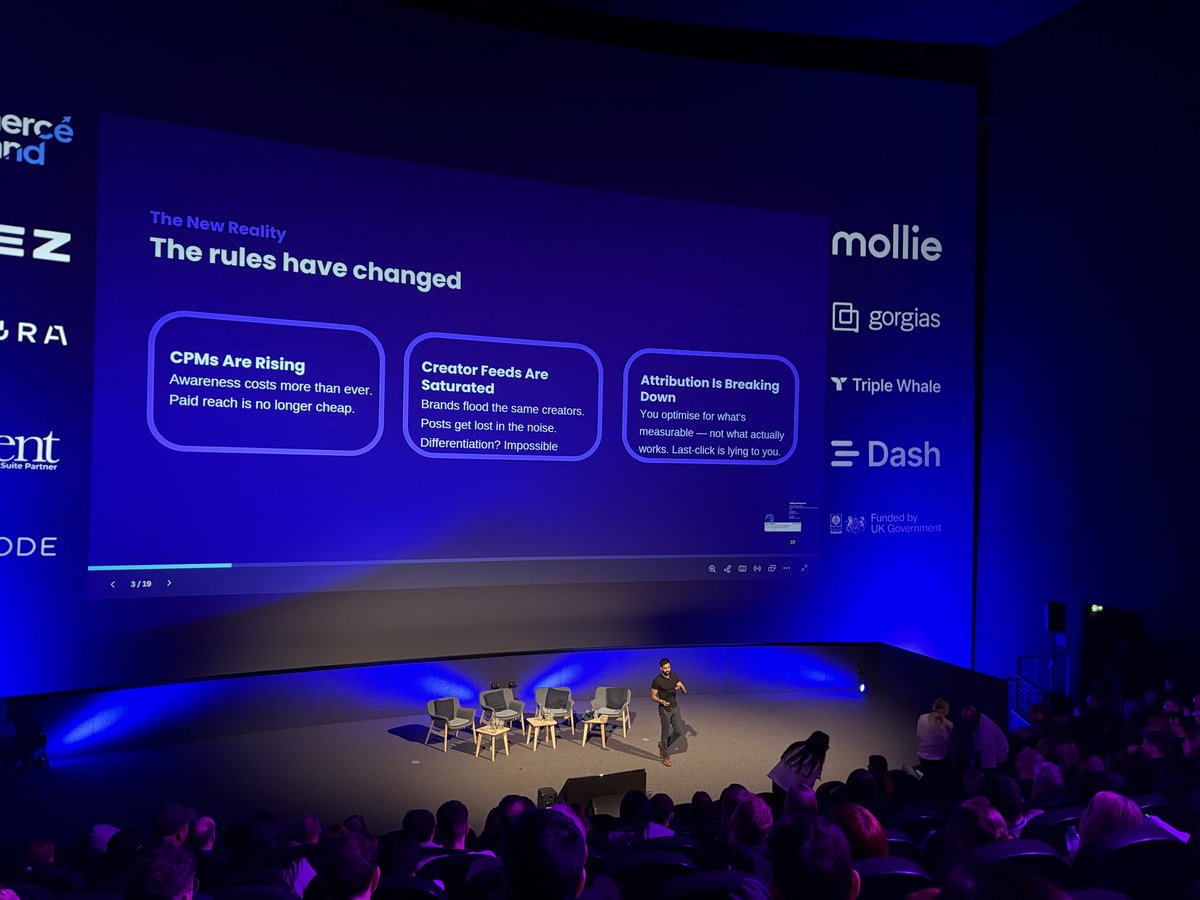
Most brands still think influencer marketing is about renting attention.
That’s why most programs underperform.
At the Ecommerce Scotland Conference Summit, I spoke about the shift I think more brands need to understand:
The best influencer programs are no longer campaign-led.
They’re infrastructure-led.
The real value is not just in a post going live.
It’s in building a system that repeatedly turns creators into:
👉 content producers
👉 affiliate partners
👉 paid media inputs
👉 and long-term brand assets
That changes the economics completely.
Instead of paying for attention once, you create an engine that compounds:
- More creator content,
- More usable ad creative,
- More trust with cold audiences,
- And more surface area for conversion.
This is also why influencer is becoming more important as paid social gets noisier and CPMs keep rising
Brands that figure this out early will have a major advantage.
Not because creators are “new.”
But because most teams still haven’t operationalised the channel properly.
Good to share some of this on stage at the E-commerce Glasgow Summit this week.
There's a heartbeat to every influencer program.
Daily. Weekly. Monthly.
Most teams don't feel it because they're not looking at the right things at the right time.
Daily is about momentum. Who's posting, how the content feels, whether the narrative is moving. You don't check revenue daily. You check pulse.
Weekly is about pace. Are affiliates staying active? Is content volume building or dipping? Are certain niches starting to outperform? This is where speed comes from - catching signals early enough to act on them.
Monthly is where you zoom out and see the business impact. Revenue from affiliates. CPM trends. How influencer is supporting the wider acquisition mix. And crucially - whether the program is getting more efficient, which a well-run one always does.
Most brands skip straight to monthly. Then wonder why the channel feels unpredictable.
The measurement framework we use with clients covers all three + how to handle attribution gaps, what signals actually indicate a program is compounding, and how to present the real picture to a board that only sees last-click numbers.
Comment "Measure" below and I'll send it over.
(Must be connected so I can DM you)
Had a call last week with a Head of Marketing at a fast-growing supplement brand.
She'd been burned by an agency before. Paid five figures. Got a deck, some impressions, and an invoice.
She opened with: "I'll be honest, I'm pretty skeptical of agencies right now."
Fair enough.
So I didn't pitch. I just walked her through what the last 90 days looked like for one of our existing clients in a similar category.
11,000+ influencer posts. Sub $8 CPM. A content library feeding their paid and organic channels.
All from creators who weren't paid a penny to post.
She went quiet for a second.
Then: "Why doesn't every brand do this?"
Honestly? Three reasons.
First, most brands think influencer means finding the right person. It doesn't. It means building the right system. One that attracts creators continuously, not one that relies on a good brief or a lucky placement.
Second, they measure too early. Influencer compounds. The creator who gets your product in February posts in April because something clicked. That sale looks like direct traffic. Most brands quit before the compounding starts.
Third, they underestimate the operational side. Seeding at scale, following up personally, moving creators into affiliate structures, activating the ones who go quiet — this is unglamorous work. Most teams don't have the bandwidth and most agencies don't do it properly.
The brands we work with who scale this channel aren't doing something different strategically.
They're just doing the unglamorous stuff consistently, at volume, for long enough that it compounds.
(she's now a client)
Thousands of health and wellness brands at Expo West last week.
Hundreds of creators trying their products.
Most brands will do nothing with that.
This is the most common pattern in influencer marketing too.
A creator tries your product. Loves it. Posts about it once.
And the brand never follows up.
No DM. No relationship. No affiliate link. No reason to post again.
The posts created have value.
But without a system behind it, it's a one-time transaction dressed up as a relationship.
The brands we work with think about this differently.
Every creator who touches the product is a potential long-term partner.
The trial is the start of a funnel, not the finish line.
That means:
→ Following up personally when someone posts
→ Moving them into an affiliate structure if they convert
→ Staying in contact so the second, third, and fourth post actually happen
Most influencer programs stall not because they can't find creators.
But because they treat every new creator like a fresh problem to solve instead of an asset to compound.
The brands generating 1,000+ organic posts a month aren't just sending more product.
They're doing more with the creators they already have.
In January, influencers posted about our clients 6,539 times.
One post every 7 minutes.
And not one of those influencers was paid a fee to post.
That number matters because of what it disproves.
The assumption most DTC brands have is that influencer marketing is expensive, hard to attribute, and dependent on finding the right people. So they test it small, get modest results, and move on.
The brands we work with have a completely different experience.
★ $2.49 CPM on their best campaigns. $6-12 as a typical range. In a channel where the industry standard sits at $25-30.
★ 1,000+ pieces of influencer content generated every month for some clients - feeding their paid creative, organic channels, and retargeting. All net new at no extra cost.
★ Not to mention the lift of having hundreds of micro-influencers post about you weekly, all on an affiliate basis.
The difference isn't luck or category or budget size.
It's that they stopped running influencer as a campaign and started running it as infrastructure.
👋 If you're curious how we could help your brand, shoot me an email aditya@augmentumis[dot]com or DM me here
We helped Fabletics crack a channel they hadn’t fully unlocked in Europe yet.
They already had:
• strong top-tier ambassador deals
• solid in-house seeding
• a clear brand and creative direction
What they didn’t have was proof that mid-sized creators could deliver the same (or better) performance - without adding complexity for the internal team.
So we ran a UK-focused pilot.
The test was simple: can a small, curated group of creators outperform large ambassador deals… while staying brand-safe, native, and hands-off?
1// THE CHALLENGE
Mid-tier creators had been deprioritised internally.
Not because they didn’t matter - but because:
• Q4 is noisy
• rates are inflated
• and testing properly takes time
Our job was to:
↳ source creators who sat at the intersection of fashion + performance
↳ negotiate strong rates during peak season
↳ manage everything end-to-end
↳ and deliver content that actually performed
2// THE APPROACH
1. Creator selection built for storytelling, not just reach
We sourced creators who could naturally integrate Fabletics into real life - not just gym shots.
Lifestyle, routine, identity.
Creators whose audience already trusted their taste.
2. Relationship-led paid partnerships
Rather than transactional bookings, we leaned into existing creator and manager relationships.
That allowed us to:
a) secure 30–40% discounts on standard Q4 rates
b) move quickly on bookings
c) activate 6 highly specific mid-tier creators
3. Fully hands-off execution
We handled outreach, briefing, logistics, posting schedules, swaps, and reporting.
Average content turnaround 4–5 days after product delivery. With some creators live within 24 hours. Boom.
And when a creator dropped out last-minute due to a personal emergency, @Izzy replaced them same day - no brand involvement needed.
4. Performance-first content
Creators were briefed to produce native, lifestyle-led video aligned with Fabletics’ wider creative strategy.
Story first.
Platform-native.
Built to be reused.
The results
• £16.34 CPM (18% stronger than target)
• 5.3% average engagement rate vs 1.5–2% benchmark
• 235k average follower count across creators
• 77% female audience reached (above 70% target)
And most importantly:
↳ content performance rivalled top-tier ambassador output
↳ majority of creators expressed interest in long-term partnerships
3// WHY IT WORKED
• Relationship-led outreach → better rates, faster delivery, stronger buy-in
• Native-first content → felt real, not produced
• End-to-end ownership → minimal internal lift for Fabletics
• Built-in performance insight → used first-party data, not guesswork
This is what paid influencer partnerships look like when they’re treated right.
Not more creators.
Not bigger names.
Just the right ones, run properly.
📷 Our Fabletics case study just dropped: check our website or DM me for the link.
Last-click attribution is a marketer's worst nightmare.
No seriously. I've had nightmares about attribution.
Not because dashboards are scary.
But because last-click quietly destroys good decisions.
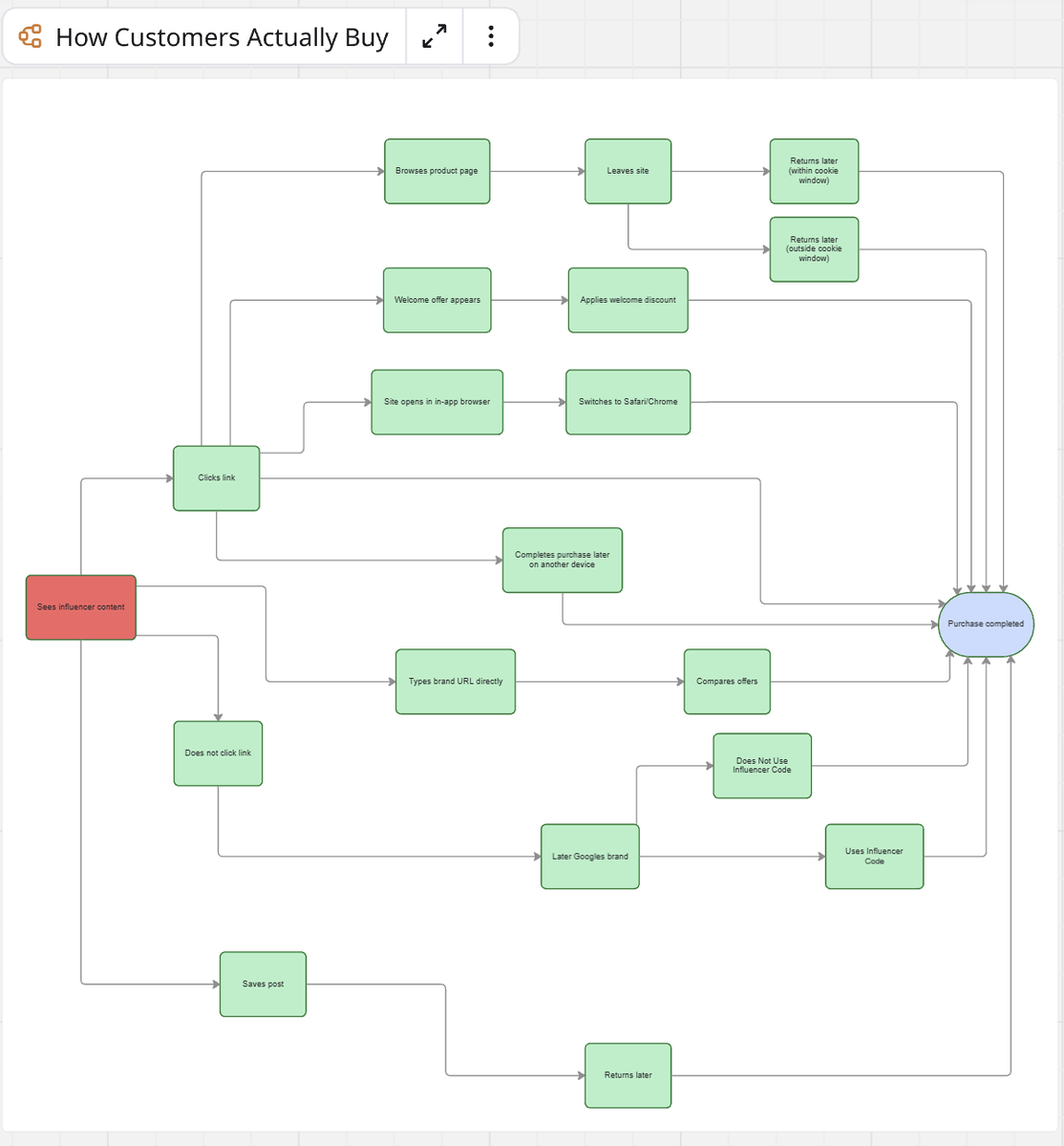
This diagram is how people actually buy after seeing influencer content.
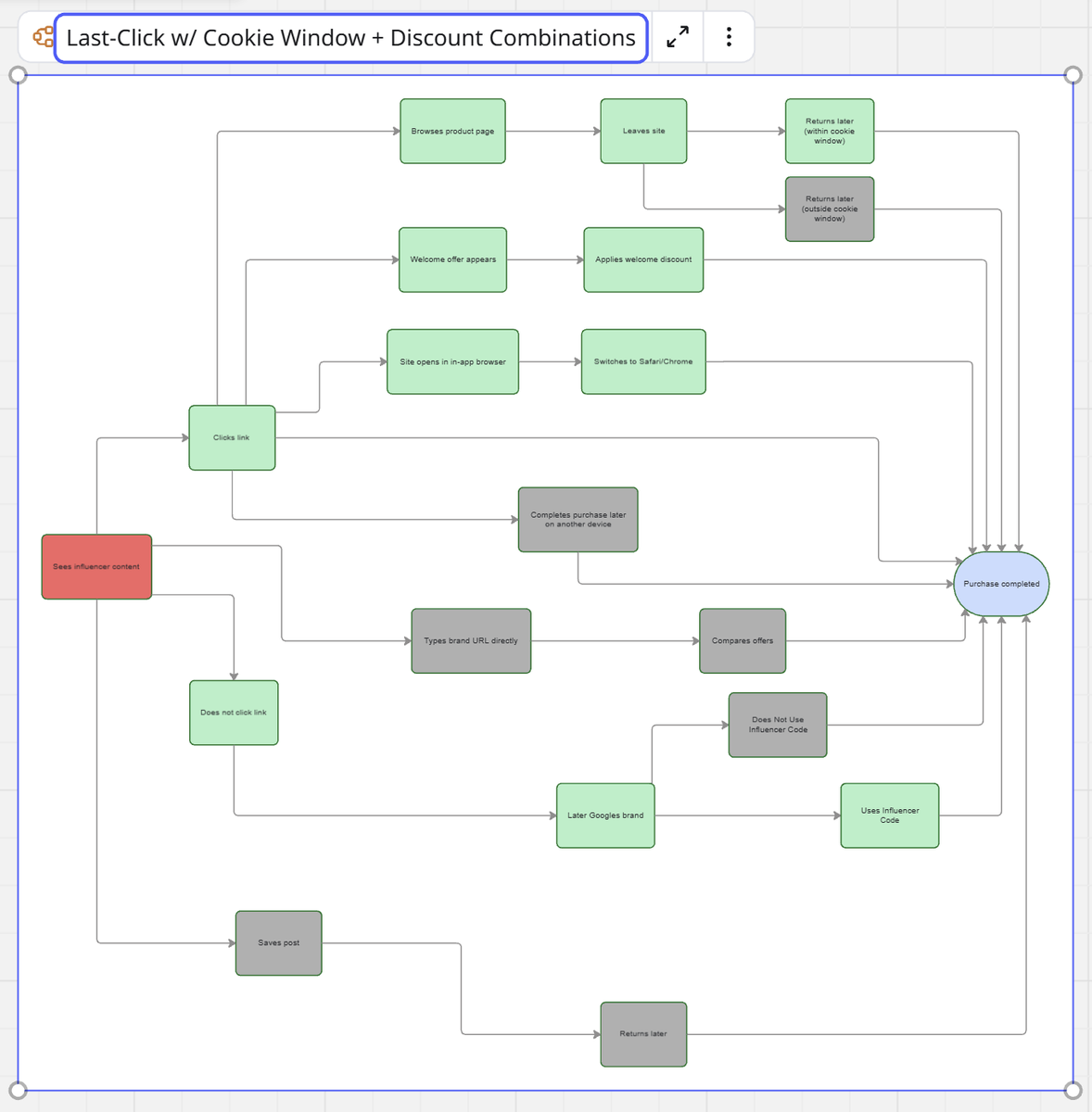
Compare that to what last-click records… and you see the problem instantly.
Last-click tells a comforting lie:
“This creator didn’t drive revenue.”
“This post didn’t work.”
→ “Cut the program.”
In reality:
• People don’t click links
• They save posts
• They Google later
• They buy on another device
• They don’t always use the code
• They convert days or weeks later
Last-click only credits the final touch.
Influencer marketing does most of its work before that.
This is why we obsess over attribution as an agency.
Not perfect models.
Useful ones.
What we actually focus on:
↳ Directional models over false precision
↳ Assisted conversion logic
↳ Post-purchase surveys
The goal isn’t to “prove influencer works”.
It’s to avoid killing the things that are working.
If you judge influence with last-click alone, you’ll always underinvest in the channels building demand.
And you’ll keep scaling the ones harvesting it.
Attribution isn’t just a reporting problem.
It’s a growth problem.
I’ve helped brands go from $0 to $1M, $1M to $10M, and $10M to $100M+ through scaling the influencer channel.
The "hack" is that most journeys look the same:
$0–1M
At this stage, everything feels fragile.
You’re looking for proof. Validation. Signals that people care.
Influencer isn’t a revenue channel yet, even if you want it to be.
Its real value is teaching you how real people talk about your product and why they’d recommend it.
What To Focus On
↳ Send product to 100–200 creators per month with zero posting expectations
↳ Track who posts organically and who replies quickly
↳ Secure usage rights on anything posted
↳ Judge success on learning velocity
$1–10M
Now paid ads are working, but it’s starting to feel heavier.
Influencer also starts “working”… but inconsistently.
Wins feel accidental.
You can’t explain why one month pops and the next doesn’t.
What To Focus On
↳ Formalise seeding into a repeatable monthly system
↳ Convert organic posters into affiliates with clear incentives and deadlines
↳ Run monthly activation moments: competitions, launches, featured creator slots
↳ Measure trends and patterns, not individual post performance
$10–100M
This is the inflection point.
You’re no longer scaling by convincing the same customer harder.
You’re scaling by entering new belief systems, lifestyles, and use cases.
Influencer becomes a serious growth lever here, not because of posts, but because of what those posts unlock across paid, CRO, lifecycle, and retail.
What To Focus On
↳ Intentionally recruit creators across new ages, regions, formats, and motivations
↳ Build a content pipeline where creators supply paid-ready assets every month
↳ Feed winning creator language into ads, landing pages, and email flows
↳ Test incrementality via creator on/off periods and paid amplification
$100M+
At this point, influencer isn’t debated.
It’s allocated.
You’re forecasting output, planning quarterly investment, and using creators as long-term partners, not media placements.
The risk now isn’t inefficiency.
It’s complacency.
What To Focus On
↳ Forecast creator output like a media plan, not a guessing game
↳ Lock in long-term creator relationships with predictable deliverables
↳ Systemise knowledge so performance doesn’t live in one person’s head
↳ Keep pressure on experimentation so the channel doesn’t stagnate
Influencer doesn’t fail because it “doesn’t work.”
It fails when it’s run the same way at every stage of growth.
The brands that win are the ones that evolve the channel as the business evolves with it.











![Aditya_AM22's tweet photo. In January, influencers posted about our clients 6,539 times.
One post every 7 minutes.
And not one of those influencers was paid a fee to post.
That number matters because of what it disproves.
The assumption most DTC brands have is that influencer marketing is expensive, hard to attribute, and dependent on finding the right people. So they test it small, get modest results, and move on.
The brands we work with have a completely different experience.
★ $2.49 CPM on their best campaigns. $6-12 as a typical range. In a channel where the industry standard sits at $25-30.
★ 1,000+ pieces of influencer content generated every month for some clients - feeding their paid creative, organic channels, and retargeting. All net new at no extra cost.
★ Not to mention the lift of having hundreds of micro-influencers post about you weekly, all on an affiliate basis.
The difference isn't luck or category or budget size.
It's that they stopped running influencer as a campaign and started running it as infrastructure.
👋 If you're curious how we could help your brand, shoot me an email aditya@augmentumis[dot]com or DM me here](https://pbs.twimg.com/media/HChhIZVWkAAp1g9.jpg)