If you pushed ‘1138’ on your TV remote while looking at the Revenge of the Sith DVD menu, you would be greeted with a video of Yoda breakdancing.
More brilliant film details: https://t.co/oAPvViTpbh
The 1883 eruption of Indonesia's Krakatoa volcano was so gargantuan that it's almost impossible to comprehend.
The loudest sound in recorded history, it ruptured the eardrums of people more than 40 miles from the epicenter, created a sound wave that circled the globe seven times, and could be heard all the way in New York City — more than 10,000 miles away.
And even those around the world who didn't hear the blast still reported seeing the sun turn purple, the moon turn blue, and the sky turn red. In fact, the sky grew so red as far away as Connecticut that one local fire department was dispatched to put out what they were sure was a blaze burning somewhere right in town.
As for those who were much closer to the eruption, Krakatoa tore its island almost completely in two. Later, the bodies of those killed in the blast floated on "rafts" made of volcanic stone all the way to the coast of Africa.
Haunting Photos of the Worst Natural Disasters in History
https://t.co/11JYJKlMZT
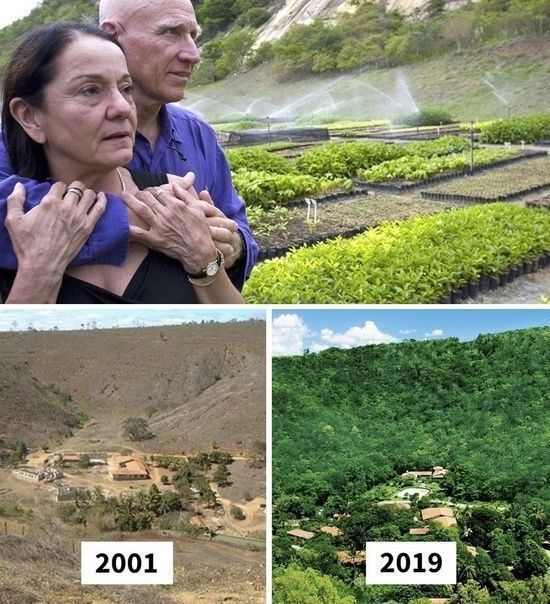
In the early 1990s, Brazilian photojournalist Sebastião Ribeiro Salgado was stationed in Rwanda to cover the genocide, an experience that left him traumatized.
In 1994, upon returning to his home in Minas Gerais, Brazil, Sebastião hoped to find solace in the lush green forest of his childhood.
Instead, he discovered that his home had transformed into a dusty, barren land stretching for miles, devoid of any wildlife. "The land was as sick as I was. Only about 0.5% of the land was covered in trees," he remarked.
At this time, his wife, Lélia Deluiz Wanick Salgado, proposed that they embark on the ambitious journey of replanting the entire forest. Sebastião supported the idea, and together, over the course of the next 20 years, they planted an astonishing 2.7 million trees.
Their efforts resulted in the rejuvenation of 1,500 acres of rainforest, and the site eventually became home to 293 plant species, 172 bird species, and 33 animal species, some of which were on the brink of extinction.
Interesting historical photos: https://t.co/FRrL4hIDpN
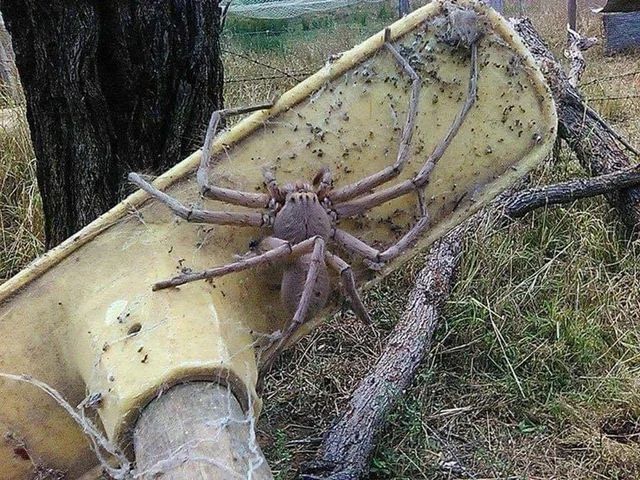
In 1948, Swiss pharmacologist Peter Witt embarked on a noteworthy investigation concerning the impact of drugs on spiders.
His study involved a series of experiments wherein he administered drugs to the spiders through two distinct methods: either by feeding them flies that were drugged or by providing them with a small amount of a drug dissolved in water.
To assess the effects, Witt captured photographs of the spiders' webs both before and after the administration of the drugs. The subsequent findings are presented below.
Coronal rain happens in the Sun’s outer atmosphere when super‑hot gas suddenly cools, collects along magnetic field lines, and drips back to the surface. It often appears after solar flares or other bursts of heating, and the falling plasma can be hundreds of times cooler than the corona around it.