HOLLYWOOD ACTOR BORIS KODJOE VISITS DANGME LAND: COURTESY CALL ON THE PARAMOUNT CHIEF OF GBUGBLA (PRAMPRAM)
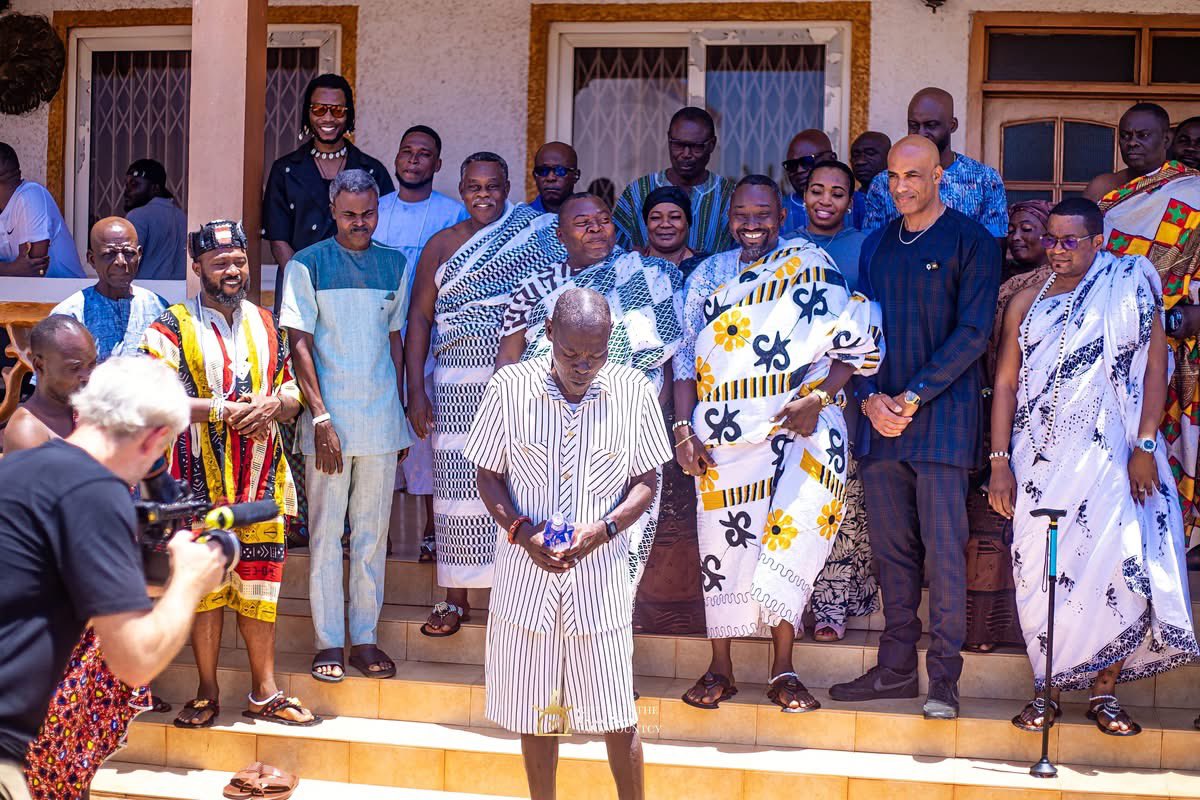
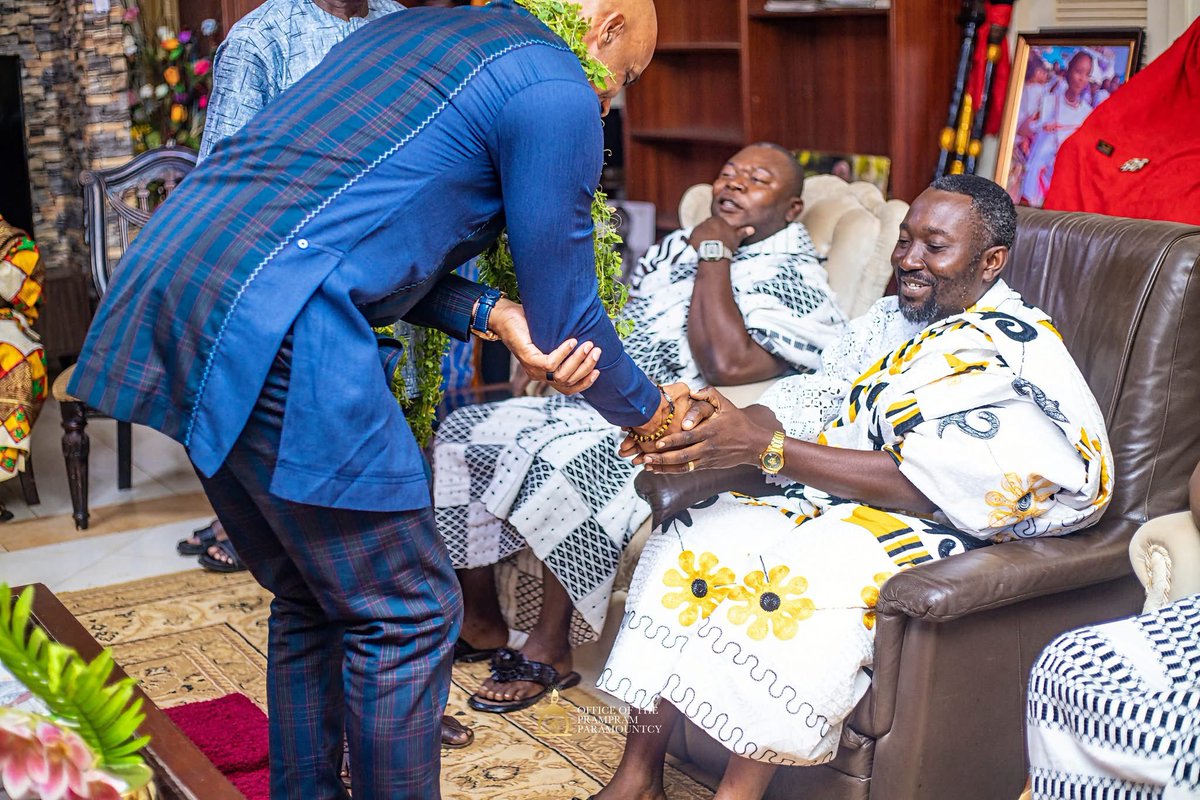
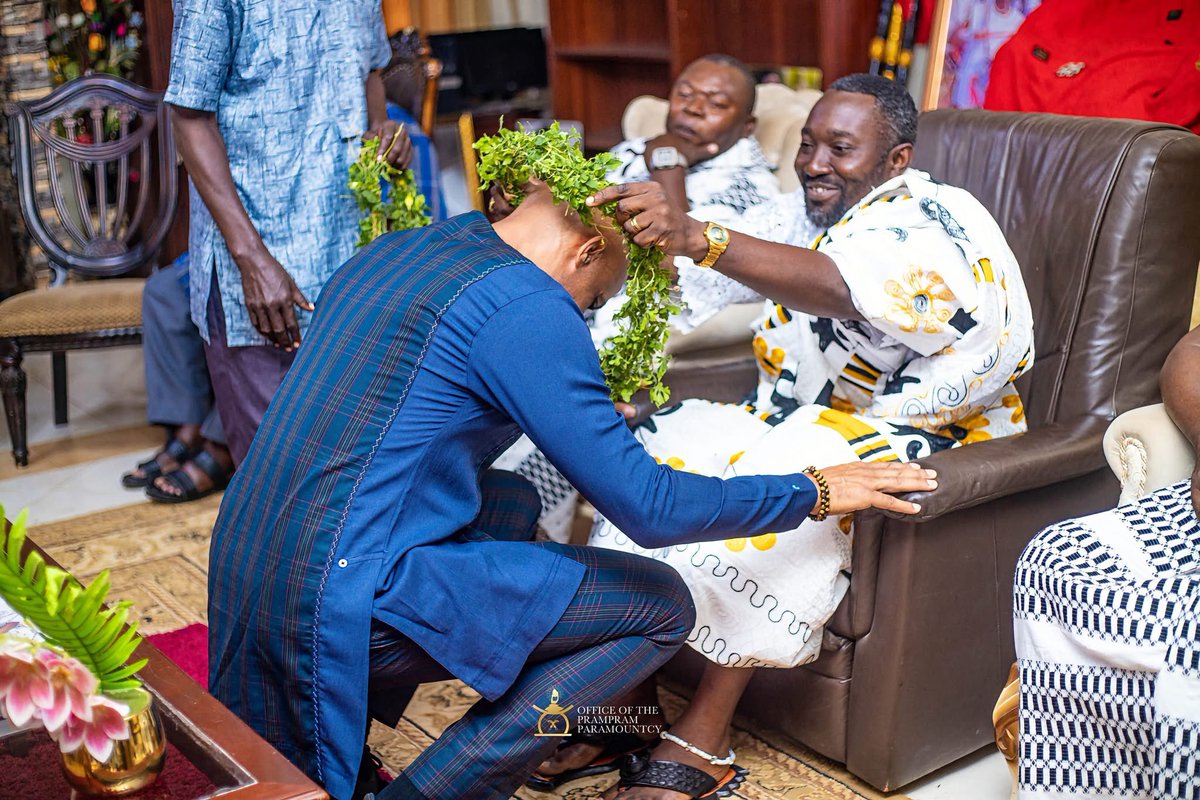
Hollywood actor Boris Kodjoe has paid a courtesy call on His Royal Majesty Nɛnɛ Tetteh Wakah III, Paramount Chief of Gbugbla (Prampram), in the Dangme Traditional Area of Gbugbla, during a visit to his ancestral homeland.
He was warmly received by the Paramount Chief of Prampram Traditional Area and his Traditional Leaders, marking a special homecoming for the actor, whose grandfather, Joseph Cecil Ofuatey-Kodjoe, hailed from Prampram.
During his visit, Boris Kodjoe reunited with his extended family and was honoured with a chieftaincy title by the Paramount Chief, celebrating his ancestral connection to Prampram.
His homecoming highlights the enduring bonds of ancestry, identity and cultural heritage, connecting generations across continents.
This is another opportunity to showcase Dangme Land to the world and promote our Dangme language, culture, traditions and heritage to a global audience. Every story that celebrates our people and our roots helps preserve our identity and pass our rich heritage on to future generations.
Welcome home to Dangme Land, Boris Kodjoe!
Date of Visit: 2 October 2026
#DangmeLand #Gbugbla #Prampram #DangmePeople #BorisKodjoe #DangmeCulture #DangmeLanguage
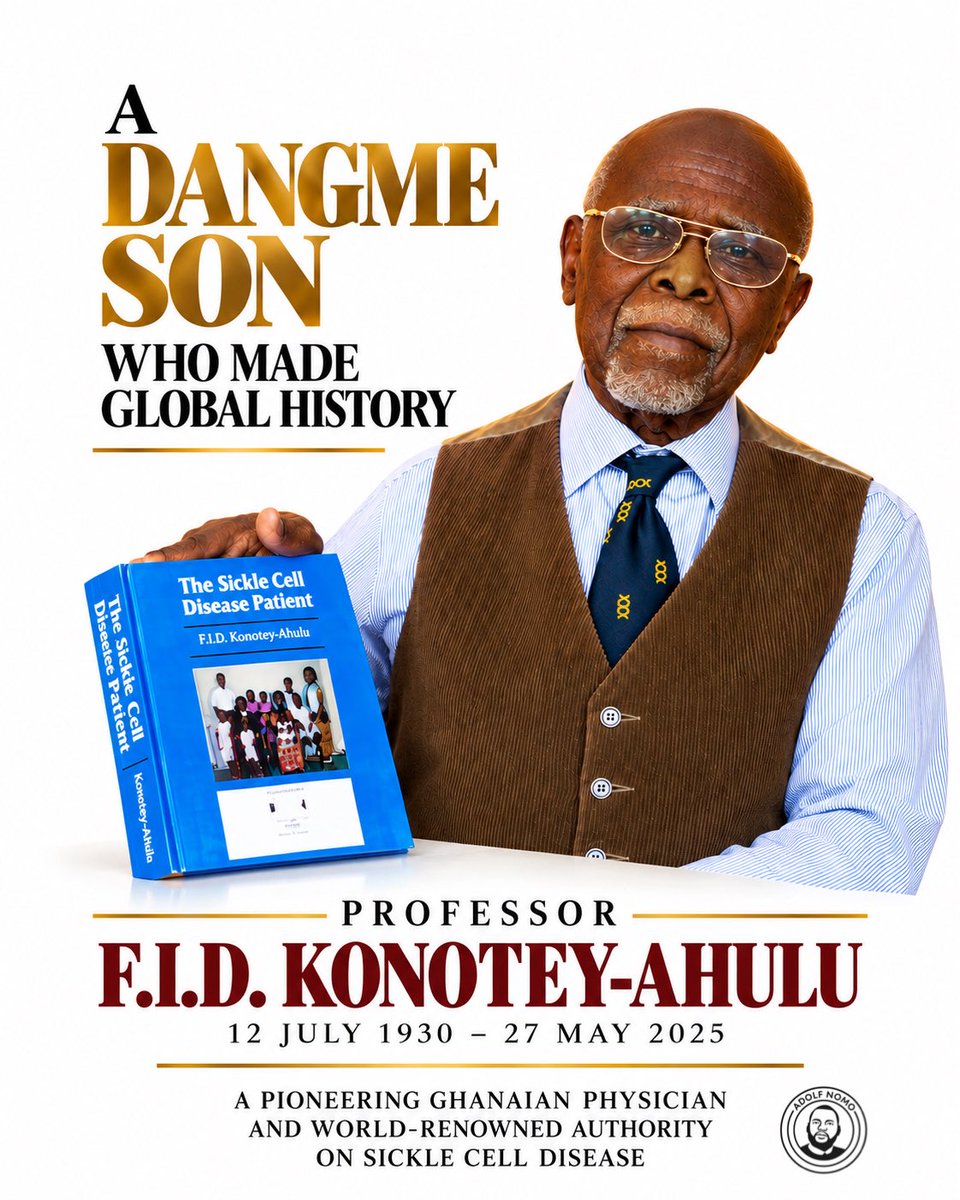
THE DANGME SON WHO MADE A GLOBAL CONTRIBUTION TO MEDICINE
PROFESSOR F.I.D. KONOTEY-AHULU (1930–2025)
A pioneering Ghanaian physician, medical researcher, educator and internationally recognised authority on sickle cell disease.
Some lives leave a legacy that extends beyond professional achievement. Professor Felix Israel Domeno Konotey-Ahulu devoted decades to medicine, research and education, contributing to the understanding of sickle cell disease and bringing the experiences of African patients into international medical discussions.
Born on 12 July 1930 in Odumase-Krobo, the capital of the Manya Klo (Krobo) Dangme Traditional Area in Ghana’s Eastern Region, he qualified as a doctor at Westminster Hospital School of Medicine in London in 1959. He returned to Ghana, working at Korle Bu Teaching Hospital and the University of Ghana Medical School.
His commitment to sickle cell disease was also personal. In his own biographical account, he explained that three of his siblings suffered from the condition.
At Korle Bu, he directed the sickle cell clinic and documented the experiences of Ghanaian patients. His research appeared in respected medical journals, including the British Medical Journal and The Lancet. In 1991, he published The Sickle Cell Disease Patient, drawing on his clinical experience.
He later served as Kwegyir Aggrey Distinguished Professor of Human Genetics at the University of Cape Coast. His recorded honours included the Gold Medal of the Ghana Academy of Arts and Sciences and the Guinness Award for Scientific Achievement in the Commonwealth.
A DANGME SON WITH A GLOBAL LEGACY
Professor Konotey-Ahulu was a distinguished Ghanaian whose contributions reached far beyond Ghana. Recognising his Dangme heritage does not diminish his Ghanaian identity or international reputation. It documents an important part of his personal history.
For the Dangme people, his life is a source of pride and a reminder that our heritage is reflected not only in our language, traditions and festivals, but also in the knowledge we create and the contributions we make to humanity.
As we document our history, we must preserve the stories of distinguished sons and daughters whose achievements can inspire future generations.
We honour the memory of Professor Felix Israel Domeno Konotey-Ahulu, whose work contributed to the understanding of sickle cell disease and whose legacy deserves to be remembered.
A son of Manya Klo. A son of Dangme heritage. A life devoted to knowledge and service.
May his achievements continue to inspire generations to pursue education, research, excellence and service to humanity.
Sources for further reading:
Family biographical archive: https://t.co/peVYLk2WrS
Medical research: https://t.co/J8XizoU4KZ
Book record: The Sickle Cell Disease Patient, British National Bibliography.
Academic recognition: University of Cape Coast, Directorate of Research, Innovation and Consultancy.
#FIDKonoteyAhulu #Dangme #GhanaianAchievers #MedicalResearch #SickleCellDisease #MedicalHistory #DangmeHeritage
KPONE OATH OF ALLEGIANCE IN DANGME — KITA KAMI
This video from Kpone captures the swearing of the Oath of Allegiance in the Dangme language during the installation of a Kpone Paramount Chief.
Dangme: Kita Kami
English: Oath of Allegiance
The use of Dangme during this important traditional ceremony is significant. It reflects the language, traditions and cultural heritage of the Kpone Traditional Area.
In Dangme traditional practice, the swearing of an oath of allegiance is an important part of the installation of traditional leaders. During such ceremonies, chiefs, clan heads (Wetsotse) and warlords (Asafoatse) hold the traditional state sword while publicly pledging their loyalty, unity and support to the Paramount Chief and the Stool.
The sword carries deep traditional significance, representing the spiritual authority of the ancestors and deities who are called upon as witnesses to the oath.
What makes this video particularly significant is that the oath is being spoken in Dangme — the historical and traditional language of the Kpone Traditional Area.
IGP Gives Update in Dangme(@dangmepeople)
22 Assistant Commissioners of Police (ACPs) have been promoted to the rank of Deputy Commissioners of Police (DCOPs).
Video credit: Think News Online
OUR RICE IS SITTING IN WAREHOUSES WHILE FARMERS ARE IN DEBT
This locally produced rice has reportedly been sitting in warehouses since the 2025 farming season, with farmers still struggling to find buyers within the Dangme Traditional Area of Osudoku.
THIS IS NOT OKAY. THIS IS NOT ACCEPTABLE.
The video shows warehouses in Osudoku, Greater Accra Region, filled with locally produced rice.
Farmers invested their savings and took loans to cultivate these farms, expecting to sell their harvest and repay their debts. Instead, many are now facing financial difficulties because their rice remains unsold.
Young people and unemployed graduates who went into rice farming are also among those affected.
Our local farmers need reliable markets and better support so that their hard work does not go to waste.
OUR FARMERS NEED A MARKET.
OUR RICE NEEDS BUYERS.
Let’s support our local farmers and create opportunities for locally produced rice.
OUR VOICE, OUR COMMUNITY, OUR FUTURE.
During a festival in Larteh Akuapem “Kubease”, listen closely and you will hear these women singing in the Dangme language.
I found this really interesting and felt it was worth sharing.
Hearing Dangme being sung in Larteh Akuapem is a beautiful reminder of how languages, songs and cultural traditions can travel across communities and generations.
There are many stories and connections within our history that are not widely known or documented. Moments like this give us an opportunity to listen, learn, ask questions and preserve what we can for the generations coming after us.
Listen to the video and hear the song being sung in the Dangme language at the festival.
Video Credit: Hero Waik
#DangmeLanguage #DangmeCulture #DangmeHeritage #DangmePeople
If you are Dangme(@dangmepeople), let’s start saying this instead.
Our Traditional Areas may be different, but we share a common Dangme identity and language.
Instead of saying:
“I am a proud Klo (Krobo).”
Say: “I am a proud Dangme from Klo (Krobo).”
Instead of saying:
“I am a proud Manya Klo (Krobo).”
Say: “I am a proud Dangme from Manya Klo (Krobo).”
Instead of saying:
“I am a proud Ada.”
Say: “I am a proud Dangme from Ada.”
Instead of saying:
“I am a proud Agotime.”
Say: “I am a proud Dangme from Agɔtsom (Agotime).”
Instead of saying:
“I am a proud Prampram.”
Say: “I am a proud Dangme from Gbugbla (Prampram).”
Instead of saying:
“I am a proud Kpone.”
Say: “I am a proud Dangme from Kpone.”
Instead of saying:
“I am a proud Ningo.”
Say: “I am a proud Dangme from Nugo (Ningo).”
Instead of saying:
“I am a proud Osudoku.”
Say: “I am a proud Dangme from Osudoku.”
Instead of saying:
“I am a proud Shai.”
Say: “I am a proud Dangme from Sɛ (Shai).”
Instead of saying:
“I am a proud Yilo Krobo.”
Say: “I am a proud Dangme from Yilo Klo (Krobo).”
Nine Traditional Areas. Different histories and traditions. One Dangme identity. One Dangme language.
Let us proudly identify with our Traditional Areas while embracing our wider Dangme identity.
I am Dangme. I am proud of where I come from. I speak Dangme.
#Dangme #DangmeIdentity #DangmeUnity #DangmeHeritage #DangmeLanguage #Ada #Agɔtsom #Agotime #Gbugbla #Prampram #Kpone #ManyaKlo #Krobo #Nugo #Ningo #Osudoku #Sɛ #Shai #YiloKlo
LIVE NOW: DEMONSTRATION IN THE DANGME TRADITIONAL AREA OF MANYA KLO (KROBO) — AT AKUSE
My team has joined the demonstration taking place this morning at Akuse in the Manya Klo (Krobo) Traditional Area.
One of the key concerns being raised is:
THE DEPLORABLE STATE OF THE AKUSE ROAD NETWORK
Promises have been made, but meaningful action is yet to be seen.
Sod has been cut to commence the road construction, but weeks and months have passed without contractors and equipment being on site to carry out the work.
Meanwhile, the persistent dust is affecting residents and road users, with serious concerns about its impact on the health and daily lives of people living along the affected roads.
We stand with our fellow Dangme people of Manya Klo (Krobo) as they peacefully raise these concerns about the development needs of their communities.
These are not just roads. They affect livelihoods, businesses, education, healthcare, transportation and the future of our communities.
The people deserve attention, accountability and meaningful action.
DANGME PEOPLE — OUR VOICE, OUR COMMUNITY, OUR FUTURE.
LIVE NOW: DEMONSTRATION IN THE DANGME TRADITIONAL AREA OF MANYA KLO (KROBO) — AT AKUSE
My team has joined the demonstration taking place this morning at Akuse in the Manya Klo (Krobo) Traditional Area.
One of the key concerns being raised is:
THE DEPLORABLE STATE OF THE AKUSE ROAD NETWORK
Promises have been made, but meaningful action is yet to be seen.
Sod has been cut to commence the road construction, but weeks and months have passed without contractors and equipment being on site to carry out the work.
Meanwhile, the persistent dust is affecting residents and road users, with serious concerns about its impact on the health and daily lives of people living along the affected roads.
We stand with our fellow Dangme people of Manya Klo (Krobo) as they peacefully raise these concerns about the development needs of their communities.
These are not just roads. They affect livelihoods, businesses, education, healthcare, transportation and the future of our communities.
The people deserve attention, accountability and meaningful action.
DANGME PEOPLE — OUR VOICE, OUR COMMUNITY, OUR FUTURE.
MORE VIDEOS FROM YESTERDAY’S DEMONSTRATION IN THE DANGME TRADITIONAL AREA OF OSUDOKU
Here are more videos from yesterday’s demonstration, which took place in the Osudoku Traditional Area.
The key concerns raised during the demonstration included:
1. LACK OF MARKET AND DELIBERATE POLICY TO PROTECT OUR LOCAL RICE INDUSTRY
2. THE DEPLORABLE STATE OF OUR ROAD NETWORK
3. ABANDONMENT OF PHASE 2 OF THE KPONG IRRIGATION SCHEME (KIS) REHABILITATION PROJECT
4. ABANDONMENT OF THE ASUTSUARE MARKET PROJECT
We are standing with our fellow Dangme people of Osudoku as they peacefully raised these concerns about the development needs of their communities.
These are important concerns affecting the livelihoods, infrastructure and future of our communities, and they deserve attention and meaningful action.
DANGME PEOPLE — OUR VOICE, OUR COMMUNITY, OUR FUTURE.
DEMONSTRATION IN THE DANGME TRADITIONAL AREA OF OSUDOKU
VIDEO: A leader of the Osudoku Youth Association reading their message and petition.
The demonstration took place this morning in the Osudoku Traditional Area.
The key concerns raised include:
1. LACK OF MARKET AND DELIBERATE POLICY TO PROTECT OUR LOCAL RICE INDUSTRY
2. THE DEPLORABLE STATE OF OUR ROAD NETWORK
3. ABANDONMENT OF PHASE 2 OF THE KPONG IRRIGATION SCHEME (KIS) REHABILITATION PROJECT
4. ABANDONMENT OF THE ASUTSUARE MARKET PROJECT
We are standing with our fellow Dangme people of Osudoku as they peacefully raise these concerns about the development needs of their communities.
DANGME PEOPLE — OUR VOICE, OUR COMMUNITY, OUR FUTURE.
LIVE NOW: DEMONSTRATION IN THE DANGME TRADITIONAL AREA OF OSUDOKU
THE YOUTH HAVE BLOCKED THE BAD ROADS AND STOPPED COMPANY VEHICLES AND TIPPER TRUCKS FROM PASSING.
The demonstration is currently taking place in the Osudoku Traditional Area.
The key concerns being raised include:
1. LACK OF MARKET AND DELIBERATE POLICY TO PROTECT OUR LOCAL RICE INDUSTRY
2. THE DEPLORABLE STATE OF OUR ROAD NETWORK
3. ABANDONMENT OF PHASE 2 OF THE KPONG IRRIGATION SCHEME (KIS) REHABILITATION PROJECT
4. ABANDONMENT OF THE ASUTSUARE MARKET PROJECT
We are standing with our fellow Dangme people of Osudoku as they peacefully raise these concerns about the development needs of their communities.
DANGME PEOPLE — OUR VOICE, OUR COMMUNITY, OUR FUTURE.
LIVE NOW: DEMONSTRATION IN THE DANGME TRADITIONAL AREA OF OSUDOKU
ALL TRUCKS, VEHICLES, OKADA RIDERS AND OTHER COMMERCIAL TRANSPORT OPERATORS ARE PARKED AND OFF THE ROAD TODAY IN SOLIDARITY WITH THE DEMONSTRATION.
The demonstration is currently taking place in the Osudoku Traditional Area.
The key concerns being raised include:
1. LACK OF MARKET AND DELIBERATE POLICY TO PROTECT OUR LOCAL RICE INDUSTRY
2. THE DEPLORABLE STATE OF OUR ROAD NETWORK
3. ABANDONMENT OF PHASE 2 OF THE KPONG IRRIGATION SCHEME (KIS) REHABILITATION PROJECT
4. ABANDONMENT OF THE ASUTSUARE MARKET PROJECT
We are standing with our fellow Dangme people of Osudoku as they peacefully raise these concerns about the development needs of their communities.
DANGME PEOPLE — OUR VOICE, OUR COMMUNITY, OUR FUTURE.
LIVE NOW: DEMONSTRATION IN THE DANGME TRADITIONAL AREA OF OSUDOKU
The demonstration is currently taking place in the Osudoku Traditional Area.
The key concerns being raised include:
1. LACK OF MARKET AND DELIBERATE POLICY TO PROTECT OUR LOCAL RICE INDUSTRY
2. THE DEPLORABLE STATE OF OUR ROAD NETWORK
3. ABANDONMENT OF PHASE 2 OF THE KPONG IRRIGATION SCHEME (KIS) REHABILITATION PROJECT
4. ABANDONMENT OF THE ASUTSUARE MARKET PROJECT
We are standing with our fellow Dangme people of Osudoku as they peacefully raise these concerns about the development needs of their communities.
DANGME PEOPLE — OUR VOICE, OUR COMMUNITY, OUR FUTURE.
LIVE NOW: DEMONSTRATION IN THE DANGME TRADITIONAL AREA OF OSUDOKU
The demonstration is currently taking place in the Osudoku Traditional Area.
The key concerns being raised include:
1. LACK OF MARKET AND DELIBERATE POLICY TO PROTECT OUR LOCAL RICE INDUSTRY
2. THE DEPLORABLE STATE OF OUR ROAD NETWORK
3. ABANDONMENT OF PHASE 2 OF THE KPONG IRRIGATION SCHEME (KIS) REHABILITATION PROJECT
4. ABANDONMENT OF THE ASUTSUARE MARKET PROJECT
We are standing with our fellow Dangme people of Osudoku as they peacefully raise these concerns about the development needs of their communities.
DANGME PEOPLE — OUR VOICE, OUR COMMUNITY, OUR FUTURE.
Kpone Paramount Chieftaincy: The Historical Use of the Nene Title
The available historical and documentary evidence indicates that Nene was the traditional title associated with the Kpone Paramount Stool before 1989.
Our working historical record traces the earlier Kpone paramountcy through:
Nene Narnor → Nene Angmo Keteku → Nene Dortey I → [undocumented succession] → Nene Tei Dortey → Nene Sei Dottey
An official 1984 government census record documents Nene Sei Dottey as Kpone Mantse, shortly after the death of Tei Dortey in 1983.
A significant change in the available record comes in 1989, when the newly enstooled Paramount Chief of Kpone, Tetteh Otu II, began using the title “Nii,” becoming known as Nii Tetteh Otu II. Based on the evidence currently available to us, this marks the earliest documented point in our working chronology at which Nii became the title for Paramount Chiefs in the Kpone Traditional Area.
This is an important distinction. The later use of Nii does not automatically mean that Nii was the traditional title used by all previous Kpone Paramount Chiefs. Likewise, the fact that Ga is widely spoken in Kpone today does not erase Kpone’s historical Dangme heritage.
The purpose of highlighting this history is not to exclude Ga people or create division. Ga and Dangme people can live together peacefully, speak both languages, work together and remain united while preserving their distinct histories, cultures and identities.
If the historical evidence shows that Nene was the traditional title associated with the Kpone Paramount Stool before 1989, then preserving and restoring that heritage should not be described as divisive.
Let us examine the records, respect the evidence and preserve Kpone’s history for future generations.
A PLEA TO THE KPONE KINGMAKERS: LET’S RESTORE PEACE IN KPONE
To the Kingmakers of the Dangme Traditional Area of Kpone, we respectfully plead with you to help restore peace and unity in Kpone.
Kpone cannot have two people enstooled as Paramount Chief of one traditional area.
We therefore appeal to the Kingmakers to follow the proper traditional processes and procedures and ensure that the rightful person is chosen according to the customs and traditions of Kpone.
Some of the issues that have historically caused concern and created problems on Dangmeland when it comes to the selection of Paramount Chiefs include money, politics, individual interests and external pressure. I sincerely pray and hope that you will not allow yourselves to be influenced by any of these.
The decision you make today will affect Kpone for generations to come.
Secondly, Kpone is a Dangme Traditional Area. Its traditional identity must therefore be respected.
The Paramount Chiefs of the Dangme Traditional Areas bear the title Nene. We therefore respectfully call for the Paramount Chief of Kpone to bear the Dangme title Nene, in keeping with Kpone’s Dangme traditional identity.
This is not about hatred, division or disrespect towards anyone. It is about tradition, identity, due process and peace.
Let the Kingmakers do what is right.
Let us resolve this matter peacefully.
Let us restore unity in Kpone.
Let us protect Dangme heritage.
Let us preserve peace on Dangmeland and in Ghana.
KPONE DESERVES PEACE.
KPONE DESERVES THE RIGHTFUL PROCESS.
KPONE DESERVES RESPECT FOR ITS DANGME IDENTITY.
Let tradition, due process and peace prevail.
LET’S LEARN DANGME HISTORY
DANGME CONTINGENTS WERE NOT LISTED UNDER KING TACKIE IN THE BATTLE OF DODOWA (KATAMANSO)
DANGME DID NOT FIGHT AS PART OF THE ACCRA DIVISION UNDER A GA KING
FOR THOSE WHO SAY THE DANGME FOUGHT UNDER A GA KING — PLEASE READ THE HISTORY
For those who claim that the @dangmepeople fought under a Ga King during the 1826 Battle of Dodowa (Katamanso), I encourage you to read the historical record carefully.
Rev. Carl Christian Reindorf’s account organizes the allied forces into three divisions: the Left Wing, Right Wing and Centre.
The Dangme contingents — Krobo, Shai, Prampram, Ningo, Osudoku, Ada and Poni (Kpone) — are listed under the Right Wing.
Accra, on the other hand, is listed separately as a division in the Centre, with King Tackie as its leader.
And the Centre was not made up of Accra alone. Reindorf lists these separate Centre contingents:
* Accra — King Tackie
* Christiansborg Militia
* Dutch Accra — Dowuona
* Danish Accra — Dowuona
* Labadi — Saki
* Teshie
* Nungua
* James Town
* Tema
* Cape Coast Militia
Where Reindorf does not give a leader’s name, we should not invent one. The important point is that these were separately listed contingents within the Centre, just as the Dangme contingents were separately listed under the Right Wing.
THIS IS IMPORTANT HISTORICAL EVIDENCE
King Tackie is specifically identified as the leader of the Accra division — not as the listed leader of the Dangme contingents.
The Dangme contingents were organized separately and fought from a different military position — the Right Wing.
Therefore, the evidence does not support the simplistic claim that the Dangme merely came to Katamanso and fought as part of the Accra division under King Tackie.
The Dangme contingents were separately listed, representing their respective traditional states, and fought alongside the Ga and other allied forces.
The Ga and Dangme fought together as allies, but fighting together does not mean they were one undifferentiated military force or that every allied contingent was commanded by the same traditional leader.
Let us read the historical records carefully and allow the evidence to speak.
Our ancestors fought together as allies. Their distinct contributions should also be remembered.
#Dangme #Ga #BattleOfDodowa #Katamanso1826 #DangmeHistory #DangmeHeritage #AfricanHistory
LAMILEY, A NON-DANGME, MAKES A COMMENDABLE EFFORT TO SHOWCASE DANGME CULTURE ON GMB
Lamiley, representing Greater Accra, showcased the traditional Dangme Kpatsa Dance on TV3’s Ghana’s Most Beautiful (GMB).
Although she is not Dangme, we commend her effort to learn, respect and present Dangme culture to a national audience.
Dangme culture to the world.
#GMB2026 #Dangme #DangmeCulture #Kpatsa #DangmeHeritage #DangmeMedia
OHENEWAA, A NON-DANGME, MAKES A COMMENDABLE EFFORT TO SHOWCASE DANGME CULTURE ON GMB
Ohenewaa, representing the Eastern Region (ER), proudly showcased Dangme culture on TV3 Ghana’s Most Beautiful (GMB).
She presented traditional Dangme Klama Music and Klama Dance, while dressed as a Dangme Dipo Yo, wearing colourful traditional beads and a traditional wrap cloth associated with Dipo, the Dangme puberty rites marking a young woman’s transition into adulthood.
Although Ohenewaa is not Dangme herself, she made a commendable effort to learn, understand, and showcase Dangme culture to a wider audience and the world. Her willingness to embrace and represent our cultural heritage on such a national platform is deeply appreciated.
Her presentation brought attention to the beauty, identity, music, dance, traditions, and heritage of the Dangme people, giving Dangme culture a meaningful presence on the GMB stage and before a national television audience.
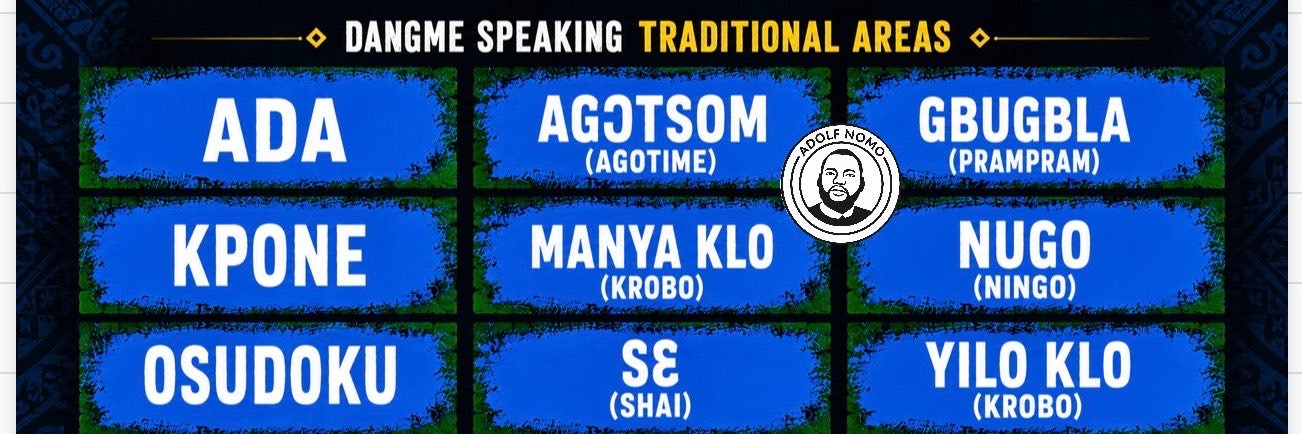
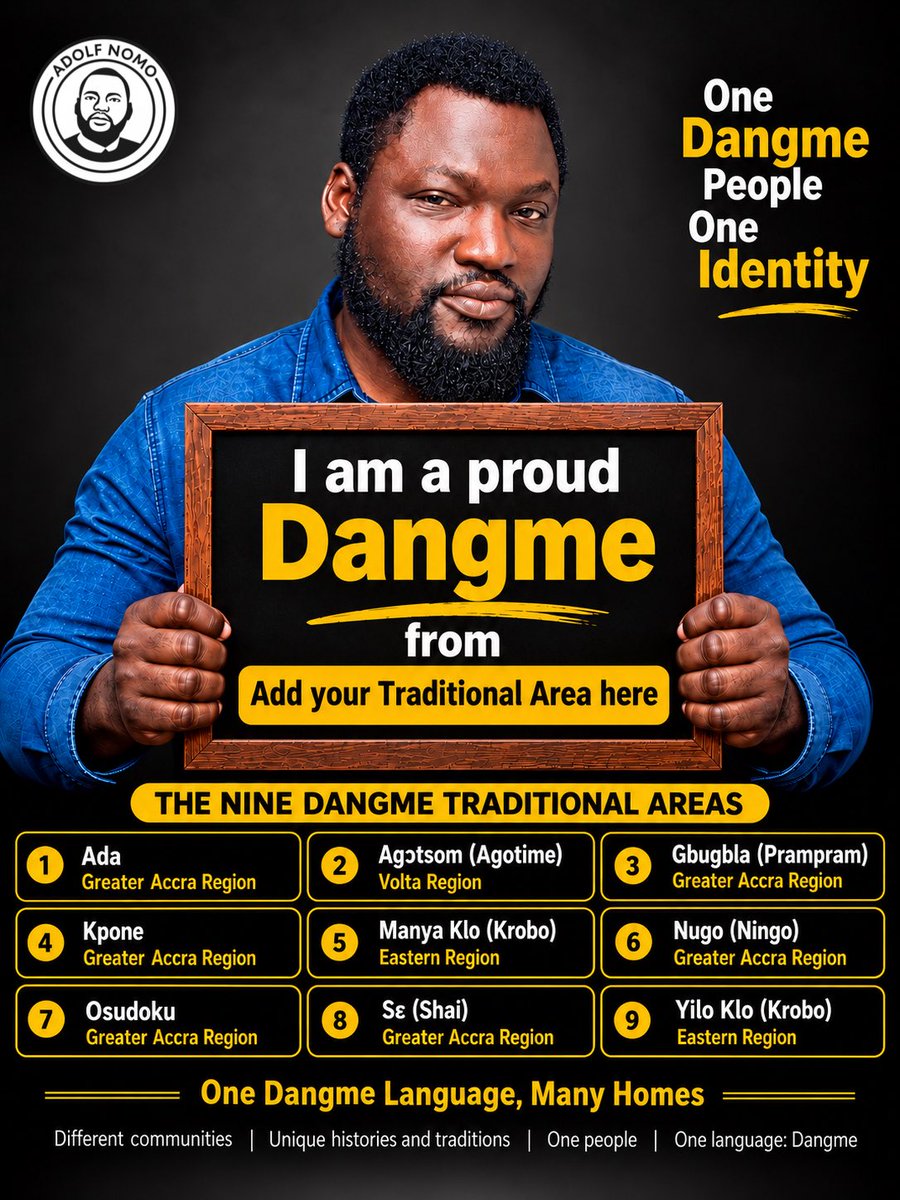
THE NINE DANGME-SPEAKING TRADITIONAL AREAS
1. Ada — Greater Accra Region
2. Agɔtsom (Agotime) — Volta Region
3. Gbugbla (Prampram) — Greater Accra Region
4. Kpone — Greater Accra Region
5. Manya Klo (Krobo) — Eastern Region
6. Nugo (Ningo) — Greater Accra Region
7. Osudoku — Greater Accra Region
8. Sɛ (Shai) — Greater Accra Region
9. Yilo Klo (Krobo) — Eastern Region
This was a beautiful representation of Dangme heritage, identity, music, dance, and tradition on one of Ghana’s biggest television platforms.
We sincerely appreciate Ohenewaa’s effort to learn, respect, and showcase Dangme culture to Ghana and the world.
Dangme culture is our heritage. Let us continue to preserve it, promote it, and share it with the world.
#GMBat20 #GMB2026 #TV3GH #Dangme #DangmeCulture #DangmeHeritage #KlamaDance #KlamaMusic #Dipo #DangmeMedia










![AdolfNomo's tweet photo. Kpone Paramount Chieftaincy: The Historical Use of the Nene Title
The available historical and documentary evidence indicates that Nene was the traditional title associated with the Kpone Paramount Stool before 1989.
Our working historical record traces the earlier Kpone paramountcy through:
Nene Narnor → Nene Angmo Keteku → Nene Dortey I → [undocumented succession] → Nene Tei Dortey → Nene Sei Dottey
An official 1984 government census record documents Nene Sei Dottey as Kpone Mantse, shortly after the death of Tei Dortey in 1983.
A significant change in the available record comes in 1989, when the newly enstooled Paramount Chief of Kpone, Tetteh Otu II, began using the title “Nii,” becoming known as Nii Tetteh Otu II. Based on the evidence currently available to us, this marks the earliest documented point in our working chronology at which Nii became the title for Paramount Chiefs in the Kpone Traditional Area.
This is an important distinction. The later use of Nii does not automatically mean that Nii was the traditional title used by all previous Kpone Paramount Chiefs. Likewise, the fact that Ga is widely spoken in Kpone today does not erase Kpone’s historical Dangme heritage.
The purpose of highlighting this history is not to exclude Ga people or create division. Ga and Dangme people can live together peacefully, speak both languages, work together and remain united while preserving their distinct histories, cultures and identities.
If the historical evidence shows that Nene was the traditional title associated with the Kpone Paramount Stool before 1989, then preserving and restoring that heritage should not be described as divisive.
Let us examine the records, respect the evidence and preserve Kpone’s history for future generations.](https://pbs.twimg.com/media/HSIGZkmbIAAGahg.jpg)


