We Help #Elephants around the World by Adopting them. In the Wild or Captivity we change the lives of these amazing animals, but only with your Help. #F4F
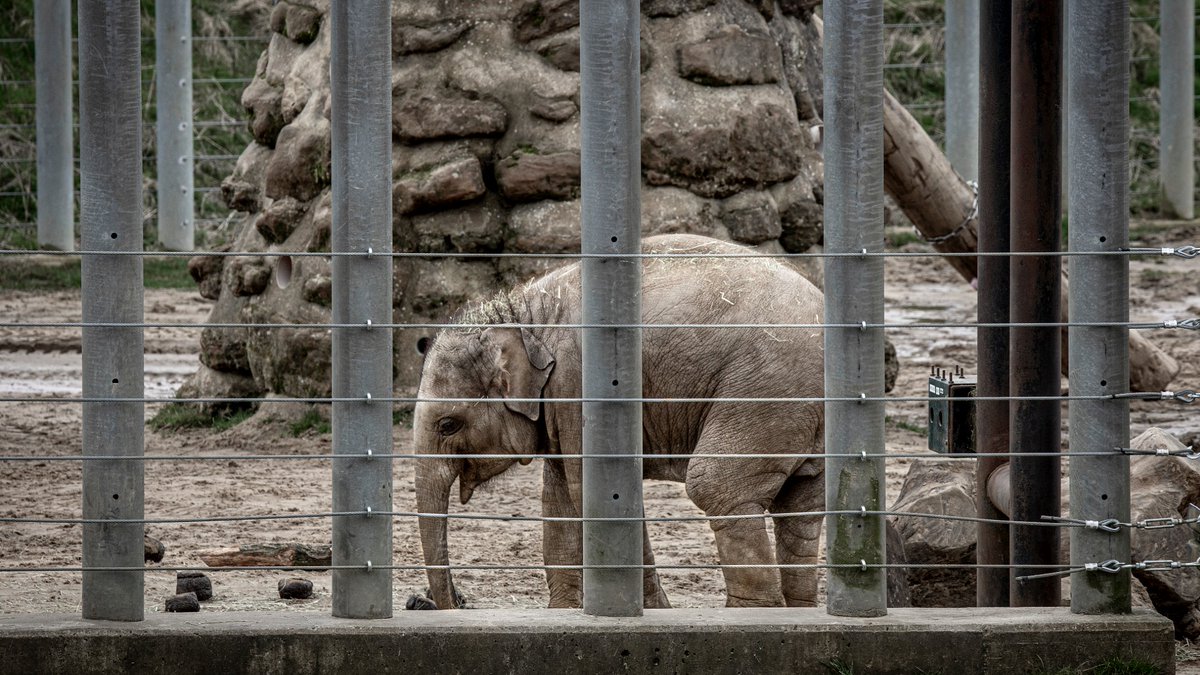
Whipsnade Zoo has announced the birth of an endangered Asian elephant, calling it “real hope for the future”. But for Born Free, this is no cause for celebration. Another calf born into captivity reminds us of Pole Pole, who died at London Zoo in 1983.
👉 https://t.co/0F4HQ8oYtp
Reintegrating elephants and rhinos looks a little different. But the end result – a life in the wild – is always the same.
Central to the successful rewilding of both species is gradual acceptance by the locals. Our elephant orphans hone their survival skills over years through face-to-face interactions with wild elephants, and we tend to find herds are accepting of their presence.
Rhinos are different. Deeply territorial, they don't welcome newcomers. Our rhino orphans learn through scent, dung piles and the slow process of being recognised by the wild rhinos around them. Every day, dawn to dusk, their Keepers walk them along the trails and dung piles left by their wild neighbours. The calf contributes its own, and gradually – over years – it becomes an accepted part of the local community. Apollo here is mid-way through that process.
Read more: https://t.co/jjLgqc8QKt
Trunk hugs and snuggles. A finger to suckle on. A mattress pulled outside to sleep under the stars when calves are restless. These are just the little ways our Keepers help settle newly rescued orphaned elephants.
Importantly though, it's a shared job among our caregivers, who sleep inside the stables with the youngest calves on a raised platform within reach of her trunk. A different Keeper rotates each night, so no single attachment forms with an orphan, ensuring when Keepers go home to visit their human families, the orphans' have a continuity of care.
That being said, we can't entirely stop the Keepers having their own favourite babies. Who's yours?
Daba loves his pellets so much, he’ll even steal them from a blind black rhino.
Maxwell has lived at our Nairobi Nursery for nearly twenty years. The orphan elephants pass his enclosure on their way to and from the forest, and most of them stop. Daba has intentions that go beyond salutations, but despite his outright thievery, Maxwell doesn’t seem to mind!
If you’ve followed us for a while, you’ll know we’ve had plenty of greedy orphans to come through our care. Drop us a comment to tell us who has been your favourite orphan food thief?
Bedtime for Bumpy! He approaches his room at a sprint, then - one little whir of the ears later - flops onto his mattress. A day spent cavorting in the water is tiring work, and our little hippo is more than ready for a good night’s sleep.
Bumpy is one of our newest arrivals. His mother died, likely in a territorial fight defending her baby’s life. He spent at least a day huddled by her body before the Kenya Wildlife Service rescued him and brought him into our care.
You can become part of Bumpy’s journey. Read his full rescue story and support him through an adoption: https://t.co/qAEjrv65WE
Every morning at first light, the Nursery herd walks out of their night-time stables and into Nairobi National Park to browse. They filter past black rhino Maxwell's stable and out to the forest. The route and pace vary day to day.
Their daily walks have been a little more subdued of late. We've been having thunderstorms recently, and orphaned elephants Wamata, Kipekee and Daba aren't fans of the loud noise; they've been rumbling in discontent. But on this day, there's a pep in their step as they hurry to their greens!
Read our Keepers' Diaries for an insight into their world: https://t.co/7BeLeWf9cI
Aura and Mwangaza have the best of both worlds.
When our orphans return to the wild, they team up with their friends and age-mates to form herds. Over time, these herds continue to grow and grow as younger orphans join the mix. When these orphans have their own calves, the herds grow bigger still.
For Aura and Mwangaza, the offspring of ex-orphans Arruba and Mweya, this is the perfect world Dame Daphne described: growing up cocooned with nannies and aunties, siblings and cousins, roaming wild but with the added protection of their mother's human family too.
Today, we honour Dame Daphne's birthday. If you have a favourite quote of hers, share it below.
Serenget is always the last to finish her milk.
She is one of the younger orphans at our Voi Reintegration Unit in Tsavo and she has her own way of doing things. Rather than gulping from the bottle like the others, she takes it slowly – the Keepers fill the very tip of her trunk with milk, so she can pour every drop carefully into her mouth at her own pace. Two bottles takes her a good while.
Every orphan drinks up to 24 litres a day, at whatever pace suits them. A gift of milk from our Wish List can help feed an orphan like Serenget: https://t.co/nStdhlgvM4
A lot can change in a month.
When Toto arrived at our Ithumba Reintegration Unit on 20 April, he was overwhelmed. He ran to his Keepers when the older orphans crowded round and stuck close for days. His Keepers knew this about him – Toto doesn't like change much. So two trusted Keepers, Sammy and Lekoli, stayed on at Ithumba to help him settle.
It worked. By the end of the month, he was the one leading the group home. Most evenings now, it's Toto out in front, walking the herd back to the stockades for the night.
Hands up if you remember Toto's rescue?
For the last several weeks, we’ve been sharing stories from caregivers who have a unique perspective on the behaviors and personalities of the elephants. Today is Sharon’s thoughts about Mara! https://t.co/phK1ol2Ilo
"'All subspecies hang on in only 5% of their historical range.' This 5.5 tonne giant is Asia’s largest land animal – but it could face extinction" https://t.co/coADDQXgJt
Three feisty peregrine falcon chicks at Great Spirit Bluff were safely banded and given health checks.
Now named Fluffernutter, Midnight, and Josie, these young falcons carry unique bands that will help researchers track their journeys for years to come.
For blind elephant Manu, his trunk is more than just a nose. It helps him navigate, explore his surroundings, locate food, and gather information about the world around him. After years of hardship as a blind 'begging' elephant, Manu now uses this remarkable adaptation.
Some mornings are quiet ones. 💚 Rana and Mara greeted caregivers softly before breakfast, content to enjoy the rain, the birds, and each other’s company without much to say. Read more: https://t.co/U3FWLFpVjl