“Reflexivity…is a methodological commitment to examining how knowledge is produced and to making visible the assumptions, relationships, and contexts that shape research” — American Anthropological Association (AAA)
https://t.co/04jPrzSZ4Q
The European and Arab rush for African ivory fueled the "Scramble for Africa." Trading stations deep in the interior evolved into military forts, infrastructure projects, and colonial territories, devastating elephant populations and enslaving locals.
https://t.co/rhxkmDReP5
When I manifested myself into existence, existence existed. I came into existence in the form of the Existent, which came into existence in the First Time. Coming into existence according to the mode of existence of the Existent, I therefore existed. And it was thus that the Existent came into existence. - Atum
Le panafricanisme en questions. L'intégralité du dernier livre collectif que j'ai co-écrit et édité aux Presses universitaires de la Méditerranée est disponible et gratuit en accès en ligne ici. Ce fut un long travail, très particulier. Bonne lecture.
https://t.co/wUkMebQdWn
When [whyte] people first came to our land, we had already gone to the moon and all the great stars. In the olden days, they used to come and learn from us. My father used to tell me that we taught them how to count. We taught them about the stars. We gave them some of our gods.
burned our gods, and they carried away many of our people to become slaves across the sea. They are greedy. They want to own the whole world and conquer the sun. Some of them believe they have killed God. Some of them worship machines.
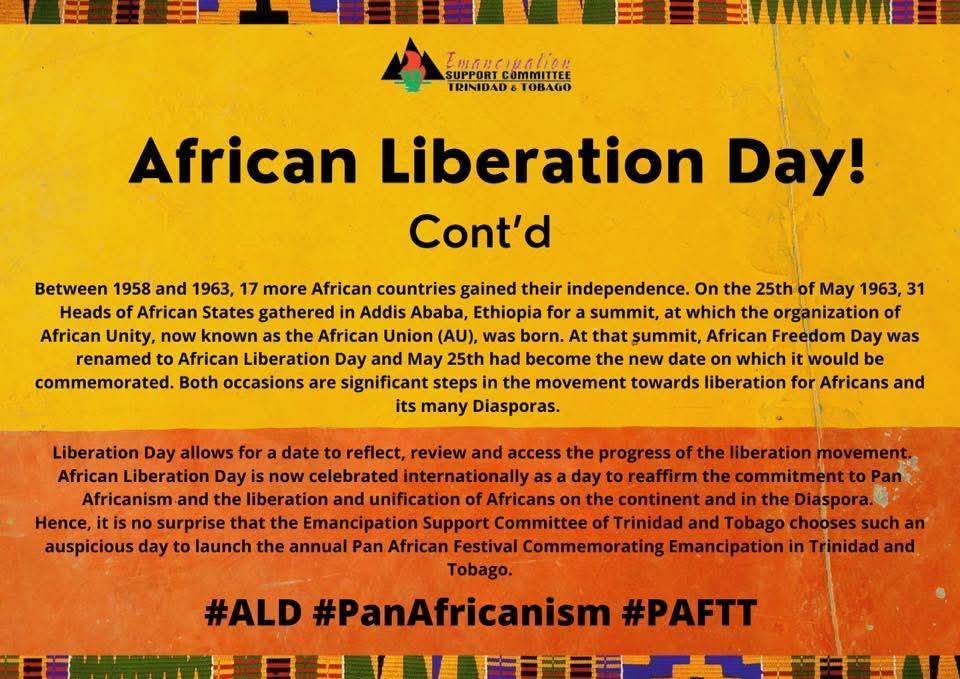
President John Dramani Mahama has announced a landmark policy to advance African unity and ease of travel across the continent.
He stated that, effective 25th May 2026 coinciding with Africa Day, Ghana will implement a free visa regime for all Africans, allowing travelers to obtain their e-visas online at no cost.
“Effective 25th May 2026, when we commemorate Africa Day, Ghana will introduce a free visa regime for all Africans. Africans travelling to Ghana will receive their e-visas online, free of charge,” he stated.
#MahamaThePresident
#AfricaDay
#PanAfricanism. .
"ESSAY: Against Nuclear Imperialism, Kwame Nkrumah, 1960"
- Check out the latest from the Editors of the @AgendaReview, in this week's @blkagendareport: https://t.co/JZoqbUezKh
Who Abolished Slavery?
You think there is no correlation between how we Africans have been engineered to look down on ourselves and to genuflect before those who oppressed us?
Who abolished slavery? Ask any fourth grader in Togo, and the answer comes without hesitation: Victor Schoelcher. Wake me from a deep sleep with that question, and my subconscious will answer before my eyes are open: Victor Schoelcher. Twenty-five years after leaving primary school, the colonial curriculum still lives in me like a reflex.
That is what was planted, and that is how thoroughly it took root. It is only the adult brain, the one lucky enough to stumble upon other literatures, other histories, other archives, that comes afterward to contest the first answer. But the first answer is always his name.
That is what colonial schools taught. That is what post-colonial schools taught. That is what is still being taught today, by people placed in power precisely to ensure that the curriculum of self-erasure continues undisturbed.
Because in Francophone Africa, the abolition of slavery has one face, and it is this French man. And in twenty years of academic formation on this continent, from primary school through university, including my own years as a history major at the University of Lome, not once, not in a single classroom, not in a single textbook, was the Haitian Revolution mentioned.
Not once were we told that enslaved Black people organized, fought, and defeated the French army, that Haïti became the first Black nation in colonial Americas and the first nation in modern history to defeat a European power that practiced slavery through the resistance of the very people it had enslaved. Twenty years of “schooling”: not one mention of that historical fact. And this is just one example, on just one subject.
Because not once throughout my entire education in Togo was I introduced to a Black mathematician, a Black physicist, a Black inventor, a Black philosopher. Not once. But for those of us who were cursed with France, the French apparently discovered more than 70% of world knowledge and wrote more than 80% of the world’s books, because our curriculum was designed to make us believe that the smartest, most resourceful, most intellectually gifted humans to have ever walked the surface of this earth were French. When the data actually tells you that France contributes approximately 2% of the world’s scientific innovation. Two percent. And we were built, from childhood, to worship that two percent as the totality of human genius. I imagine the same arithmetic applied to British, or Portuguese colonies, just with a different flag. This just one subject. There are decades of damage underneath it, layered and compounding.
Which is why it is genuinely exhausting to wake up every single day and be expected to debate, with patience and good faith, people who were produced by these laboratories of engineered ignorance and who are entirely convinced that what was done to their minds was an education.
‘A white man’s war, a Black man’s fight’: the eye-opening story of Black soldiers in Vietnam
"African Americans filled 31% of ground combat battalions in Vietnam, while the percentage of African Americans as a minority in the general population was 12%" https://t.co/JVyaHtvy3D
The article is a powerful reaffirmation that Zimbabwe’s land reform was not an act of injustice, but a historical correction of colonial theft, where land was seized without compensation in the first place. It rightly situates the debate within the broader struggle for African reparations, arguing that the real moral and legal burden lies with former colonial powers like Britain, as even Zimbabwe’s Constitution acknowledges their obligation to compensate for land dispossession.
In essence, the piece exposes the contradiction of demanding compensation for settlers while ignoring centuries of uncompensated African dispossession, and it reinforces the irreversibility of the land revolution as part of the unfinished Pan-African struggle for justice and restitution. https://t.co/PbYNqdMXEa
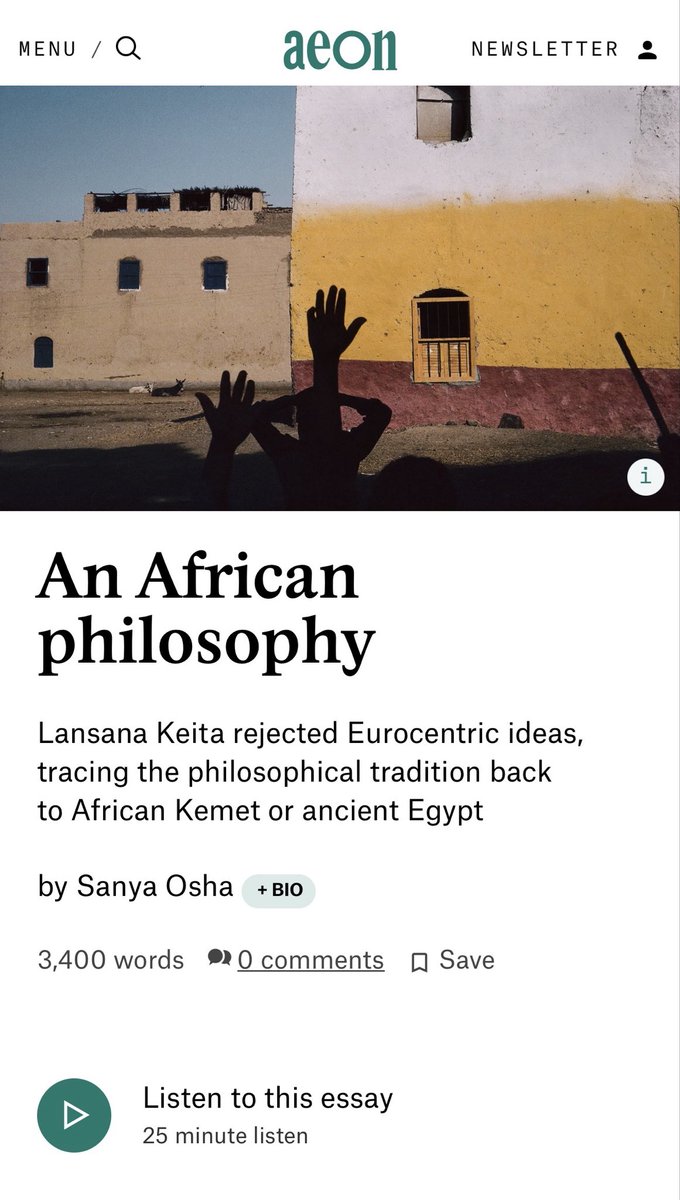
“An African philosophy”: beautiful essay by Sanya Osha edited by @samhaselby on Lansana Keita, who taught at Howard, revisiting Hountondji and Mudimbe. No paywall. https://t.co/QHs9FlUfxS
“Hamitic beliefs about the "foreignness" of the Tutsi, and the political marginalisation of the Hutu, culminated in the first genocide of Tutsis in 1959-62, and the violent abolition of the monarchy.”
https://t.co/xCZAlBdauT