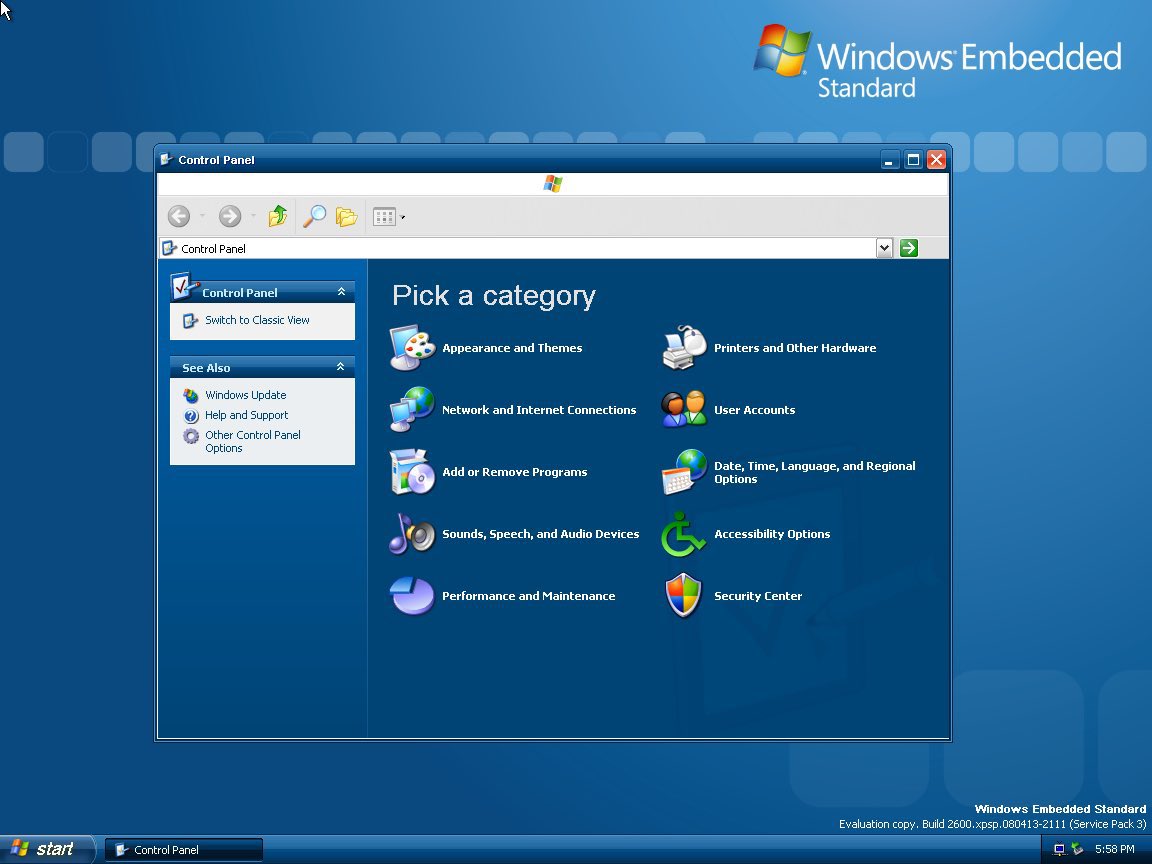
Windows Embedded 2009 was a version of Windows XP (2001) designed for embedded PCs, such as ATMs. It was released in 2 variants, Standard & POSReady, in late 2008 - almost 2 years after XP’s successor, Windows Vista (2006) 🤯 - and came with a new visual style, called Embedded.
Build 5215 is a pre-beta 2 build of Windows Vista compiled on 7th August 2005. This build includes support for 32-bit UEFI booting - a feature which wouldn’t make the final release of Vista (2006): it wouldn’t officially be supported in Windows until Windows 8 (2012).
Windows 95 OEM Service Release 2.5, from November 1997, is the last release of Windows 95. It brought updated media & Internet features, like Internet Explorer 4. Windows Update - introduced in Windows 98 & backported to 95 - offered further updates until end of support in 2001.
One of Windows 8’s (2012) goals was to replace the decades-old desktop with a new, more modern UI. However, this goal seems to have been only skin deep: the new desktop “replacement” consists of windows running…in the desktop. 🧐 Maybe it wasn’t so “replaceable” after all… 🤔
During the launch of Windows XP (2001), Bill Gates ceremoniously marked the end of the MS-DOS-based era of Windows that had ended with Windows ME (2000), by typing “exit” into the command prompt. In doing so, the “voice of DOS” is heard, reminding him (& us) of its significance.
Velkommen (a.k.a. the Windows Welcome Music) is famously played during the Windows XP (2001) out-of-box experience (OOBE). Composed by Stan LePard, it first appeared in the Internet Explorer Starter Kit (1996). A variation of it is also found in Encarta Virtual Globe (1998). 🎵
In 2017, Microsoft previewed a Windows 10 feature in development, known as Sets. Sets was a window management feature that allowed users to run & group apps together as tabs. Whilst it rolled out to Windows Insiders in 2018, by 2019, it had disappeared & has not been seen since.
Happy 15th Birthday, Windows 7! Developed in response to the poor reception of its predecessor, Windows Vista (2006), Windows 7 was released on 22nd October 2009. It introduced the beefed up “Superbar”, new window management features, performance improvements & much more. ✨
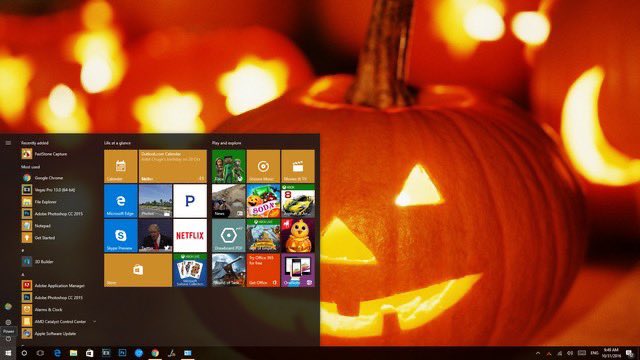
In October 2018, Microsoft released the Pumpkin Season desktop theme for Windows 10 (2015) to “usher in the fun” of “pumpkin time”. 🎃 Featuring 13 (get it? 🔪🩸) Halloween & autumn-inspired wallpapers, it is downloadable via the Microsoft Store @ https://t.co/Bi8FozRDDT 👀👻🍂
Eerie Autumn is a desktop theme for Windows 7 (2009). It was available as a free download through the Personalization Gallery: an online repository of themes, wallpapers & desktop gadgets for the OS. The theme was one of only a few to include its own unique sound scheme. 🦇🦉🌕👀
Windows CE is a line of Windows for mobile/embedded PCs. Debuting in 1996, it was a result of Microsoft’s scrapped WinPad project & would influence the future Windows Mobile/Phone OSes. Support for the last version - Windows Embedded Compact 2013 - ended on 10th October 2023.
In 1994, Microsoft debuted the Business Solutions Telecast to inform 3rd-party devs of product releases & services. The inaugral BST featured footage of what appears to be Windows Codename Cairo, an ambitious but ultimately scrapped version of Windows from the early 90s. 👀
On 9th January 1998, Microsoft announced the Windows 98 Consumer Beta Preview Program. This let “computer-savvy” Windows 95 (1995) users try out the Beta 3 build of the new OS. A “select list” of users were invited by email & could join the Program for $29.95 plus shipping/tax.
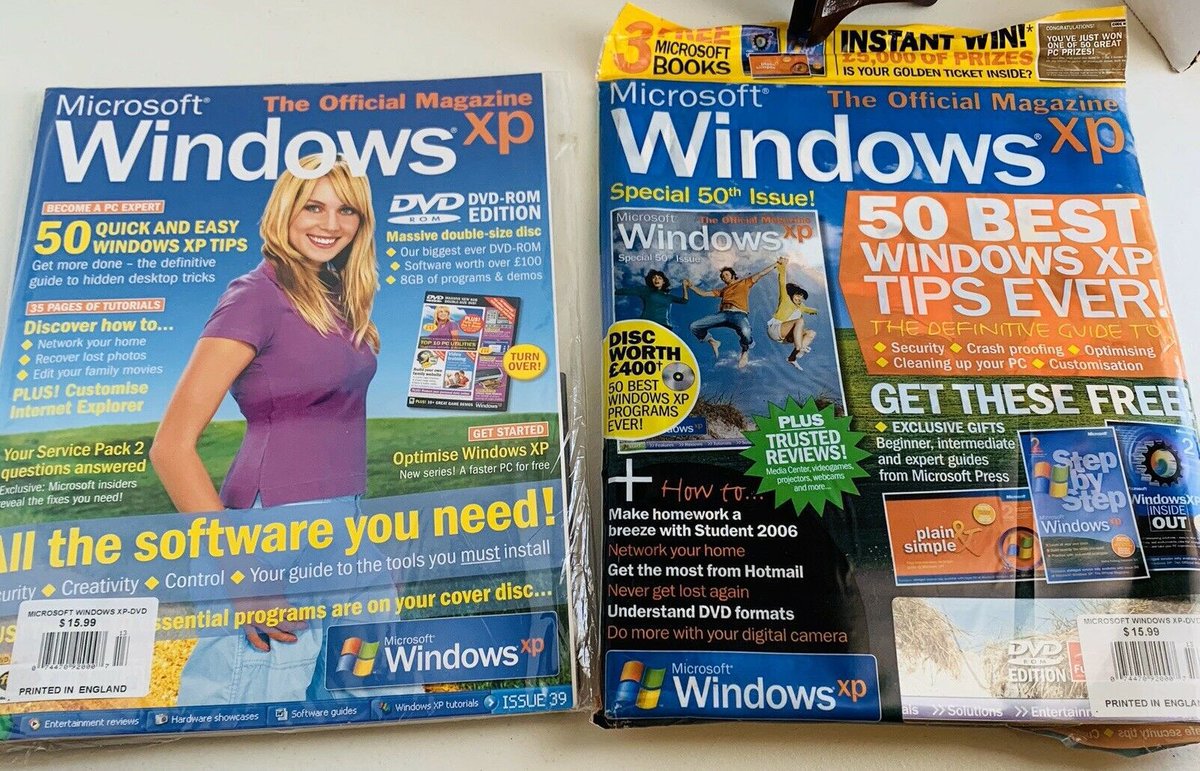
Between 2001-2008, consumers could purchase Windows XP: The Official Magazine. This 4-weekly publication - exclusively endorsed by Microsoft - included tips, tutorials, reviews, competitions & software, via an included CD/DVD-ROM. The magazine also had its own website & forum. 📖
Windows 7 build 6568, from 12th March 2008, introduced the Windows Health Centre: an early iteration of what would become the Action Centre in the final release of 7 (2009). It was denoted in the notification area by a lighthouse, compared with a flag in the final release. 🕯️��️
Windows 98 build 1400, from February 1997, introduced a Show Desktop button in the bottom right of the Taskbar. Removed shortly after, it was tested again in early builds of Windows 2000. However, it didn’t make a final release of (desktop) Windows until Windows 7 in 2009. 🤯
File Explorer is the default file manager in Windows. Introduced in Windows 95 build 58s (1993), it was 1st known as (File) Cabinet or Chicago Explorer (after 95’s codename, Chicago). It was renamed Windows Explorer before 95’s release, & became File Explorer in Windows 8 (2012).