Is the intellectual property system ready for the AI era?
WIPO's inaugural Global Forum on IP and AI brings together policymakers, creators, innovators, and industry to explore what stays uniquely human, who benefits from AI's value, and more.
🔗https://t.co/BItrJdUiYl
An AI revolution is sweeping through education. But teachers who can convey the excitement of thinking and learning are irreplaceable
https://t.co/zDIuOguR8s
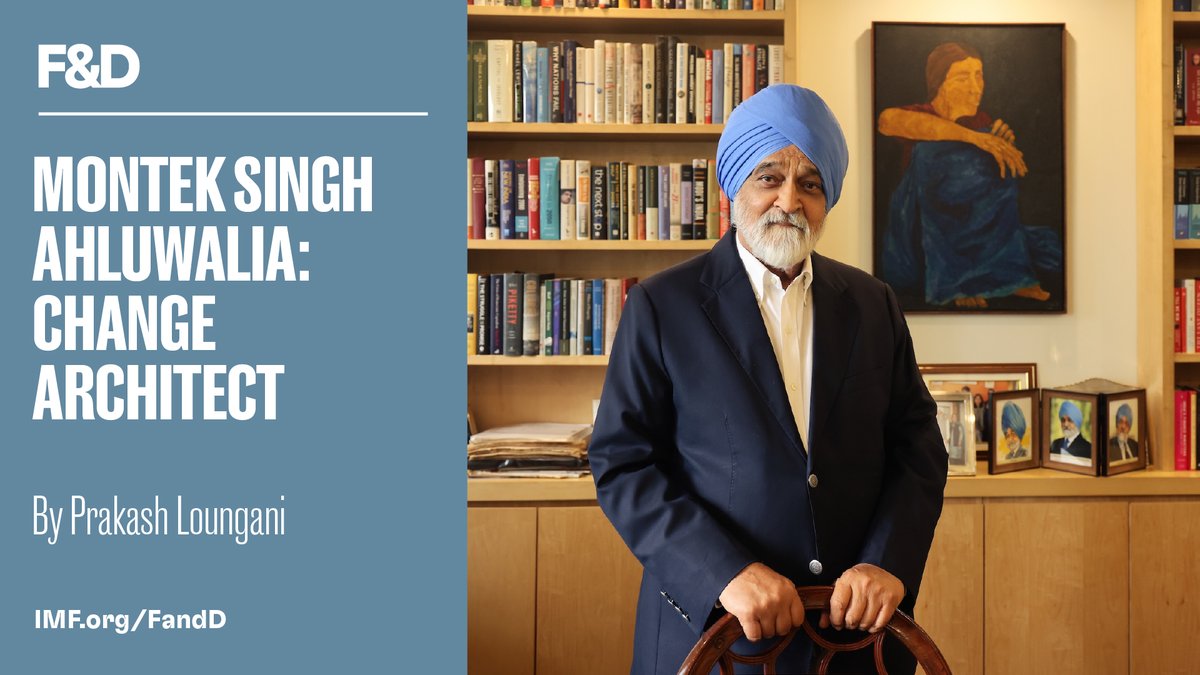
India’s economic transformation was shaped by a reserved reformer who helped turn a balance-of-payments crisis into an opportunity for change. Prakash Loungani profiles Montek Singh Ahluwalia in F&D magazine. https://t.co/lkgZ4NewdR
No, our ancestors weren't carnivores. Here's what they really ate and why it matters [a more accurate summary 'Our ancestors didn’t just eat meat, they ate different things and, usually, plenty of plants'] https://t.co/XWFgY5901a
In yet another sign of AI’s surging dominance over human minds, OpenAI recently claimed to solve one of math’s biggest questions: the Navier-Stokes problem. But now three mathematicians have showed OpenAI’s work dodges the question rather than solving it.
https://t.co/5Fbf4R460T
RUSSELL TUTTLE, (1939-2026)
Russ Tuttle was Professor Emeritus of Anthropology, Evolutionary Biology, and History of Science and Medicine at the University of Chicago. He studied fossil hominins and primates, as well as the 3.6 million year old footprints at Laetoli, Tanzania
Artificial-intelligence systems can generate hypotheses, design experiments and analyse data — but humans still need to decide what makes sense
https://t.co/Ay4hLGj2MG
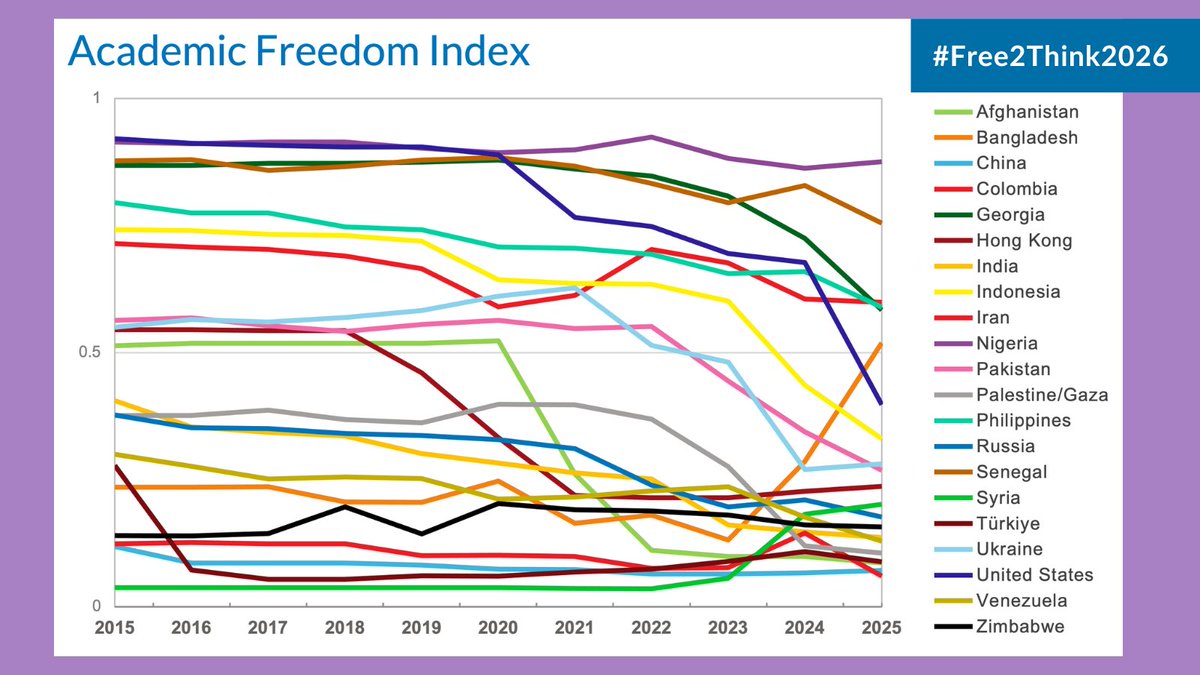
Data from the #AcademicFreedomIndex reveals declining #AcademicFreedom around the world. In its 2026 update, the AFI found that academic freedom dropped significantly in 50/179 countries analyzed, including 13 countries & territories in #Free2Think2026: https://t.co/kS1R7aXJpZ
Controversy around OpenAI’s claim to have solved the Navier–Stokes problem highlights how researchers could be inadvertently sharing — and absorbing— ideas through chatbots.
https://t.co/KGRTpFdHMg
Researchers have observed how neuronal circuits in the human brain resolve such a dilemma in real time, revealing a ‘tug of war’ between rival neuronal groups
https://t.co/nyPJbfm6zA
The AI agent can respond immediately to questions about the paper, providing a convenient way for scientists to grasp advances in unfamiliar fields
https://t.co/cIDLeUVmqa
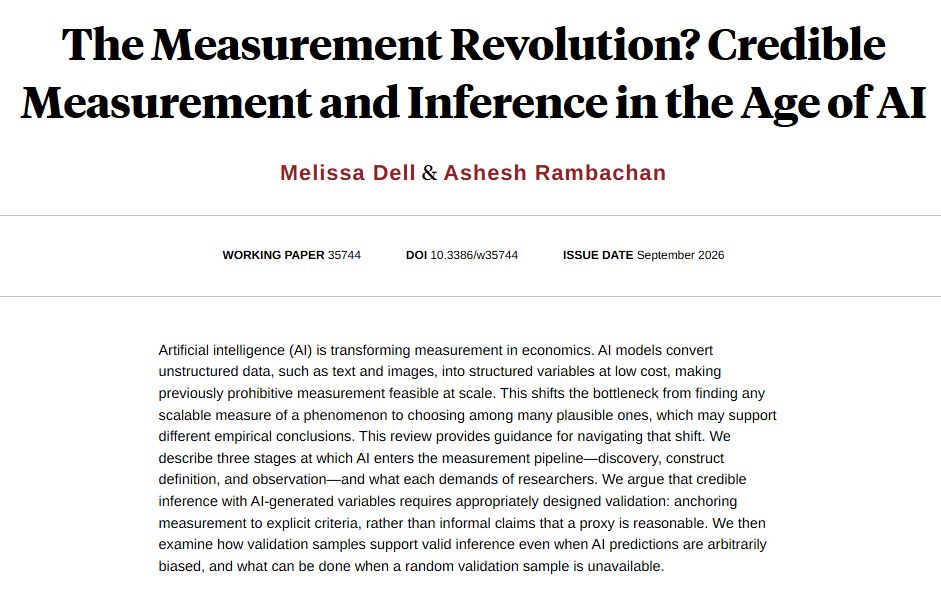
Describing three stages at which AI enters the measurement pipeline—discovery, construct definition, and observation—and what each demands of researchers, from Melissa Dell and @asheshrambachan https://t.co/3fdww0gAdR
Designs engraved on Ice Age female figurines were inspired by growth patterns in mammoth tusks, a study has found. The research looked at 18 "Venus" models discovered in Mizyn in Northern Ukraine
https://t.co/xTB9WDQ9Y3