Great on-chain digging!
Airdrops used to feel like user rewards. This one looks more like Tornado Cash took a day off and someone left a very clean CSV file in charge.
Not accusing anyone, but fresh wallets, batch structure and near-identical page totals are hard to explain with privacy alone.
Curious to see if the team addresses the actual mechanics.
/1 I pulled the @o1_exchange community airdrop straight off the chain.
95% of the tokens claimed so far went to wallets that had never made a single transaction, and almost none of it has moved since.
Here's what the distribution looks like.
Very interesting situation around Anthropic Claude Fable 5
To me, many discussions around AI safety are starting to look like a fight against windmills
Every problem has a cost and a time requirement. AI dramatically reduced the second one, yet somehow most of the attention is focused on the tool itself
Every day I hear news about someone breaking this, bypassing that, finding another jailbreak. What I hear much less often are stories about auditors losing licenses after failed reviews, consultants being held liable for bad advice, or employees being held responsible for obvious mistakes
The interesting part is that the people fighting abuse usually have budgets, information, specialists, and often access to the exact same technologies. Yet the conversation increasingly revolves around how to restrict the tool rather than how competent the people using and supervising it actually are
To me, better models are a path toward progress, not destruction. Maybe it's time to pay more attention to real competence, actual achievements, and the ability to solve problems instead of certificates, polished presentations, and prestigious university logos
There's another thought that comes out of this
Many people view AI safety as a censorship and restrictions problem. I don't think that's the real issue
You can put as many rules and guardrails on a model as you want. The foundation of most successful bypasses isn't fighting the restrictions themselves. It's finding the places where the model still falls short
Every serious jailbreak starts with analyzing where the model misunderstands context, misinterprets intent, or replaces understanding with pattern matching
That's why the key question isn't the number of restrictions. It's the quality of the model's reasoning
Guardrails are an outer layer
The real vulnerabilities are usually inside - in the gap between the complexity of the real world and what the model truly understands
And let's be honest, black marketing campaigns don't always work out the way you expect.
Domestic market politics are still a thing.
Been thinking about this for a few days and I'm pretty much in the same camp
The only thing bothering me is the crater under the Christmas tree - the same one from the dump earlier this year. No presents, just a hole, while Ellison Onizuka quietly watches from above
Feels like Santa got the months mixed up
Smells like a Christmas dump
A few thoughts after testing Claude Fable 5
The biggest improvement I noticed is speed. It can chew through massive amounts of context surprisingly fast
That said, I still wouldn't let it touch production code without a second model reviewing the work. Architecture and logic mistakes are still very much a thing
In one run I gave it a detailed QA report and a clear spec. It executed one part perfectly, completely ignored another, then later hit me with the classic:
"ah yes, you're right."
So some things never change
The other surprise was token consumption. This thing eats
For my workflow, Codex + Opus is still the default choice, especially with the current promo limits
But credit where it's due: for finding directions, generating ideas, spotting angles, and helping shape strategy, Fable 5 is genuinely impressive
Every decade gets its own tech boogeyman
1990s: TV and computer monitors will fry your brain
2000s: mobile phones are basically portable nuclear reactors
2010s: Wi-Fi routers are slowly cooking everyone
2020s: 5G is activating something
Now: AI can hack the Pentagon if you ask nicely.
same movie, different villain
Humanity remains undefeated at finding a new thing to panic about
GitHub stars should have been the real yield farm.
But they are not.
They are reputation, not a business model.
The interesting part of @bankrbot is that it gives small crypto-native software something GitHub never did:
a wallet, fee flow, paid APIs and a way to fund the next version
https://t.co/VXtglPwsfZ
So... has anyone else tried this?
Before giving Claude a task, I asked him during the briefing how to route different types of work to different reasoning modes and when each one actually makes sense.
Now he basically yells at me every time I fire up the heavy modes for simple tasks.
What's funny is that using the strongest mode isn't always better. Sometimes it's like shooting sparrows with a cannon - the model starts exploring directions that don't matter and burns tokens doing it.
Feels like there is an underrated skill emerging here: model routing.
Not just which model to use, but which thinking mode, for which task, at which stage.
Wouldn't be surprised if in a year people are paying for "AI routing audits" the same way they pay for cloud cost audits today.
The funniest part? The first auditor might be Claude himself
Finally got my hands on the fancy Claude Opus 4.8.
Not gonna lie, I did not expect magic. And you should not either. But it impressed me.
I gave it a short, focused context dump, attached a detailed QA report, turned on high thinking, and let it cook.
First, it pushed me into a completely new product direction. Then it ran around 3 rounds of future-product simulations, which exposed several weak spots before we even touched the code.
After that, we went into implementation.
I think the detailed QA report saved me from burning unnecessary credits, although the limit still got drained by 96%.
Final result: around 12 technical issues found, 4 of them critical.
My honest take:
The real edge is not one model replacing everything.
It is the stack.
5.5 for architecture, logic and control.
4.8 for a strong second pass.
Then manual review and debugging.
No magic. Just a better degen product assembly line
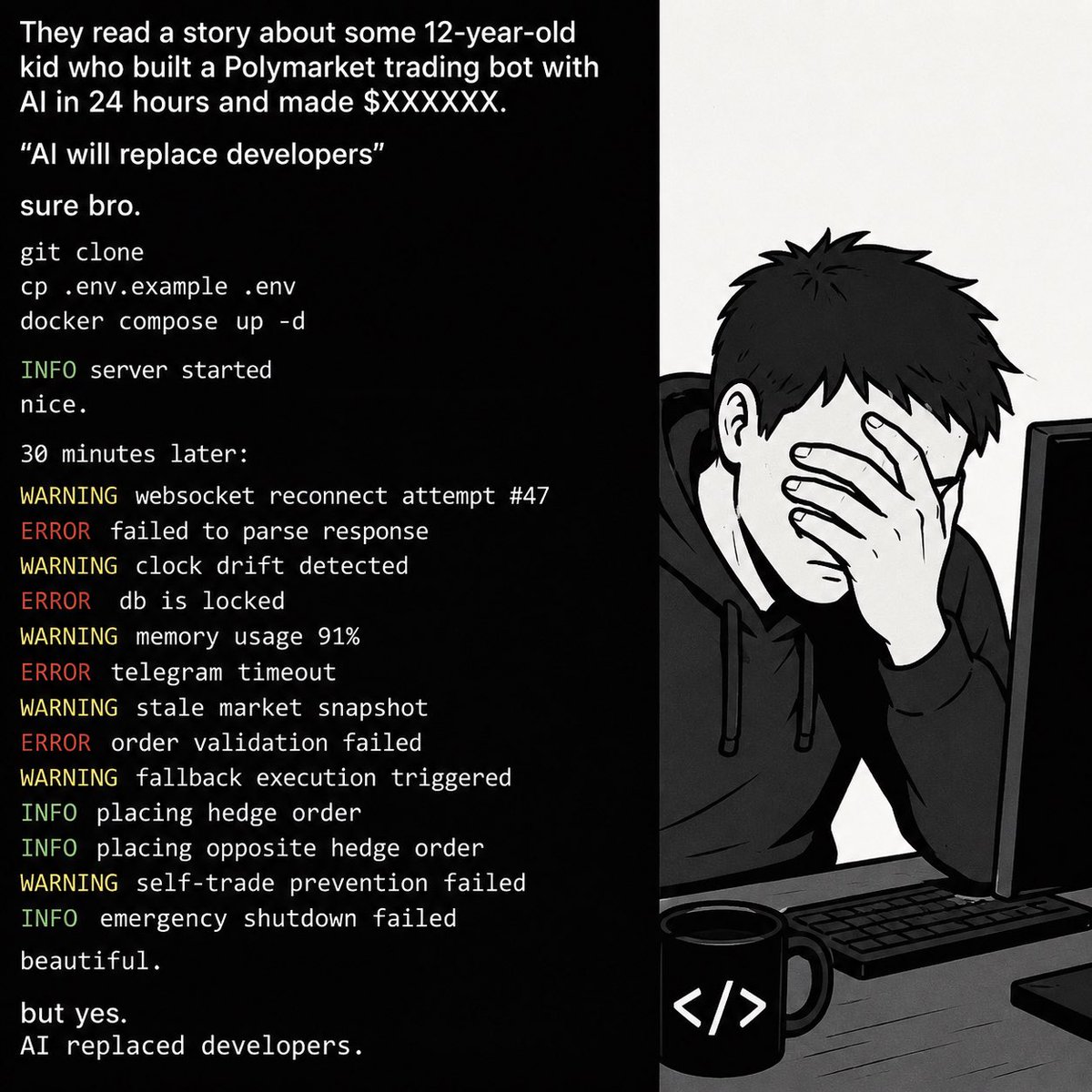
Woke up ready to debug my little market bitch.
Checked:
websockets orderbooks retry logic cache stale state fallback paths API responses
..
Turns out @Polymarket had silently nuked weather markets..
beautiful UX..
Here’s the real lesson from this mess $AAVE:
DeFi still treats composability like free security.
A token gets exploited on one layer, bridged into another, accepted as collateral, and turned into real ETH before risk systems can even react.
That is not resilience.
That is latency disguised as design.
Freshly bridged or freshly minted collateral should not get instant full borrowing power.
Not because every asset is bad.
Because time itself is part of risk.
Cooldowns.
Dynamic caps.
Borrow limits tied to real exit liquidity, not headline liquidity.
And much harsher treatment for assets whose safety depends on external bridges, wrappers, or validator assumptions.
If toxic collateral can become real ETH in one hop, the protocol is not pricing risk.
It is subsidizing it.
This is the difference between a market that looks liquid and a market that can actually absorb size.
DeFi keeps learning that lesson the expensive way
Aave catching heat after $292M KelpDAO hack
hacker bridged, grabbed ~18% rsETH supply
used it as toxic collateral on Aave V3
borrowed $236M+ in ETH/WETH and dipped
now:
$177M–$280M bad debt
ETH pool maxed out, liquidity tight
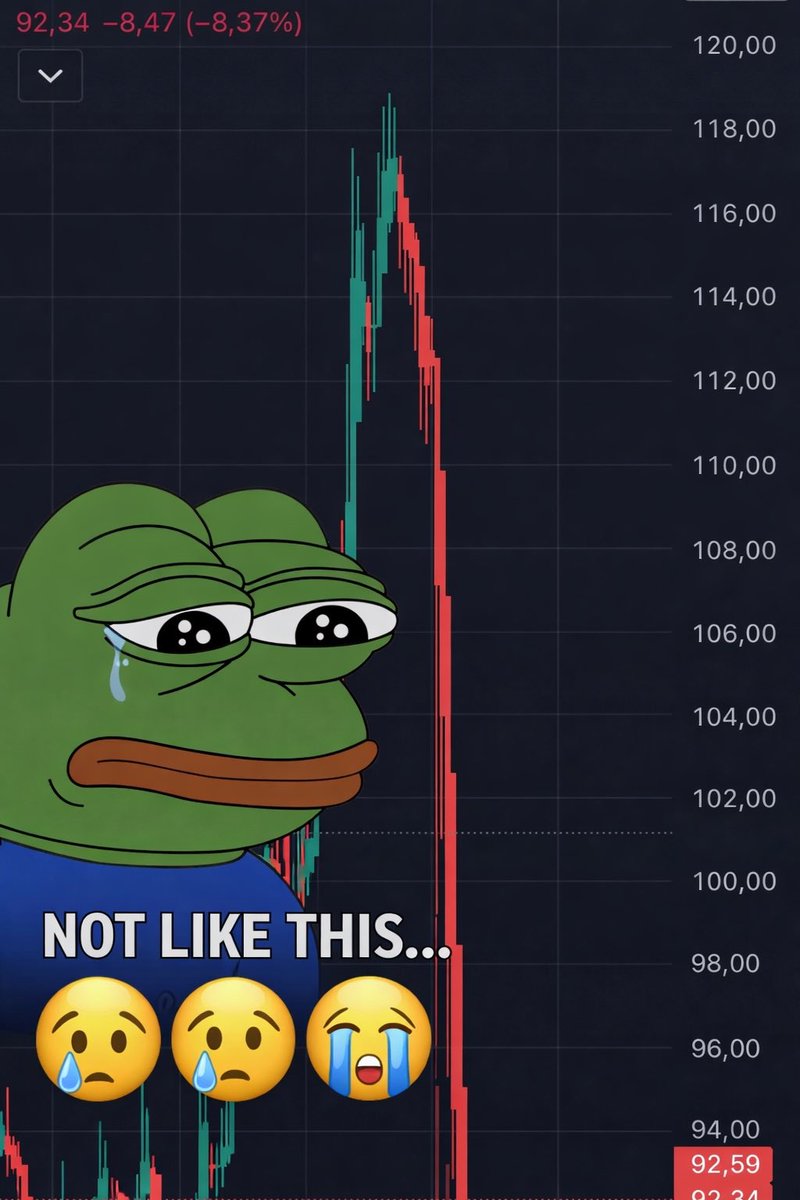
$5B+ TVL gone, $AAVE -20%
contracts are fine - this is external
markets frozen, Safety Module stepping in
DeFi 2026: one bridge issue and a giant starts shaking
Aave holds
or contagion spreads?
@justinsuntron reached out to the @KelpDAO hacker like
“how much do you want? let’s talk”
on one hand - pragmatic, better to recover something
on the other - this is straight up rewarding hackers
short version:
“ok how much you want? you’re not spending $300M anyway” 😂
2026 DeFi feels like nation states
people negotiating on twitter instead of locking wallets
makes sense? maybe
but this just breeds more hackers
and no jokes - market’s already shaky
we really don’t need another FTX right now
OK — Kelpdao hacker, how much you want? Let’s just talk. With KelpDAO’s help, of course. It’s simply not worth it to sacrifice both Aave and KelpDAO and let them go down over this hack. You can’t spend $300 million anyway.