At the Women in Banking and Finance Conference, organised by @ibfsUg, we joined sector leaders to reflect on the role of women in shaping sustainable finance.
Speaking at the conference, Ann Marie Mwaka Sabano, our Head of Investments, shared reflections on what it takes for women to build leadership careers in sustainable finance. She highlighted three practical priorities:
➡️ Building credibility through continuous upskilling
➡️ Investing in mentorship and professional networks
➡️ Remaining lifelong learners as roles and industries evolve
Strengthening women’s leadership in finance is critical to building more inclusive institutions, improving financial solutions for women-led businesses, and accelerating green and resilient growth.
These priorities also align with aBi Finance’s broader partnership with @ibfsUg to strengthen knowledge and capacity in sustainable finance across the sector. One key milestone under this collaboration is the development of the Sustainable Finance Curriculum.
Thank you to the organisers, speakers, and everyone who contributed to the conversation.
#WIBF2026
Today, we join the world in celebrating #InternationalCoffeeDay and for us Ugandans, this day carries deep meaning. Coffee is not just a crop it is our heritage, our economy, and our hope.
1: A Journey Through Time
•Uganda is the birthplace of Robusta coffee, indigenous to our forests.
•Arabica was later introduced on the slopes of Mount Elgon, the Rwenzoris, and West Nile.
•By the mid-20th century, coffee had become Uganda’s leading export, earning us recognition as one of Africa’s top producers.
•Millions of households have survived and thrived because of coffee, with every bean telling a story of resilience and hard work.
2: The Challenges We’ve Faced
•Price fluctuations that left farmers vulnerable.
•Old, unproductive coffee trees.
•Limited access to international markets and low bargaining power.
•Poor farmer organization in some areas.
•A perception among young people that coffee is “an old man’s crop.”
3: Opportunities Before Us
But today, Uganda stands on the brink of a new coffee era:
✅ Specialty and sustainable coffee are in high demand globally.
✅ Digital trade and traceability are opening direct market linkages.
✅ Value addition roasting, packaging, branding means more wealth can stay at home.
✅ Coffee tourism is becoming a new way to showcase our culture.
✅ Climate smart and agroecological farming methods offer a path to sustainability.
4: The Youth Factor
Here’s the reality: the future of Uganda’s coffee depends on the youth. With their energy, creativity, and digital skills, they can transform the sector:
•Using technology for marketing & e-commerce.
•Innovating in processing, roasting, and branding.
•Leading the shift to sustainable, climate-smart farming.
•Connecting Ugandan coffee to global consumers with fresh ideas.
But this won’t happen automatically. We must rethink youth involvement giving them access to land, finance, training, and mentorship. Only then will Uganda’s coffee story remain vibrant for generations.
On this International Coffee Day, let’s honor our roots, recognize our challenges, seize the opportunities before us, and most importantly invest in a youth-driven coffee future
Lastly , I dedicate myself to standing by the youth fueling their dreams, amplifying their voices, and giving my all to ensure they shape the next chapter of Uganda’s coffee journey.
For God and my country Uganda 🇺🇬
#InternationalCoffeeDay #UgandaCoffee #YouthInCoffee #CoffeeOpportunities
@SpireJim Still trou led by the title with questions:
Did it die so that we live?/Are we living because it died?/Are we killing more of its kind?/Are we supposed to kill more of its kind to be able to live?/Till when shall we have to kill? Are there consequences? Can this be reversed?
Engaging men and boys as champions of change is crucial in the fight against Gender Based Violence. By promoting positive masculinity, we can break down harmful social norms and practices - building a safer, more equal future for all 💗#30DaysToBeijing30#WomenUganda2025+
Support @MaryHelda to go to Cambridge.
This fundraiser is not just about going to Cambridge, it is about investing in someone who has already reached and uplifted over 50.000 women and children through her work in the social impact space ...
https://t.co/pLRDwpgKB8
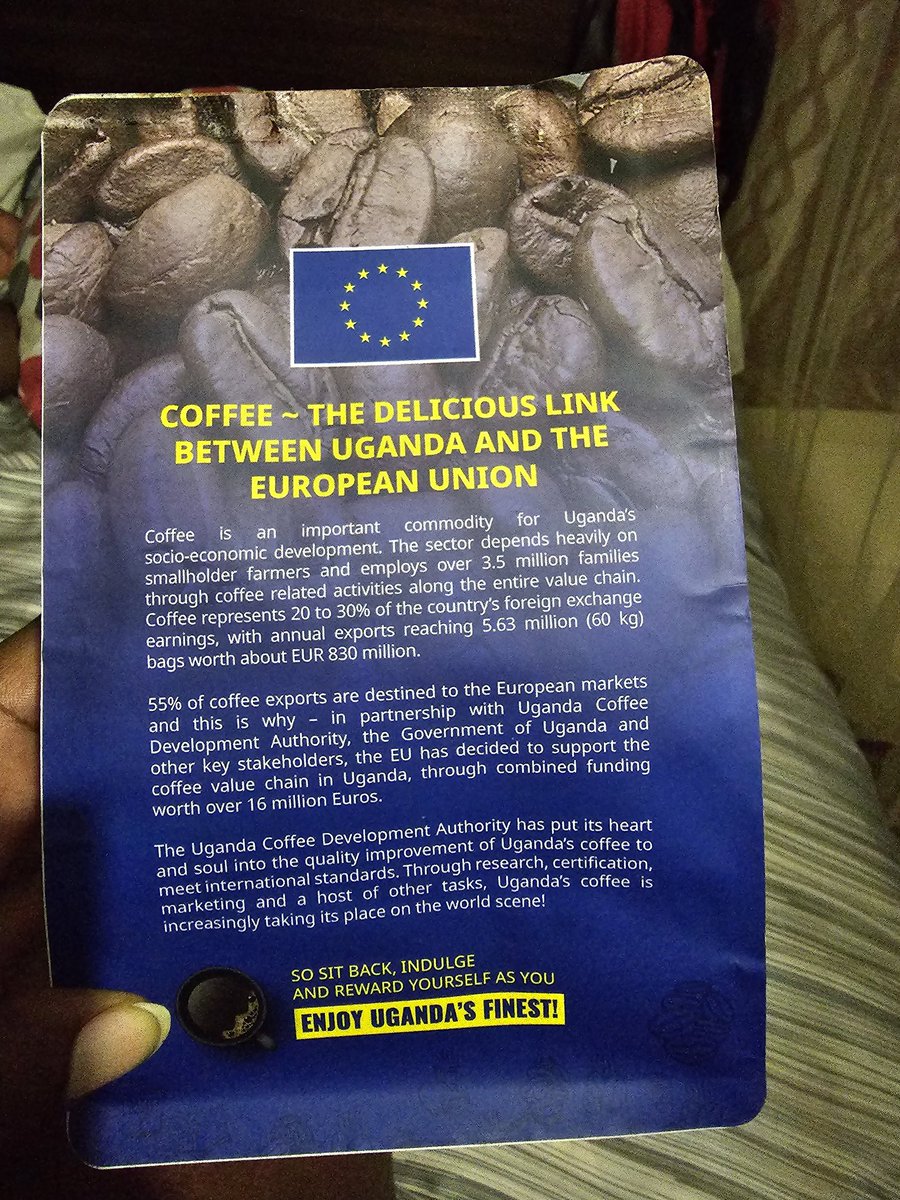
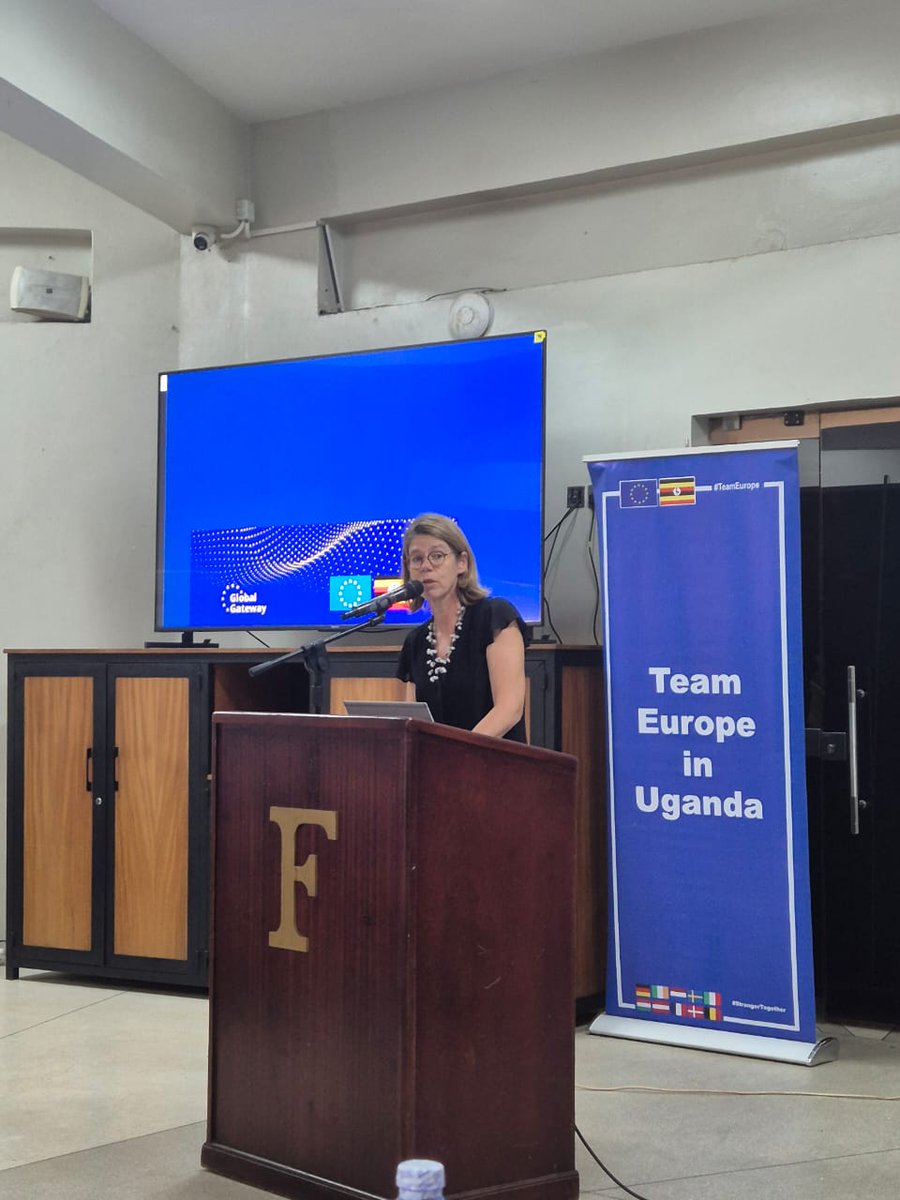
Together with @CoffeeUganda, @CafeAfrica & @FAOUganda, we had the pleasure today to engage over #Coffee with national & international stakeholders as part of our broader #TeamEurope🇪🇺 effort to identify challenges and investment opportunities within Uganda's🇺🇬 coffee value chain.
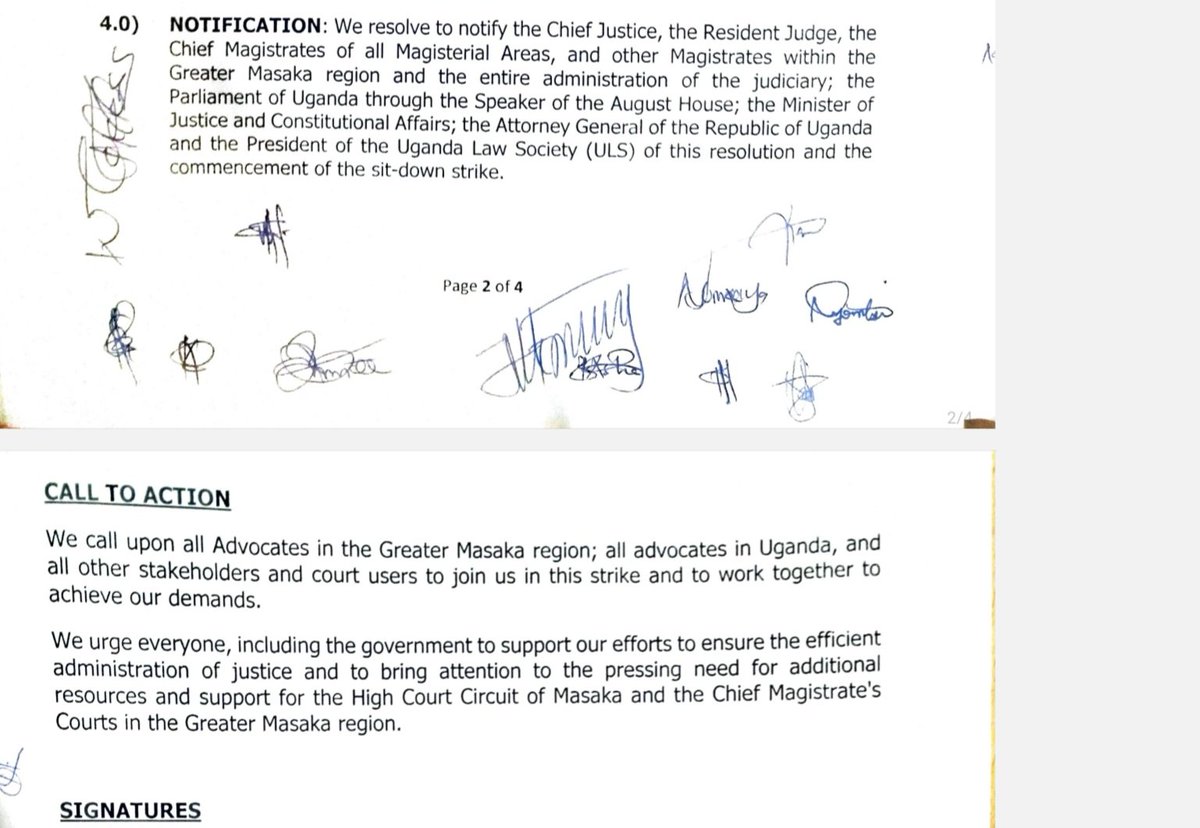
Lawyers in Greater Masaka have gone on strike.
They’ve downed their tools because there is only one judge in the greater Masaka area and over 4,290 cases waiting to be heard.
That’s the reason. That’s the crisis.
One judge. Four thousand, two hundred and ninety cases.
This is not a tantrum. This is a cry for help; from inside the justice system itself.
Let’s be honest. Once you take out weekends, court vacation, leave, and public holidays, a judge has maybe 198 working days a year. Even at a superhuman pace; five trials a day, five days per case, it would take twenty-two years to clear that backlog. Twenty-two years.
That’s not justice delayed -that’s justice buried alive.
And let’s not forget: that figure is before the Succession Amendment Act took effect, wiping out thousands of Grants of Probate and Letters of Administration and adding hundreds if not thousands of cases on that particular judge.
In January, I went around the country. From Gulu to Mbarara, Arua to Fort Portal and I can say without fear of contradiction that Masaka’s story is the story of many a High Court circuit: one judge drowning in thousands of cases, and the people waiting, hoping, suffering
But the Constitution didn’t leave us helpless. It gave us a tool Article 142(2) which provides that when the state of business in the courts so requires, the President may appoint people who qualify to be judges (ie members of @ug_lawsociety) as temporary judges on the advice of the Judicial Service Commission. They come in with a mission to solve backlog. They solve it and leave. No pension. No car. No bodyguards. No right of way. That’s the spirit.
When the army is overwhelmed, it calls in the reservists.
When the medical system is overwhelmed, it calls in the private sector. When police are stretched thin, they turn to community policing. So when the courts are overwhelmed as they clearly are the state must call upon the Uganda Law Society.
That is the purpose of Article 142(2).
That is why temporary judges must be appointed now.
We need mission-based judges. But not only that. We need online hearings. We need to treat backlog as a war
We need a system that works- not just for case files but for real people.
But here's the contradiction:
We can't even get that process moving because the @JSCUganda is not fully constituted.
The Uganda Law Society representatives remain unelected- their elections stuck in the same broken court system they’re supposed to help fix.
And let’s be clear: a Judicial Service Commission without the Bar is not just incomplete - it is unfit. You cannot prescribe medicine when you’ve silenced the doctor.
In law, as in anatomy, a body with a missing organ doesn’t function it fails. And when that missing organ is the conscience of the legal profession, its absence is not silence; it is an alarm.
You cannot solve this crisis from the Bench without hearing from the Bar.
This strike is not a rebellion.
It is not selfish.
It is not political.
It is the justice system itself crying out from the inside. As Dr King once said; "We either live together as brothers, or perish together as fools."
This is not a strike. This is a stand.