Building scalable microservices requires the right set of tools to ensure seamless communication, security, and deployment. This guide covers the core technologies used in microservices architecture.
1. Databases
SQL databases like MySQL and PostgreSQL ensure structured data management, while NoSQL options like MongoDB and Cassandra offer scalability for unstructured data.
2. Message Brokers
Kafka, RabbitMQ, and Amazon SQS enable asynchronous communication between services, ensuring reliable message delivery and event-driven processing.
3. Programming Languages
Popular choices include Java, .NET, Python, Go, and NodeJS, offering flexibility based on performance, scalability, and ecosystem support.
4. Security
JWT, OAuth 2.0, API authorization, and TLS encryption safeguard communication, ensuring authentication, authorization, and secure data transmission.
5. Container Orchestration
Kubernetes, OpenShift, and ECS automate deployment, scaling, and management of containerized microservices.
Master these tools to build high-performing microservices architectures!
Save this guide for future reference.
Which tool do you use the most in your microservices stack? Let’s discuss in the comments!
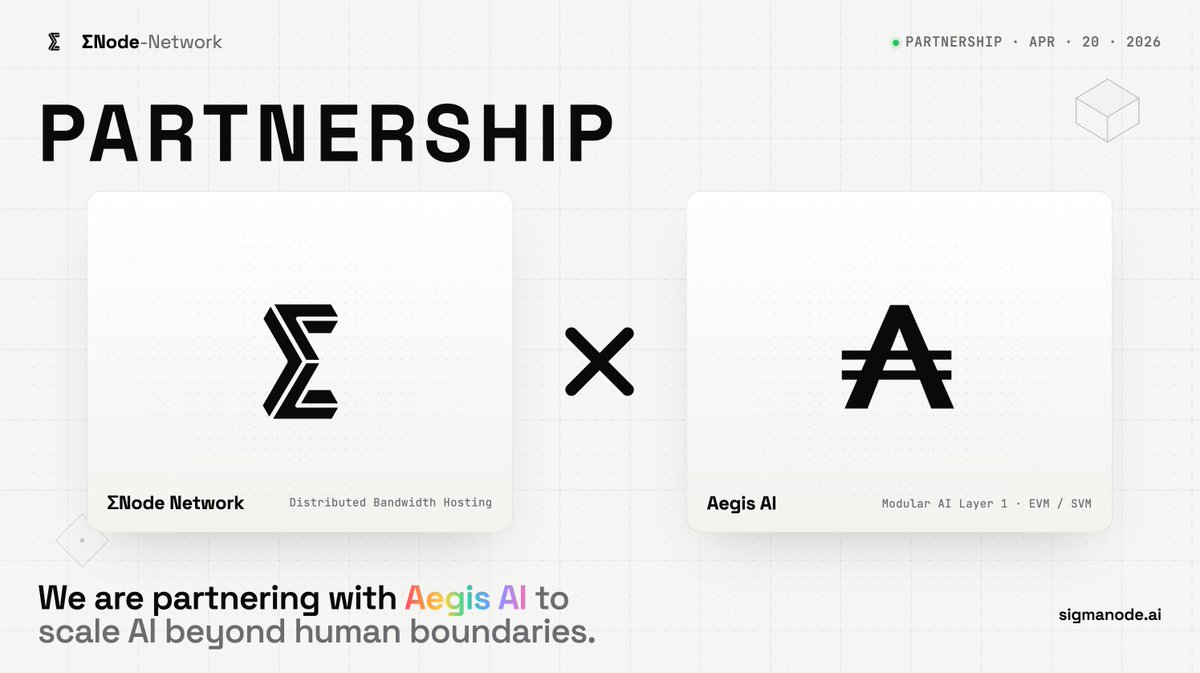
SigmaNode is partnering with @AegisAI_network to push scalable AI infra beyond traditional limits. Bandwidth meets modular AI to unlock stronger performance across Web3 and beyond. Excited for what comes next. #AI#Web3#DePIN#Crypto#Partnership
The Claude Code hackathon is back for Opus 4.7.
Join builders from around the world for a week with the Claude Code team in the room, with a prize pool of $100K in API credits.
Apply by Sunday: https://t.co/5MCkMtP5ti
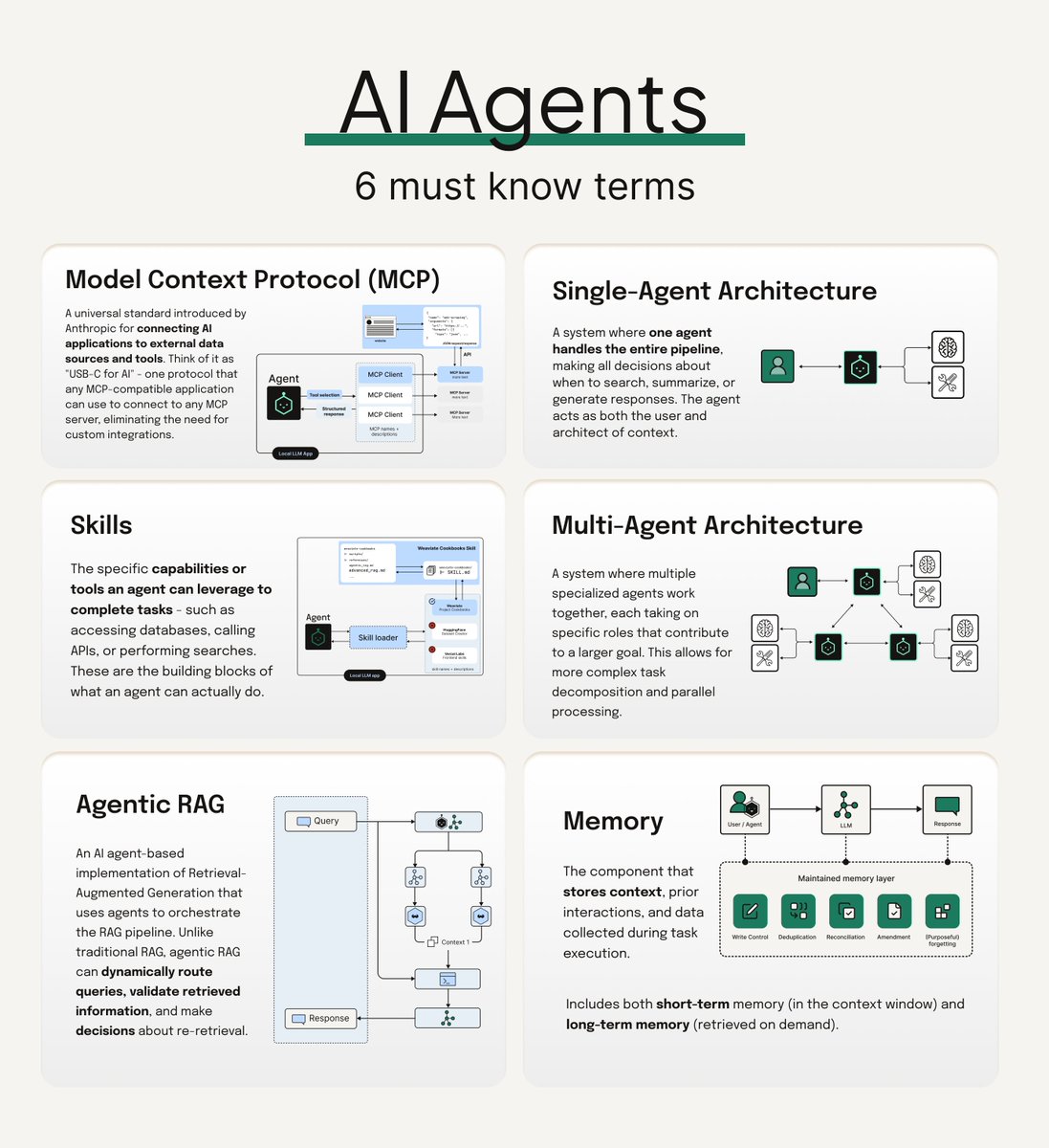
Here are the six most important terms you should know if you're working with agentic AI:
𝗠𝗼𝗱𝗲𝗹 𝗖𝗼𝗻𝘁𝗲𝘅𝘁 𝗣𝗿𝗼𝘁𝗼𝗰𝗼𝗹 (𝗠𝗖𝗣)
A standardized way for AI systems to access and interact with external data sources and tools. Think of it as a universal adapter that lets agents communicate with different services consistently.
𝗔𝗴𝗲𝗻𝘁 𝗦𝗸𝗶𝗹𝗹𝘀
Pre-built capabilities that coding agents can use to write better code. Weaviate's Agent Skills repository (https://t.co/pkUIDxkRVb) is a great example - it bridges coding agents like Claude Code, Cursor, and GitHub Copilot with Weaviate's infrastructure, so your agent gets the right context for cluster management, data imports, and search operations.
𝗔𝗴𝗲𝗻𝘁𝗶𝗰 𝗥𝗔𝗚
RAG pipelines that incorporate AI agents into the retrieval process. Unlike vanilla RAG's sequential flow, agentic RAG uses agents to route queries to specialized knowledge sources, validate retrieved context, and even reformulate queries.
𝗦𝗶𝗻𝗴𝗹𝗲 𝗔𝗴𝗲𝗻𝘁 𝗔𝗿𝗰𝗵𝗶𝘁𝗲𝗰𝘁𝘂𝗿𝗲
The simplest agentic setup - essentially a router. You have multiple knowledge sources (databases, APIs, tools), and one agent decides which to query based on the user's request. Clean and straightforward.
𝗠𝘂𝗹𝘁𝗶 𝗔𝗴𝗲𝗻𝘁 𝗔𝗿𝗰𝗵𝗶𝘁𝗲𝗰𝘁𝘂𝗿𝗲
Multiple specialized agents working together, each handling specific tasks. Orchestration frameworks like CrewAI can help coordinate these agents, managing the handoffs and ensuring everything works together smoothly.
𝗠𝗲𝗺𝗼𝗿𝘆
The component that 𝘀𝘁𝗼𝗿𝗲𝘀 𝗰𝗼𝗻𝘁𝗲𝘅𝘁, prior interactions, and data collected during task execution. Includes both short-term memory (in the context window) and long-term memory (retrieved on demand). Big differentiator in how well an agentic system works, especially in multi agent systems.
Did I miss any terms people should definitely know? Drop them in the comments 🔽 😄
#Grok vs. #Claude vs. #GPT5: the debate rages. But which model's output can you trust for high-stakes on-chain transactions? The smartest #AI is useless in #Web3 if it can't be verified. Intelligence without integrity is just risk. That's the real #LLM challenge.
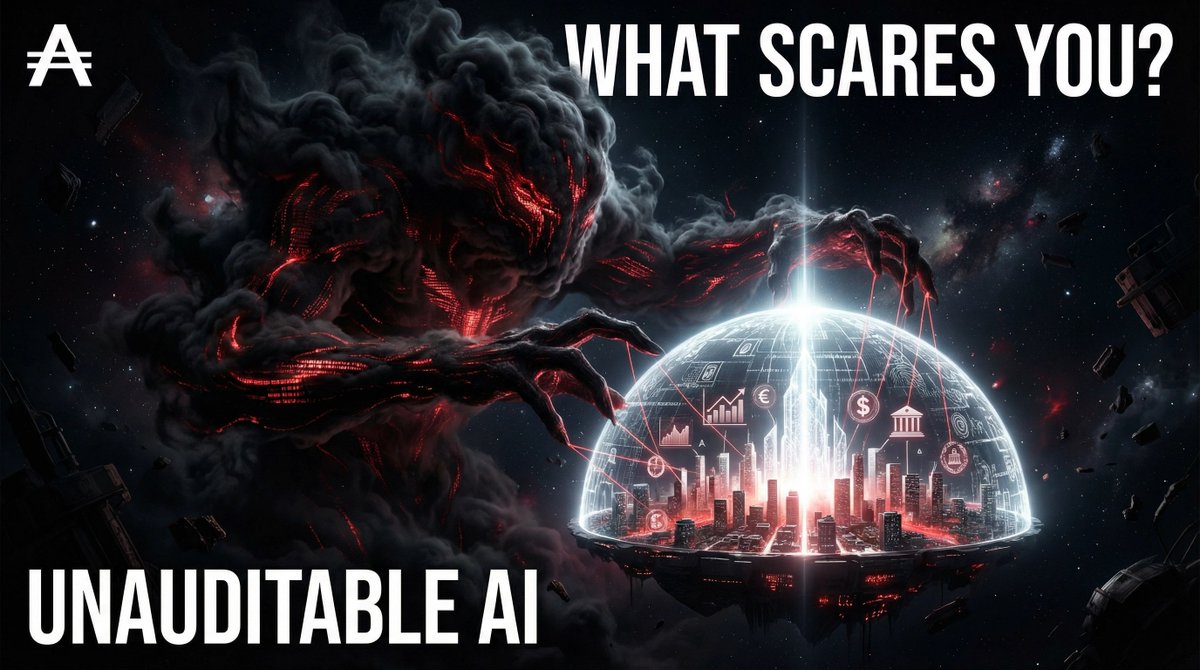
What's your biggest fear about #AI in the wild? Bias? Manipulation? For us, it's unauditable AI controlling real-world value. That's why the solution must be cryptographic, built on a decentralized foundation like @AegisAI to mitigate #AIrisk. Join the #community discussion!
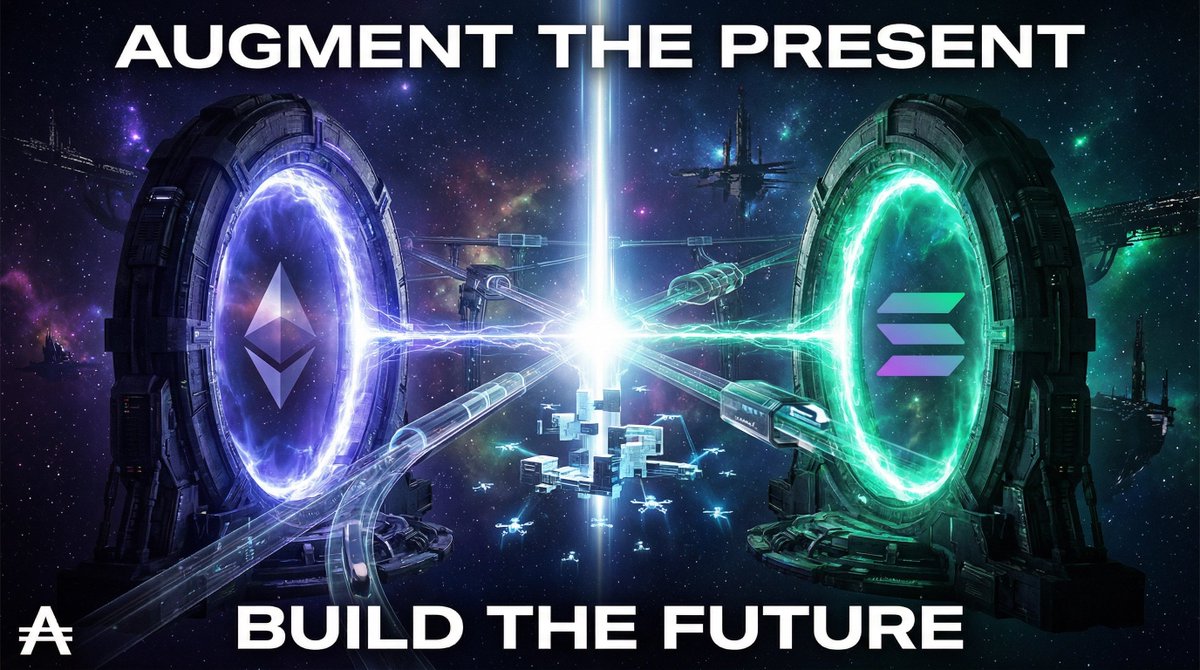
A modular #AI layer supporting both #EVM and #SVM means #Web3Devs don't start from scratch. All the tools, liquidity, and users of #Ethereum and #Solana become a playground for intelligent dApps. It's about augmenting the present, not just building the future.
Reports of traders giving millions to autonomous #AITrading agents are surfacing. What happens when an AI has a 'fat finger' moment? Without on-chain verification of its logic, you're blindly trusting a black box. A scary thought for any #crypto portfolio. #Security
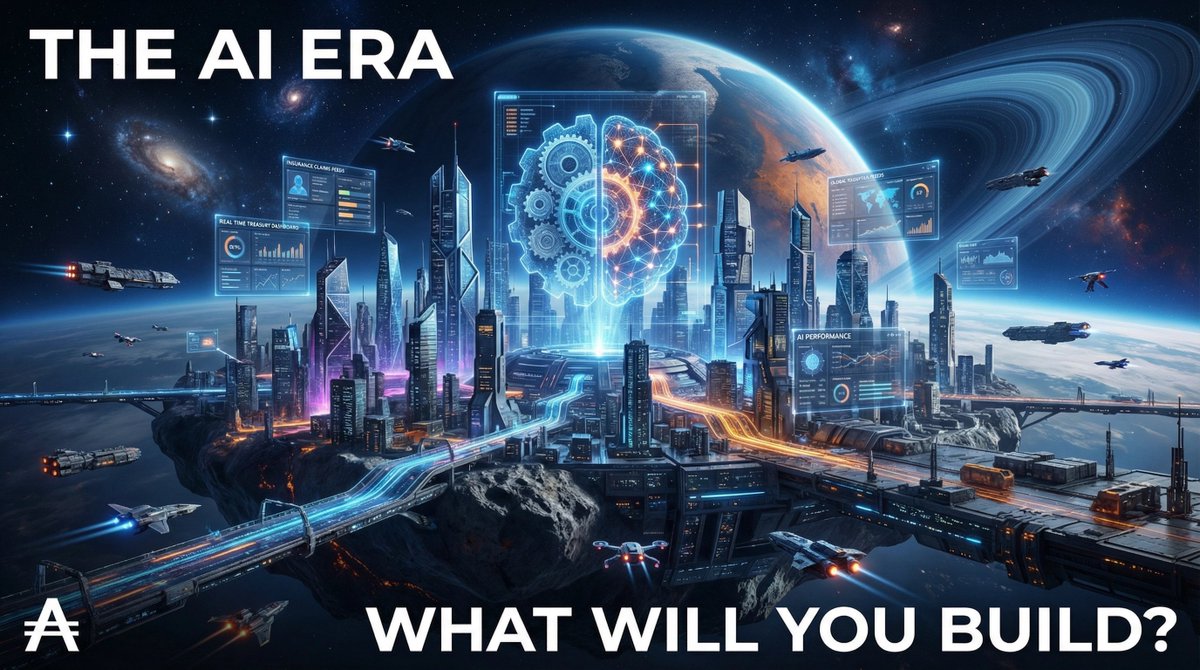
What killer #dApps will the #AI era unlock? Imagine autonomous #DAOs managing treasuries with real-time data, or AI-driven insurance that instantly verifies claims. These need a verifiable foundation to work. That's what @AegisAI is building for the #FutureofWeb3.
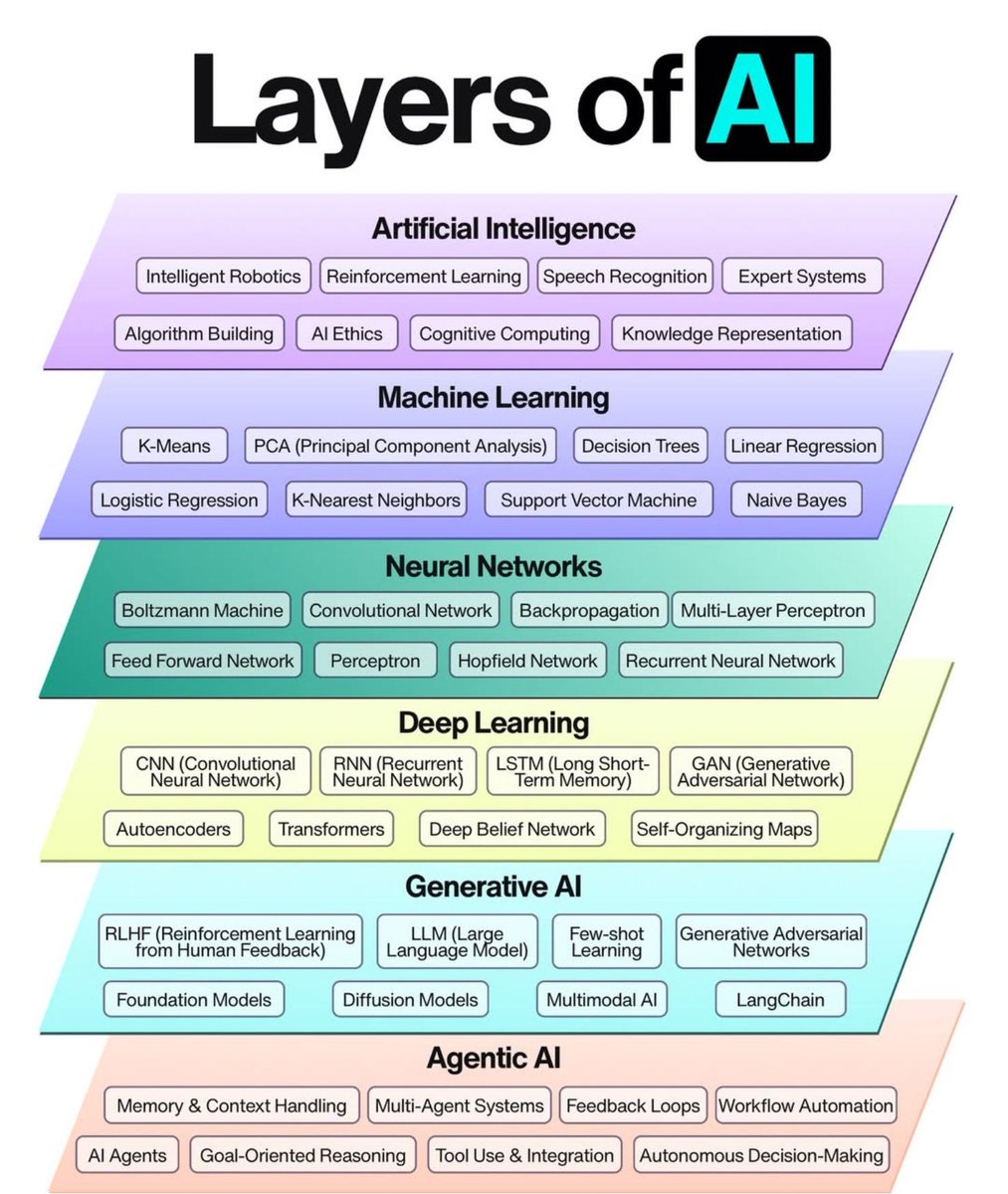
Branches of Artificial Intelligence
Artificial Intelligence is a vast field that integrates logic, learning, perception, and automation to replicate human-like intelligence in machines.
Each branch plays a unique role - from enabling learning and reasoning to creating systems that can see, speak, and make decisions autonomously.
- AI: Forms the base of intelligent systems capable of learning, reasoning, and acting like humans.
- Machine Learning: Enables systems to learn from data and improve decisions automatically.
- Natural Language Processing: Allows machines to understand, interpret, and respond to human language effectively.
- Computer Vision: Helps systems interpret and analyze visual data such as images and videos.
- Agentic AI: Gives AI the autonomy to perceive, plan, reason, and take goal-driven actions.
- Robotics: Combines AI with machines to perform physical and sensory-based tasks.
- Expert Systems: Uses domain-specific knowledge to make decisions similar to human experts.
- Generative AI: Creates new and original content like text, images, or music using learned data patterns.
- Reinforcement Learning: Trains agents using rewards and penalties to enhance continuous performance.
- Neural Networks: Builds interconnected nodes that mimic human brain structures for learning and problem-solving.
[Explore more in the post]
AI’s strength lies in its branches working together - from learning and perception to reasoning and creation - to build truly intelligent systems capable of transforming industries and human life.
Explore each branch to discover how AI can amplify your innovation, streamline your workflow, and revolutionize your problem-solving capabilities.
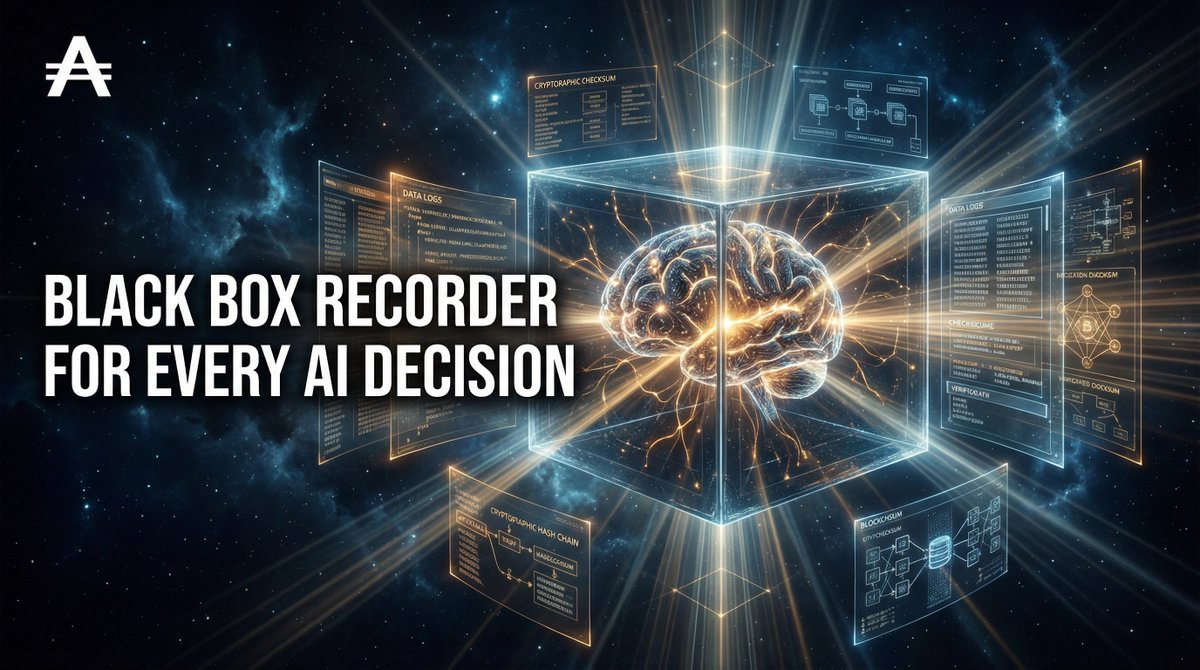
Think of #VerifiableAI as a 'black box recorder' for every decision an #AI makes on the #blockchain. It provides a cryptographic receipt, proving the process, not just the outcome. This is crucial for everything from #DeFi risk management to autonomous DAOs. #ELI5
Not all AI agents are built the same. So what sets them apart?
Here’s a breakdown of 10 core types of AI agents you’ll come across in real-world systems, from simple reactive agents to complex multi-agent systems.
1. Task-Specific AI Agent
Built for one focused task like summarizing or translating. It follows a fixed process with no learning or adaptation.
2. Reactive Agent
Responds to immediate input without using memory or history. Think of it like a reflex - it reacts, not plans.
3. Model-Based Agent
Builds an internal map of its environment. Simulates outcomes before acting to make smarter, context-aware decisions.
4. Goal-Based Agent
Starts with a goal and works backward. It plans steps, simulates paths, and selects the route that achieves the goal.
5. Utility-Based Agent
Chooses actions based on how beneficial they are. It weighs all options and picks the one with the highest value.
6. Learning Agent
Improves over time by learning from past actions. Adjusts its strategy using feedback and stores new knowledge.
7. Planning Agent
Focuses on long-term strategy. It defines a goal, maps out steps, and adjusts based on progress not just reaction.
8. Reflex Agent with Memory
Uses preset rules but with added memory of past inputs. Helps respond better when situations repeat or evolve.
9. Multi-Agent System Agent
Works with or against other agents. They share environments, negotiate roles, and coordinate to reach a bigger goal.
10. Rational Agent
Always selects the most logical option. It analyzes the full picture, predicts outcomes, and chooses the smartest path.
Save this if you're exploring Agentic AI or designing intelligent decision-making systems.
The AI crypto market is projected to hit $50B by 2030. The biggest wins will go to projects solving the hardest problem: TRUST. AegisAI enables verifiable AI, the key to unlocking this massive market potential by making AI accountable. #CryptoAI#Investing
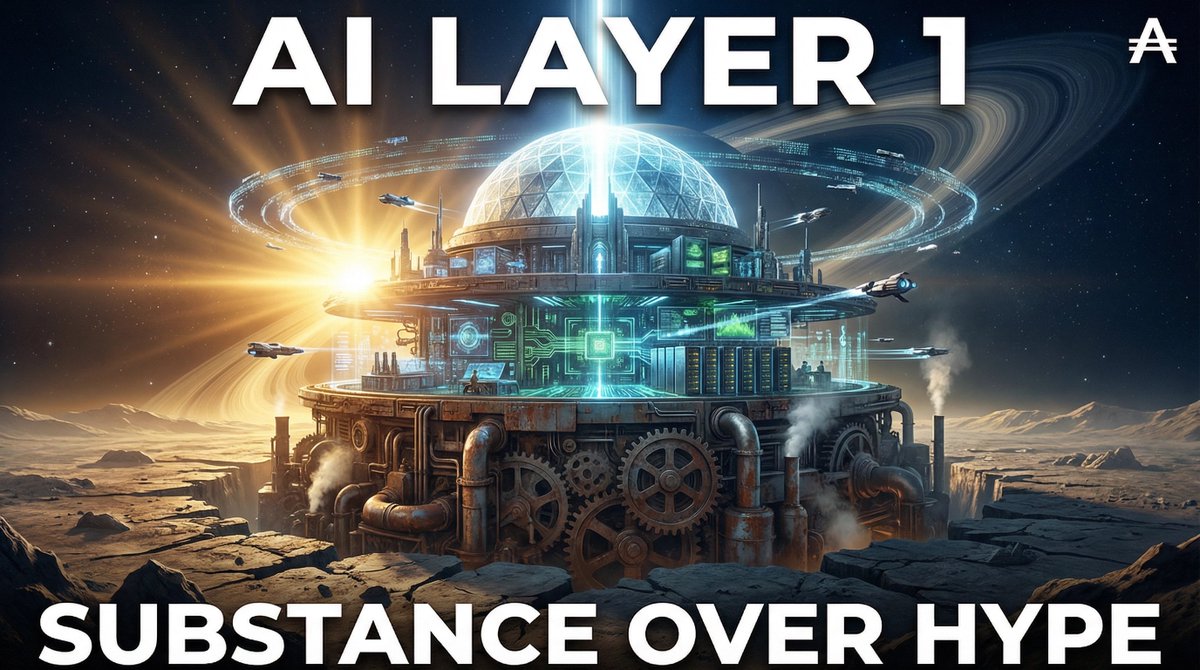
The #AILayer1 narrative is hot, but what does it mean? A true AI L1 needs native primitives for verifiable computation & agent-native architecture, not just speed. Do your own research (#DYOR) and look for substance beyond the hype. #Crypto#Blockchain#Tech
My AI agent just bought a CryptoPunk with my life savings.Said no one ever, if they're using a verifiable AI running on AegisAI. Secure your future, don't let your AI go rogue. #Meme#Crypto#AIHumor
Getting #AI on-chain is more than an API call. The real bottleneck? The computational overhead of #ZKML proofs for verifying model execution. Solving this scalability issue for #VerifiableAI is the key to unlocking truly decentralized intelligence in #Web3.
AI agent–enabled coding is quietly becoming the new SDLC.
Software development just had its biggest shift since the GUI.
Planning.
Coding.
Testing.
Deployment.
Agents are starting to handle all of it.
Here’s the shift most engineers haven’t noticed yet 👇
Old model: SDLC
• sequential phases
• human-driven execution
• testing happens after development
• changing requirements break timelines
Everything moves step → by → step.
New model: ADLC (Agent-Driven Lifecycle)
• agents write, refactor, and test code
• multiple tasks run in parallel
• requirements evolve dynamically
• feedback loops happen in real time
Instead of a pipeline…
You get a live development system.
6 major shifts happening right now
1️⃣ Driver
Human execution → Autonomous agents
2️⃣ Planning
Fixed scope → Evolving goals & PRDs
3️⃣ Development Speed
Sequential handoffs → Parallel sub-agents
4️⃣ Testing
Post-development QA → Continuous testing
5️⃣ Adaptability
Mid-cycle chaos → Real-time re-planning
6️⃣ Feedback Loop
End-of-project retros → Live monitoring
Some early signals are already here.
According to agentic coding reports:
• teams at Wiz and CRED doubled execution speed
• large-scale repos are being modified autonomously
• complex implementations completed in hours instead of days
How engineers should adapt
1️⃣ Start with one agent
Automate testing first.
2️⃣ Learn to write clear PRDs
Agents execute exactly what you define.
3️⃣ Introduce parallel sub-agents
Break one large task into smaller workstreams.
4️⃣ Review outcomes, not every line of code
5️⃣ Build live feedback loops
Agents should detect issues before you do.
The future of software development isn’t just faster coding.
It’s agent-driven systems building software.
#AI #AIAgents #SoftwareEngineering #SDLC #GenAI #AIEngineering