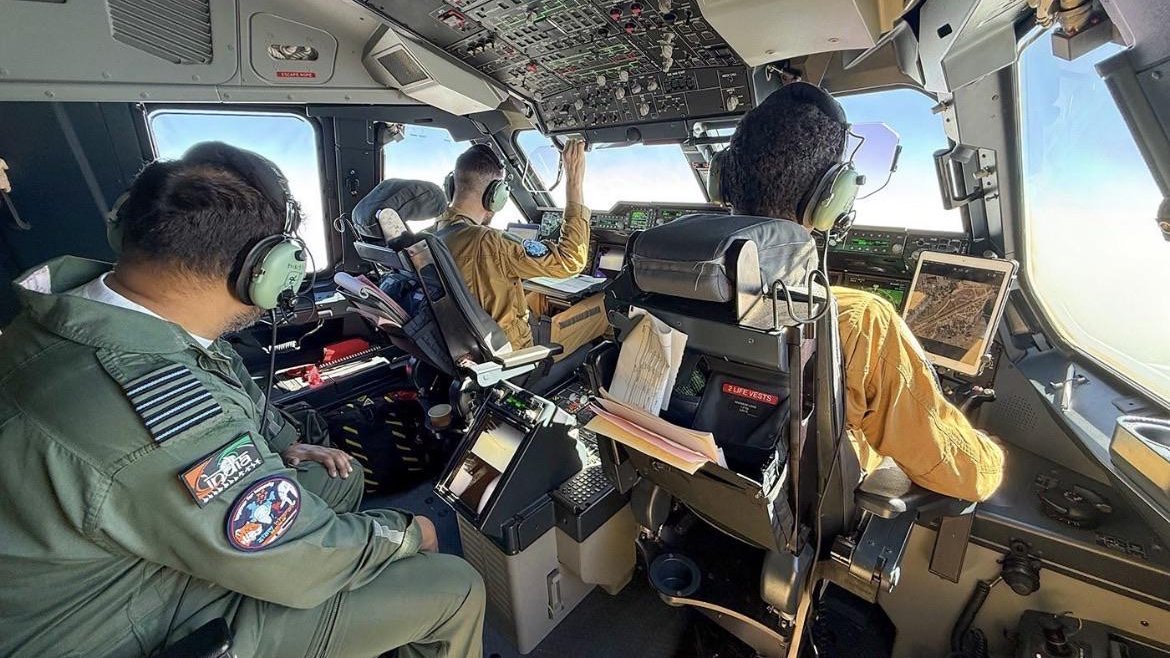
ACM AP Singh holds his final annual PC as 28th CAS of IAF 🇮🇳
He was commissioned into fighter stream in dec '84. a QFI & ETP with 5k+ flying hrs, he commanded a MiG-27 sqn, led MiG-29 upgrade team in moscow, and served as Prjct Director at the NFTC during LCA's flight testing.
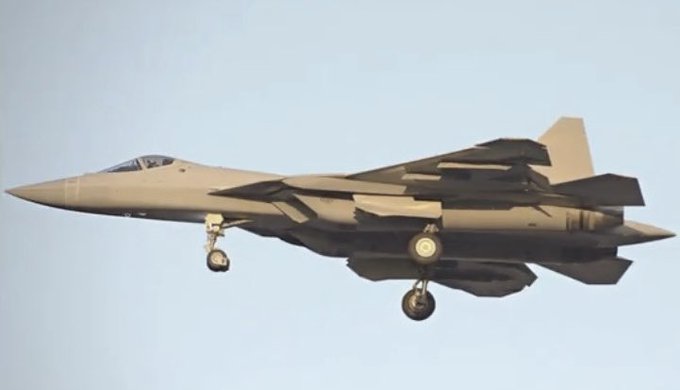
A seemingly unfinished Su-57 airframe has been captured during what appears to be a factory flight, with its airframe lacking std production digital camouflage.
The a/c appears to be wearing a uniform protective/primer-type finish.
Source: Vostok_Mil_spotter (on TikTok).
How the Chinese aviation industries (SAC/AVIC) must have felt after copying every Flanker in the RussianAF's fleet and making them even better than the originals ones:
Currently, every major AF in the world has specific-role bombers in its fleet, like:
-USAF: B-21 Raider, alongside the existing B-52H and B-1B
-PLAAF: H-6, with the H-20 in development
-VKS: Tu-160 and Tu-95MS, with PAK DA in development.
But IAF, despite being one of the world's major AFs, doesn't operate any dedicated bomber. Its stance has largely been that “we don't need bombers.”
I find this a bit confusing, but the reality is also clear that IAF is still below its sanctioned fighter strength of 42.5 sqns, while fighter procurement itself continues to face delays and production constraints.
so how exactly wud we acquire and sustain an expensive dedicated bomber fleet on top of that? a new bomber prgm wud mean another stone age long, very expensive procurement cycle, new infras in existing AFBs, training, logistics, and, most importantly years of waiting/delays from BABUS.
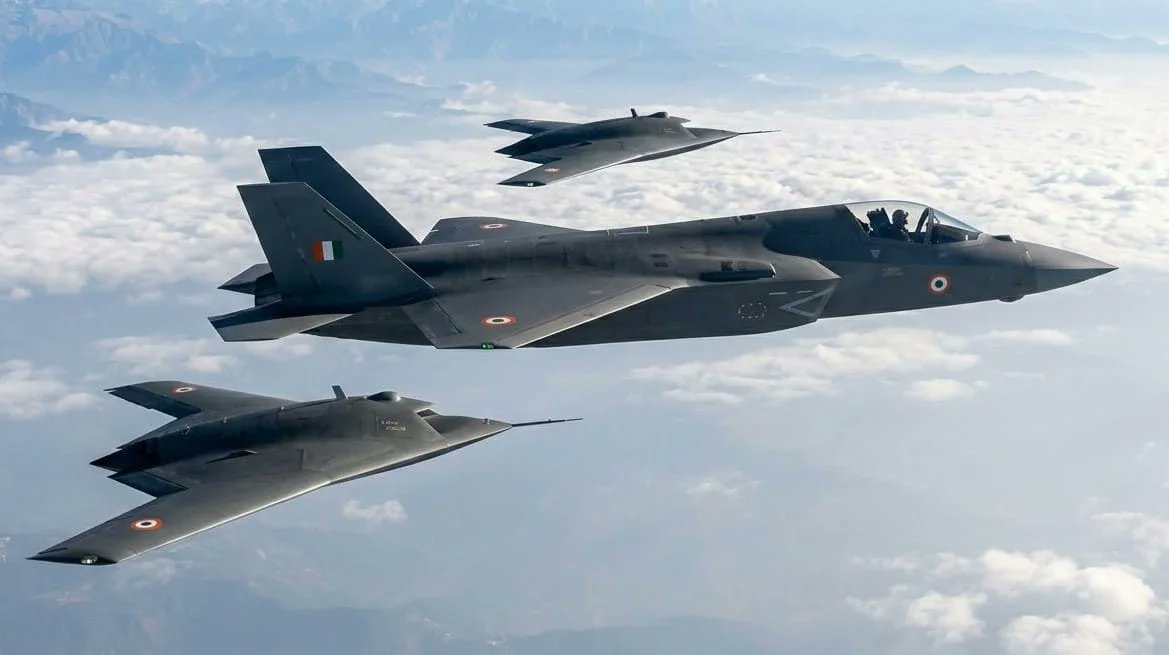
This is where I think the focus on UCAVs and indigenous stealth-strike capability becomes much more important. Ghatak needs to move ahead at full pace, while work on an indigenous KDE continues alongside it. technologies being developed around Ghatak, like flying-wing design, control laws, stealth materials and indigenous propulsion, could eventually form the foundation for much larger unmanned strike platforms.
@GauravT71548031@vasilyaarkhipov@IAF_MCC@DRDO_India Sir, don't take it in wrong way but IAF has no vision at all. They have not planned anything like PLAAF or USAF in long term goals. A organisation built of imports!
There is but one logical path ahead for SWiFT/Ghatak.
And it culminates in a stealthy strategic strike platform.
@IAF_MCC and @DRDO_India must immediately collaborate and commence feasibility studies to define that roadmap.
Cannot keep saying 'we have no agressive designs' etc.
If India truly wants heft in IOR, this is the way to go. Define the road map and go to the govt if the govt does not lay it down
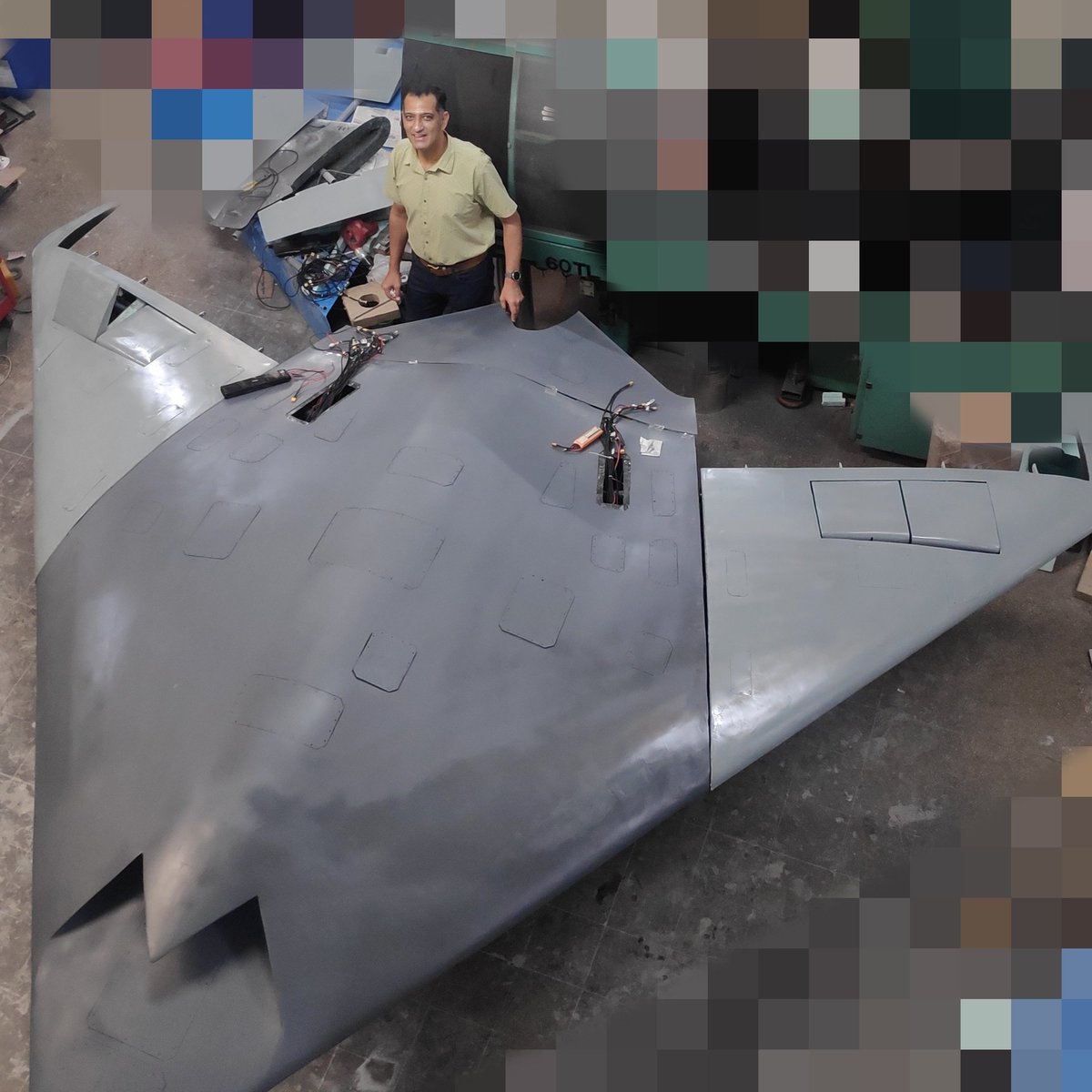
This is SWiFT (Stealth Wing Flying Testbed), the sub-scale flying-wing demonstrator developed by ADE (DRDO) as a technology pathfinder for GHATAK UCAV.
At roughly 4m long with a ~5 m wingspan and ~1-tonne class weight, SWiFT was built to validate some of the hardest parts of a tailless autonomous a/c
-FCLs, flying-wing aerodynamics
-autonomous navigation and landing
-and Stealthy LO-airframe techs.
This demonstrator first flew autonomously at Chitradurga in july 2022, means completing take-off, waypoint navigation and touchdown.
F-15EX may finally be getting a capability its airframe was provisioned for from day one.
USAF (AFLCMC) is seeking an operationally qualified missile warning system (MWS) built around 6x existing sensor locations, with power, data and environmental interfaces already integrated into Eagle II.
Forward-fuselage, aft/tail-boom and vertical apertures of EX already support (a distributed) MWS architecture, with LRU-level integration is aimed at rapid field installation and organic maintenance. It adds a dedicated passive MW-channel to F-15EX's existing EPAWSS, APG-82 (AESA) + IRST survivability/sensing architecture (without requiring major airframe modification).
Will USAF finally turn those six apertures into an operational MWS?