🇸🇳Ousmane Sonko: “There will be no system of hyper-presidentialism in Senegal today.”
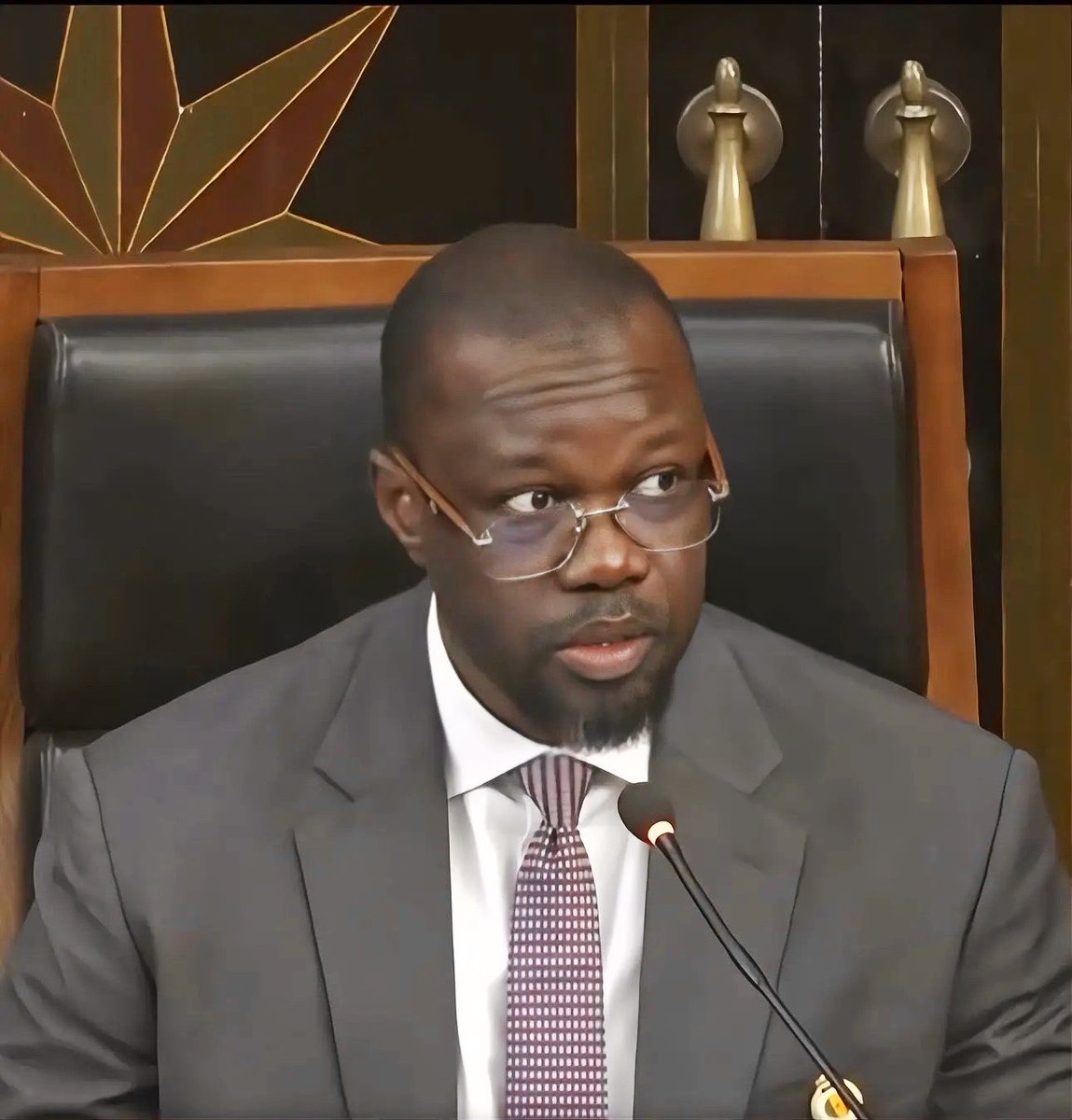
Senegal’s parliament erupted in celebration and dance as Ousmane Sonko took his seat as the new President of the National Assembly, amid escalating tensions with President Bassirou Diomaye Faye.
“What is at stake is the relationship between morality and politics,” Sonko declared.
“The National Assembly will use all its levers of power firmly but responsibly moving forward,” Sonko warns in his first address, as he officially becomes Senegal’s second-highest state authority.
"I will not use the Assembly to feed personal vendettas. That would be a betrayal to our very own struggle."
While insisting that his party, PASTEF, will give President Faye “the best conditions to complete his term”, Sonko maintains that his party must remain central to the functioning of government. He argues that the appointment of the new Prime Minister, Ahmadou Al Aminou Lô, was carried out without adequate consultation with the ruling party, PASTEF.
“Our party was not involved in this decision to appoint the new prime minister. It was also not consulted in the formation of the government. You can’t have PASTEF without PASTEF.”
“I know the Prime Minister personally having worked with him for a year and a half during which he accomplished a tremendous amount of work.”
However, Sonko says he had “certain disagreements” with him on monetary and debt-related issues.
“On ne peut pas faire du Pastef sans Pastef. Pastef, c’est unique au monde, est à la fois majoritaire dans l‘opposition et au pouvoir. On ne peut pas être dans une situation d’hyper-présidentialisme au Sénégal.” Sonko lors de son discours d’ouverture. Les hostilités sont lancées.
🇸🇳 Members of Parliament are summoned to a plenary session on Tuesday at 9 a.m.
It appears the primary objective is the reintegration of #Sonko and his subsequent election as President of the National Assembly.
Faye appears to be drifting from the party’s core platform, specifically regarding financial transparency, anti-corruption legislation, and systemic policy reforms. To frame this dismissal purely as a clash of personalities is to completely misunderstand the strategic reality.3/3
Much of the commentary surrounding the recent #Senegalese political turmoil misses the mark. Most analyses superficially reduce the conflict to a question of whether Sonko should defer to presidential authority and accept a subordinate role.1/3
However, this crisis transcends mere ego or emotion; it is rooted in structural dynamics essential to achieving PASTEF’s foundational goals. What we’re witnessing is a fundamental divergence in political objectives.2/3
Shock in Senegal: President Faye dismisses Prime Minister Sonko and dissolves the entire government!
Less than two years after they rose to power together under the slogans of "change," the historic alliance between Faye and Sonko has exploded in the first major crisis within the new regime.
The President issued a presidential decree dismissing Sonko and his entire government, a move described as a "political divorce" or a "soft coup."
This is not merely a government reshuffle, but the beginning of an early power struggle, and a real test of Senegal’s stability ahead of the 2029 elections.
The Senegalese street is divided: Sonko’s supporters are talking about “betrayal,” while others believe the President is reclaiming control.
Thus, Senegal now stands at a crossroads: either Faye succeeds in consolidating his power, or the popular revolution that brought them both to power turns into an internal conflict that threatens the country’s stability.
Il appartient désormais à Ousmane Sonko de faire la vérité sur ce qui s'est passé en 2024, et ce qui a amené à la plus grande trahison de l'histoire du peuple sénégalais.
collaborators from the Macky Sall administration, can successfully neutralize Sonko’s political influence. If this realigned executive branch fails to consolidate its power, it risks paving the way for a powerful 'Sonko 2029' presidential campaign.
The dismissal of Sonko was the inevitable culmination of a year marked by escalating institutional and ideological friction between the President and the Prime Minister. The critical question now is whether Faye, backed by a new coalition increasingly comprised of former/1
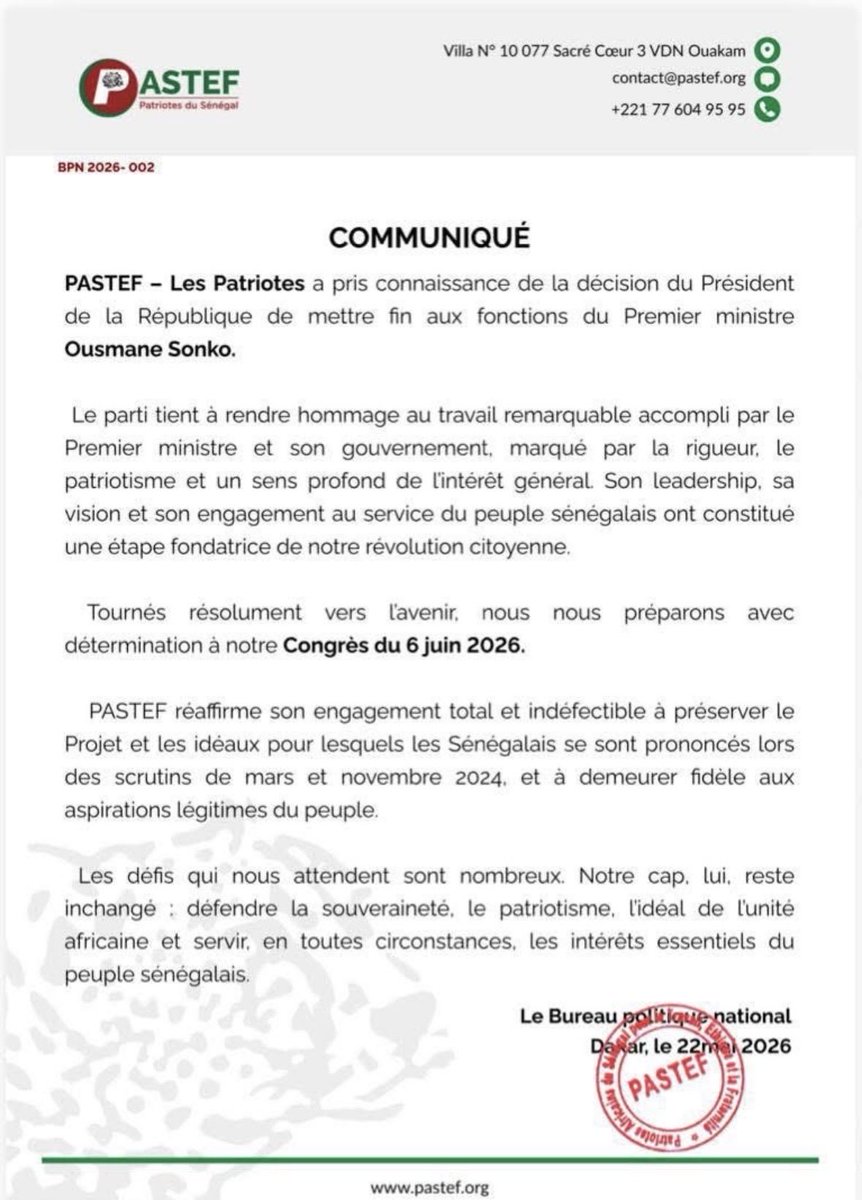
Le Président Bassirou Diomaye Faye met fin aux fonctions du Premier ministre Ousmane Sonko et de son gouvernement.
🔗 Suivez le direct ici⤵️
https://t.co/ks6Cmf7TSi
🚨 #Chad
At least 17 civilians were killed Wednesday afternoon when a funeral was bombed in #Tina, a border town in eastern Chad near #Sudan. Local sources have attributed the strike to the Chadian military, while Chad’s president, pointed to the warring parties in Sudan.
🔴🇹🇩#Tchad: À la suite d’une attaque de drones en provenance du Soudan ayant fait plusieurs victimes au Tchad, le Président Mahamat Idriss Déby Itno a convoqué un Conseil de défense et décrété l’alerte maximale.
When Power Outlasts Purpose: Africa’s Elder Statesmen in decline.
How can Africa truly develop when many of its leaders are old, out of touch, and operating within outdated political systems? Too often, power is seized and held onto indefinitely, while democratic values are actively suppressed. Election fraud, corruption, and nepotism have become the defining traits of these regimes.
Today, five presidents remain in office despite being well into their 80s and, in some cases, their 90s—leaders who appear more concerned with clinging to power than building a sustainable future:
•Paul Biya 🇨🇲 (#Cameroon): 92 years old
•Alassane Ouattara 🇨🇮 (#Côte d’Ivoire): 83
•Teodoro Obiang Nguema Mbasogo 🇬🇶 (Equatorial Guinea): 83
•Emmerson Mnangagwa 🇿🇼 (Zimbabwe): 82
•Denis Sassou-Nguesso 🇨🇬(Republic of the #Congo): 81
Even worse, their administrations are often filled with equally aging and entrenched elites, creating a cycle of stagnation, political instability, and economic collapse.
How can the world take Africa seriously when some of its most prominent leaders seem more focused on self-preservation than national progress? These aging rulers ignore the broader interests of their people and appear indifferent to the long-term consequences of their governance. But history will not forget them.
Africa must face an uncomfortable truth: sometimes, it is its own worst enemy. It’s time to stop blaming only external forces and begin an honest reckoning with the internal leadership crises that continue to hold the continent back.
From Power Broker to Bystander: Chad’s Diplomatic Decline
Once a dominant force in the diplomatic sphere of its region and the African continent, Chad has recently weakened and appears increasingly directionless. During the reign of former President Idriss Déby, #Chad invested heavily in diplomacy. The appointment of competent foreign representatives was crucial, along with the backing of a clear and concise foreign policy. Although its internal affairs were far from adequate, Chad successfully projected itself to the world as a developing country striving to achieve democratic reforms. It used military diplomacy to persuade the international community that this approach could be effective, even though it was costly. This was evident through the Chadian army’s interventions in Mali, the Central African Republic, and the Lake Chad Basin on a regular basis. However, these efforts also helped Chad gain incentives and support from the UN and the EU in its fight against terrorism.
Chad’s election as a non-permanent member of the UN Security Council in 2014 was another crucial milestone in its diplomatic success. For the first time in the country’s history, Chad secured a seat on the Security Council—a result of strategic diplomatic efforts and influence. The use of soft power and the projection of credibility as a serious and stable country were key factors. This not only enhanced Chad’s visibility and influence but also helped cement its position as an international leader within its subregion.
Moreover, the election of Moussa Faki as Chairman of the African Union (#AU) in 2017 was another clear sign of the country’s strong diplomatic standing. Without even citing other international appointments of Chadian figures to key global organizations, Chad’s influence was evident. It had the ability to impact decisions on the international stage and within its subregion, either directly or indirectly.
However, fast-forward to the current political realities of the country, and reports suggest that Chad is suffering—not only due to worsening internal affairs but also on a diplomatic level. The imprisonment of political leaders such as Succes #Masra, who has been detained for more than 65 days without any apparent reason or charges, has drawn widespread criticism. Even worse was the assassination of Yaya Dillo in February 2024, as well as the harassment and imprisonment of activists and figures like Secretary-General Robert Gam. Although these events occur internally, they have severe repercussions on Chad’s international image. The once powerful and respected nation in the region is now perceived as a country lacking seriousness and credibility.
The recent results of the African Development Bank election illustrate this decline. Chad’s candidate, former Minister Abbas Mahamat Tolli and former Governor of the Bank of Central African States (#BEAC), received only 0.52% of total votes and 0.88% of regional votes—an embarrassingly low result. For comparison, the next-lowest candidate, from South Africa, received 8.24% of the votes. This was the lowest vote share ever recorded in the history of the institution’s elections, highlighting Chad’s lack of support and diplomatic clout.
As such, Chad urgently needs serious reforms—not only domestically but also on the international front. It must prioritize achieving realistic democratic values and establish a clear framework to return to the right path. The government should begin by freeing unlawfully incarcerated political leaders such as Succes Masra and ensuring that freedom of expression becomes a reality. Additionally, Chad must earn back international respect. The current regime can start by fostering respectful relations with its neighbors, cooperating with openness and without hostility, and adopting strategies similar to those that brought it success in the past. Most importantly, Chad must work to restore its reputation and credibility.
From Power Broker to Bystander: Chad’s Diplomatic Decline
Once a dominant force in the diplomatic sphere of its region and the African continent, Chad has recently weakened and appears increasingly directionless. During the reign of former President Idriss Déby, #Chad invested heavily in diplomacy. The appointment of competent foreign representatives was crucial, along with the backing of a clear and concise foreign policy. Although its internal affairs were far from adequate, Chad successfully projected itself to the world as a developing country striving to achieve democratic reforms. It used military diplomacy to persuade the international community that this approach could be effective, even though it was costly. This was evident through the Chadian army’s interventions in Mali, the Central African Republic, and the Lake Chad Basin on a regular basis. However, these efforts also helped Chad gain incentives and support from the UN and the EU in its fight against terrorism.
Chad’s election as a non-permanent member of the UN Security Council in 2014 was another crucial milestone in its diplomatic success. For the first time in the country’s history, Chad secured a seat on the Security Council—a result of strategic diplomatic efforts and influence. The use of soft power and the projection of credibility as a serious and stable country were key factors. This not only enhanced Chad’s visibility and influence but also helped cement its position as an international leader within its subregion.
Moreover, the election of Moussa Faki as Chairman of the African Union (#AU) in 2017 was another clear sign of the country’s strong diplomatic standing. Without even citing other international appointments of Chadian figures to key global organizations, Chad’s influence was evident. It had the ability to impact decisions on the international stage and within its subregion, either directly or indirectly.
However, fast-forward to the current political realities of the country, and reports suggest that Chad is suffering—not only due to worsening internal affairs but also on a diplomatic level. The imprisonment of political leaders such as Succes #Masra, who has been detained for more than 65 days without any apparent reason or charges, has drawn widespread criticism. Even worse was the assassination of Yaya Dillo in February 2024, as well as the harassment and imprisonment of activists and figures like Secretary-General Robert Gam. Although these events occur internally, they have severe repercussions on Chad’s international image. The once powerful and respected nation in the region is now perceived as a country lacking seriousness and credibility.
The recent results of the African Development Bank election illustrate this decline. Chad’s candidate, former Minister Abbas Mahamat Tolli and former Governor of the Bank of Central African States (#BEAC), received only 0.52% of total votes and 0.88% of regional votes—an embarrassingly low result. For comparison, the next-lowest candidate, from South Africa, received 8.24% of the votes. This was the lowest vote share ever recorded in the history of the institution’s elections, highlighting Chad’s lack of support and diplomatic clout.
As such, Chad urgently needs serious reforms—not only domestically but also on the international front. It must prioritize achieving realistic democratic values and establish a clear framework to return to the right path. The government should begin by freeing unlawfully incarcerated political leaders such as Succes Masra and ensuring that freedom of expression becomes a reality. Additionally, Chad must earn back international respect. The current regime can start by fostering respectful relations with its neighbors, cooperating with openness and without hostility, and adopting strategies similar to those that brought it success in the past. Most importantly, Chad must work to restore its reputation and credibility.
#تشاد#الجزائر
استقبلت الوزيرة المنتدبة لدى وزير الشؤون الخارجية، المكلفة بالاندماج الإفريقي والتشاديين في الخارج، السيدة فاطمة الجينة قارفا ، الليلة بمطار حسن جاموس الدولي، وفدا جزائريا يقوده السيد سفيان شايب، كاتب الدولة لدى وزير الدولة وزير الشؤون الخارجية الجزائري.
وتندرج هذه الزيارة في إطار تعزيز العلاقات الثنائية والمبادلات الاستراتيجية بين تشاد 🇹🇩 والجزائر 🇩🇿، مما يعكس الرغبة المشتركة للبلدين في تعزيز تعاونهما في المجالات ذات الاهتمام المشترك.
#تشاد #الجزائر
24 hours after the attack on the presidency of the Republic of #Chad, and after reviewing surveillance footage and reading the various statements issued by the Prosecutor of the Republic and the Minister of Foreign Affairs, who is also the government spokesperson, we have arrived at two hypotheses based on our analyses:
1.The Government: To point fingers at #France, potentially justifying a future rupture in diplomatic relations, while also targeting internal individuals with whom the government wants to settle scores.
2.Proponents of Secession: To create an insurrectional situation along regional and sectarian lines, ultimately pushing for the partition of the country. This strategy would involve fueling resentment and frustrations stemming from the massacres experienced by supporters of the Transformateurs movement.
For the first hypothesis, it is important to note that in the past 48 hours, the Minister of Foreign Affairs and the Prime Minister have reiterated the urgency of removing French forces from Chadian territory. During the reception of his #Chinese counterpart, the Minister of Foreign Affairs even declared that Chad had made a "historic decision" for the complete disengagement of foreign forces.
For the second hypothesis, Chad’s history is deeply complex, and Chadians of all political affiliations must exercise caution to avoid falling into this trap. If the government does not handle this matter with great care, the families of the victims of yesterday’s attack and the events of October 20, 2022, could develop widespread feelings of revolt. This could further destabilize the situation and potentially destroy the very foundation of national unity.
Additionally, the Minister of Foreign Affairs recently stated that the assailants were “armed groups from the southern neighborhoods of N’Djamena,” indirectly pointing fingers at a particular segment of the population. Moreover, an army general arrested this morning is also from the southern part of the country, a detail that could further inflame regional tensions. There is strong concern that the consequences of this issue and the government’s handling of it could escalate in extreme and unpredictable ways.
It is essential not to awaken the demons of division. The government must adopt a more coherent, stable, and unified communication strategy. Recent communications appear far removed from professional norms and standards, giving the impression that those in charge are unaware they are governing a nation.