Cape Verde is in West Africa, but its history is more similar to the Caribbean than mainland Africa. It was used by the Portuguese as a major Atlantic slave trade + agricultural hub.
Modern Cape Verdeans descend largely from a mix of Portuguese settlers (source of most Cape Verdean paternal haplogroups) and enslaved West Africans from Senegal/Gambia and Upper Guinea region (most Cape Verdean maternal haplogroups)
The average Cape V is close to a 50/50 split between Portuguese and Senegambia/Guinea but there are many individuals with much higher percentages of either.
By now, it should be obvious that Kenyan and Tanzanian Maa-speaking populations (including the Maasai, Samburu, and some Rendille groups) are not ideal proxies for broadly “Nilotic” ancestry.
Genetic analyses consistently show that many Maasai individuals carry substantial West Eurasian-related ancestry, often around 18–25% (run any Maasai results on GEDmatch and Vahaduo), largely reflecting historical admixture with Cushitic speaking populations.
Same problem with using significantly admixed Kenyan Bantu groups as stand ins for Bantu when they also average 18-25% Western Eurasian.Myheritage did this, which is why it throws off results for so many other groups.
In all fairness, truth is that majority of Ethiopians look more like the people on the left. Over 90% of the population, more than 100 million people, belong to Semitic and Cushitic speaking groups. For context, that’s nearly three times the population of Ghana.
If anything, these groups are still underrepresented online, largely because Ethiopians are relatively conservative and insular, and most online visibility comes from their diaspora. Overt self promotion is kinda looked down upon in most of Ethiopia.
Omotic and Nilotic populations are concentrated mainly in the southwest of the country and make up less than 10% of Ethiopia’s population.
If you dropped a random pin on an Ethiopian map and decided to go there you’d be far more likely to end up in an Amhara village like this.
It wouldn’t be entirely accurate to say the Kikuyu are 50% Maasai, but it isn’t completely off either. The Kikuyu, along with closely related Eastern Bantu communities, and the Maasai share roughly 50% of their DNA because both groups were formed in part by the assimilation of Southern Cushitic populations. These groups were referred to by different names over time, with early ethnographers in the 1800s often using the term “Ndorobo.”
While the Kikuyu speak a Bantu language, their genetic makeup is only half Bantu, with the remainder being mostly Cushitic and a small Nilotic component. On the other hand, the Maasai speak a Nilotic language but also have significant Cushitic ancestry, around 50%.
This helps explain why many Kikuyu who take DNA tests through services like AncestryDNA often show about 50% Nilotic, largely because Maasai samples were used in that category. However, more detailed analyses from tests like 23andMe indicate that much of this ancestry is actually Cushitic.
So yes, Maasai and Kikuyu are about 50% genetically similar, primarily because they assimilated the same group of early Kenyan communities.
The heritage of these early groups is still very visible in both, not just genetically but also in many cultural elements, such as initiation practices.
Below is one of the earliest videos of the Ndorobo
You’re right Tigray is the place but also wrong because you directly translated ትግሬ(Tigre) from an Amharic context.
For a non Amharic audience Tigre would mean the Tigre people of Eritrea, a different people who speak their own language separate from both Tigray(Ethiopia)/Tigrinya (Eritrea) people. Some shared roots (Ge’ez) though.
Standard way of referring to people from Tigray would be Tigrayan.
Not diagnosing her, but the swollen lower face is more consistent with sialadenosis (chipmunk cheeks) than with a side effect of GLP-1 medications.
It’s a common feature of bulimia nervosa, where repeated purging can enlarge the parotid glands. Over time, this can become quite noticeable, especially in people who’ve experienced it longterm.
Severe and sustained calorie deficiency hollows out the upper two-thirds of the face, which tends to make the inflammation in the lower third appear even more pronounced.
Ebony Obsidian is of Eritrean and Caribbean heritage. A mix of Northeast African (Habesha) and West African ancestry can often result in features that resemble those seen among certain Kenyan groups, such as the Kikuyu, Kamba, Embu, and Meru due to overlapping ancestral components.
Arsema Thomas (Bridgerton), for example, has Nigerian and Ethiopian heritage and shows some similar features.
Of course, phenotype ≠ genotype, but it’s a look that appears often with that mix.
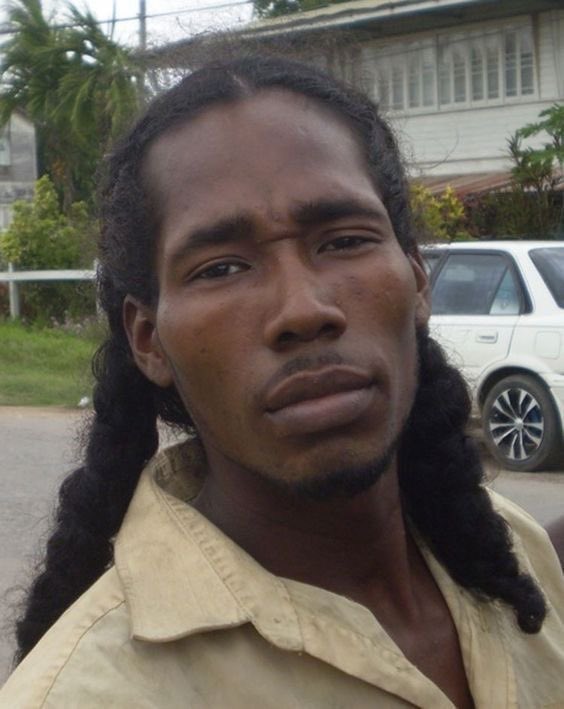
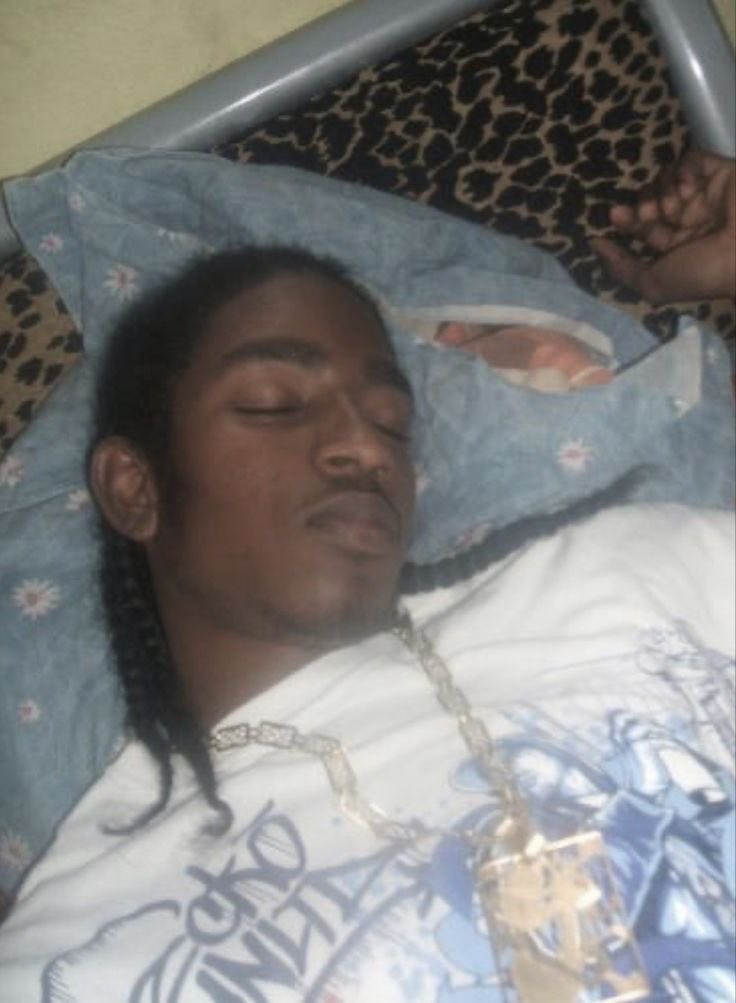
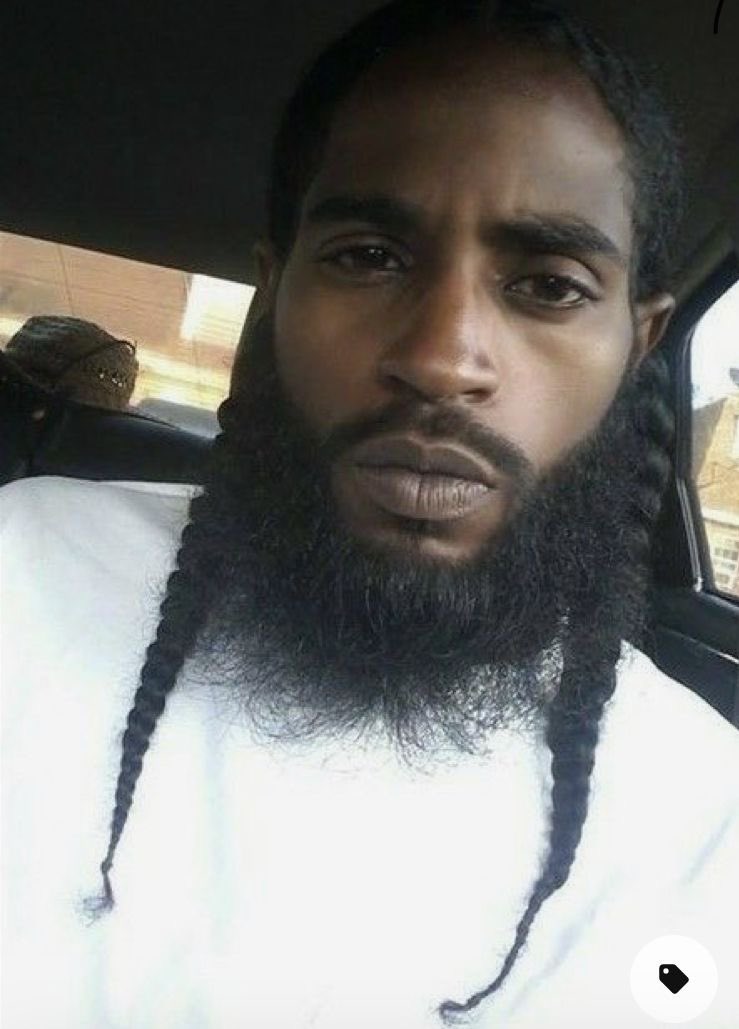
This phenotype is most common among the Dougla populations of Trinidad, Guyana, and Suriname (a mixture of African and East Indian ancestry, occasionally with minor Native American influence) and, to a lesser extent, Belize. In Belize, the mix is usually African and Native American.
Among Black Americans, this specific combination of deep skin tones paired with a looser hair texture is most prevalent in Mississippi and Alabama.
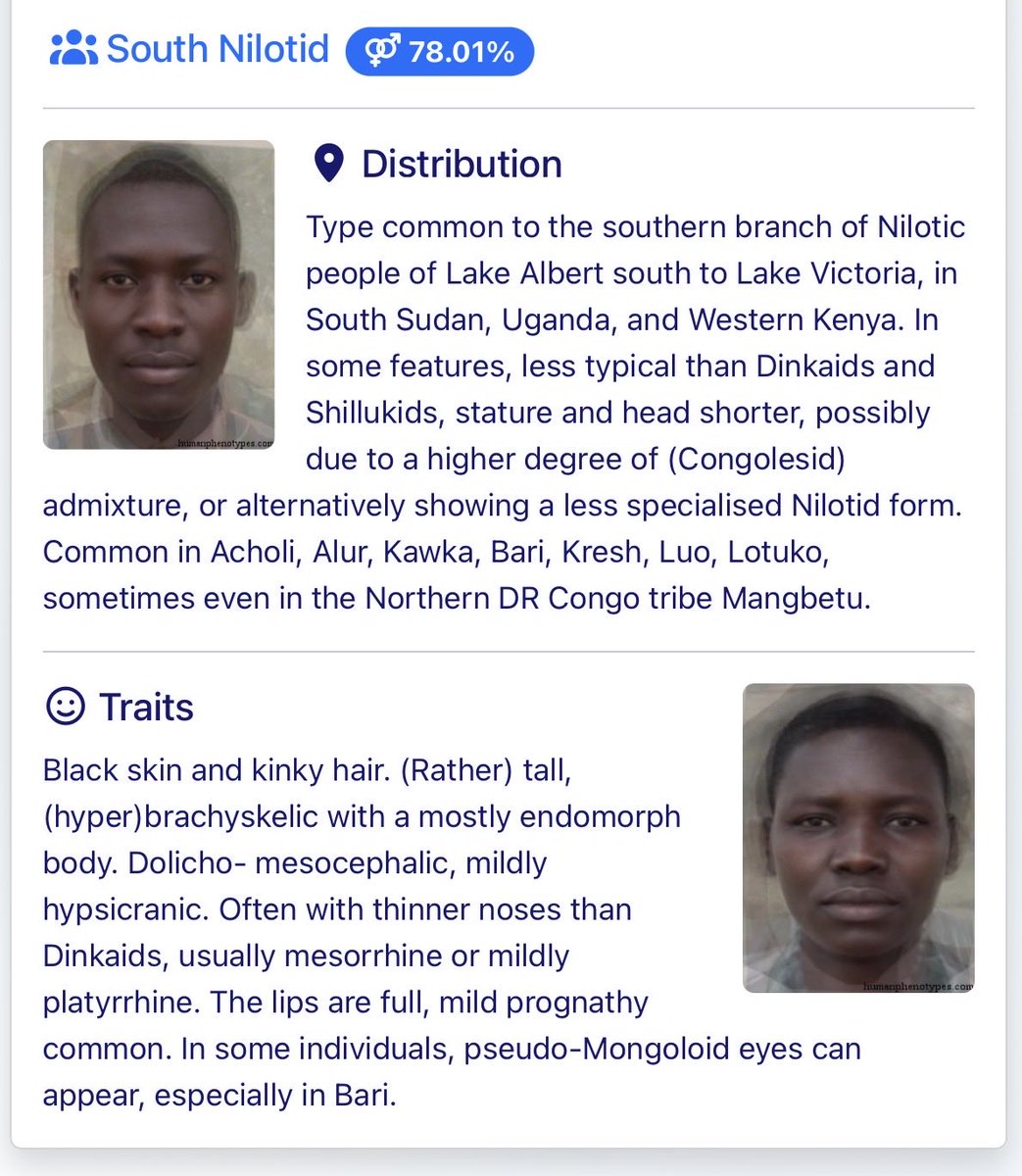
A few reasons why everyone seems to agree he looks Kenyan (specifically Luo) …. but they can’t pin point why.
It’s the South Nilotid Phenotype, most common in Western Kenya and Northern Uganda and some parts of South Sudan. Phenotypes aren’t exactly science but tend to be accurate.
Relatively narrow and elevated nose bridge (common in East Africa), compact face (not as elongated as many other East African groups but narrow), dark skin but a shade lighter than other Nilotic groups because of Bantu admixture.
Can appear in other parts of Africa especially Senegal/Gambia but most prevalent in Western Kenya and Northern Uganda.
Most South African groups get epicanthic folds and high cheekbones from Khoisan admixture….it’s highest in the Xhosa and Tswana.
But in some cases it wasn’t just admixture, Some Xhosa subgroups like Gqunukhwebe started out as Khoi but got assimilated as a whole into Xhosa identity.
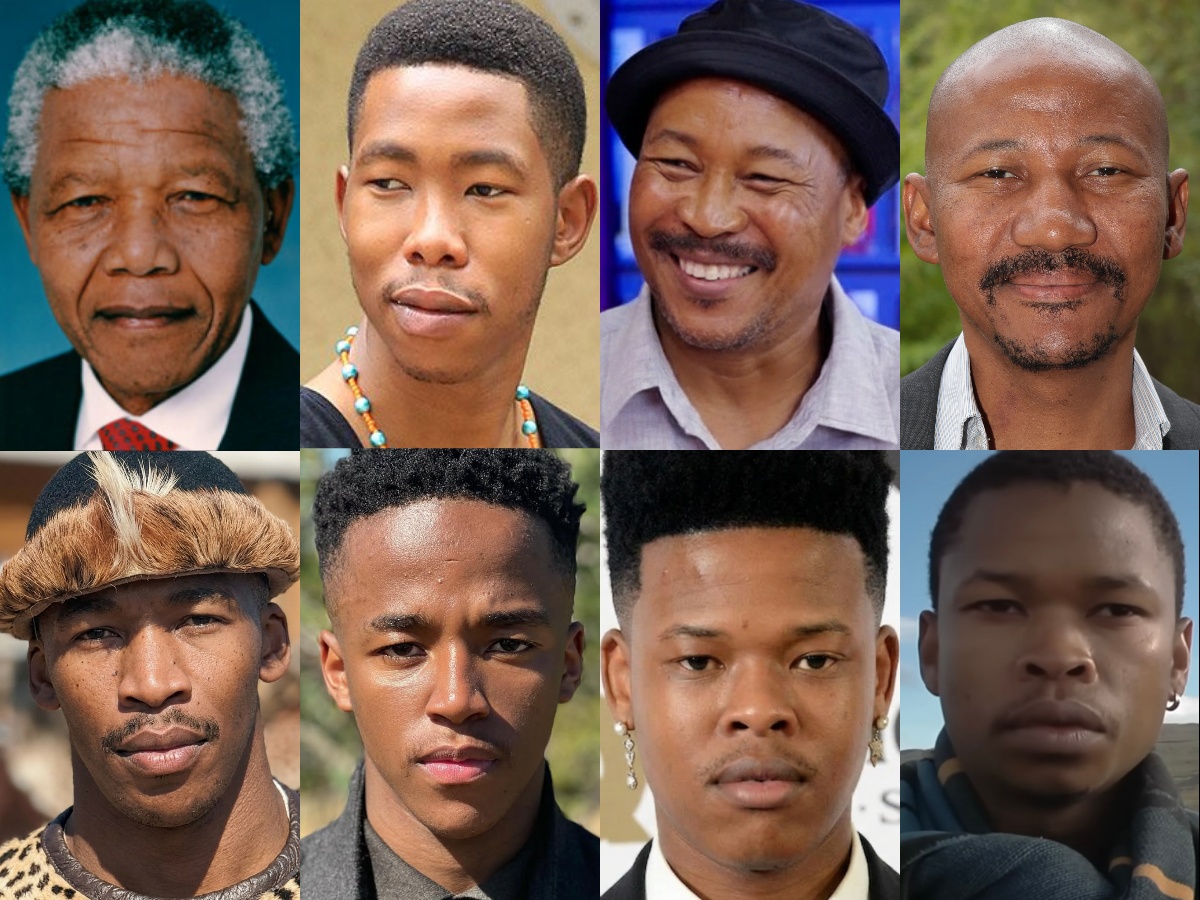
Have you ever wondered why many people in Southern Africa have such distinctively narrow hooded eyes or an epicanthic fold? 🌍☀️🇿🇦🇧🇼🇳🇦🇱🇸🇸🇿
READ THE FOLLOWING AND LOOK AT THE PICTURE ATTACHED BELOW:
For example, someone like Nasty C (frame 7) illustrates hooded eyes, where the skin of the brow sits lower over the eyelid crease. On the other hand, Nelson Mandela (frame 1) famously displayed the epicanthic fold - that distinct skin transition at the inner corner near the nose that creates a tapered almond shape.
When comparing respective eye structures of Thabiso Ramotshela (frame 6) and Zenzo Ngqobe (frame 8), you can see a perfect illustration of how the epicanthic fold exists on a spectrum - ranging from a fully defined anatomical feature to a subtle hint of a fold.
Dosto Noge (frame 3) is also showing us the beauty of this anatomy - while his eyes are naturally structured, his smile causes his lids to appear perfectly hooded. The brow skin completely overlaps the eyelid crease, often leaving only a narrow and twinkling slit visible.
However, these two traits can also overlap in harmony, and someone like Mbuso Mandela (frame 2) carries an unmistakable epicanthic fold that is paired with a subtle hooding that highlights his Southern African heritage.
So, why do these features exist here?
Anthropologically, they are as clinal adaptations - biological solutions to a specific environment. In the high-glare, arid landscapes of the Kalahari and the open veld, these eye shapes act as built-in sunglasses. The hooding and the fold protect the eyes from intense UV radiation, wind-blown dust, and moisture loss.
This eye structure is more than just a physical feature; it is a genetic signature belonging to some of the oldest human lineages on Earth. Long before modern specific ethnic labels were established, the early inhabitants of the Southern African plateau developed these traits as a direct response to the environment. These populations remained in the region for many thousands of years and the trait became deeply baked into the local DNA.
Through centuries of genetic interaction, the epicanthic fold and/or hooded eyes became widespread across the entire Southern African region. Some individuals carry a very prominently sharp version of the fold, while others show a much slighter and more subtle variation.
These features are a beautiful testament to how the human body has optimized itself for survival across the diverse terrains of the African continent.
The Fulani are spread across more than 20 countries, from West Africa to East Africa, and their culture and language remain relatively intact. Genetically, they are also quite similar, with slight regional differences due to local admixture. On average, their genetic profile is a mix of West African and North African ancestry. These Sudanese Fulani (Felata), still have much in common with Fulani communities as far away as Burkina Faso. Their ability to adapt in all these different countries while maintaining so much of their culture is remarkable.
Sudanese Fulani results below (The 31% Sudanese would probably be the only difference with a Fulani from say Guinea)
These nomadic pastoralists, also known as the Falata, were crossing the Openo Bridge today to return to their country. During the dry season, they travel to #Gambella for grazing. When the rainy season begins, they return to their country. As you can see, they have thousands of livestock. Should the government start collecting taxes?
Most Madagascans are the literal definition of Blasian (about 50% E/Southern African and 50% SE Asian) … Asian percentages are slightly higher in the Central highlands and African a bit higher in the coastal areas but the average Madagascan is now an even split between both.
Of course Cushitic itself is already a mixed profile (West Eurasian + Sub Saharan African) but when you say Cushitic + West Eurasian it becomes a different genetic profile which is found primarily in Northern Ethiopia and Eritrea.
No, most Somalis are 100% Cushitic while most Eritreans and Northern Ethiopians aka Habesha (Tigray, Tigrinya, Jeberti, Amhara etc) have a genetic profile that’s Cushitic (Agew) + Additional West Eurasian DNA.
For Oromos it’s a bit complicated while there’s many in the South and East who are purely Cushitic, many Oromo from Wollo, Raya and parts of central Ethiopia are almost indistinguishable genetically from the Habesha.
Most of East African ancestry / being Somali/ Eritrean etc is 60–70% (Cushitic) ancestry, with about 30–40% West Eurasian (Arab/North African) , primarily stemming from ancient migrations- so they are essentially mixed.
Cushites were a lot darker with tighter hair until the Arab arrival in the 7th centrally where a lot of mixing happened
Best genetic match for Somali Bantus is Southern Tanzania and Mozambique Bantus with some little horn admixture.
Kenya and Northern Tanzania are not a gd match.
The average Somali Bantu DNA results look something like this