@terraindustries Secures Africa's Largest Seed Round with $52 Million Raise
Nigerian defence-tech startup Terra Industries has closed a landmark $52 million seed funding round, making it the largest seed raise by an African startup to date.
The company secured an additional $18 million from new investors Norleo Space Investments and angel investor Grant Gordon, alongside continued backing from existing investors 8VC, Silent Ventures, Nova Global, Belief Capital and SV Angel.
According to the company, the new funding will be used to establish its first international office in London, expand manufacturing capacity, accelerate the deployment of its defence technologies across the Global South, and strengthen its engineering, operations, and business development teams.
The milestone highlights growing global investor confidence in Africa's deep-tech and defence innovation ecosystem. It also signals that African founders are increasingly building companies capable of solving complex, strategic challenges while attracting significant international capital.
As investment in frontier technologies continues to rise, Terra Industries' achievement could pave the way for more African startups developing advanced solutions in aerospace, defence, robotics, and industrial technology.
#AfricanStartupMetrics #TerraIndustries #DefenceTech #DeepTech #AfricanStartups #StartupFunding #SeedFunding #Innovation #Technology #Nigeria #MadeInAfrica #VentureCapital #Engineering #GlobalSouth #StartupEcosystem #TechInAfrica #FutureOfDefense #Entrepreneurship
@Lazervault_app Surpasses 10,000 users less than one week after launch
The Nigerian fintech ecosystem continues to witness exciting developments as Lazervault, an AI-Native Financial Operating System, officially launches and records an impressive milestone of over 10,000 users in less than one week.
Founded by a Nigerian entrepreneur based in the United Kingdom, Lazervault is designed to simplify how individuals and businesses manage their financial activities by bringing multiple financial services together in one integrated platform.
From sending and receiving money across banks to managing multiple currencies, making international payments, exchanging currencies, saving, trading cryptocurrency, purchasing gift cards, paying utility bills, and managing business finances, lazervault brings a wide range of financial capabilities into a single application.
The platform also introduces features such as voice banking, AI-powered financial services, escrow payments, multi-currency accounts, crowdfunding, bill splitting, and dedicated business and family accounts.
Available on Google play store, lazervault is positioning itself as a comprehensive financial platform built to address the evolving needs of individuals and businesses across emerging markets.
Crossing the 10,000-user milestone in less than seven days after launch represents an encouraging early adoption signal for the company and highlights the growing appetite for accessible, integrated financial technology solutions.
As African fintech continues to evolve, platforms building around convenience, accessibility, and financial inclusion will remain important to the future of the ecosystem.
Download the Lazervault App on Google play store:
https://t.co/NpGo55MfNt
#AfricanStartupMetrics #Lazervault #AfricanStartups #Fintech #AfricanTech #DigitalFinance #FintechInnovation #StartupGrowth #DigitalBanking #TechEcosystem
🇳🇬 NIGERIAN TECH GIANT CONTISX BY PROF @ndekekwe , INTRODUCES POS TERMINAL DESIGNED FOR CAPITAL MARKET INVESTING
ContiSX has unveiled the ContiSX Terminal, positioning it as the world's first Point-of-Sale (POS) terminal specifically designed to facilitate capital market investing.
The innovation introduces a new approach to making capital market services more accessible by bringing investment-related activities closer to everyday financial transactions.
Displayed alongside Wazobia Securities, the handheld device is designed to bridge the gap between traditional point-of-sale services and capital market operations, allowing users to interact with investment services through a familiar POS-style experience.
The terminal is geared toward supporting activities such as cashing out securities, managing investment wallets, and accessing exchange-related tools, potentially creating new opportunities for investors to engage with capital markets beyond conventional digital investment platforms.
By combining POS technology with capital market infrastructure, ContiSX is exploring how existing financial transaction channels can become alternative access points for investment services.
This development reflects a broader shift in financial technology, where innovation is increasingly focused on making sophisticated financial services more accessible, convenient and integrated into everyday economic activities.
If successfully deployed at scale, solutions like the ContiSX Terminal could contribute to expanding access to investment opportunities and bringing capital market participation closer to everyday consumers.
#AfricanStartupMetrics #ContiSX #WazobiaSecurities #FintechInnovation #CapitalMarkets #FinancialTechnology #InvestmentTechnology #AfricanFintech #DigitalFinance #Innovation
🇬🇧 UK Based Nigerian Founder @TheNwadikeLouis Launches @Lazervault_app, An Ai-Powered Fintech App Positioning To Challenge the Likes of @OPay_NG , @palmpay_ng , @joinkuda And @moniepointng .
A Nigerian entrepreneur based in Manchester, United Kingdom, is making a bold entry into Africa's fintech industry with the launch of lazervault.
Founded by Louis Nwadike, a master's degree holder in Artificial Intelligence and Robotics, lazervault aims to redefine how individuals, families and businesses manage their finances.
Within the last 24 hours of launch, The platform has recorded over 8,500 new users and processing more than ₦50 million in transaction volume.
Core Features Includes:
1. Send & Receive Money: Seamless transfers to and from banks.
2. Multi-Currency Accounts: Access Naira🇳🇬, USD🇺🇸, GBP🇬🇧, Ghanaian Cedi🇬🇭, Kenyan Shilling🇰🇪 and South African Rand🇿🇦 accounts.
3. International Payments: Make payments across supported countries.
4. Currency Exchange: Exchange between six supported currencies.
5. RMB Transactions: Convert Naira to RMB and pay suppliers in China.
6. Split Bills: Share expenses with friends, family and groups.
7. Crypto Wallet: Buy, sell, store and trade cryptocurrencies.
8. Spend Crypto Like Naira: Make direct Naira payments using crypto without manual conversion or P2P transactions.
9. Gift Card : Buy and sell gift cards.
10. Piggyvault: Save towards financial goals and earn interest.
11. Crowdfunding (Esusu): Save collectively with friends, family and groups.
12. Cheap Airtime & Data: Enjoy Cheap airtime and data purchases.
13. Utility Payments: Pay electricity bills, fund betting accounts and TV subscriptions.
14. Invoice Generation: Create professional invoices for goods and services.
15. Escrow Pay: more secure buying and selling with strangers through escrow-protected transactions.
16. AI Voice Banking: Perform All in-app transactions using just your voice voice.
17. LazerSpray: Host live events and receive virtual money sprays from viewers, bringing the excitement of digital celebrations to your screen.
18. Event Hub: Discover nearby events, list events, attract attendees and sell tickets.
19. Business Accounts: Manage business finances, generate invoices, handle payroll and oversee business activities.
20. Family & Friends Accounts: Add family members and manage their spending from one account.
Its proposition goes beyond conventional transfers and bill payments. The goal is to build an integrated financial ecosystem that serves individuals, families, entrepreneurs and businesses.
With over 8,500 users already onboarded at launch, lazervault has made its entry into Nigeria's competitive fintech market.
Download the Lazervault App on Google Play Store:
https://t.co/NpGo55MfNt
#Lazervault #AfricanFintech #NigerianStartups #Fintech #ArtificialIntelligence #DigitalBanking #AfricanStartups #Innovation #DigitalPayments #AI #AfricanStartupMetrics
🇧🇼 Botswana Moves to Double Its Stake in De Beers to 30%
Botswana is seeking greater control over one of the world's most recognised diamond businesses as the global diamond industry undergoes a major restructuring.
On November 9, 2026, President Duma Boko announced that the country plans to increase its stake in De Beers from 15% to 30%, following Anglo American's decision to exit its 85% shareholding.
The proposed move would make Botswana the largest single shareholder in De Beers, giving the country greater influence over the company's strategic direction, diamond marketing and domestic value addition.
Botswana has also endorsed the Global Diamond Consortium, led by former De Beers CEO Gareth Penny, as its preferred bidder for Anglo American's stake. Namibia and Angola are expected to participate in the broader discussions, alongside engagement involving luxury group Richemont.
However, Botswana's interest extends beyond traditional diamond mining.
President Boko has highlighted the strategic importance of Element Six, De Beers' synthetic diamond business, particularly its applications in high-performance computing, artificial intelligence and data centres.
Synthetic diamonds are increasingly relevant to advanced industrial technologies, creating opportunities that extend well beyond jewellery and traditional mining.
The proposed investment comes at a difficult time for the natural diamond industry, which continues to face falling rough diamond prices, production cuts and pressure on major producers.
For Botswana, increasing its ownership stake is therefore both an economic and strategic decision.
The bigger question is whether greater ownership of De Beers can help the country move beyond exporting natural resources towards building stronger industrial capabilities, technology partnerships and greater value within its domestic economy.
For African resource-producing nations, the opportunity may lie not only in owning more of their natural resources, but also in capturing more of the technology and value chains built around them.
#AfricanStartupMetrics #Botswana #DeBeers #DiamondIndustry #Mining #SouthernAfrica #ArtificialIntelligence #DeepTech #IndustrialTechnology #AfricanBusiness #ResourceValueAddition #GlobalEconomy
@MTNza South Africa: Data Usage Surges as Service Revenue Growth Remains Flat
South Africa’s telecommunications market is facing a growing monetisation challenge: customers are consuming significantly more mobile data, but telecom operators are struggling to translate that growth into stronger service revenue.
MTN South Africa’s nine-month results for the period ended September 30, 2026, highlight this disconnect.
In Q3 2026, data traffic on its network increased by 27.9%, even as active data subscribers declined by 4% to 21.1 million.
Meanwhile, service revenue grew by just 1% over the first nine months of the year and remained flat in Q3.
Several factors are contributing to this performance.
Intense competition and management efforts to improve the quality of earnings from its prepaid customer base have weighed on consumer revenue. However, postpaid performance has been stronger, with Q3 service revenue increasing by 4.9% and subscribers growing by 6.1% to 4.8 million.
Enterprise and wholesale operations also provided positive momentum.
Despite subdued revenue growth, MTN South Africa recorded its strongest earnings quarter of 2026, with EBITDA increasing by 7% and its EBITDA margin expanding by 3.6 percentage points to 38.1%, supported by cost-control measures.
The wider MTN Group tells a different story. Across its markets, service revenue grew by 17.2% in constant-currency terms to R176.2 billion during the first nine months of 2026, with Nigeria and Ghana contributing to growth.
Data accounted for 50.4% of the group's service revenue.
The contrast highlights an important challenge for telecom operators: increasing data consumption does not automatically translate into proportional revenue growth.
As customers consume more gigabytes at increasingly competitive prices, operators must improve network efficiency, strengthen higher-value enterprise and postpaid offerings, and develop additional revenue streams through digital services and fintech.
For telecommunications companies investing heavily in network infrastructure, the next competitive advantage may not simply be attracting more data users, but finding more sustainable ways to monetise their usage.
#AfricanStartupMetrics #MTNGroup #MTNSouthAfrica #Telecommunications #SouthAfrica #DataMonetisation #DigitalEconomy #Telecoms #AfricanBusiness #Fintech #EnterpriseTechnology #DigitalInfrastructure
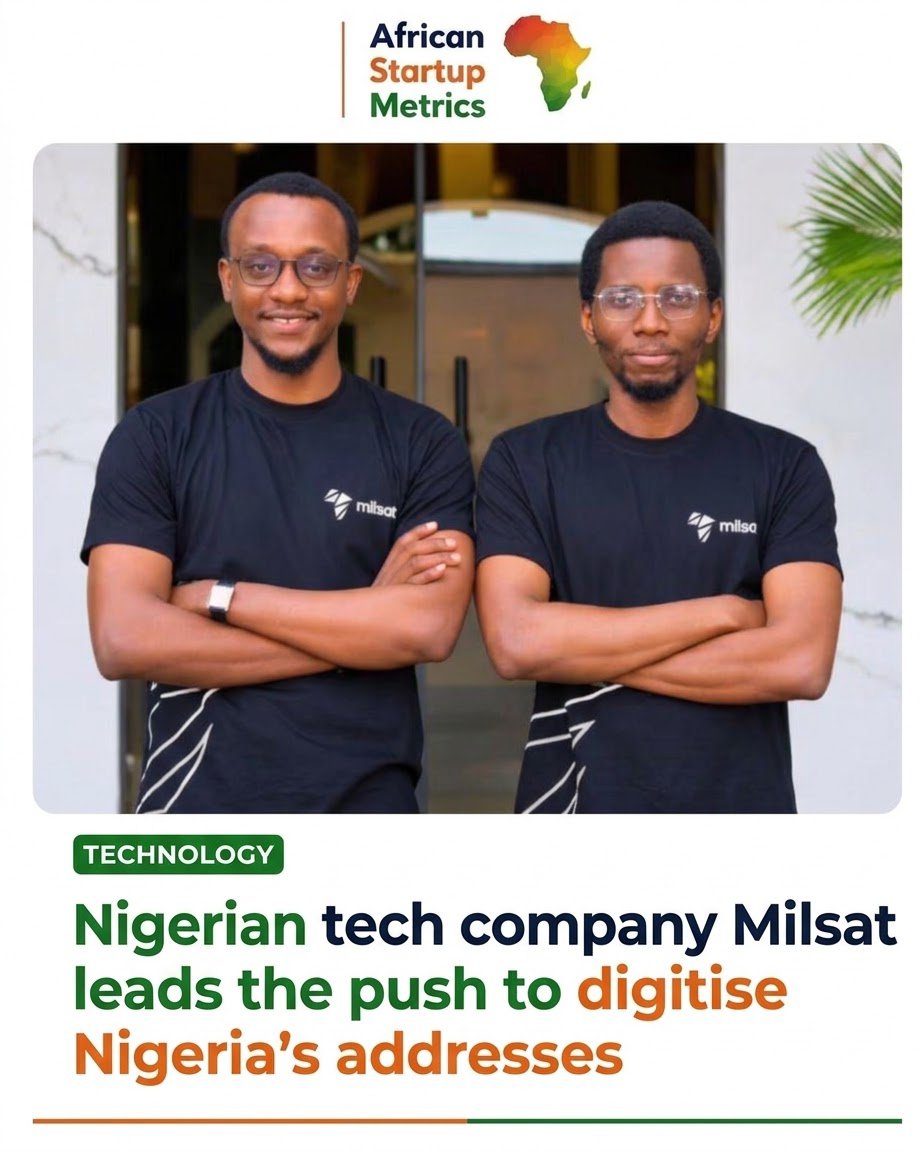
@milsat_africa : The Nigerian Startup Digitising the Country’s Addresses
For decades, the absence of reliable physical addresses has created challenges across Nigeria, affecting e-commerce deliveries, bank KYC verification, logistics and emergency response.
Nigerian geospatial technology company Milsat Technologies is helping to address this infrastructure gap.
Following the October 1, 2026 launch of Nigeria’s National Digital Alphanumeric Postcode System, Minister of Communications, Innovation and Digital Economy, Dr. Bosun Tijani, publicly identified Milsat as the Nigerian company behind the system’s core technology.
Founded by Taslim Saluadeen and Adedamola Baderinwa, Milsat began with a pilot project in Bwari, Abuja, in 2023 before contributing to the national rollout alongside NIPOST, Meeds Network Limited and the National Population Commission.
The system replaces Nigeria’s traditional six-digit postcode with a unique 11-character alphanumeric code for individual buildings across all 774 local government areas. Each code connects a physical structure to its verified GPS coordinates.
To improve accuracy, Milsat combines geospatial technology with field verification, using trained enumerators to capture building coordinates, photographs and classifications rather than relying entirely on satellite imagery.
The implications are significant.
Logistics companies can improve delivery accuracy, financial institutions can strengthen address verification, and emergency responders can locate specific buildings more efficiently. APIs also create opportunities for businesses to integrate verified location data into their platforms.
Nigeria’s digital transformation requires more than fintech applications and internet connectivity. It also depends on foundational infrastructure that makes everyday services more efficient.
By helping give buildings across the country reliable digital identities, Milsat is contributing to an important layer of Nigeria’s digital economy.
#AfricanStartupMetrics #MilsatTechnologies #Nigeria #GeospatialTechnology #DigitalInfrastructure #AfricanTech #DigitalAddressing #Logistics #Fintech #StartupInnovation
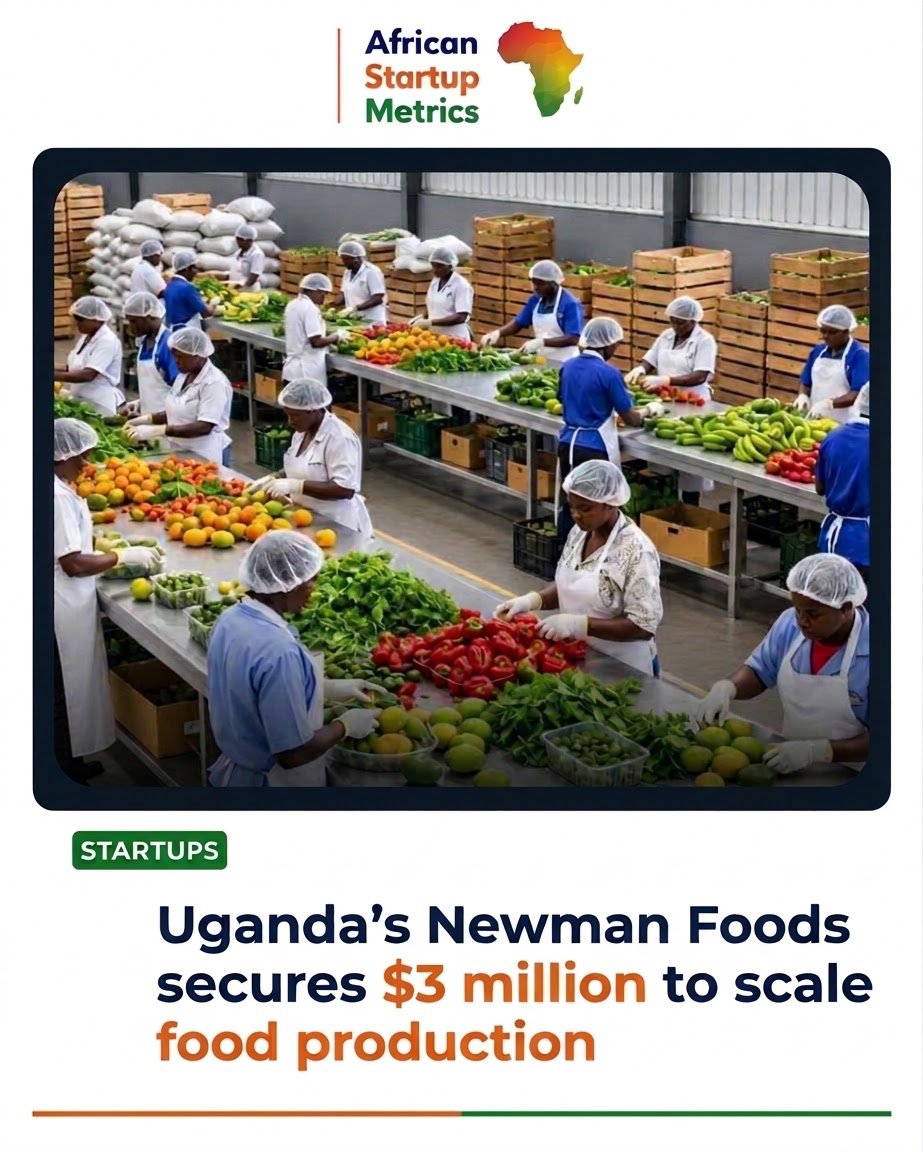
🇺🇬 Uganda’s Newman's Foods Ltd Secures $3 Million to Expand Local Food Production
Ugandan agro-processing company Newman Foods Limited has secured a $3 million (approximately UGX 12.3 billion) mezzanine loan from AgDevCo Ventures to expand its food processing operations and strengthen its agricultural supply chains.
Announced on November 4, 2026, the financing will support the Kampala-based company's efforts to increase production capacity, expand its range of locally manufactured food products and reach more customers across domestic and regional markets.
Led by Managing Director Ssegujja Nasser, Newman Foods transforms locally sourced agricultural produce into branded consumer foods and snacks. The company also aggregates and packages fresh fruits and vegetables for export to European markets.
One significant aspect of its business model is its connection to smallholder farmers.
Newman Foods currently sources agricultural produce from more than 3,000 smallholder farmers across Uganda and distributes its products through thousands of formal and informal retail outlets.
The new financing is expected to increase direct purchases from local farmers, expand its processing facilities and bring additional agricultural producers into its supply network.
The transaction also highlights the role of mezzanine financing in supporting growing African businesses.
Through flexible financing structures, AgDevCo Ventures provides growth capital and technical support to promising agricultural businesses that need funding to expand without necessarily giving up additional equity at an early stage.
For Uganda's agricultural sector, investments in companies like Newman Foods create an important link between rural production, industrial processing, retail distribution and international export markets.
Africa's agricultural opportunity extends beyond growing and harvesting crops. Building businesses that can process, package, distribute and export locally produced food is essential to creating more value within the continent.
Newman Foods' expansion demonstrates how financing mid-sized agro-processors can strengthen farmer livelihoods, create employment and contribute to a more competitive African food industry.
#AfricanStartupMetrics #Uganda #NewmanFoods #Agribusiness #AgroProcessing #AgriculturalInvestment #FoodSecurity #EastAfrica #SmallholderFarmers #ImpactInvesting #AfricanBusiness #FoodManufacturing #AfricanAgriculture
🇳🇬 Nigeria Sets ₦15 Billion Capital Requirement for Foreign Stablecoin Issuers
Nigeria is tightening its regulatory oversight of the digital asset industry, introducing a ₦15 billion minimum paid-up capital requirement for foreign currency-backed stablecoin issuers operating in or targeting the Nigerian market.
The requirement forms part of the Central Bank of Nigeria's new Regulations for the Operations of Non-Security Virtual Assets in Nigeria, which took effect on November 5, 2026.
The framework introduces stricter requirements covering stablecoin issuance, custody, settlement and peer-to-peer cryptocurrency transactions.
Under the new licensing structure, foreign currency-referenced stablecoin issuers classified under Class 2 must maintain a minimum paid-up capital of ₦15 billion. Naira-referenced stablecoin issuers under Class 1 face a ₦10 billion minimum requirement.
Foreign stablecoins offered to Nigerian customers must be issued through a Nigerian-incorporated entity with the appropriate CBN licence.
The regulations also introduce strict local operational requirements. Licensed issuers must maintain a physical office in Nigeria, appoint a resident Chief Compliance Officer and establish local redemption and record-keeping operations.
Another significant provision is the prohibition of algorithmic and crypto-collateralised stablecoins, with issuers required to maintain full backing through eligible fiat reserve assets.
The CBN has also introduced additional oversight for stablecoins that reach significant adoption levels. Tokens exceeding ₦500 billion in daily circulation for 30 consecutive days, or held by more than five million Nigerian users, will qualify as Systemic Stablecoins and face heightened regulatory supervision.
Peer-to-peer transactions are also receiving closer attention. Service providers facilitating these transfers must verify that customers' bank account names and Bank Verification Numbers (BVNs) match their verified platform identities before releasing tokens.
For Nigeria's fintech and digital asset ecosystem, these requirements could significantly reshape the cost of entering and operating in the stablecoin market.
While stronger capital requirements, reserve controls and identity verification may improve regulatory confidence, they could also create substantial barriers for smaller issuers and emerging fintech companies.
The message from the regulator is becoming increasingly clear: operating a stablecoin business in Nigeria will require more than technology and market adoption. It will demand substantial capital, local accountability and strict compliance.
#AfricanStartupMetrics #Nigeria #CBN #Stablecoins #Fintech #CryptoRegulation #DigitalAssets #FinancialTechnology #FinancialInclusion #NigerianFintech #Blockchain #AfricanTech #FinancialRegulation
🇿🇼 Zimbabwe Looks to India’s Startup Ecosystem to Accelerate Technology Entrepreneurship
Zimbabwe is strengthening its technology and investment relationship with India, seeking to leverage India's experience in software development, digital infrastructure and business process outsourcing to accelerate its own digital economy.
The initiative gained momentum following the India–Africa Tech & Entrepreneurship Summit, held in Harare on October 28–29, 2026, which brought together more than 300 delegates from Zimbabwe, India and other African countries.
The discussions focused on turning international cooperation into practical investment opportunities, technology partnerships and employment creation.
Through the Zimbabwe Investment and Development Agency (ZIDA), the country is working to attract Indian investment into information and communications technology, business process outsourcing and the local processing of critical minerals used in electronics and energy storage.
Another major proposal involves strengthening cooperation between Harare and Bengaluru, one of India's leading technology hubs. The proposed partnership includes talent exchange programmes and exploring digital public infrastructure models inspired by India's UPI and MOSIP frameworks.
Zimbabwe is also positioning its policy environment to attract technology investors. Its 2026–2030 National AI Strategy, alongside proposed investment incentives for licensed BPO operators and ICT infrastructure, forms part of its broader digital transformation agenda.
Beyond foreign investment, the country is exploring stronger connections with its diaspora through initiatives designed to bring technical expertise, mentorship and capital into local startups.
The proposed Zimbabwe–Africa–India Innovation Challenge is another effort to connect entrepreneurs with investors, corporate buyers and international technology partners.
For Africa's emerging technology ecosystems, this development presents an important lesson: building a competitive digital economy does not necessarily require copying Silicon Valley.
Strategic partnerships, knowledge transfer, investment-friendly policies and access to established technology markets can provide alternative pathways to growth.
Zimbabwe's engagement with India could become an interesting example of how South–South collaboration can help African startups move from local innovation to international competitiveness.
#AfricanStartupMetrics #Zimbabwe #IndiaAfrica #AfricanStartups #TechEntrepreneurship #DigitalEconomy #StartupEcosystem #ArtificialIntelligence #BusinessProcessOutsourcing #TechnologyInvestment #DigitalTransformation #AfricanInnovation #GlobalPartnerships
Massive Is Betting That Small Businesses Will Pay to Be Found on Google
While many small businesses invest heavily in social media marketing, an important customer acquisition channel often receives less attention: local search.
When customers search Google or Google Maps for nearby restaurants, salons, clinics, gyms or professional services, businesses with strong local visibility have an opportunity to turn those searches into actual customers.
This is the opportunity Nigerian startup Massive is targeting.
Founded in 2026 by Segun Olaiya, who previously spent four years working in local SEO in the United States on accounts including AT&T and businesses across San Diego and Texas, Massive is building an AI-powered platform to help small businesses improve their visibility on Google.
The platform goes beyond simply creating a Google Business Profile. It helps businesses manage the activities that influence local search visibility, including profile optimisation, competitor monitoring, scheduled updates, customer reviews and Google Maps visibility tracking.
One interesting aspect of its model is the combination of AI automation and human account management. While the platform handles recurring optimisation tasks, account managers monitor performance, review updates and provide additional support.
Massive is targeting location-dependent businesses such as restaurants, gyms, salons, spas, clinics and law firms.
Its subscription currently costs ₦18,000 per month per business location, with a 14-day free trial.
The startup is reportedly bootstrapping with more than 20 active customers and competing in a market that includes established platforms such as Yext, SOCi and Localo.
The bigger opportunity lies in helping small businesses understand that visibility is not limited to social media followers and engagement.
A customer searching for a service nearby may already have the intention to spend money. The challenge is making sure the right business appears when that search happens.
For Massive, the real test will be demonstrating that improved Google visibility translates into measurable customer inquiries, visits and revenue.
#AfricanStartupMetrics #Massive #AfricanStartups #NigerianStartups #LocalSEO #SmallBusiness #DigitalMarketing #GoogleBusinessProfile #ArtificialIntelligence #StartupInnovation #CustomerAcquisition #BusinessGrowth #TechEcosystem
Prodalim’s $37 Million Acquisition Puts South Africa’s Agro-Processing Industry in the Spotlight
Global juice and specialty ingredients company Prodalim has agreed to acquire a 93.25% stake in South African agro-processing company Brenn-O-Kem for $37 million, highlighting the growing commercial value of agricultural waste and circular manufacturing.
Based in South Africa's Western Cape, Brenn-O-Kem has operated since 1968, building a business around transforming winery by-products into valuable ingredients for the food, beverage, pharmaceutical, nutraceutical and agricultural industries.
Rather than allowing grape skins, seeds and wine residues to go to waste, the company processes these materials into commercially valuable products, including tartaric acid, grape seed oil, natural colourings, specialised extracts and agricultural compost.
The acquisition will see Prodalim take a 93.25% ownership stake, while Brenn-O-Kem's management team retains 6.75% and continues to participate in the business.
The company reportedly generated approximately $29 million in revenue and $8 million in EBITDA for the 12 months ended September 2026, operating three processing facilities and employing around 160 people.
For Prodalim, the acquisition offers an opportunity to strengthen its global ingredients business while expanding its presence in South Africa's wine industry.
It also creates opportunities to introduce Prodalim's dealcoholisation technology to the South African market as demand for no- and low-alcohol beverages continues to develop.
Beyond the acquisition value, the transaction highlights an important opportunity for African agriculture and manufacturing.
Economic value does not end with harvesting crops or producing wine. Significant opportunities exist in processing agricultural by-products, developing specialised ingredients and building businesses around materials that would otherwise be discarded.
Brenn-O-Kem demonstrates how agricultural waste can become an industrial resource, creating jobs, generating revenue and connecting local production to international markets.
#AfricanStartupMetrics #Prodalim #SouthAfrica #AgroProcessing #CircularEconomy #Agribusiness #FoodInnovation #SustainableManufacturing #AfricanBusiness #AgriculturalInnovation #MergersAndAcquisitions #FoodAndBeverage #IndustrialDevelopment
Ecobank DRC Secures $10 Million Guarantee to Expand Lending to Small Businesses
Access to finance remains one of the biggest barriers facing small and medium-sized businesses across Africa. In the Democratic Republic of Congo (DRC), a new financing partnership aims to address that challenge by helping businesses access commercial loans despite limited collateral and perceived credit risks.
Ecobank Democratic Republic of Congo has secured $10 million in portfolio guarantees from Proparco, the private-sector financing arm of the French Development Agency, with support from the European Union under its IMPACT+ programme.
The agreement was announced during the Africa Financial Summit (AFIS) 2026 in Luanda, Angola, held on November 3–4.
The guarantee facility is structured around two key objectives.
The first is to support Ecobank DRC's broader lending portfolio for micro, small and medium-sized enterprises (MSMEs). The second focuses on businesses and sectors with significant development potential, including women-led enterprises, youth entrepreneurs, startups, agriculture, healthcare, education and green activities.
The partnership is particularly significant because portfolio guarantees work differently from conventional grants or direct investments.
Rather than giving businesses a lump-sum payment, the arrangement allows Proparco and the EU to share part of the credit risk with the bank. This gives Ecobank greater capacity to extend loans to qualifying businesses while maintaining its own lending and repayment assessments.
The transaction also represents the first concrete deployment under a broader agreement between Proparco and Ecobank Group, which outlines ambitions to mobilise up to €100 million in financing and risk-sharing solutions across Ecobank's pan-African network.
For African entrepreneurs, the real significance of this development goes beyond the $10 million commitment.
It demonstrates how development finance institutions and commercial banks can work together to reduce lending barriers and unlock capital for businesses that traditional financing structures often overlook.
Ultimately, the success of such initiatives will be measured by how many viable African businesses gain access to affordable financing and turn that capital into jobs, innovation and economic growth.
#AfricanStartupMetrics #SMEFinance #FinancialInclusion #Ecobank #Proparco #EuropeanUnion #DemocraticRepublicOfCongo #AfricanStartups #MSMEDevelopment #StartupFunding #DevelopmentFinance #AfricanBusiness #AFIS2026
🇬🇭 Ghana Awards $100,000 to 10 Agritech Startups Through 2026 AgriTech Challenge Pro
Ten early-stage agricultural businesses in Ghana have received a combined $100,000 in seed funding following the 2026 AgriTech Challenge Pro, organised by the Kosmos Innovation Centre (KIC) in partnership with the Mastercard Foundation.
Announced on October 29, 2026, the awards recognise emerging businesses working to strengthen agricultural production, food processing and agribusiness across Ghana.
One notable aspect of the programme is its emphasis on commercial validation rather than presentation alone. Before the final awards, participating ventures underwent field assessments to verify their operations, business claims and market traction. They also received technical coaching and mentorship from industry professionals.
The funding was distributed among the ten selected businesses:
- Angban Life received $13,000.
- From a Mother's Kitchen received $12,000.
- Pri Fimps Foods, Kebab Masters, Hibitea and Beverages, GreenFalcon Innovations, Feathery Care Ltd, Ecoverse Ltd and Ecofert Ghana Ltd each received $10,000.
- Hot Drops received $5,000.
Beyond the financial awards, the selected businesses will enter a structured incubation programme designed to strengthen their business models, improve unit economics, expand market access and build sustainable revenue streams.
The initiative reflects a broader effort to support young agricultural entrepreneurs in moving from early-stage ideas to commercially viable businesses.
Through programmes such as the Initiative for Youth in Agricultural Transformation, backed by a four-year, $16 million commitment from the Mastercard Foundation, and other emerging agritech initiatives, Ghana continues to strengthen its agricultural innovation ecosystem.
The bigger opportunity lies in connecting agricultural innovation with real market demand.
Funding can help startups get started, but field validation, customer adoption and sustainable revenue are what ultimately determine whether an agribusiness can scale.
#AfricanStartupMetrics #Ghana #AgriTech #Agribusiness #StartupFunding #AfricanStartups #FoodSecurity #AgriculturalInnovation #StartupEcosystem #YouthEntrepreneurship #BusinessGrowth #impactinvesting
Dangote’s $16 Billion Lamu Refinery Clears Major Legal Hurdle in Kenya
Dangote Group has secured a significant legal breakthrough in Kenya after the country's Public-Private Partnership (PPP) Petition Committee dismissed a challenge concerning the procurement and regulatory classification of its proposed $16 billion oil refinery in Lamu County.
The decision, issued on October 30 and made public on November 5, 2026, removes an important procedural obstacle for one of East Africa's most ambitious industrial investment projects.
The proposed refinery is designed to process approximately 700,000 barrels of crude oil per day, with the ambition of reducing East Africa's dependence on imported refined petroleum products.
Unlike a conventional government-backed infrastructure project, Dangote Group has maintained that the refinery will be privately financed, owned and operated, without direct public equity contributions. The project also benefits from incentives associated with Kenya's Special Economic Zone framework.
In a significant regional investment proposition, Dangote has offered East African governments a combined 30% equity stake, creating an opportunity for regional participation in the project.
Construction is expected to follow an ambitious timeline, with completion targeted for 2030.
However, important issues remain unresolved. Separate legal proceedings involving local residents' concerns over ancestral land compensation, environmental compliance and public disclosure are still ongoing.
The development highlights the growing role of African private capital in addressing major infrastructure and energy challenges across the continent.
For Dangote Group, the proposed Lamu refinery represents an opportunity to extend its industrial footprint beyond Nigeria. For East Africa, it could become a major step towards strengthening regional energy security and reducing dependence on imported petroleum products.
The real test will be turning the investment announcement into a successfully completed industrial operation.
#AfricanStartupMetrics #DangoteGroup #AlikoDangote #Kenya #EastAfrica #AfricanEnergy #OilAndGas #InfrastructureDevelopment #AfricanBusiness #Industrialisation #EnergySecurity #CrossBorderInvestment #AfricanEconomy
Africa Has Its Own Car Brands, But Can Local Automakers Achieve Industrial Scale?
Africa is no longer just a market for imported vehicles. Across the continent, homegrown automotive companies are designing, assembling and manufacturing vehicles for local and regional markets.
From passenger cars and SUVs to commercial buses and electric vehicles, African manufacturers are demonstrating that the continent has the capacity to build its own automotive brands.
Some notable examples include Innoson Vehicle Manufacturing and Nord Automobiles in Nigeria, Kantanka Automobile in Ghana, Kiira Motors Corporation in Uganda and Wallyscar in Tunisia.
However, establishing an automotive brand is only the beginning. Scaling production into a globally competitive manufacturing industry remains a much bigger challenge.
One of the major obstacles is dependence on imported components. Although several manufacturers assemble vehicles locally, essential parts such as engines, transmissions, electronics and specialised automotive materials are still sourced largely from outside the continent.
Foreign exchange volatility, supply chain disruptions and high production costs consequently make it difficult for local manufacturers to compete on price.
Market fragmentation presents another challenge. Africa's 54 national markets have different regulatory requirements, consumer preferences and trade barriers. Meanwhile, the continued dominance of imported used vehicles creates additional pressure on locally manufactured alternatives.
This is where regional integration becomes important.
The African Continental Free Trade Area (AfCFTA) presents an opportunity to strengthen regional automotive supply chains, harmonise standards and expand access to markets beyond individual countries.
Africa has already demonstrated that it can build its own automotive brands. The next challenge is developing the industrial infrastructure, financing, component manufacturing and regional partnerships required to produce at scale.
The question is no longer whether Africa can manufacture vehicles. It is whether the continent can build an automotive industry capable of competing globally.
#AfricanStartupMetrics #AfricanAutomotive #AutomotiveIndustry #Manufacturing #Industrialisation #AfCFTA #AfricanBusiness #MadeInAfrica #Innovation #ElectricVehicles #SupplyChain #EconomicDevelopment #Mobility
From Squatting in Lagos to Building Air Peace: The Remarkable Journey of Allen Onyema
Before becoming the founder and chairman of one of West Africa's largest airlines, Barrister Allen Ifechukwu Onyema experienced a difficult beginning in Lagos, where he reportedly struggled financially and shared a single room while trying to establish himself as a young law graduate.
Born in Benin City, Edo State, and originally from Mbosi in Anambra State, Onyema studied law at the University of Ibadan and was called to the Nigerian Bar in 1989.
His journey, however, would eventually take him far beyond the legal profession.
Before entering aviation, Onyema established the Foundation for Ethnic Harmony in Nigeria (FEHN), an organisation focused on peacebuilding, conflict resolution and non-violence training. Its work included programmes aimed at rehabilitating former Niger Delta militants.
In 2013, he founded Air Peace with a vision of creating employment opportunities and improving air connectivity across Nigeria and West Africa.
The airline commenced commercial operations in October 2014 with an initial fleet of seven aircraft.
Over the years, Air Peace expanded its operations across domestic, regional and international markets, establishing routes connecting Nigeria to destinations including London, Johannesburg, Jeddah and Mumbai.
Beyond commercial aviation, the airline also attracted attention for its humanitarian interventions.
During the 2019 xenophobic attacks in South Africa, Air Peace provided free flights to evacuate Nigerians who wished to return home. The airline also participated in evacuation efforts during other international crises, including the Sudan conflict.
Onyema's journey highlights an important dimension of entrepreneurship: identifying gaps in critical infrastructure and building businesses capable of addressing them at scale.
From his early struggles in Lagos to establishing an airline with international reach, his story offers a powerful perspective on resilience, ambition and the long-term commitment required to build an enterprise.
#AfricanStartupMetrics #AllenOnyema #AirPeace #AfricanAviation #NigerianEntrepreneurs #AfricanFounders #Entrepreneurship #BusinessLeadership #Nigeria #AviationIndustry #BusinessGrowth #AfricanBusiness #Leadership
From World Cup Finalist to Saving Young Hearts: Gerald Asamoah Takes Medical Mission to Ghana
Former German international footballer Gerald Asamoah is using his personal health journey to give children in Ghana a second chance at life.
Born in Mampong, Ghana, and raised in Germany, Asamoah was diagnosed with hypertrophic obstructive cardiomyopathy, a condition affecting the heart muscle, in 1998. Despite the diagnosis, he went on to earn 43 appearances for Germany's national team and reach the 2002 FIFA World Cup Final.
His experience inspired him to establish the Gerald Asamoah Foundation for Children with Heart Disease in 2007.
Through the foundation, Asamoah has continued to organise medical missions bringing specialised German healthcare professionals to Ghana to perform life-saving heart surgeries on children.
One of the missions involved a 55-member German medical delegation comprising paediatric cardiologists, cardiac surgeons, anaesthetists and intensive care nurses.
Working alongside Ghanaian medical professionals, including teams at the National Cardiothoracic Centre of Korle-Bu Teaching Hospital in Accra, the specialists provide critical surgical care to children with congenital and acquired heart conditions.
Beyond the surgeries, these missions also contribute to knowledge transfer, helping local healthcare professionals strengthen their expertise in specialised cardiac treatment and post-operative care.
Across sub-Saharan Africa, access to specialised paediatric heart surgery remains limited, leaving many families struggling to find affordable and timely treatment for their children.
Asamoah's work demonstrates how personal experiences can become powerful platforms for social impact.
His story is a reminder that influence extends beyond sporting achievements. Sometimes, the greatest legacy an individual can build is measured by the lives they help save.
#AfricanStartupMetrics #GeraldAsamoah #Ghana #GlobalHealth #Healthcare #MedicalInnovation #Philanthropy #SocialImpact #AfricanLeadership #HealthcareAccess #ChildHealth #Germany #Africa