A conversation spotter, starter & influencer for folks involved in business of growing food, fuel, feed and fiber in Nigeria. invite us to your agric events.
BREAKING!
After a first term as President which he performed spottily albeit calamitously, PBAT seeks a second relief for the profit of low minded materialistic gratification, puffery, ambition and guile.
Power for the sake of power.
A Pygmalion* in love with the wreckage of his inventive genius.
(*Pygmalion. From Ovid's “Metamorphoses”, a sculptor who fell in love with a statue he had carved)
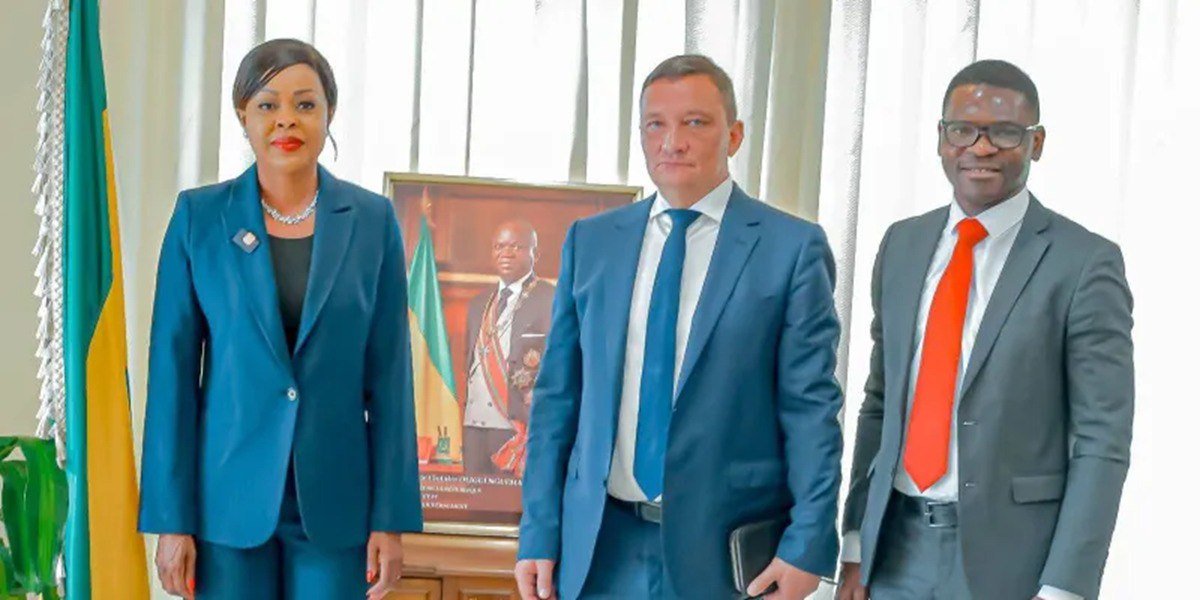
Russian investors propose major agricultural logistics hub in Gabon, seeking to diversify Africa's trade partnerships beyond Western and Chinese dominance. A strategic foothold for Moscow in Central Africa.
Russian paramilitaries have been protecting the regime in the Central African Republic in exchange for mineral resources and they deploy a massive propaganda campaign to cover up the crimes they are accused of.
Two Central African soldiers tell me Russian commanders ordered them to “kill everybody”, including women and children, in gold mining communities during operations to seize mines in the northeast of the Central African Republic.
Russian paramilitaries have turned Central African Republic into a hellscape of atrocities since 2018—all to seize gold & diamond mines in order to fund Russia’s war in Ukraine.
People don't realise just how broken Nigeria and Nigerians are. A criminal, a common thief, the person who tells old white women they love them just to steal their money is treated with much more regard than an educated person earning an honest living.
Everything about this place disgusts me.
‘Anyone touched a Newcastle player, they were rolling around, you look at Gordon he falls over’ 🤣
‘Newcastle lads are getting stuck in, ironically 1 got sent off, 2 went off injured, so Liverpool stood up to the physical side’
Roy destroying Newcastle
https://t.co/41UnWD4bon
On July 22, 2025, the Nigerian Senate approved an additional $21 billion, €2.2 billion, ¥15 billion of external borrowing for the 2025–2026 fiscal cycle. It also approved a N750.98 billion domestic bond issuance and a €65 65million grant. With an already existing public debt of about N149.39 trillion as at the first quarter of 2025, adding the approved loans of about N37.2 trillion) brings our current total debt to about N187 trillion with concerns that our debt might likely be over N200 trillion by the end of 2025.
As our GDP before rebasing was about N269.2 trillion (about $180 billion), the government has borrowed the equivalent of nearly 70% of our previous GDP. Even after the rebasing, which pushed our GDP to about N372.8 trillion (about $243. 7billion), the government would have borrowed about 50.16 % of the new GDP (with the approved loans), the highest debt-to-GDP ratio in our history as a nation.
While the year-on-year increase is about N27.72 trillion and the quarter-on-quarter increase is about N4.72 trillion, we are accumulating very exponential levels of unsustainable debt with little or nothing to show for it in critical areas such as education, healthcare, electricity generation, security of lives and property, and pulling people out of poverty.
We still rank low in all major human development indicators. While education is underfunded and standard in continuous decline, healthcare remains inaccessible to millions of Nigerians particularly the poor. Security of lives and property has deteriorated with over 10,217 people killed and 672 villages sacked between May 29th 2023, and May 29th 2025, even when security spending has significantly increased from N2.98 trillion in 2023 to N4.91 trillion in 2025. Infrastructure decay persists across the country, with about 135,000km of our 195,000km of roads remaining unpaved, largely unmotorable, and unusable. It is the same depressing situation in almost all sectors of the economy, with the power sector an unquestionable example, with less than 5,000 MW supplied for over 200 million Nigerians.
Today, over two years after the present government took over and with all the humongous borrowing, we are still confronted with negative reports of worsening poverty with about 133 million (63%) Nigerians classified as multi-dimensionally poor, increasing unemployment and disheartening news like 652 children dead as the malnutrition crisis worsens in Northern Nigeria.
Médecins Sans Frontières (MSF), also known as Doctors Without Borders, has just sounded the alarm over an escalating malnutrition crisis in Northern Nigeria, with Katsina State emerging as one of the worst-hit areas.
This is a country blessed with enormous resources, yet nobody should go to bed hungry. Still, a persistent deficiency in leadership has thrown the majority of our citizens into increasing multi-dimensional poverty.
Borrowing is not inherently bad if it is sustainable and tied to productive investments with measurable outcomes. Unfortunately, this current pattern of borrowing without accountability, without transparency, and without transformational impact is simply mortgaging the future of our children. The government should consider the inter-generational consequences of their unsustainable borrowings and show at least a minimum consideration and interest in future of young and unborn Nigerians.
We must return to a disciplined and prudent economic management culture, cutting the cost of governance, blocking leakages, investing in human capital, and building a productive economy. Nigeria cannot continue to borrow recklessly while poverty deepens and public trust erodes.
It is time to stop this fiscal indiscipline. We must build a New Nigeria, where leadership is responsible, development is people-centred, and every kobo borrowed or spent delivers a measurable impact to achieve sustainable and inclusive development and growth.
A new Nigeria is POssible.
-PO
Not everybody is good at everything. And that’s ok. Even the average af kids he comes across that don’t have the natural skill to be chess masters also deserve better than what Nigeria has offered to them.
@NYFarmer We’ll need about 50,000 MWac by 2050, and 84% is expected to go on farmland (esp. cropland). So we’ll convert anout 5% of our farmland to solar at this rate: ~327,000 acres.
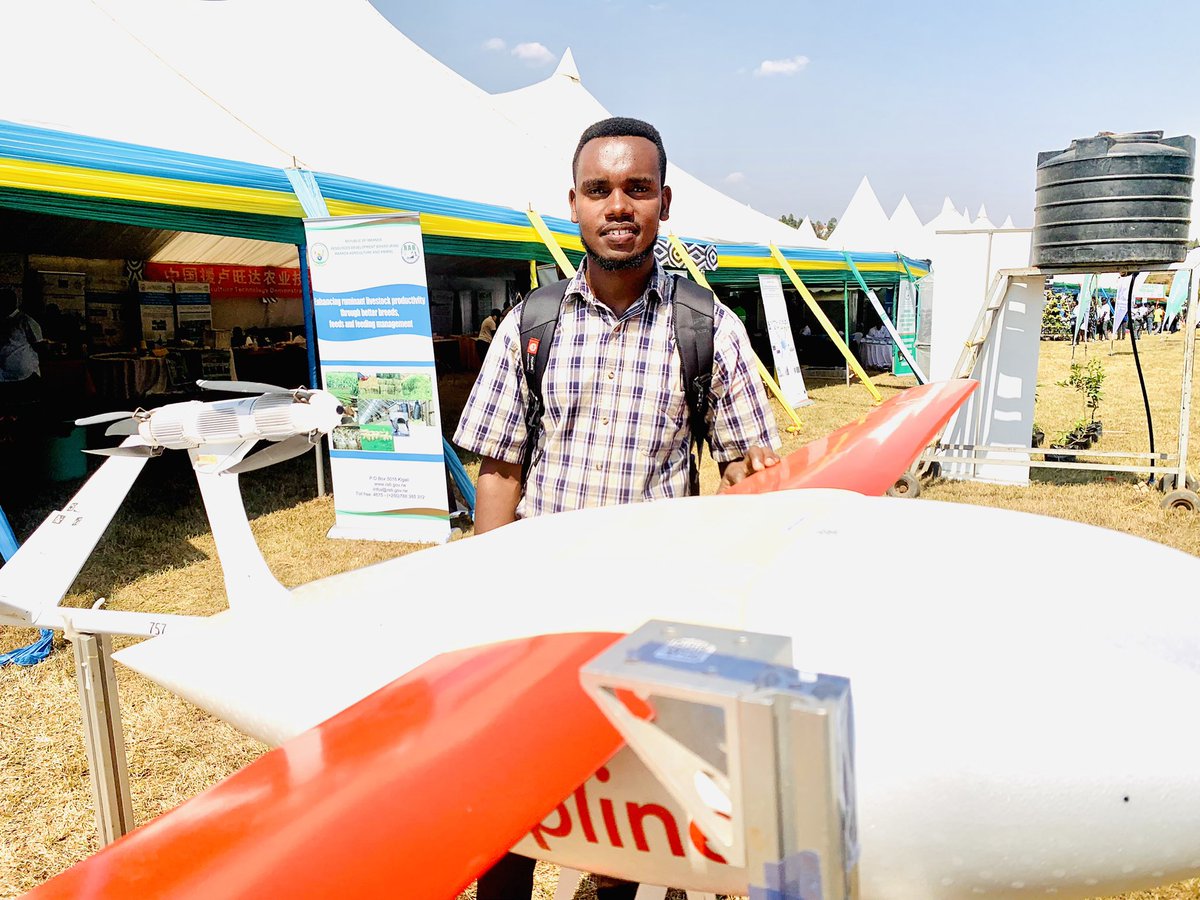
The use of drones in agriculture.
@ZiplineRwanda is a company that uses drones in various farming activities. Among services it provides, it transports pigs’ semens for artificial insemination in all districts.
#RwandaAgriShow2023