AI powered in silico solutions for BioPharma R&D. Multi-disciplinary team spanning multi-scale systems biology, computational chemistry & generative AI.
The common thread across these applications is purpose-built computational approaches grounded in chemistry, physics, and biology that help reduce experimentation and improve decision-making.
Read the full blog here: https://t.co/EkWcrabZGn
📖 New blog: "Beyond the Hype: How AI and Computational Chemistry Are Reshaping Formulation and Manufacturing"
Formulation, catalysis, crystallization, & manufacturing are among the most complex stages of Pharma R&D; AI and comp chem are beginning to deliver measurable value.
• Predicting pKa, solubility, nitrosation risk & peptide permeability
• Speeding catalysis/biocatalysis via AI-guided enzyme engineering & reaction optimization
• Supporting formulation with API surrogate search, CSP & ASD models
• Building digital twins & forecasting model
📖 New blog: "Beyond the Hype: How AI and Computational Chemistry Are Reshaping Formulation and Manufacturing"
Formulation, catalysis, crystallization, & manufacturing are among the most complex stages of Pharma R&D; AI and comp chem are beginning to deliver measurable value.
📣 Krishna Harsha Adusumilli will present at the @3D_cellculture Hands-On Training Workshop on Alternatives to Animal Models.
"Beyond the Hype: Real-World Uses of #AI in Organoid Research" explores practical applications of #AgenticAI across the #organoid research workflow.
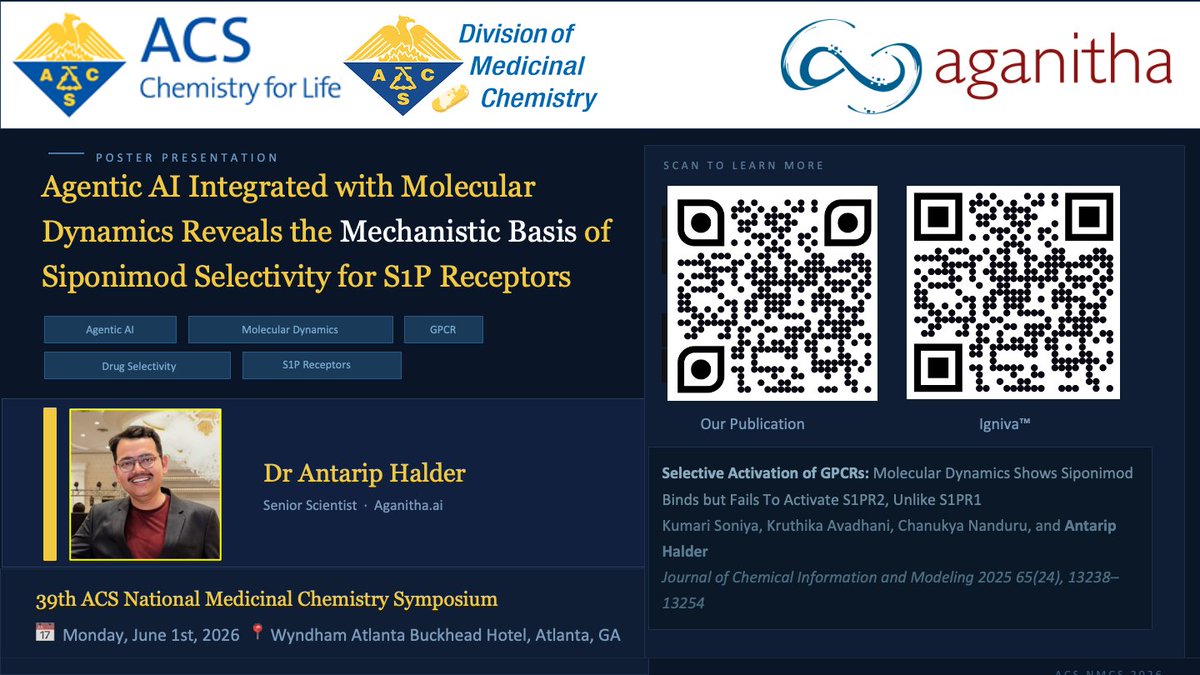
📣 @AntaripHalder is presenting a poster at ACS National Medicinal Chemistry Symposium in Atlanta.
“Agentic #AI Integrated with #MD Reveals the Mechanistic Basis of Siponimod Selectivity for S1P Receptors,” explores subtype selectivity across highly homologous GPCRs.
And we're just getting started.
🤖 Coming next: Lab automation through PyLabRobot integration, helping bridge protocol design and experimental execution.
More differentiators:
📊 Human-in-the-loop refinement for iterative protocol development
🤝 Collaborative and eLN-ready workflows designed for modern R&D teams
What makes IgnivaLab™ different?
🔬 Citation-backed protocols linked directly to experimental rationale
🧭 Experimental design with controls, timelines, & editable plate layouts
🧬 Integrated scientific tools embedded within workflows
...
IgnivaLab™ is built for scientific teams with:
✅ Version tracking
✅ Metadata management
✅ Peer validation
✅ Collaborative discussions
✅ Integrations with lab systems, computational & data analysis tools
Making protocols living scientific assets.
Once a protocol is tested on the bench, it can be saved into a IgnivaLab™ Protocol Library.
This creates an institutional knowledge layer where scientific context stays attached to the workflow instead of being lost across notebooks, emails, and disconnected files.
IgnivaLab™ doesn't just generate protocols.
It helps scientists connect:
• Literature evidence
• Scientific reasoning
• Experimental design
• Computational design of primers, guide RNAs, ...
• Workflow documentation
All within a unified environment.
Bench Scientists spend countless hours before experiments even begin:
📚 Reviewing literature
🧪 Comparing protocols
🎯 Designing experiments
🔍 Refining controls
📝 Documenting scientific rationale
IgnivaLab™ is designed to support scientists throughout this process.
From protocol generation and critique to plate design and citation-backed experimental workflows, IgnivaLab™ helps researchers design, rationalize, and refine experiments across the drug discovery value chain.
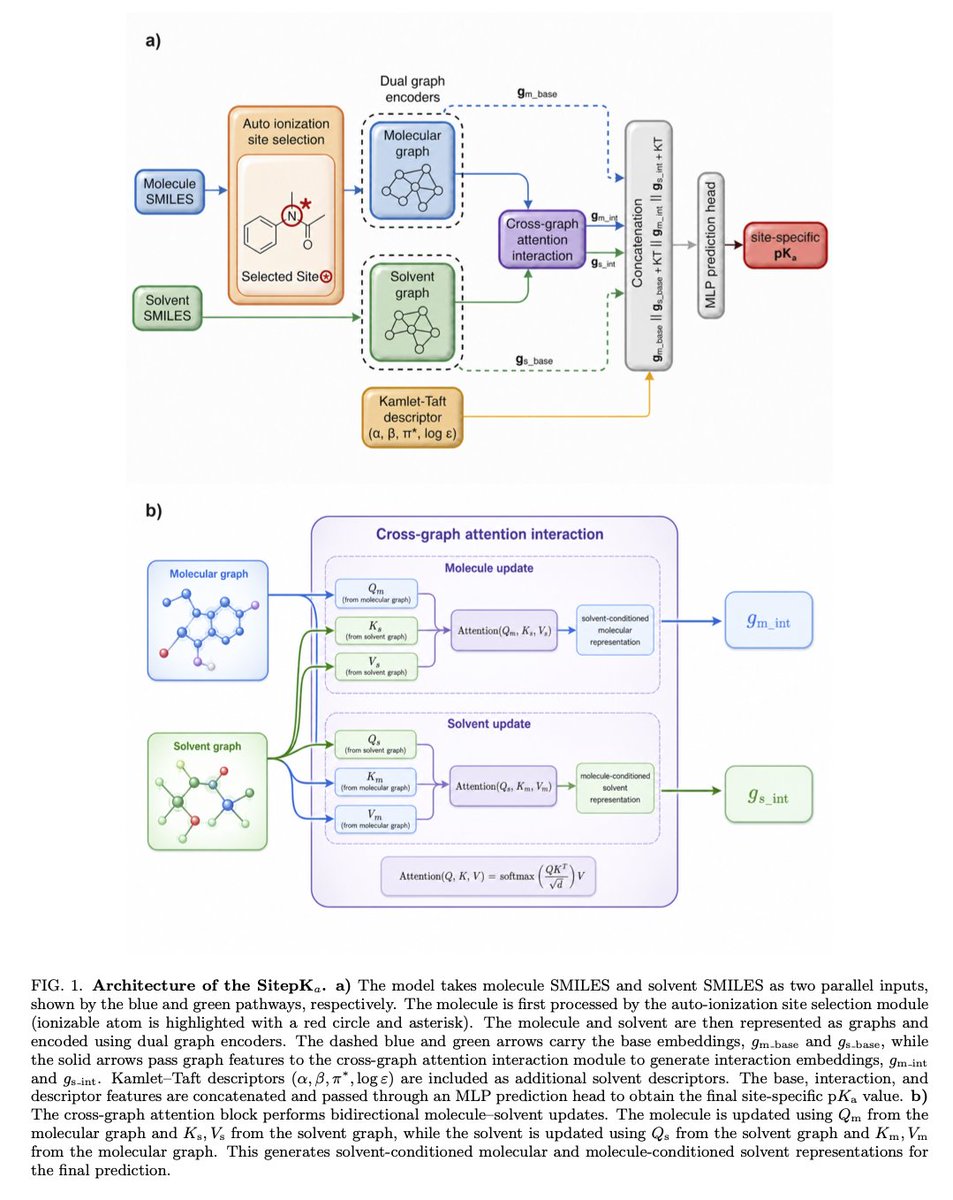
🤖 SitepKa predicts not just whether a molecule gains or loses protons, but also where within the molecule this happens — and how that behaviour changes across solvents.
The goal: faster and earlier molecular evaluation with reduced dependence on slow experimental testing.
🧠 SitepKa is a graph neural network for site-specific pKa prediction across water + 34 industrial organic solvents.
Rather than treating pKa as a single molecular property, SitepKa explicitly identifies ionisable sites & models their solvent-dependent behaviour.
#AI#CompChem