"I only trust them when I don't look at the code." @tmikov is only half joking here. In the interview, he also explains how he reviews specs and tests, with Codex and Claude helping with review ⬇️
Draft the email, wait for approval, then send. @DavidKPiano of @statelyai explains how state machines define an AI agent's workflow, with guards for unexpected outputs. Watch the interview ⬇️
Why put 100 agents on code quality? Carl Ross of @OpenAI explains competing code changes, a grader that picks the best candidate, and agents that keep cleaning up as features ship. Watch the interview ⬇️
What changes when you move beyond a single agent? Nishant Gupta of @Meta explains shared state, background ops agents, and a control plane for authentication and observability. Watch the interview ⬇️
Who's testing the code your agents write? @SzymonRybczak of @TesterArmy explains AI testing for web and mobile apps, including test plans built around each pull request.
Grok Bot reached internal beta in about a month. @nickwm of @spacexai explains how Cursor's browser experience and isolated virtual machines shaped its computer use. Watch the interview ⬇️
We believe in domain-specific models and domain-specific harnesses. At Callstack, we've been investing in both.
Excited to bring you the first piece of a broader family we're building. More to come!
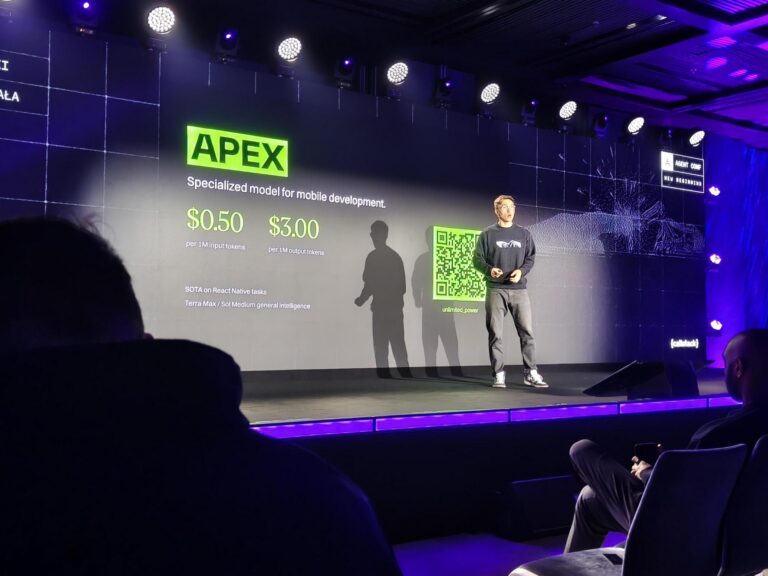
Announcing Apex: agentic coding model for mobile and web, specialized in React.
We built Apex from a single idea: can an open-weight model deliver frontier-level performance at lower cost?
Yes. Apex is SOTA in React Native and Next.js.
Try it now: https://t.co/nKbBxcmRFX
Developer tools now have a second audience: the coding agents using them on behalf of people. David Mokos explains what @expo learned when it started designing its platform for both human developers and AI agents.
Trying to force an LLM into perfectly deterministic behavior misses what it does best. Jakub Kuzimski shows how Allegro built a software factory around structured specifications, specialized agents, and explicit decisions instead.
A general-purpose agent can take on more than isolated coding tasks. Nick Miller shows how Grok Bot uses a cloud computer, company context, and familiar tools to handle long-running work across research, communication, and software delivery.
Agents can execute the same prompt-based skill again and again, spending tokens each time. Kent C. Dodds argues that repeated work belongs in deterministic software and demonstrates Kody, a personal software ecosystem designed to let any agent discover and run reusable capabilities.
Software development is moving from hand-written implementation toward systems where engineers direct agents, shape context, and judge the result. In the Agent Conf 2026 keynote, Mike Grabowski and Michał Pierzchała share how @callstackio is adapting to that shift.
Follow @apex__ai and @agent_device for real-time updates.
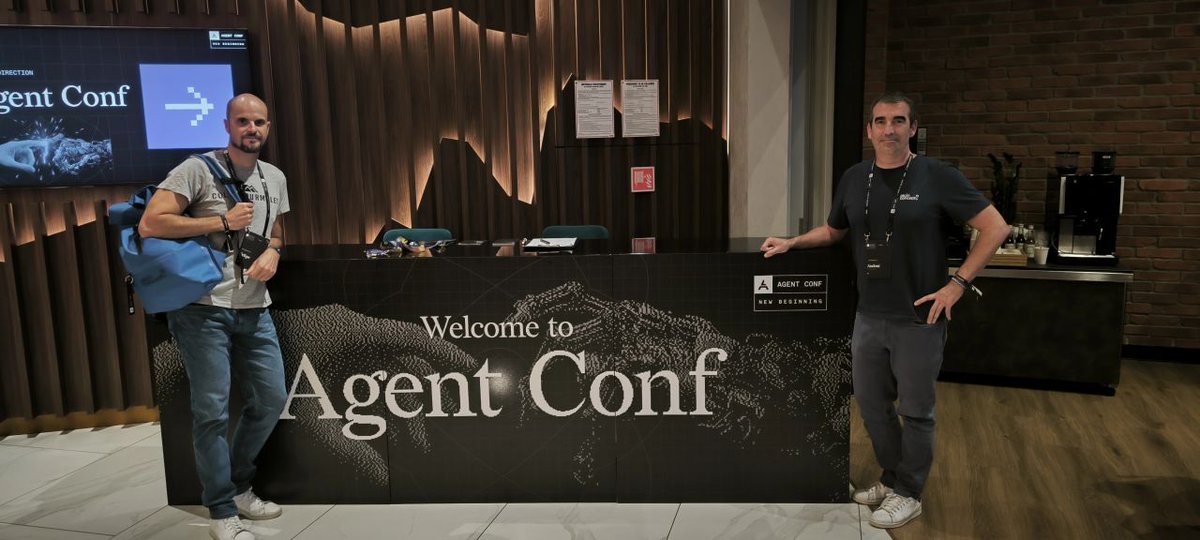
Last week, our colleagues Andoni Santamaria and Felipe Ugena attended @AgentConf in Warsaw.
🔹 Specialized models
🔹 Multi-agent coordination
🔹 Observability
🔹 Production-ready agentic systems
and more!
@callstackio
https://t.co/DINeQbQfAd
Had a great time at @AgentConf with @svennergr talking about how @grafana’s Agent Observability can help us, and everyone else building agents 🫵, build agents they can trust.
The video is out now! 🎥👇
https://t.co/htTizIpiHD