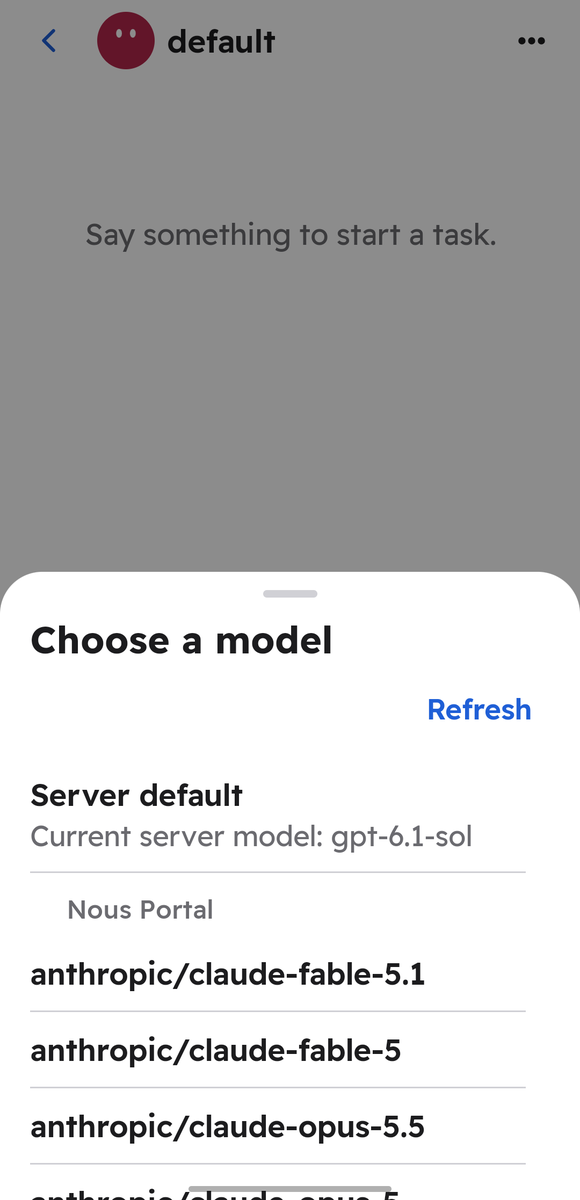
I built Rasul: a free, open-source Android app for Hermes Agent.
Chat with the bots on your PC from your phone, approve actions, switch models, run jobs, edit bot instructions.
100% vibecoded: Claude Opus 5.5 led it, GPT-6 Luna + Sol 6.1 wrote the code.
https://t.co/IK4beFparR
@hadealahmad أنا بخلي الشغل كلو من كلاود وبطلب منو يستخدم الباقي من cli headless وبكون محددلو بالضبط شو كل واحد يشتغل. بتحكم من الموبايل ومابضطر ابدا إلا لكلاود للتحكم بالكامل.
Ran the storage-rescue skill (https://t.co/L0kogMPr7X) with Claude Code on 2 Windows laptops. Survey first, then it asked me per category before deleting anything.
~158 GB back:
• Old laptop: 139 GB (WSL disk 145→64, caches 23)
• Main: 19 GB (Temp + Docker)
My Mac was down to 26 GB free. The space wasn't in caches. It was in old projects, AI models, recordings, backups, and chat histories.
So I wrote a skill that teaches AI agents to free it up without losing anything.
Storage Rescue has two modes:
1. Offload. Big files go to an external drive and get checked by SHA-256 twice. Only then is the Mac copy deleted. Works with APFS, exFAT, FAT32, and NTFS.
2. Reclaim. No drive. Caches are cleared with each tool's own command, and your files go to the Trash first.
The agent surveys the disk first, then asks you what to do with each group: move, delete, or keep. Nothing happens without a clear yes.
On my Mac: 968 GB used before, 366 GB after.
Free and open, plain text, no runtime. macOS only. Works with Claude Code, Codex, Cursor, Factory Droid, Devin, Hermes.
https://t.co/imIE2LUux0
I had the same problem. What fixed it: stop describing when to delegate and make it a table. Opus never builds; it plans, reviews and merges. Every build goes to an executor, and each brief has a TIER line that a script maps to a model. Briefs stay about 1h. The builder never reviews its own work.