I think the problem with a sensible immigration policy is that the obvious solutions are potentially too simple. There are really only two questions.
Who? and How many? 1/10
But there are likely some systematic investors who could improve their portfolio with this strategy. The shorts insurance for 2008 and 2022 has value too?
Results from back-testing. Past performance is not a reliable indicator of future performance. Not advice.
Rejected idea #1: Andreas Clenow's 'time return' trend model on futures. Monthly: long if price is above its level ~6 and ~12 months ago, short if below both, sized by volatility. We back-tested it on liquid futures, Jan 2003 to Nov 2026, net of modelled costs.
Why didn't we use it? We already run futures trend and this overlapped (correlation >0.4). Added to our portfolio, it lowered risk-adjusted returns. Part of the long-only edge is also a standing long tilt to bonds and equity indices. Good idea, not for this strategy.
More than four years after President Nayib Bukele began a crackdown on gangs, investment is surging and real estate and tourism are booming https://t.co/lVA3h13lGf
Building Genesis meant testing widely. Some good ideas didn't make the cut: too correlated, costly or fragile. Every few days we'll share one: the idea, the evidence and why we passed.
Past performance is not a reliable indicator of future performance (I hope).
Nearly two years into running The Aggressive Fund (TAF), a systematic quantitative fund, the biggest lesson was how difficult it is to effectively adapt the algorithm in real-time. Whenever I changed the algorithm, the cuts came back strongly and strategies we leaned into weakened. A thread on an aggressive systematic strategy.
The lesson I've taken: re-weighting a narrow set of strategies chases what just worked. Over the past six months we built Genesis, our next version, around breadth: more uncorrelated strategy families, futures across asset classes, crisis hedges. Aim: lower volatility, exposure and drawdowns.
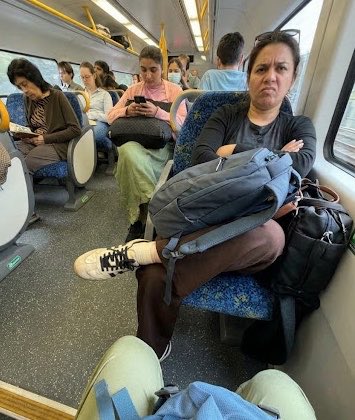
I seldom have occasion to ride public transport these days, but my great pleasure when doing so is always to select the person using a seat to carry their bag as my neighbour...
Thoughts and prayers to the commuter on my Waratah this morning who had to endure the immense trauma of removing their bag and shoes from the facing single seat after I had the sheer nerve to say "excuse me" and sit down.
Hope they recover from acting like I’d just evicted them from a First Class suite.
Australians: “We just want to stop living pay cheque to pay cheque, afford groceries and utilities, keep inflation in check and not have our mortgages and rents keep going up.”
Australian Government: “Best we can do is stop you seeing trad-wives baking sourdough online.” 🤷♀️
I thoroughly encourage mask-wearing.
It is perhaps the fastest heuristic enabling the identification of the credulous and the gullible who walk among us.
With millions of Americans preparing to travel for the holidays, is it worth digging out those old N95s?
Here’s how to weigh your risk, when wearing a mask makes the most sense and which types offer the best protection: https://t.co/xYrmlfViaD
A story about how Twitter works.
It was 2001 and I was in college. I was in the Park End nightclub in Oxford, in the men’s bathroom.
My friend Steve was at the urinal.
Our friend Matt walked in. He announced with excitement that Zinzan Brooke was in the club tonight.
Steve asked him who Zinzan Brooke was.
Matt replied that he was one of the most famous New Zealand All Black rugby players of all time.
Matt leaves the bathroom. And our friend Graham walks in. Steve says excitedly to Graham: “Can you believe Zinzan Brooke is in Park End tonight!?”
Immediately, a deep Kiwi voice pipes up from one of the toilet cubicles saying “Mate, 30 seconds ago, you had no idea who I was.”
This is a story about twitter takes.