A grassroots, 100% volunteer initiative promoting friendship and ecological resilience, in the same breath, within and between communities throughout the PNW.
@AnarContrarian @sellieyoung @TornadoNate@bgcts@tradistae@guyjames23@RizomaSchool@MichaelTG09@csmaje@alancornett Our experience with the Agrarian Sharing Network - now entering a second decade in its current iteration - is that ideological diversity is simply irrelevant to an experiential territory of common concern and conviviality transcending political/religious/cultural divisions.
Word has it that our ‘Shady Grove Grex’—a highly diverse, multi-species genepool of our best leaf Brassicas, having passed through two cycles of intense natural and human selection under punishing conditions—is already shockingly resilient under severely restricted winter light.
An inaugurated eschatology is but a world fully inhabited. Community-developed and -stewarded crop genepools are a slow social practice by which that correspondence becomes durable and inherited: new creation as lived ecology, bred into time.
Field Brassicas underpin temperate-climate winter-vegetable cropping, and represent a core focus and strength of our efforts reconstituting culture along essentially regenerative lines. This time of year, they're also one of our main recruitment platforms. https://t.co/ny49pA7LQf
@thebafflermag 1/2 For decades now, our 'applied agrobiodiversity' volunteers have been studying the grammar of the trees at the USDA pear repository, freeing material we’ve identified as ‘future heirlooms', into the commons. Gentle Joseph, retired now, is a much cherished elder in our circle.
@thebafflermag end/ And yes, Asian pears have emerged as a favorite for us, too. The trees themselves possess an uncommon charm: copper-boned in winter, vigorous to the edge of unruly, fragile under the hand, and often startlingly elegant once their force has been gathered rather than subdued.
@clothofnature In a similar vein, I love this image of a fallen Asian pear, Seuri Li, an exquisite corpse: skin gone from sun-gold to perfect, speckled black, without the rot disturbing a single, immaculate curve.
@thebafflermag 1/2 For decades now, our 'applied agrobiodiversity' volunteers have been studying the grammar of the trees at the USDA pear repository, freeing material we’ve identified as ‘future heirlooms', into the commons. Gentle Joseph, retired now, is a much cherished elder in our circle.
2/ Millennials? The oldest European, as distinct from Asian variety we share, is a 2,000 year-old Roman pear. Don’t be duped. It takes not sentimentality, but substance, to outlast a passing show of cultures, languages and civilizations coming and going through a swinging door.
Yes, it's already seeding season for winter field crops. The ASN Seed Increase Initiative will be gathering on Memorial Day at Maitreya eco-village in W. Eugene to discuss raising perennial seed crops through winters; strategy; and, as always, potlucking. https://t.co/DEKRYVlj82
We've been asked to make a long-form video demonstrating the Z-graft, a technique that has, in effect, transformed the ease and take-rate of temperate fruit tree grafting since it was introduced to the PNW by @AgrarianSharing volunteers some 4-5 years ago. https://t.co/2vDa7dYPkP
Always lovely, the meeting of fellowship and the deep agrarian. A day of procession through four homesteads, knit together in generative, biocultural participation in the 100% volunteer-driven Agrarian Sharing Network Seed Increase Initiative.
A distributed fellowship—lay fruit enthusiasts and professional ag scientists—hones our sense of which pear varieties, among the 1,000 we track in field and kitchen, are worth carrying forward in @AgrarianSharing's applied agrobiodiversity work. Each spring, we adjust the target.
2/ The wedding of global agrobiodiversity and local food cultures is where a vast inheritance of planetary intelligence condenses into a living grammar—a shared language by which nourishment is bound to adaptation, adaptation becomes culture, and the universal is made particular.
Though spiritual horticulture is universal, Persian gardens are distinctive in how many religious layers—pre-Islamic Zoroastrian cosmology, Islamic paradisiacal theology, and Sufi mystical interiority—they inscribe in semiotic traces visible to the cultivated eye.
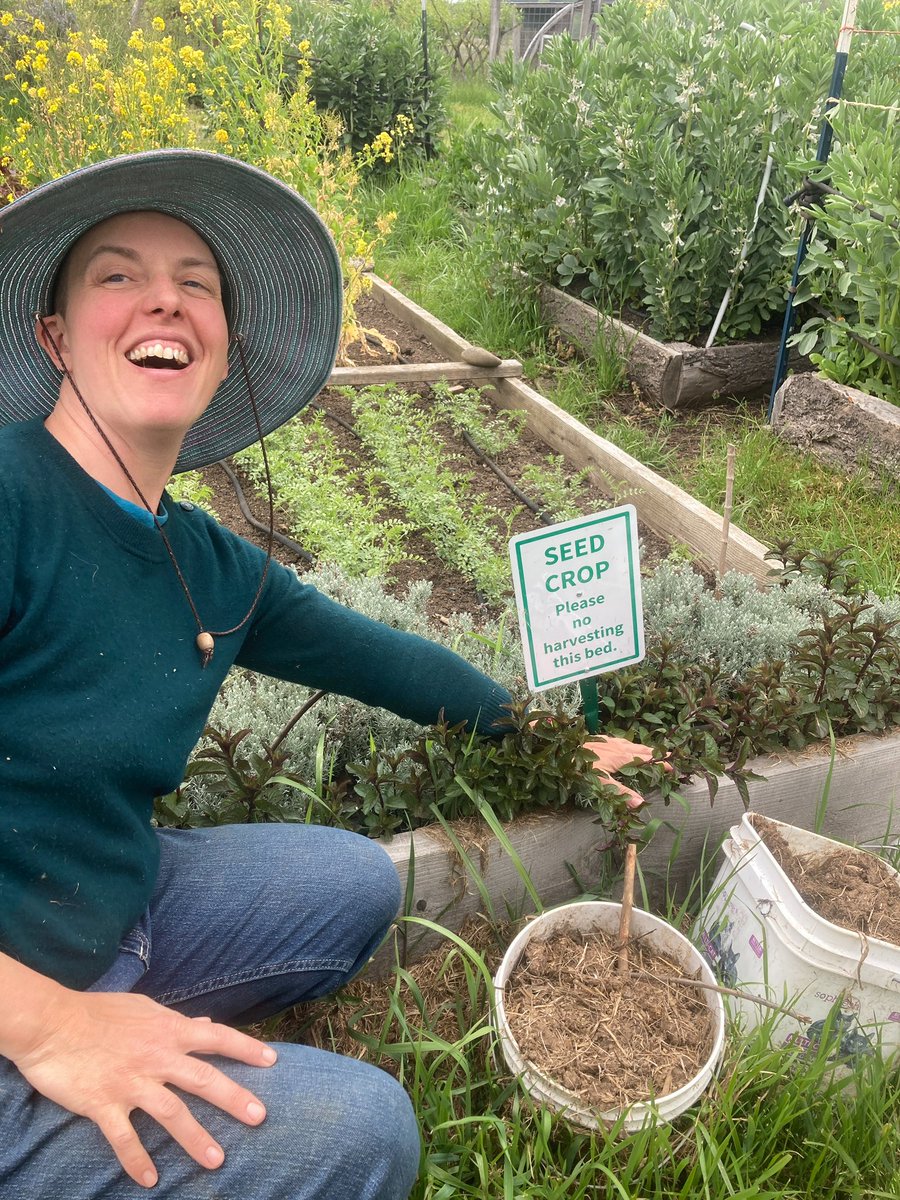
Just now, our 4K member FB group is wondering how best to raise seed on thousands of allium transplants needing to find ground. This fusion of technical, social & ecological ecologies is where coordination becomes biology, and biology becomes coordination. https://t.co/rCDADkZ4DX
Just now, our 4K member FB group is wondering how best to raise seed on thousands of allium transplants needing to find ground. This fusion of technical, social & ecological ecologies is where coordination becomes biology, and biology becomes coordination. https://t.co/rCDADkZ4DX
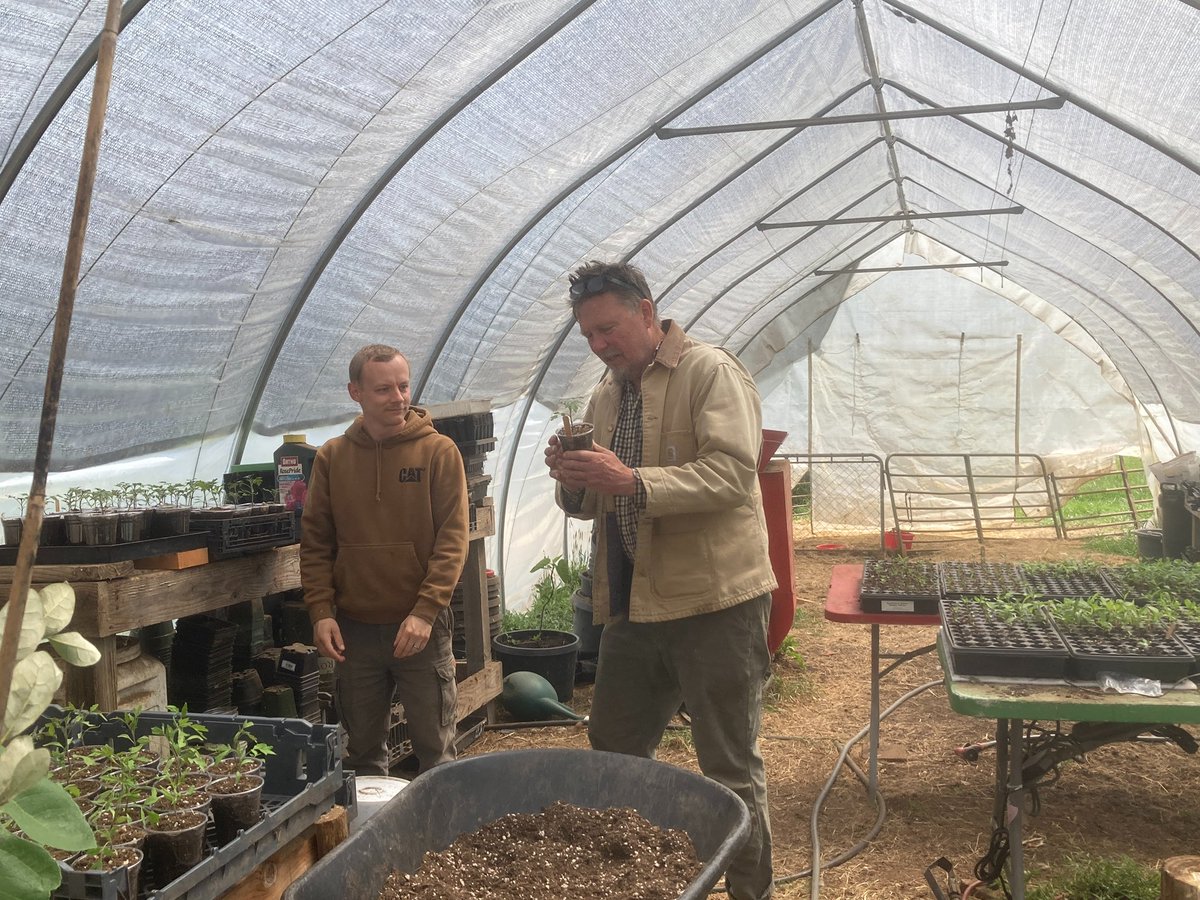
"...here's a picture coming off our nursery tables...beyond the reach of the for-profit complex, our focus on adaptability means we have more freedom to embrace the human ecology of homestead life in our plant stewardship. What does that mean?..." https://t.co/gSQHmjYWRl
Fascinating. 'Silver Edged' Squash (C. argyrosperma) seed, at @AgrarianSharing seed steward meeting yesterday. An important ingredient in Latin American cuisine, the flesh goes to animal feed; the seeds are roasted for snacks (pepitas) or ground for pipian sauce, a type of mole.
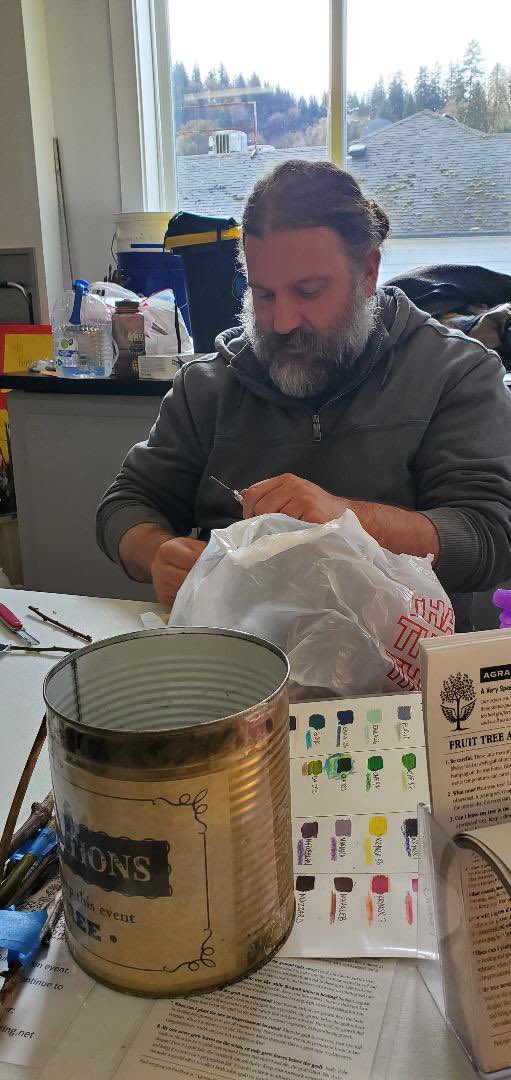
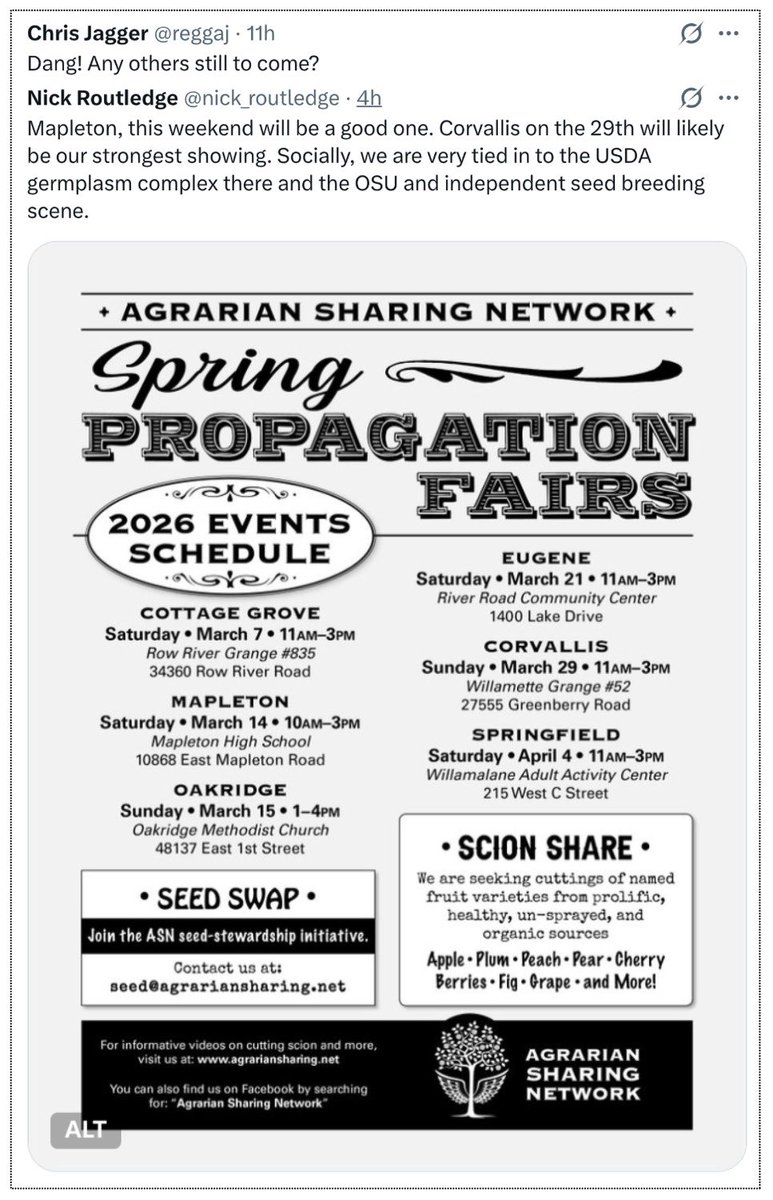
Volunteers handling specific responsibilities—seed, scion, rootstock, grafting—gather from across the bioregion to support each propagation fair we support. Here, images from yesterday's event in Mapleton, in Oregon's Coast Range. Today, we're in Oakridge, in the Cascade range.
@AnarContrarian @sellieyoung @TornadoNate@bgcts@tradistae@guyjames23@RizomaSchool@MichaelTG09@csmaje@alancornett Our experience with the Agrarian Sharing Network - now entering a second decade in its current iteration - is that ideological diversity is simply irrelevant to an experiential territory of common concern and conviviality transcending political/religious/cultural divisions.
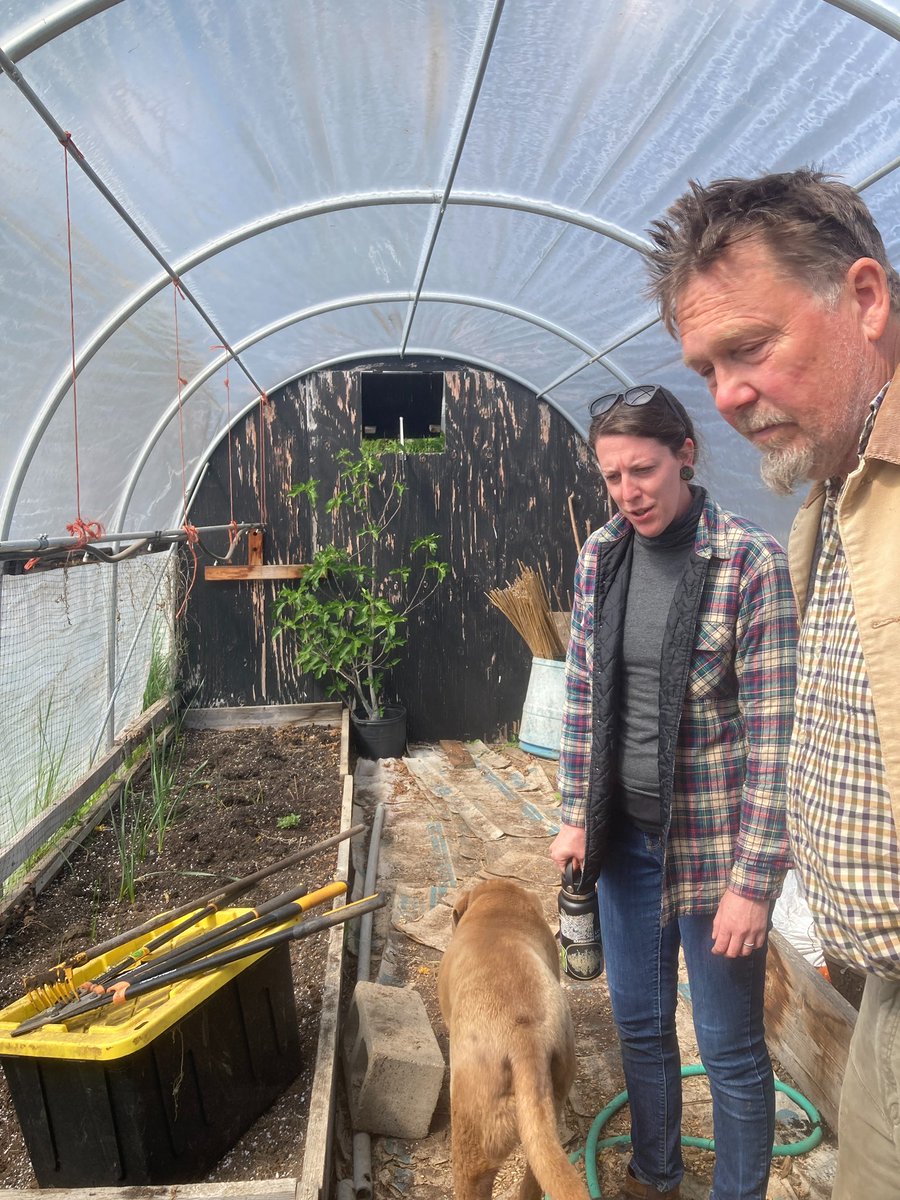
The polycrisis is a threshing floor. As collapse deepens, illusions are winnowed, essentials remain. What actually matters? The regenerative foundations that hold the world up—the humble substrates of survival: food resilience, the patient work of adaptation. In the greenhouse...
What happens when the best of visionary, holistic, regenerative-design practice hooks up with revolutionary, leading-edge, ag science in an entirely novel paradigmatic combination functionally ‘clicking!’ at a co-evolutionary level?
The 'realocalization' movement addresses a disorder in how reality itself is known, not merely how it is encountered. Its work is not only material but perceptual—healing the civilizational ground where significance, responsibility, and agency become legible and newly actionable.
Seed increases, anyone? Purple tofu made from black soybeans? Brazil, the world's most fertilizer-dependent ag system supplies 50% of global soybean exports. 1/3 of traded fertilizers depend on the Hormuz Strait. Soybean diversity for homesteaders, then... https://t.co/SqwA45I11C