The ASI has now taken cognizance of this find. A message purportedly from the Director (Epigraphy) has been circulating in some groups. I hope that this means that the inscription will be noticed and protected. There are several errors in the interpretation of the inscription in the message but the overall significance has been understood.
However, in the message no credit has been given to our team for finding or deciphering the inscription. We hope that this oversight is rectified.
Our team member Rudra Vikrama Srivastava has made this striking discovery -- a discovery that large government institutions could not make. We hope that these contributions are recognized.
New Inscription Found: A Milestone in the History of Rama Worship
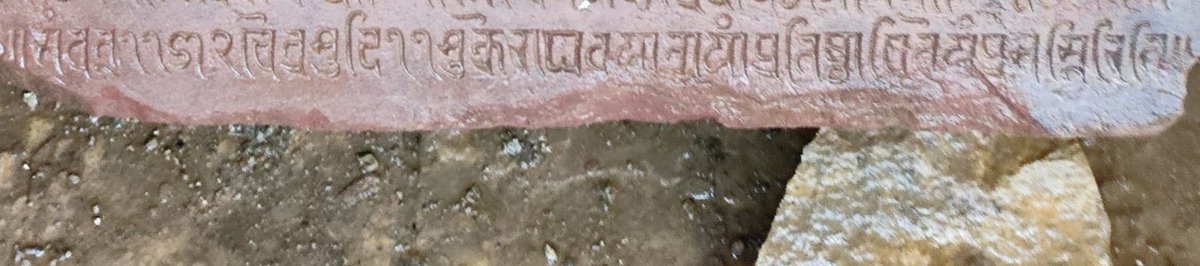
We are delighted to announce a new archaeological discovery shedding light on the history of Rama worship: the oldest praśasti inscription devoted to Shri Rama.
A new, unpublished, 11th century inscription of Kirtivarman Chandela issued by his minister Vatsaraja was found by Sh. Rudra Vikrama Srivastava (Archaeologist) during an exploration at the Garhwa Fort in Prayagraj, Uttar Pradesh.
The reconstruction was meticulously done by Sh. Kushagra Aniket (Economist and Sanskrit Scholar), with help from Dr. Shankar Rajaram (Presidential Awardee and Sanskrit Scholar). The significance of the inscription became apparent after reconstruction efforts.
This inscription is the oldest praśasti (eulogy) to Shri Rama discovered in India. It predates the famous Vishnu-Hari inscription. It is also the earliest archaeological evidence of ceremonies surrounding the Rama-Navami festival. The inscription references the exile of Rama and mentions the construction of a temple (matha) at an earlier āśrama (resting place).
The inscription is on a large stone slab and consists of 16 lines, and barring a couple of letters on the left margin of every line, the rest is in an excellent state of preservation. The language is Sanskrit engraved in the characters of the 11th century Nagari script. The inscription was erected in 1095 CE (VS 1152) on the eleventh day of the waxing half of Caitra (Caitra śukla ekādaśī) at the conclusion of a ceremonial procession (Rāghava-yātrā).
The inscription is expected to be published in the near future.
गरबा, रास, और दांडिया - नवरात्र के उत्सवों की व्युत्पत्ति
-कुशाग्र अनिकेत
प्रायः लोकभाषाओं में “नवरात्र” और “नवरात्रि” - दोनों प्रचलित हो गए हैं। संस्कृत व्याकरण के अनुसार “नवरात्र” ही शुद्ध है। यह एक द्विगु-समास है जिसका अर्थ है “नौ रात्रियों का समाहार”। पाणिनीय व्याकरण के अनुसार “रात्रि” से पहले जब संख्या जोड़कर समास बनाया जाता है, तो वहाँ “रात्रि” का रूप परिवर्तित होकर “रात्र” रह जाता है। इसी प्रकार द्विरात्र, त्रिरात्र आदि शब्द भी बनते हैं। “नवरात्र” शब्द का प्रयोग प्रायः सभी ग्रन्थों में मिलता है, “नवरात्रि” का नहीं। किन्तु सामान्य बोलचाल में प्रचलित हो जाने के कारण हिन्दी में “नवरात्रि” भी बहुधा देखने मिलता है।
देश के विभिन्न प्रदेशों में नवरात्र में कुछ विशेष उत्सवों का आयोजन होता है। इनमें गुजरात का “गरबा” आज पूरे विश्व में प्रसिद्ध है। “गरबा” की व्युत्पत्ति संस्कृत के “गर्भ” से मानी गई है। इस आधार पर इस नृत्य के विषय में अनुमान लगाया जा सकता है कि पूर्वकाल में गरबा देवालयों के गर्भ-मण्डप में खेला जाता था। यह भी कहा जा सकता है कि यह नृत्य घर अथवा हवेली के आँगन के केन्द्र में रखे एक विशिष्ट “गर्भ-दीप” के चारों ओर खेला जाता था। इस प्रकार गरबा मन्दिरों में प्रतिमा अथवा घरों में दीपज्योति के रूप में प्रतिष्ठित देवी की आराधना का उत्सव है।
कभी-कभी गरबा के पूर्व “रास” शब्द भी जोड़ा जाता है। रास से सभी परिचित हैं। मूलतः यह गोपालकों का एक नृत्य था जिसका आयोजन रात्रि के समय एक मण्डलाकार रूप में होता था। बाद में श्रीकृष्ण की लीला का अंग बनकर यह मण्डल की परिधि पर स्थित जीवात्माओं के केन्द्र में स्थित परमात्मा के साथ मिलन का प्रतीक बन गया। वर्तमान में प्रचलित गरबा में रास के इस प्राचीन प्रारूप की झलक मिलती है।
गरबा में प्रयोग किए जाने वाले “दांडिया” की उत्पत्ति स्पष्टतया “दण्ड” से हुई है। मध्यकालीन अष्टछाप कवियों ने इसी शब्द से उत्पन्न “दांडी” का वर्णन किया है, जिसका प्रयोग श्रीकृष्ण की लीलाओं में देखा जाता था।
* नवानां रात्रीणां समाहारो नवरात्रम्। अहस्सर्वैकदेशसंख्यातपुण्याच्च रात्रेः (पाणिनीय-सूत्र ५.४.८७)। सङ्ख्यापूर्वं रात्रं क्लीबम्। तत्र वार्त्तिकम्।
@atulpmail Thanks for achieving the impossible @atulpmail !
The present crop of officers - and teachers - who came in after intense cleansing, shall ensure that Bihar rises and rises. A most memorable tenure. Integrity and transparency, thou name is Atul Prasad. Very well done, Chairman!
Thanks BiharTimes Conclave for conferring the first ‘’श्रेष्ठ बिहार-नवनिर्माण युगल’ or the ‘best couple contributing for Bihar’s transformation’ Award on me and @atulpmail by the civil society & diaspora of Bihar for our respective work! We are inspired & humbled!
@PTI_News This is a great initiative. Mohammad Shami is undoubtedly the brightest star of Team India. Every resident of Amroha feels proud of him. Very well done, district administration!
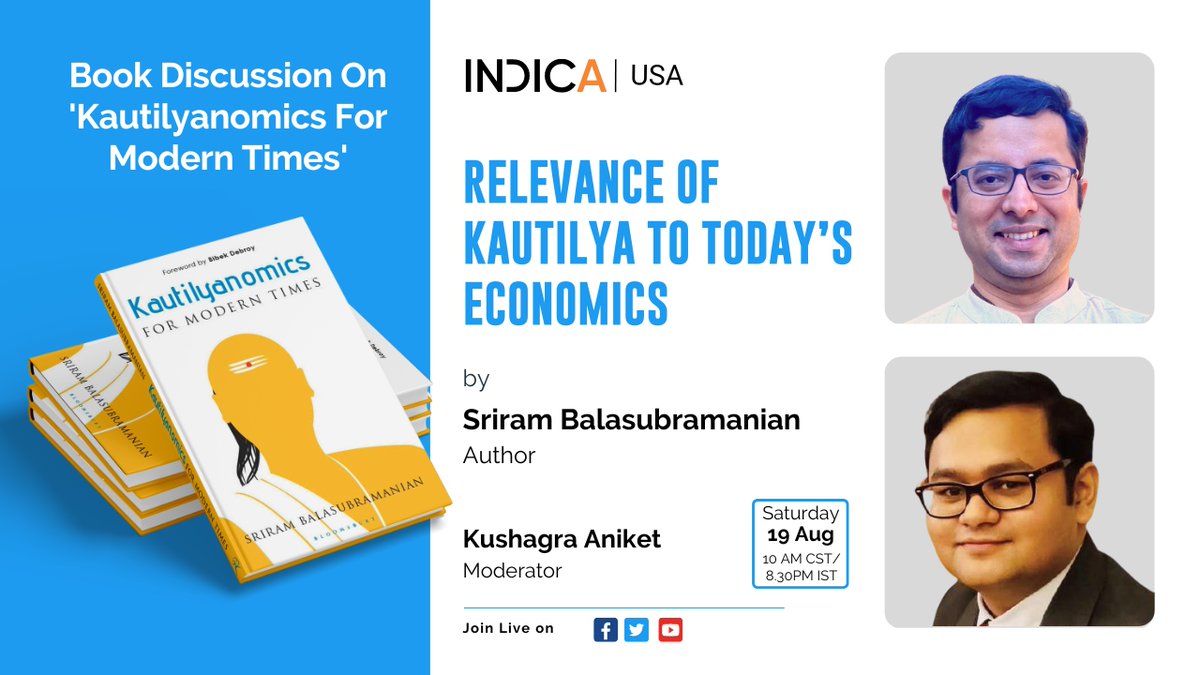
Relevance Of Kautilya To Today’s Economics
Sriram Balasubramanian and Kushagra Aniket (@KushagraAniket) are going to discuss the ideas laid out in Sriram’s latest book, #Kautilyanomics For Modern Times.
The book draws ideas from Kautilya’s (Chanakya) Arthashastra to be applied to modern economic scenarios like wealth creation, Dharmic capitalism, enforcement of contracts and come up with new policies that are aligned to Bharatiya (Indic) values.
Register Now - https://t.co/9szitKkdQR
@avatans@indiancatch22 @cmram_23 #QnA
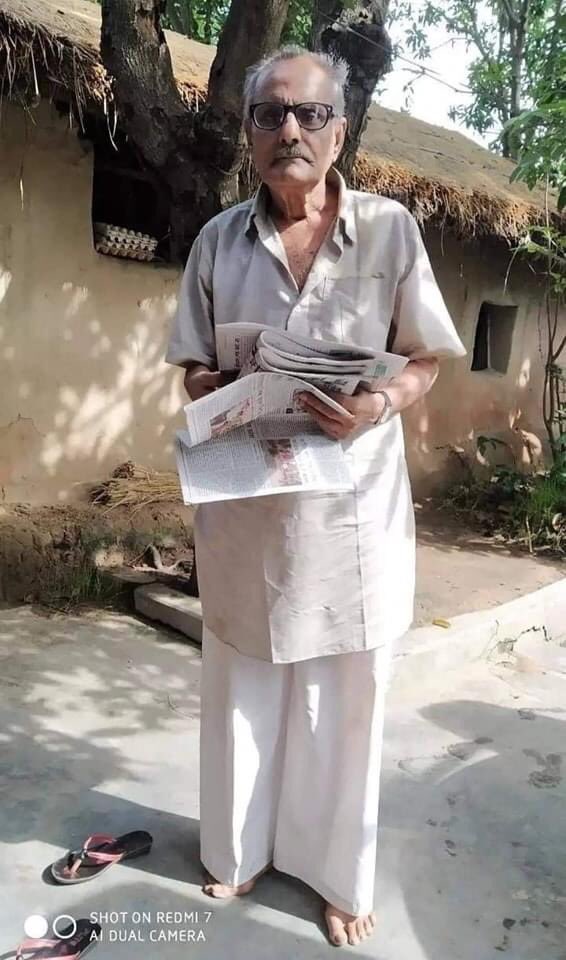
“The day I got my postgraduate degree, I didn’t waste a minute– I rushed back to my village, Ausgrum in Bengal to become a teacher. Yes, I had higher salary offers from schools in bigger towns, but for me, the 169 Rs. I was offered at my school village meant everything; I was hungry to teach the students from my village who needed a good teacher the most.
And I taught at my school for 39 years and only retired because I’d hit my ‘retirement age’– 60, what a ridiculous concept!
So there I was at 60, retired and expected to spend my years drinking sugary tea and whiling away my time on the charpoy! But I was restless, I didn’t want to retire and kept asking myself, ‘What shall I do now?’ A few days later, I got the answer.
One morning, around 6:30 AM, I saw 3 young girls enter my house. I was shocked when they told me they’d cycled for over 23 kms to see the Master who’d retired! They were young tribal girls who were desperate to learn; with folded hands they asked, ‘Masterji, will you teach us?’ I immediately agreed and said, ‘I can teach you, but you will have to pay my school fees for the whole year–are you ready to pay?’
They said, ‘Yes, Masterji, we will manage the money somehow.’
So I said, ‘Yes, my fees are Rupee 1 for the whole year!’
They were so happy, they hugged me and said, ‘We will pay you 1 Rupee and 4 chocolates also!’
I was elated! So, after they left, I put on my dhoti and went straight back to my school and requested them to give me a classroom to teach…they refused. But I wasn’t going to stop– I had years of teaching left in me, so I went back home, cleaned my verandah and decided to start teaching there.
That was in 2004–my Pathshala started with those 3 girls and today we have over 3000 students per year, most of whom are young tribal girls. My day still starts at 6 AM with a walk around the village and then I open my doors to students coming from all over– some of the girls walk for 20 plus kilometres; I have so much to learn from them!
Over the years, my students have gone on to become professors, heads of departments and IT professionals– they always call me and give me the good news and as always, I ask them to please give me some chocolates! And last year, when I won the Padmashree, my phone didn’t stop ringing; the whole village celebrated with me–it was a happy day, but I still didn’t allow my students to bunk class!
And my doors are open to all– come visit me and my Pathshala anytime; our village is beautiful and all my students are bright–I am sure you can learn something from them!
So that’s my story– I am a simple teacher from Bengal who enjoys his tea and evening naps on his charpoy. The highlight of my life is being called Master Moshai–I want to teach until my last breath; it’s what I was put on this planet to do!”
Sujit Chattopadhyay
President Kovind presents Padma Shri to Shri Sujit Chatterjee for Literature and Education. A retired school teacher from Purba Bardhaman, West Bengal, he is recognised over the state for his free coaching center named “Sadai Fakirer Pathsala”. (Courtesy: Characters of Calcutta)
Harsha Bhogle said "I remain the teller of the story. Not the story itself".
Harsha with gift of the verse made cricket more romantic and interesting.
While cricket was played on the field, he served it in his own flavour into our drawing rooms.
1. When Geoffrey Boycott once said Sachin may be a great batsman but he never got his name at the Lord's honours boards, Harsha said - "So whose loss it it? Sachin's or the Honours Boards'?"
2. Explaining how Cheteshwar Pujara is a fine Test player but the T20 format doesn't suit him - "Pujara is a classical musician in the era of Yo Yo Honey Singh."
3. After Dhoni sent a Mitchell Starc delivery to the boundary - "He had all the time in the world. He could have read a newspaper."
4. On a Tendulkar straight drive against Ishant Sharma in the IPL - "open the text book. Turn to page 32".
5. About Rahul Dravid's devastating form - Ask him to walk on water and he would say, 'how many kilometres?'
6. About Glenn Maxwell’s batting - "He just loves to storm through. I guess if he had a car, he would probably start it in 4th gear."
7. After Sehwag was dropped yet again during a tour of New Zealand - "Its that kind of a day, Sehwag can walk blindfolded across a busy highway today and not get run over."
8. When Michael Clarke got caught at slip but was still waiting for the umpire’s decision - :I think he is waiting for tomorrow's newspaper to declare him out."
9. During Sachin’s last Test match against the West Indies - "Sachin playing well and looking positive. I think that couple of fours he hit settled the nerves. Dont know about his nerves, I am talking about the nerves of each and every person in the crowd."
10. Looking at the pitch in a recent England tour : "Looks like Suarez was here".
11. India's last man Narendra Hirwani was coming into bat when Bhogle was asked by his co-commentator Ian Chappell whether Hirwani could bat - "If you make a team with all the No.11s of all the teams, Hirwani would still come at No.11 in the line-up."
12. What a way to welcome Sachin when he was coming in to bat in a Test match!
"Eruption of joy in the fall of an Indian wicket would only mean one thing".
13. When India's 11th man, Varun Aaron, was coming into bat - "Cricket is the only sport in the world where you are absolutely horrible at something and you still need to go out and do it."
14. Dhoni was whacking one shot after another until Sachin got on strike and caressed a delivery towards covers - "We have a surgeon at one end and a butcher at the other."
15. After Dhoni lost the toss yet again - "MS Dhoni has yet again called for heads to the coin which has two tails."
16. While co-commentating with Rahul Dravid in a Test match that India was losing to England - "The only man who can save the match is the man sitting next to me."
17. After a diving Kieron Pollard could not take a catch - "If Pollard can't reach it then it's not a catch."
18. When Sachin got out off Michael Vaughan's offspin in 2002 - "Oh what a shame! It's like a soldier who survived the war when all the bullets were flying by his nose and then got run over by a bicycle in his native town."
19. When the batsmen are scrambling for singles and twos at the end of an innings - "It's like the end of a scrabble game at this stage, India will take whatever they can get."
20. What a way to sum up why we call Dravid The Wall! - "Is there a more calming sight in the world than Rahul Dravid taking guard."
21. And this is what he said during a lecture at IIM-A and someone asked him what his CGPA was as a student - "I learnt this very early in my childhood.
Remember the good, forget the bad."
https://t.co/aEK503Hl9j
Rebirth of an institution!
Bihar Public Service Commission (BPSC) completes 75 years. Hear BPSC Chairman Atul Prasad speak at Foundation Day.
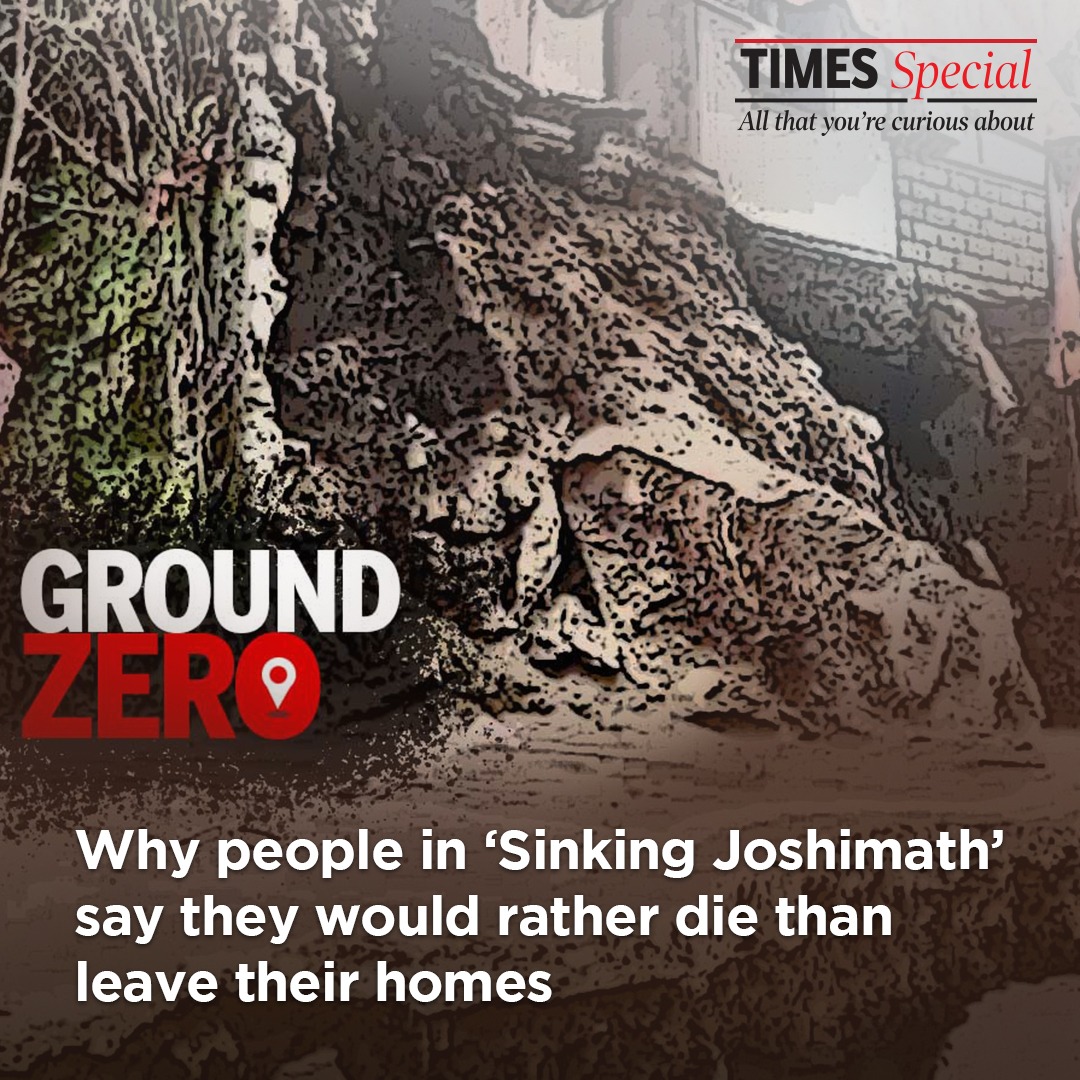
Joshimath is witnessing frenetic activity as the entire town is caving in. In this #TimesSpecial presentation, Ground Zero, TOI reporters who have been camping in Joshimath and Karnaprayag, recount tales of horror, pain and apprehension. Listen now.
https://t.co/cBze0CNntQ
The Seven Exoduses of the Kashmir Pandits.
This is great piece recounting the pains, sufferings, the transgenerational trauma of the Kashmiri Hindus by my buddy Atulya Tankha, a Kashmiri Hindu.
Via @myindmakers.
#KashmirFiles
https://t.co/LwzplyH0rQ
The JNU camaraderie: forever thriving.
Right to left - Dr Amitabh Singh, Associate Prof, JNU; Sri Sanjay K Jha, Minister IPRD & WRD, Govt of Bihar; Sri Ashish Sinha, Secretary General - Broadcasting Content Complaints Council; & myself
@AmitaabhSingh@SanjayJhaBihar@Ah_shish