Ontology MainNet upgrades to v3.1.2 at block height 20,800,000.
Four Ethereum opcodes come to the Ontology EVM: PUSH0, BASEFEE, MCOPY and transient storage. Smaller contracts, cheaper temporary state, less friction porting from Ethereum.
https://t.co/RkxgtES5ae
🔥ŞOK HABER🔥
( RT YAP HERKES BİLSİN)
Google, Amerikan tarihindeki en BÜYÜK açık hava biyolojik deneylerinden birini başlatmak üzere.
Google, EPA’ya (ABD Çevre Koruma Ajansı) Florida ve California’da iki yıl boyunca toplam 64 milyon Wolbachia bakterisi taşıyan erkek sivrisinek salmak için deneysel kullanım izni başvurusu yaptı. Plana göre her eyalette yılda 16 milyon sivrisinek bırakılacak.
Milyonlarca canlının açık havaya bırakılacağı devasa bir biyolojik deneyden söz ediyoruz.
Google bu kez internete değil, doğanın üreme sistemine müdahale etmeye hazırlanıyor!
Sözde, doğaya salınan erkek sivrisinekler doğadaki dişilerle çiftleşecek; taşıdıkları bakterinin oluşturduğu üreme uyumsuzluğu nedeniyle embriyolar gelişmeyecek, yumurtalar açılmayacak ve sonraki nesiller baskılanacak.
Bill Gates Vakfı, benzer yöntemi kullanan uluslararası sivrisinek programlarına yıllarca milyonlarca dolarlık destek sağladı.
Bugün “salgınları önleme” bahanesiyle bir türün üreme sistemine müdahale ediliyor.
Ya bu kontrolsüz biyolojik müdahale, virüslerin yeni taşıyıcılara uyum sağlamasına ve ileride yeni bir salgının, hatta pandeminin tetiklenmesine zemin hazırlarsa?
Doğaya bırakılan 64 milyon sivrisineği geri toplamak mümkün olmayacak.
Salgını önleme projesi diye başlayan deney, yeni bir pandeminin ilk halkasına dönüşürse...
Ekosistem bir teknoloji şirketinin açık hava laboratuvarı mı?
Milyonlarca laboratuvar üretimi sivrisineği doğaya salıp, bir türün üreme zincirine müdahale etmeye kim yetki veriyor?
“Hastalıkları önlüyoruz” denilerek başlatılan bu biyolojik deneyin uzun vadeli sonuçları ters teperse, yeni salgınlara zemin hazırlarsa hesabını kim verecek?
Doğaya yapılan müdahalenin geri dönüşü OLMAYACAK. Kimse bunlara DUR demeyecek mi?
$ZEN staking rewards are now live on Horizen! ✨
The rewards pool is active and flowing to stakers.
If you staked ahead of today, you are already earning. If not, you can stake and join anytime.
Stake Now → https://t.co/XXxMYUWUqM
$ZEN staking has arrived! 🎉 Getting positioned is simple.
Stake your $ZEN now, and when the rewards pool opens Monday, July 27, you are already earning.
No advantage to timing it, and no penalty for staking early.
Stake Now → https://t.co/ULOg25FFt0
Builders don't show up asking for privacy. They show up with a problem: a strategy they can't expose, treasury moves they'd rather not broadcast.
Privacy is what makes the work possible. And it only matters when people actually use it.
This week's community call recap covers where the ecosystem stands, the Builder Fund's focus on privacy-forward DeFi, and a look at @AmaanahLabs' take on selective privacy.
Read it↴
As we lean into practical privacy on Horizen, the team wanted to make it easier for builders to move from idea to deployment.
So the developer docs have been fully revamped and are live now at https://t.co/Ygod1AJdQZ, rebuilt around how you actually build.
Let's take a closer look at what changed. A 🧵...
The recap is live.
We broke down the full X Space conversation on practical privacy: where Horizen started, why we went EVM-native, the builder case, privacy in the agentic economy, and the role of $ZEN.
Missed the Space? This covers everything. Read below↴
Missed the Space? The full recording is live.
The team talked through Horizen's evolution from privacy coin to privacy-first ecosystem, why privacy is becoming a practical requirement onchain, and where things go from here.
A full recap blog post drops tomorrow, and we'll be sharing highlights from the discussion soon. Stay tuned.
Listen back below↴
https://t.co/J509NyPHtb
Privacy has always been part of Horizen's story.
Today that story takes a practical turn.
We're bringing privacy into the modern onchain economy, where confidentiality, auditability, and real economic use finally work together.
This is where Horizen is going↴
🔗 https://t.co/EEp7qzvYlo
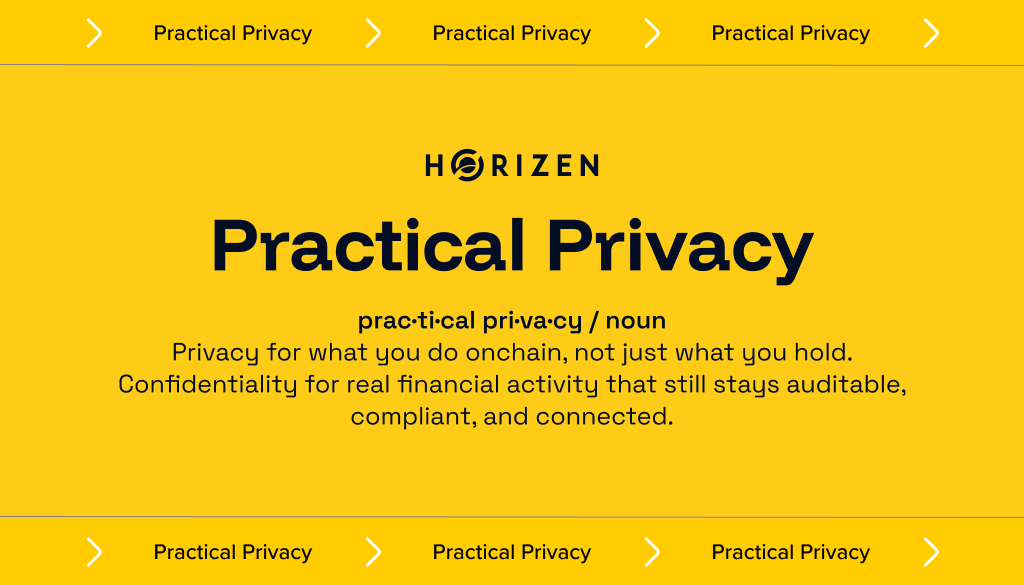
For years, privacy in crypto meant one thing: private money.
But holding assets privately is only part of it.
Practical privacy is about protecting what you do onchain, your strategies, your positions, your activity, without giving up compliance or access.
A lot has changed across the Horizen ecosystem.
Horizen is now an OP Stack blockchain on @base, built around compliant privacy infrastructure, EVM composability, and TEE-backed confidential compute.
$ZEN remains the governance and utility token of the ecosystem, with an active builder program, new privacy apps, and staking coming soon.
The mission is the same. The architecture has moved forward.
Last week's RTDMD paper proposes reward-guided RL for few-step diffusion alignment.
It also explicitly acknowledges, in its own framing, that aligning distilled models with human preferences remains challenging.
The framework solves a downstream problem. The upstream is still doing what it always did.
🧵
Two @thriveprotocol Grant Program projects. One clear signal.
@poly_pay, a Horizen x Thrive project, used @veravote_org, a @ZKVProtocol x Thrive project, to support private internal voting with verifiable results.
🔒 Privacy protects the voter
✅ Proof verification protects the outcome
This is the kind of activity taking shape across Horizen and zkVerify↴
Real teams. Real use cases. Real proof.
The METR time-horizons graph, cited everywhere from policy briefings to capability roundups, is publicly contested.
A detailed teardown documents "numerous severe errors."
Every lab that ever cited the graph now has a credibility problem they did not have last week.
🧵
Nine years ago, ZenCash launched.
A lot has changed since then. The name. The network. The mission’s scale.
But the core belief is still here: privacy matters.
Happy birthday, Horizen. Stay $ZEN.
The published research is in.
AI-mediated communication systems measurably shift the opinions of the groups they serve.
Polish, suggest, summarise, rewrite. Each tap nudges. The aggregate shifts.
"Did this person say this thing" is becoming a real question.
🧵 on the architecture that answers it.