Today in 1975, Éamon de Valera died peacefully in Linden Convalescent Home, Blackrock, Co. Dublin, aged 92. It was the passing of a man who had lived long enough to become the last surviving commandant of the 1916 Rising, and with his death the revolutionary generation itself seemed to pass into history.
De Valera had been at the centre of Irish public life for over half a century. He had led from the front as President of the Executive Council, then Taoiseach, and finally President of Ireland, steering the state through independence, neutrality, and the establishment of the Republic.
By the late 1960s he was almost completely blind, and after leaving Áras an Uachtaráin in 1973 he retired quietly to Blackrock. His final years were marked by personal sorrow: his wife, Sinéad, died on 7 January 1975, aged 96, the day before what would have been their 65th wedding anniversary.
The news of his death reverberated far beyond Ireland. His successor in the presidency, Cearbhall Ó Dálaigh, drove to Blackrock to pay his respects. He spoke of de Valera as “one of the towering figures in Irish history” who had “answered the last call, with a smile upon his lips.” Around the world, tributes flowed in. In the United States, where de Valera had been born in New York in 1882, President Gerald Ford declared, “We are proud that this son of the United States became the father of modern Ireland. Our sense of loss is heightened by the intimate ties of friendship and kinship between our peoples.”
On the 2nd of September 1975, Ireland laid him to rest with a state funeral, a national day of mourning marking the occasion. His grandson, Fr Seán Ó Cuív, said the Mass at Dublin’s Pro-Cathedral. Outside, more than 200,000 people lined the streets to watch the funeral cortège move slowly towards Glasnevin Cemetery, where he was buried among comrades and rivals alike, within sight of the graves of Michael Collins and other architects of independence.
For some he remained divisive, a man whose long shadow had defined not only the freedoms but also the limits of modern Ireland. For others he was simply the statesman who had outlasted them all, carrying the memory of revolution and the reality of statecraft into the late twentieth century. Either way, on that August day in 1975, Ireland closed a chapter of our history.
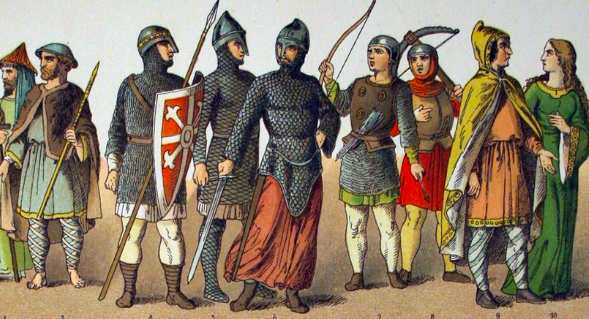
#OnThisDay 1170 Strongbow landed at Passage East at the head of an army of 200 knights & 1000 men-at-arms. He attacked & took Waterford then would march on Dublin, not before marrying Aoife MacMurrough. The Norman Conquest of Ireland had begun in earnest. #Ireland#History
#OnThisDay 1922 Michael Collins, Commander in Chief of the National Army was shot dead when ambushed by the IRA at Béal na Bláth, Cork. When advised against making the tour of army positions in Cork, Collins responded;
"They won't shoot me in my own county,".
#Ireland#History
The annual commemoration in memory of General Michael Collins who was shot dead at Béal na Bláth on 22 August 1922 takes place this afternoon
https://t.co/bpHX048IJP
#OnThisDay 1920 Kevin Barry, an 18 year old medical student was hanged for his role in an ambush on British soldiers in Dublin. Barry was the first republican executed since Roger Casement after the 1916 Rising. He said
"What’s my life compared with the cause?”
#Ireland#History
Looking for digital classroom resources for your History classes? Check out the History Skills' Store page. Includes free worksheets, subscriptions for 2023, plus more:
https://t.co/PxPgLGEtHx
In 1941, the Nazis created a propaganda movie called “My Life For Ireland”.
It tells the story of an Irish nationalist family and their involvement in the Irish struggle of independence over two generations.
It was created with the intent of challenging pro-British allegiances
#OnThisDay 1171 King Henry II landed at Waterford with an army 500 mounted knights, 4,000 men-at-arms & archers. He was the first king of England to set foot on Irish soil. He took the submission of many Irish kings & Norman lords but not the O'Neills of Ulster
#Ireland#History
OTD 1601 Mountjoy leads the English army from Cork & marches towards the Spanish ensconced at Kinsale. Stops to rest at the Owenabue River just five miles short of his goal. Events have started that will put Ireland's future in the balance, with no outcome certain #nineyearswar