“I wrote this because I can’t speak about it.
I wrote this because I want you to know that I will make sure that you live on.”
@RBLeipzig and @equipenatciv winger Yan Diomande on the life of his sister, Roxane. https://t.co/6wQmpdWTSi
Capoeira looks like dancing because enslaved Africans in Brazil designed it to look like dancing. Getting caught training to fight meant death.
The art emerged during Brazil's colonial period among people brought primarily from Angola and West-Central Africa. Brazil received roughly 4 million enslaved Africans over three centuries, more than any other country in the Americas. Open combat training was prohibited. Any slave caught training to fight faced torture, forced deportation to isolated colonies, or execution. So they built the entire fighting system around deception.
Kicks, sweeps, headbutts, and takedowns hide inside playful-looking spins and acrobatic movements. The music served as the control system. The berimbau, a single-string bow made from wood and a gourd, controlled the pace of every sparring session. When danger approached, the tempo shifted. Slaveholders saw entertainment. What was actually happening was weapons practice.
After slavery was abolished in 1888, the disguise had worked so well that authorities finally grasped what capoeira was. Within two years, the government banned it. Article 402 of Brazil's 1890 Penal Code made practicing capoeira on any street or public space a criminal offense carrying 2 to 6 months in prison. Gang leaders faced double the penalty. The word capoeira, once a symbol of survival, became slang for criminal and outlaw. Police hunted them city-wide.
Manuel dos Reis Machado, better known as Mestre Bimba, changed that. In 1932, he opened the first official capoeira school in Salvador, Bahia, where the art had survived longest. By 1937, the government formally registered the academy and ended the ban. President Getulio Vargas watched a demonstration in 1953 and declared capoeira "Brazil's only true national sport."
In November 2014, UNESCO added capoeira to its Intangible Cultural Heritage of Humanity list. It is now practiced in more than 160 countries. The bus driver in this video is performing a combat system that was illegal in Brazil less than 90 years ago.
Elon just handed you the cleanest mental model in economics, and almost no one will trade on it.
Money is a claim on scarce human labor. Every dollar in your account is an IOU redeemable for someone's time. Once AI and robots supply labor at near-zero marginal cost, the IOU loses its anchor.
Scarcity migrates. Wattage and tonnage become the new denominators: energy to run intelligence, mass to build the machines that deploy it.
The repricing already started. Microsoft signed a 20-year, $16B deal to restart Three Mile Island. Meta put out an RFP for up to 4 gigawatts of new nuclear. Big tech contracted over 10 gigawatts of nuclear capacity in a single year. US data centers burned 4.4% of national electricity in 2023, and the Department of Energy projects up to 12% by 2028.
Watch where the labs park their dollars. Power purchase agreements, transmission rights, land, silicon. They are swapping the dying denominator for the next one as fast as regulators allow.
Elon ran this playbook before anyone named it. Gigafactories, solar, batteries, chips, launch capacity. Fifteen years of trading paper for wattage and tonnage.
The transition is the trade. Money matters less at the destination and more than ever on the way there, because it's the last tool that converts into the assets the AI economy will actually price.
as long as you keep showing up, your life will eventually have no choice but to change. not immediately. but quietly. in ways you don’t notice until one day you look back and realize the things that once felt impossible have become normal to you. the discipline got stronger. the mindset got sharper. the person you were trying so hard to become quietly started becoming you.
most of life changes slowly in silence before it changes loudly all at once. every late night. every failed attempt. every boring routine. every moment you wanted to quit but didn’t. it’s all building something you can’t fully see yet.
that’s why you can’t stop now.
"life rewards the people who stay consistent long enough for the results to finally catch up."
⚡️Egyptian football legend Mohamed Aboutrika:
Whoever wants to whitewash their image hosts the World Cup.
A country that is participating in a genocide in Gaza right now wants to whitewash its image through the World Cup.
A country that waged a war against another country is now whitewashing its image through the World Cup.
A country that kidnapped a president of another country is now hosting a World Cup.
Then they tell us, “We are democracy” and bla bla bla
A woman showed up at her depressed friend's apartment and cleaned it. She didn't give a speech or ask what she could do, she just did the dishes and made the bed. For someone with depression, that small act is closer to medicine than it looks.
When you're badly depressed, the part of your brain that starts things goes quiet. You can want a clean home and still not be able to begin. And it's physical. Brain scans of depressed people show less activity right behind the forehead, where the brain plans a task and pushes you to start it. Dopamine drops too, the chemical that makes a small job feel worth doing. Run low on it and you can stare at a sink of dirty dishes and still not get your body to move. From outside it looks like laziness. It feels more like your hands are glued down.
Then the mess starts working against you. Researchers at UCLA had couples film a tour of their homes, then measured a stress hormone, cortisol, in their saliva all day. The women who called their place messy or unfinished had cortisol that stayed high into the evening, when it should be falling so the body can wind down. A room they couldn't face was quietly keeping their body on alert, hour after hour.
So you get a trap. The brain can't start the cleanup, the mess keeps the stress turned up, and that stress makes starting harder than before.
A friend walking in and cleaning breaks the trap from the outside. There's a well-tested treatment for depression, called behavioral activation, built on one plain idea: do the thing first and let the better mood catch up, instead of waiting to feel ready. In one large trial, it worked about as well as antidepressants for serious depression. The hard part is that first step, the exact move depression jams. When someone takes it for you, the wheel finally turns.
How she did it matters too. Two researchers ran a diary study with couples and found the best help is often the kind you barely notice. The loud kind, the "look how much I'm doing for you" kind, can sting, because it quietly says you couldn't manage alone. Help that just makes the problem disappear skips that cost. Instead of a sit-down talk about getting her act together, she picked up the dishes and pulled back the curtains.
The friendship itself is doing more than it looks. One review pooled 148 studies and over 300,000 people. Those with strong, close ties were 50% more likely to outlive the ones without them, which puts a good friendship in the same league as quitting smoking.
She didn't fix her friend's depression in an afternoon. She did something smaller and, going by the research, more useful. She made one corner of a heavy life lighter, and reminded someone who was sinking that another person was still willing to walk through the door.
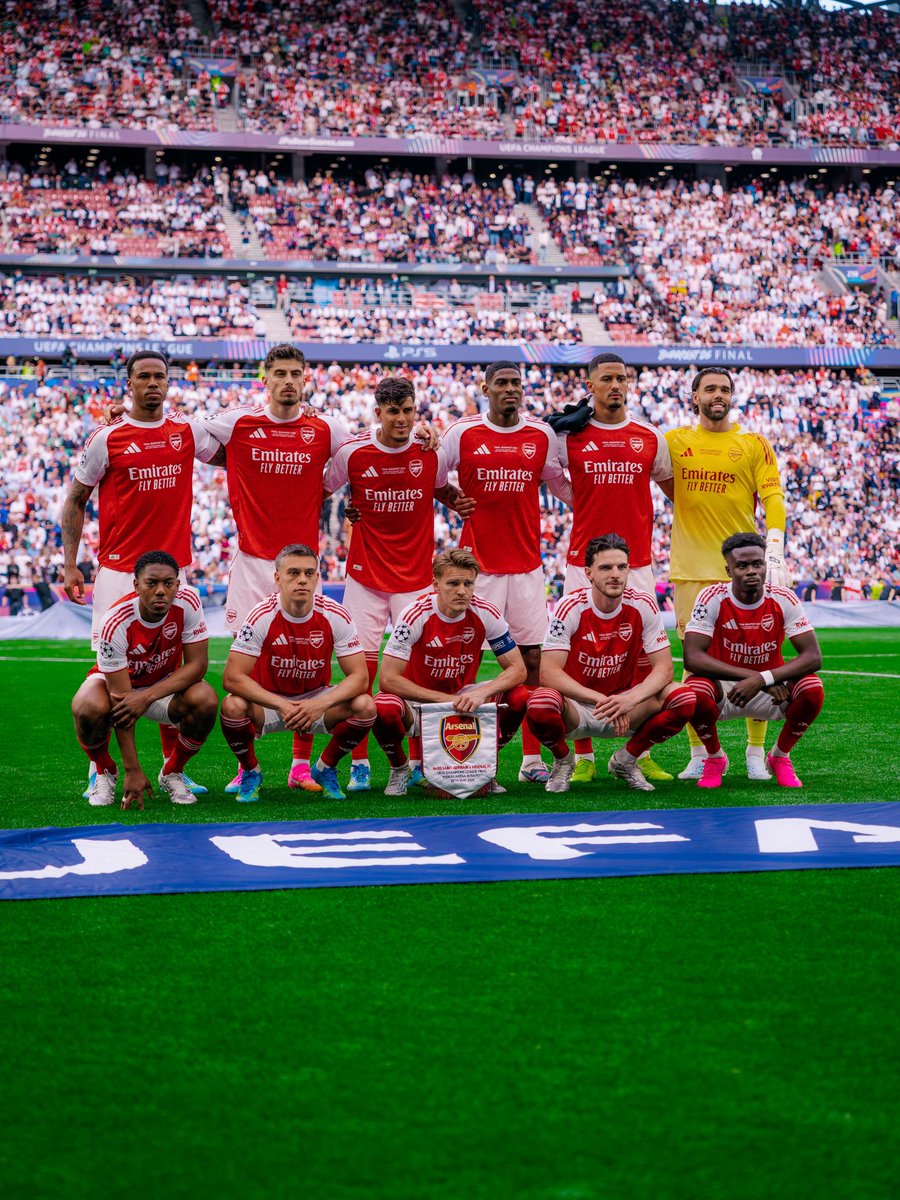
An unbelievable season which didn’t end in the way we all dreamed of. That doesn’t change the fact we are still champions of England!
Looking forward to celebrating that with the thousands of fans tomorrow in North London!
Thank you for all the support this season ❤️