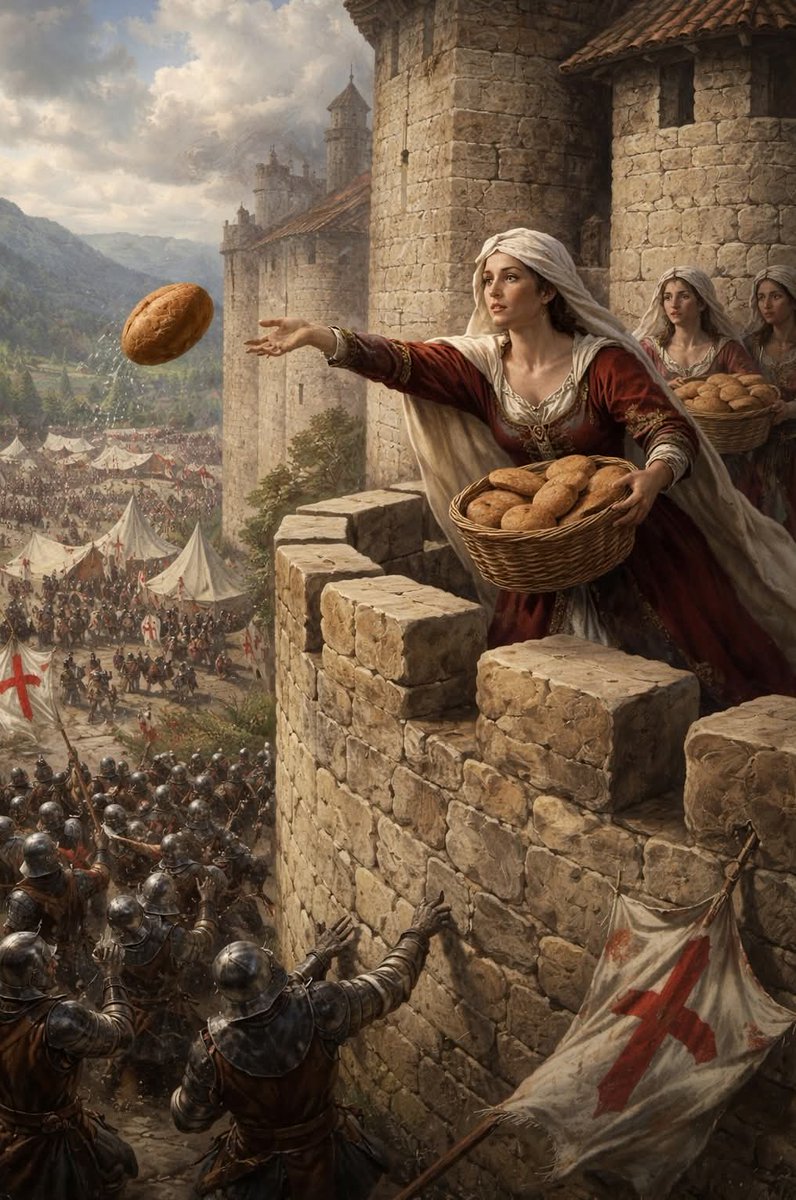
In 1369, during the Fernandine Wars between Portugal and Castile, the small border town of Monção was surrounded by a vastly superior Castilian force. Inside the Portuguese fortress, supplies were running low, morale was collapsing, and everyone understood the truth: they wouldn’t survive a long siege.
That’s when Deu-la-Deu Martins, the captain’s wife, effectively took command—and refused to surrender.
She knew brute force wouldn’t save them. So she chose something else: a bluff so bold it had to work. She ordered the last of the flour baked into fresh loaves, carried them up to the battlements, and threw them down to the besiegers. According to the story, she mocked them as she did it, as if the town had so much food it could afford to waste it.
The message was unmistakable: We’re not breaking. We can outlast you.
The Castilians took the bait. Convinced Monção was still well supplied, they dreaded a long, costly siege—and withdrew. The defenders survived not because they had more, but because they had the nerve to make the enemy believe they did.
That daring trick became one of Portugal’s best-known wartime legends: wit against overwhelming power. To this day, it shapes the town’s identity. Deu-la-Deu Martins is remembered as a folk heroine—her name lives on in streets and monuments, and even in Monção’s coat of arms, where she’s depicted holding a loaf of bread.
#archaeohistories
The Siege of Barad-dûr is one of the most epic battles, because Elendil, Isildur, Gil-galad, Elrond, and above all Sauron himself took part in the fight.
When Tyler, The Creator attended the graduation of his manager’s daughter and called her “Esmeralda”, the fake name he used to call her when she was little 😅