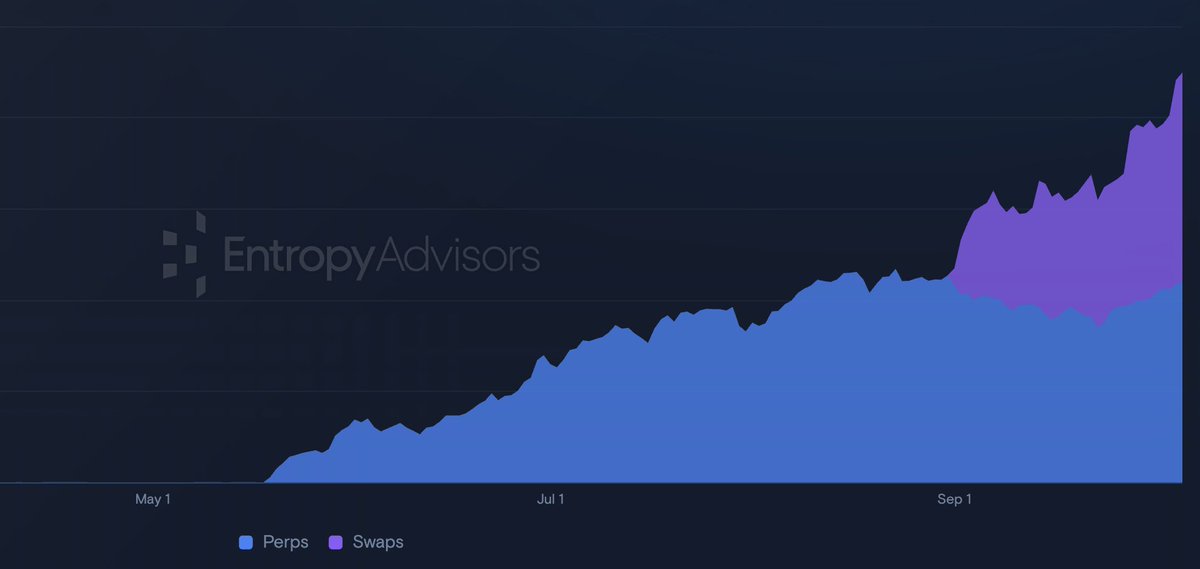
Swaps tapping directly into TradFi liquidity means better execution costs for both large and small orders.
Top-of-book execution costs on some swaps are 100x+ cheaper than perps on the same market.
For most users, execution costs = fees + spread.
Exchange fees and thin on-chain orderbooks can eat into your returns on every trade.
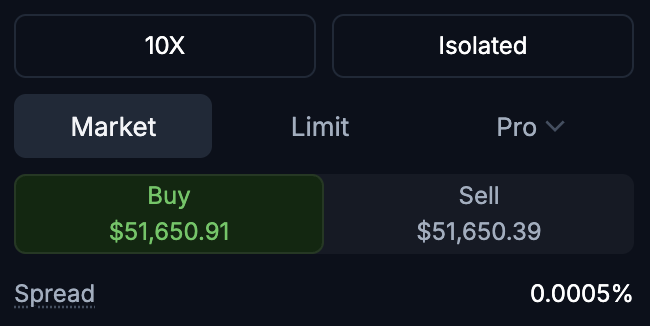
On Variational, zero-fee trading meets TradFi-quality liquidity. Right now a $25K order on US30-SWAP has a total execution cost of 0.0005%.
my little brother just lost his arm
it brings me great sadness to share this tragedy on X that I'm dealing with for the past few days
my little cousin brother (16), lost his right arm in an accident
it's been extremely tough few days for the family.. trying to cheer him to push through this travesty
he was such a kind soul, so full of life and it feels like a part of him is lost forever
with the emotional trauma, the financial stress is the most haunting part
its the most crushing feeling when your loved one needs help and you dont have the ability
im taking to X because I'm really out of options
i would do anything to see the light again in his eyes
we want to get a robotic surgery which would cost around $20,000
for him and im asking for any help that I can get
CT has come through for people many times so its the last place I can ask.
even if you cant help, I appreciate any comment or like or repost. god bless you all
may god give us the strength to push through this 🙏🏼
evm address :
0xa7d1e723b2f9fcbAeb8Da2e7bA98F5826DC2A479
DEAR @YouTube my channel I’ve had for over 10 years was hacked today. I filled out the form, emailed, have done everything I can! The hackers now have deleted most of my content and are uploading their own. My channel name was immallorybrooke. Please help!!!!
One security tip.
When you buy a hardware wallet (or download a new software wallet), leave it for a couple of weeks before moving any meaningful amount of funds to it.
And follow the news in those weeks (and after), for hacks, etc. Hardware can be tempered with, software official website can be hacked. Self custody comes with extra responsibilities.
I wrote about this 6 gears ago here https://t.co/1jMVxbzKFX
Stay SAFU!
Also, Starlink has proven to be essential for saving lives during natural disasters throughout the world, when all other communications systems have failed, so you would also be helping save men, women and children throughout India. 🇮🇳
Dear Prime Minister Ambani,
Please accept my humble apologies for not realizing that you are the real boss of India.
Naturally, you would prefer to maintain your monopolistic exploitation of the great people of India, but would you nonetheless consider allowing Starlink to compete?
There are many areas of India, as there are in all countries, with no Internet access, which denies children the opportunity for education and for small businesses the opportunity to sell their goods to a global market. Starlink would change their lives for the better.
Thank you 🙏
I don't recommend anyone scramble to move their funds to new wallets today. But we should take the risks to cryptography from AI-accelerated math seriously, and minimize our exposure to not just quantum-vulnerable cryptography, but also potentially AI-vulnerable cryptography.
The core new area of risk from this viewpoint is, unfortunately, ML-DSA / FHE / lattices.
(and it's also another reason, along with quantum, why ECDSA might fall even faster than expected, hence the "fresh address" recommendation)
So far most people have been in the mode of thinking "elliptic curves broken, hashes safe, lattices safe". But there is a good chance that the concrete security of lattices will take serious hits from the next two years of AI math.
The basic threat model is: factoring is something that naively takes 2^(n/2) time, but over decades smart people have found and optimized number field sieves, and degraded that to 2^O(n^(1/3)), which is why RSA keys and signatures need to be ~400 bytes (and not 64 bytes). What if there are skeletons in the closet like that, both for elliptic curves and lattices, that we are simply not smart enough to discover - but bots soon will be?
This is a major part of the reason why for the past year ethereum's lean roadmap has been going in the "hash-only" direction: no lattices, no ML-DSA, no Falcon, no lattice-based commitments inside ZK proofs, etc. Signatures in lean ethereum are all hash-based, either WOTS or SPHINCS-.
For signatures and proofs, we already know how to go hash-only. The bigger challenge is for *public-key encryption* - and this goes far beyond blockchains. Secure communication, anonymizing protocols, lots of things need public-key encryption.
And unfortunately there are long-standing mathematical theorems showing why public-key encryption cannot be done with hashes alone. You have to have some kind of trapdoor object that has at least one form of usable "structure" - either group theory (incl. isogenies) or lattices or code-based or potentially in the future even more newfangled and spooky things (local mixing?). But for anything that has structure, you should assume that AI will make at least some progress in breaking that structure. Here, one reasonable inference is that if you want to make something plausibly long-term secure, multiply the key sizes by 10.
To me that's a very plausible world and something not at all extreme to predict. If AI will bring us 50 years of math in 2 years, then that 50 years of math may very plausibly include a "naive factoring -> GNFS" level of improvement to our ability to break lattices. In that world, lattices will still exist, but they will have to be significantly bigger to guarantee the same level of safety.
And at those new larger sizes, hash-based constructions will beat lattice-based constructions on concrete efficiency in every use case where hash-based constructions are possible at all.
Theoretically, of course it's possible that hashes are broken too (eg. P = NP would imply that). But I think P = NP is very unlikely. And intuitively, it's much more likely that a mathematical object has exactly no exploitable structure (like hashes are intended to), than that a mathematical object has exactly ~3 forms of exploitable structure (for elliptic curves: associativity, Schoof, pairings) and not some secret fourth form of structure we have not yet discovered that greatly degrades its security (for elliptic curves, ECDLP and pairing security). Similar for LWE, SVP, RLWE and the zoo of lattice problems.
For this reason, we do not yet see any reason to worry and start padding the byte size of hashes (if we start to worry more, we would pad the round count first before doing anything to the byte size).
Concrete TLDR, my own personal views:
* Hash-based > lattice-based, in those situations where hash-based is possible at all
* For anything lattice-based, be much more paranoid on param sizes. Remember that blockchains are only a small portion of the cryptography story; this point goes far beyond blockchains and applies to eg. access to websites, secure messaging, Tor / VPNs ...
* For privacy protocols, strongly favor NOT putting encrypted notes onchain. Instead, send them offchain through some third-party mechanism.
* If it's not difficult for you, keeping your funds in addresses which have not yet been used to make a transaction is a good idea. If it's easy for you, do it. **But be careful about migrations; I personally have lost more money in botched migrations than I have lost in all hacks combined**.
* For multisig wallets, doing confirmations offchain is better than onchain, because this way the signatures of signer wallets do not get exposed to the public, so if ECDSA falls to AI much faster than expected, at least the multisig "gracefully degrades" to a 1-of-1 where the 1 is whoever was gathering the signatures - a much better place to be than "anyone can take the money"
https://t.co/oVjwZog2lL
Here's how I first got into crypto.
Six years ago, my father was diagnosed with cancer.
I became the one supporting my family.
Back then, the only hope I had to escape that living hell was crypto.
Those days were so hard that I made myself a promise:
If I ever made it, I'd give back to people going through the same hard times.
When I finally made my first profit, the very first thing I did was give all of my first year's earnings to the hospital that saved my father's life.
I believe most people come into this market just trying to build a better life from wherever they are right now.
I'm rooting for every one of you. ❤️
What first brought you into crypto?
I'd love to hear your story.
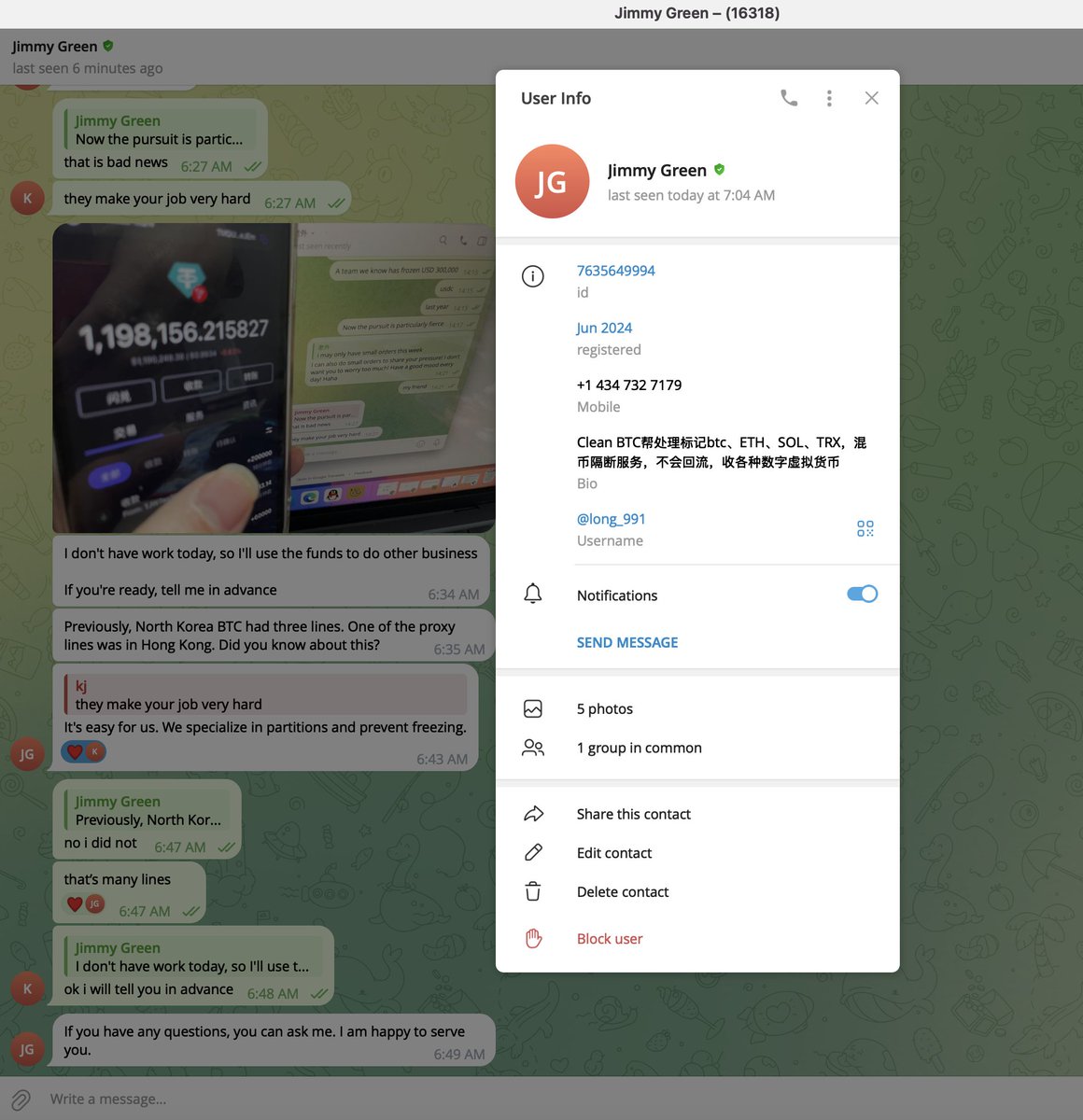
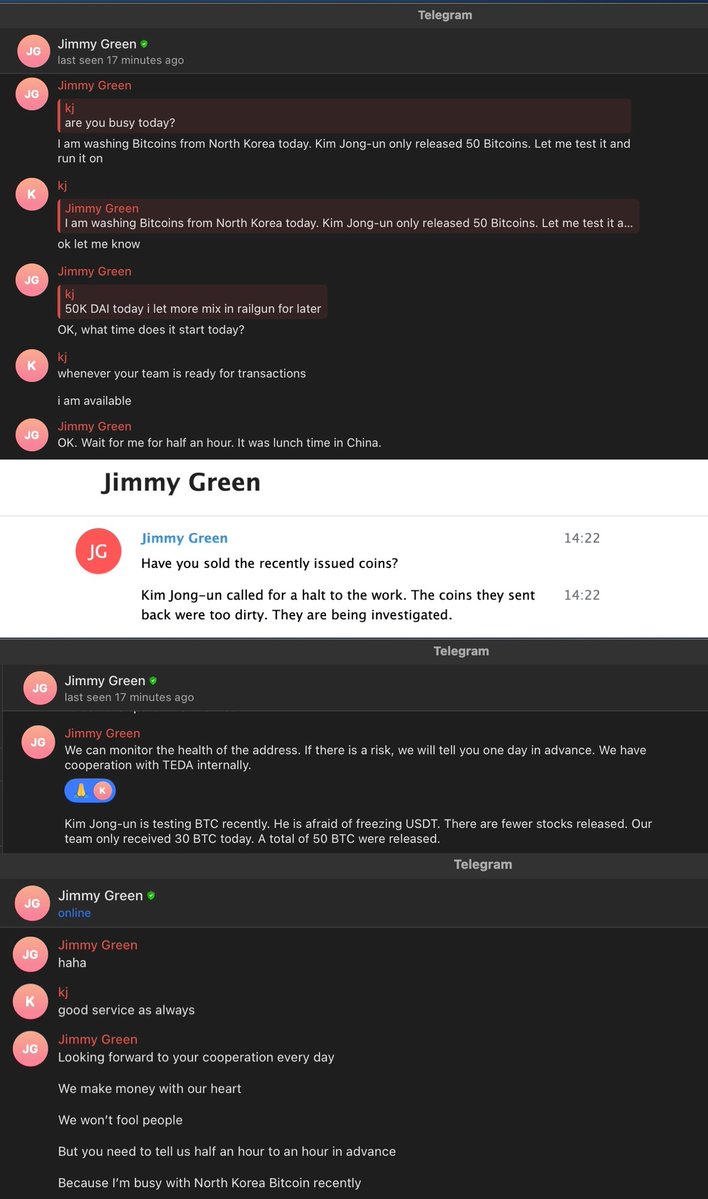
1/ How I infiltrated a Chinese organized crime syndicate that has laundered $1B+ across multiple exploits for Lazarus Group.
Posing as a client, I gathered intel that helped action freezes for the Feb 2025 Bybit exploit and attribute illicit activity onchain.