people asking our thoughts on the election's impact on biotech. overall net +, caveat some unknowns since neither campaign talked much about it. likely positives: ftc eases off biotech m&a. no change in fda's trend towards increasing flexibility in response to compelling innovation. possible incremental IRA reform (still low odds on repeal). increasing momentum for PBM/insurance reform/transparency. some low odds risks to note. rfk jr related items - less fda funding, higher bar for vaccines, + for psychedelics/cannabis. reimportation - trump was a fan last time, but we're post IRA, so low odds.
I was pretty excited when I heard about @Illumina’s Constellation mapping technology. No library prep, no sensitivity to fragment length, and runs on NovaSeqX flow cells. They may have just made a powerful long-read solution that overcomes drawbacks of current long-read workflows.
Using RNA destruction to forecast outcomes for breast cancer patients.
Rna Diagnostics Completes Phase I Trial for Breast Cancer Treatment Test, Aims for 2025 Launch | GenomeWeb
Cells are fast and crowded places. Numbers help us make sense of them.
Here are five of my favorite "bionumbers."
1. ATP synthase spins 134 times/second. That is much faster than the propeller on most piston airplanes, and about half the r.p.m. of a Boeing 737 jet engine.
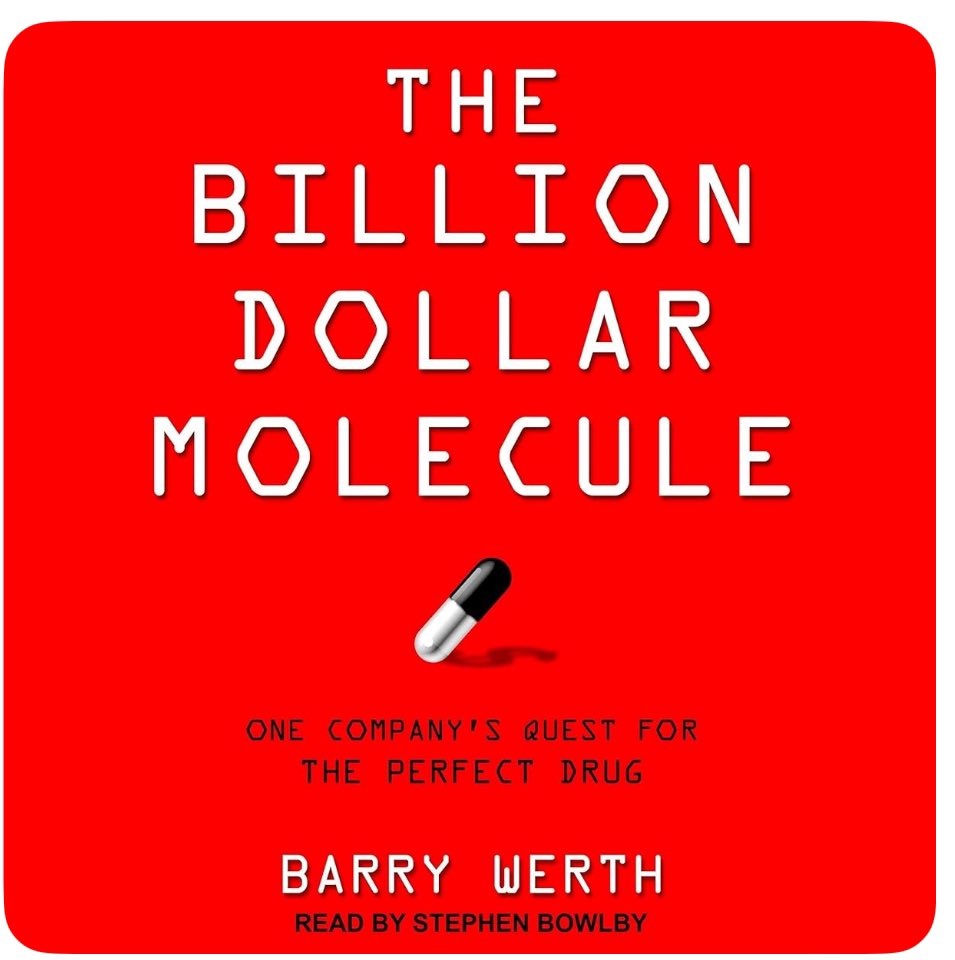
Good read on how Vertex’s ambitions and vision for structure-based design began.
In light of the news today on their new non-opioid pain drug meeting primary goal.
Everything we do is for the dogs we love too. Loyal was mentioned at the #Emmys this evening — congrats to #Beef for winning the award for Outstanding Limited or Anthology Series tonight, Lee Sung Jin!
Why does Moderna not become THE gene editing company?
https://t.co/h9Vj4P1Iur
This serious question has a serious, substantive answer.
Moderna has the delivery technology - LNPs it can make at global scale! - the ability to make the mRNA CRISPR payload - also at global scale! - AND can deliver to organs like the lung and the liver.
Moderna could edit to health every US newborn with an inborn error of metabolism (other than PKU, there are 2,500 such children a year - thank you, @kiranmusunuru, for telling me about this).
Moderna could expand its union with Vertex and edit all the CFTR mutations that ivacaftor and other small molecules don't touch.
It will do neither.
Why?
Because the NPV of each individual disease is too low if you think about repairing each mutation as being a distinct medicine.
And THAT, folks, is what the @igisci@DanaherCorp Beacon for CRISPR Cures aims to address: how to make editing into a platform that can become viable both in the nonprofit AND for-profit sector.
See https://t.co/rN2F0h0inq and watch this space closely, please.
With the numerous layoffs and pivots we’ve seen from co’s pursing new technologies lately, I thought I’d re-up this clip from ASH (with Vertex’s COO).
Think it’s one of my best questions, and it is definitely one of the best answers I’ve heard since I’ve been doing these videos.
Key point: There are a lot of exciting new technologies out there, but it’s patient benefit (and not the technology itself) that reigns supreme. Also of course, biotech is hard.
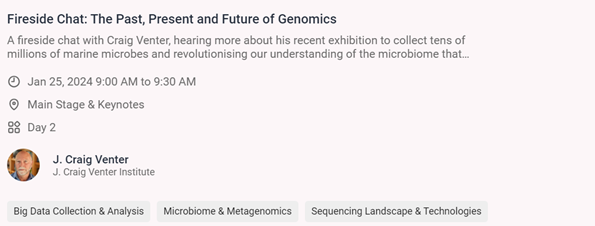
Looking forward to the Festival of Genomics @FoGenomics in London.
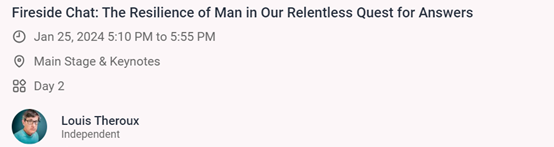
Craig Venter's perspectives on the future of genomics and the potential of the microbiome ought to be interesting. Didn't know Louis Theroux dabbled in the sciences, but bookmarking that one too👇
Q: Best advice for a pre-product/market fit startup?
One of my favorite pieces of advice on this topic comes from Coinbase founder Brian Armstrong: “Action produces information. Just keep doing stuff.”
He borrows this from Paul Graham who said: “Startups are like sharks. If they stop swimming they die.’”
Even if you’re not sure what to do, just try something different. Don’t get stuck in endless debate or analysis paralysis.
When you try a product or go-to-market experiment, it will produce information and help you come up with better ideas of what to try next.
As Brian argues in the clip below, this is true even when you try the wrong thing. Trying the wrong thing should still help you identify which hypotheses about your users, value proposition, go-to-market strategy, etc. are wrong.
So if you’re pre-product/market fit, my best advice is to just keep moving and trying things.