A Law student at Bishop Stuart University
The president Rule of Law BSU, the President Kanungu BSU students association and treasurer The legal dream team
13th April 2026, Environmental conservation by Akandinda Baram, the President of Kanungu Bishop Stuart University Students Association, planting a tree at Nyakinoni Secondary School
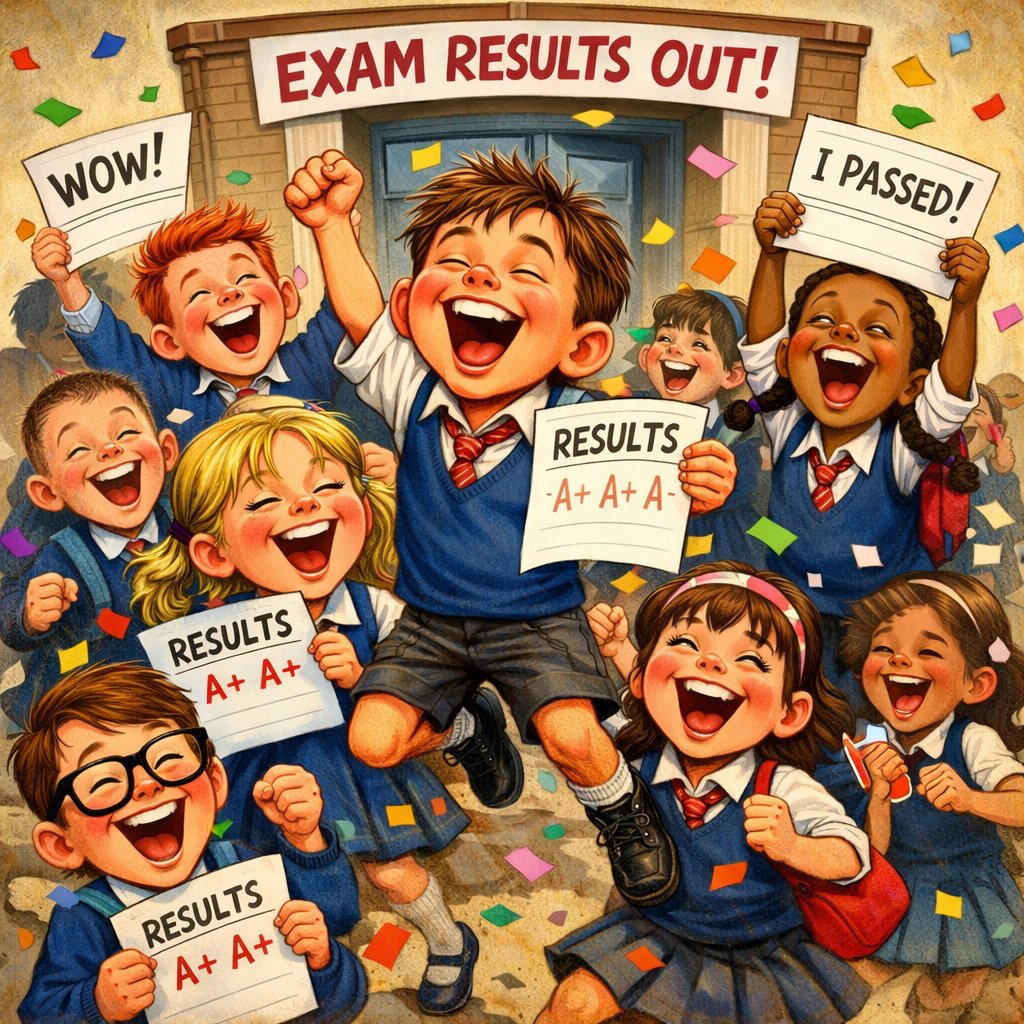
OPINION: S.4 RESULTS ARE OUT; ASK YOURSELF THOUGH
Tomorrow, Friday 13, 2025, it's been confirmed that the Uganda National Examinations Board (UNEB) will release the results of the second cohort of candidates who sat examinations under the New Revised Lower Competency-Based Curriculum.
As is customary, there will be anxiety, excitement, celebration, and disappointment. Parents and their children will wait eagerly. Learners will refresh phones and listen for updates from school administrators. This ritual of results release is familiar. But beyond the anticipation, there are serious questions we must ask ourselves.
Have we observed any tangible skills nurtured in our children under this new curriculum? Is there any visible difference between today’s candidates and those of us who once anxiously waited for our own results-struggling only for grades?
On average, an O' Level graduate is at least 16 years old. Sixteen is not childhood, it is the doorstep of adulthood. At that age, a young citizen can participate meaningfully in productive ventures, contribute ideas, and even support taxable economy in their economic activity. Are our post–O’ Level learners demonstrating this level of preparedness? If not, then the transition we speak of in education remains largely theoretical.
We still yearn to see exhibitive and showcasing hungry children but not those whose bed will be the best hangout during their vacations.
Today, some schools charge additional fees for academic seminars and discussion sessions. If such initiatives do not aim at showcasing practical integration of skills, innovation, creativity, entrepreneurship, digital literacy, then we are still trapped in the old cycle of drilling learners to answer questions rather than preparing them to solve real-world problems.
Equally concerning are schools that demand money for holiday study programs or require learners to report before holidays end. What urgent skills are being taught that cannot wait for the official school calendar? If these activities are not equipping learners with practical competencies, then they risk being perceived as mere financial pressure on parents rather than meaningful educational interventions.
Perhaps it is time for a new national education theme:
“Enhancing Digital and Global Village Skills through Comparative Education.”
After S4, a learner should at least understand how an application (App) works—better yet, be able to conceptualize or build one but how will that happen when a smart mobile handset as a learner requirement is an abomination in the school setting. Digital literacy should not be optional; it should be foundational.
Government initiatives such as the Parish Development Model (PDM) require digital awareness. Children with digital skills can help their parents interpret online tutorials, research value-addition techniques, explore better farming methods, or market products online. If a parent receives Shs. 1 million to start a poultry project, a digitally skilled child can help with market research, disease control information, record keeping, and online marketing. That is real education at work. That's part of the reasons why we agitate for two semesters instead of three terms with three weeks' holidays.
As the results are released tomorrow, ask yourself:
What can my child do now, practically and independently, that is already stamped in their hands as a skill?
If there is nothing, if all we celebrate are the labels “Exceptional,” “Outstanding,” “Satisfactory,” or “Basic” without any corresponding ability—then we are still measuring success in symbols rather than substance.
A learner may score a D1 or a C4, but if they cannot apply knowledge, solve a practical problem, or demonstrate a usable skill, then the grade alone changes little. Education must go beyond paper qualifications. It must produce capability.
As we receive the results, let us celebrate achievement—but let us continue to reflect deeply on whether our education system there is observable change or we are sliding into the rejected ritual.
For God and My Country.
You're not here by accident. Every scar and delay proves you're stronger than your hardest days. The legendary you isn't the one who never fell—it's the one who rises faster each time. Choose victory today. Keep going—your moment is now.
Access to justice is not just a legal concept—it's a fundamental human right. Yet in Uganda, barriers like affordability, cultural sensitivities, systemic inequalities, and limited awareness continue to deny vulnerable groups—the fair outcomes they deserve.https://t.co/Frr8IRTzBh
Dear H.E. @KagutaMuseveni and the Minister of Education and Sports, @JanetMuseveni,
As a self appointed advisor here in X, kindly allow me to share this public advisory on the future of education in Uganda.
The Ministry of Education’s adoption of the new Competency-Based Lower Secondary Curriculum, described as learner-centred, is a commendable and timely reform in line with global education trends. Its objective of reducing learner workload and content overload is equally laudable.
However, while emphasis is rightly placed on the learner, there is an urgent need to also reduce the burden on parents, teachers and the government by reconsidering the current three-term school calendar.
I propose a shift from three terms to two semesters per year, with each semester lasting four months, structured as follows:
•1st Semester: February – May
•2nd Semester: July – October
•November: Nationwide summative evaluation and assessments
Expected Impact on the Economy and Society
1. Parents
Parents urgently need relief from the crushing burden of school fees amidst a biting economy. Paying fees three times a year has proven unsustainable for many households. Parents are queuing in banks, looking for loans, selling land, betting, offering IDs as collateral to money lenders not to get money for personal income but for school fees. Schools have now become extortionist centres, taking advantage of parents' ego on their children acquiring that weapon that shall change their children lives.
While the slogan “Education for All” sounds appealing, the reality is that access to quality education comes at a cost. Parents have been impoverished long enough by an inflexible school system that does not reflect current economic realities. Reduce the terms, relieve the parents.
2. Teachers
Recent teacher strikes, particularly by humanities and primary school teachers, highlight persistent dissatisfaction arising from meagre remuneration.
Reducing the number of school terms would allow teachers time to:
•Engage in self-help and income-generating projects
•Participate in refresher courses for professional growth
•Innovate beyond survival-driven dependence on limited salaries
3. Learners
Under a competency-based curriculum, learners require time to innovate, explore, reflect, and practice. The current three-term system compresses learning into rigid cycles that leave little room for creativity, independent thinking, or research.
Many learners today are stressed, culturally disconnected, and deprived of rest. The erosion of patriotism is partly due to the absence of time for intergenerational learning—listening to history, culture, and national narratives from elders and witnesses.
4. Government
Reducing school terms would also lower government expenditure on capitation grants and operational school funding. These savings could be redirected towards research, innovation hubs, and skills development, nurturing a generation of problem-solvers rather than certificate seekers.
Conclusion
There is no compelling justification for maintaining three school terms in a competency-based education system. Two well-structured semesters of four months each are sufficient to build strong competencies, reduce economic strain, and promote holistic national development.
Such a reform would mark a bold step towards a more humane, realistic, and future-oriented education system for a better Uganda.
The growing perception of making the school as the nurture centre must be changed and the child's 60% nurture centre must be the home.
I beg to submit.
Following the recently concluded elections, courts have been requested to send all election petition files being filed in their respective courts to the Registrar, High Court, for onward transmission to the Hon. Principal Judge.
Courts on ECCMIS are to send the files via ECCMIS to the Hon. Principal Judge’s account and notify the Registrar, High Court by email.
Message to the Chairperson and Members of the Uganda Electoral Commission @UgandaEC
Justice Byabakama,
On 17th January 2026, you orally declared the final results of the 2026 Uganda Presidential Elections.
Article 61(d) of the Constitution of Uganda requires the Electoral Commission to ascertain, publish and declare in writing under its seal the results of the elections. Announcements made through public media do not satisfy this Constitutional requirement.
This requirement must be read together with Article 1 of the Constitution, which vests sovereignty in the people of Uganda and mandates that all authority be exercised in their name and for their benefit.
I have checked the official Electoral Commission website https://t.co/BFOmumRpZR and the https://t.co/yA9BEB2fcT which publishes the Uganda Gazette and have not found any publication of the 2026 Presidential Election results.
As the body entrusted with the responsibility and which conducted these elections, the Electoral Commission is required to provide the people of Uganda with clear answers to the following questions:
1. How did the Electoral Commission ensure there was no ballot stuffing and multiple voting in light of the nationwide failure of the biometric machines?
2. What steps has the Electoral Commission taken to address videos online showing its officials, members of security forces, and other civillians ticking multiple ballots and/or stuffing multiple ballots at different polling stations or at other venues?
3. How did the Electoral Commission ascertain the results of the Presidential Elections within 48 hours in the absence of duly signed and transmitted Declaration of Results (DR) Forms from each polling station?
4. How were the Presidential Election results transmitted to the National Tallying Centre during the nationwide internet shutdown, and what verifiable audit trail exists to demonstrate the integrity, chain of custody, and authenticity of those results?
5. Has the Electoral Commission published the 2026 Uganda Presidential Election results for each polling station?
6. If so, where has the Electoral Commission published these results and when was that publication made?
7. If the publication of these results has not been made, why has the Electoral Commission not complied with this clear mandatory Constitutional requirement, 10 days after your announcement? Such a publication would also enable Ugandan citizens who wish to access these results, to do so.
8. What steps is the Electoral Commission taking to recover the 69 million United States Dollars of taxpayers’ money expended on non-functioning biometric machines, including any civil recovery actions against suppliers and Electoral Commission officials involved in the procurement, approval and testing of this equipment prior to their dispatch to the respective polling stations?
I am asking these questions as a citizen of Uganda and taking into account that the Electoral Commission bears a positive and continuing duty under our Constitution to conduct elections that are not only free and fair but which are also transparent and verifiable through the results declared.
Where access to information has been restricted as was the case with the nationwide internet shutdown, the obligation to provide verifiable quantitative and qualitative data rests squarely with the Electoral Commission as the declaring authority. Transparency in such circumstances is not discretionary. It is a constitutional obligation.
The burden to prove compliance with its constitutional obligations rests with the Electoral Commission and not with the candidates who contested in the elections, the Ugandans who voted, those who opted not to vote, or those who were rendered unable to vote.
Elections belong to the people, not to those who administer them.
FOR GOD AND MY COUNTRY
Justice Dr. Esther Kitimbo Kisaakye.
Former Justice of the Supreme Court of Uganda. January 27, 2026
cc: The People Of Uganda
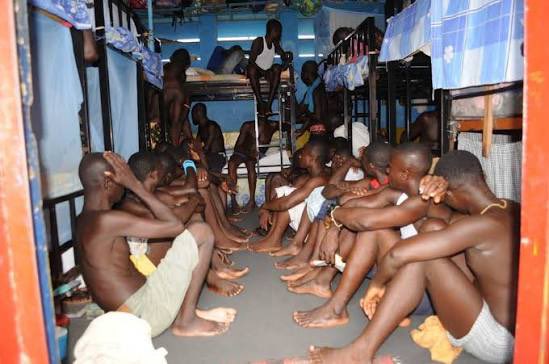
🚨 If you don’t want your family members to visit you in PRISON in 2026, take note:
Avoid these things.
1. If you own a car, avoid giving strangers a lift.
One day dem fit kpai inside your car and you go explain tire.
2. If your neighbour is sick, don’t give them medicine or recommend drugs.
If anything happens, court go ask who licensed you to give medical advice.
3. Stop giving visitors food. Offer sealed drinks instead.
Even on Christmas day, start the No Food Policy.
If someone gets poisoned elsewhere and eats at your house, you go explain tire.
4. As a man, avoid doggy with any woman who isn’t your wife. It can be medically stressful and, depending on pressure, the lady go fi die. Court don’t know “we were just enjoying ourselves”
5. When you’re angry, avoid pushing, hitting, or any physical contact. Some people are walking corpses—small push and problem don land. You go explain tire.
6. Before asking your girlfriend to sleep over, check her BP and have a First Aid kit.
If she collapses during the “do,” wahala be that.
7. Before dating or getting intimate with any lady, ask for her Birth Certificate.
Otherwise, you go explain tire for court.
8. As a lady, if a man sends you money to show up, please show up—or refund it.
E get why.
9. "Oga, my pikin no dey hear word, abeg help me flog am.” please don’t try it. Let parents beat their own children themselves.
10. Avoid buying second-hand or fairly-used items that are trackable. E get why.
11. Avoid threatening people, even as a joke.
That small threat fit actually happen—and you’ll answer for it.
⚠️ Ignorance of the law is NO excuse.