✅ Bottom line: genetic testing should be considered for ALL pheochromocytoma/paraganglioma patients per current guidelines — not just those with red flags. Early identification = better surveillance for the patient AND their family. #endocrinology
🩺 Pheochromocytoma spotlight: a rare adrenal tumour that overproduces catecholamines, causing episodic hypertension, palpitations, sweating & headaches — the classic triad. Often missed as "just anxiety." Always consider it in resistant HTN with paroxysmal symptoms. 🧵👇
🚩 Red flags for a hereditary cause of pheochromacytoma: young age at diagnosis, bilateral or multifocal tumours, extra-adrenal location (paraganglioma), or a family history of pheo/para, MEN2, or VHL features. These patients need more than routine follow-up.
🩺 Clinical pearl: When is a varicocele not “just a varicocele”?
🚩 New, sudden-onset or right-sided varicocele, especially if it persists when lying down, warrants further assessment.
Scrotal ultrasound can confirm the diagnosis and assess the testis for an underlying lesion.
🤪Myth: Only teenagers get hormonal acne.
😎Fact: Hormonal acne can affect adults too and may sometimes be linked to conditions such as PCOS. If acne is persistent or occurs with irregular periods or excess facial hair, it's worth discussing it with your GP.
#PCOS#WomensHealth
🤔 Is excess facial hair always caused by PCOS?
Not always. While PCOS is the most common cause, other hormone conditions can also be responsible. If it appears suddenly or worsens quickly, speak to your GP. Early assessment can help identify the cause.
#WomensHealth
📚 Did you know?
Venous thromboembolism is one of the leading causes of death in patients with glucagonoma syndrome. Alongside tumour-directed therapy, VTE risk assessment and consideration of thromboprophylaxis should be part of holistic management. #Glucagonoma
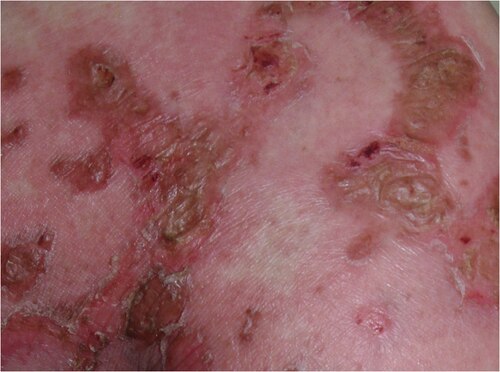
🤔 Would you recognise this rash?
Necrolytic migratory erythema is the classic cutaneous manifestation of glucagonoma syndrome. Although rare, it often provides the earliest clue to the diagnosis. Rash + hyperglycaemia -- think beyond the skin!!
Fragility #fractures remain a common and serious complication of long-term oral #glucocorticoid therapy that might affect all skeletal sites, although the spine is particularly prone to fractures owing to its high proportion of trabecular bone https://t.co/ZmMFAOJkmw
#OpenAccess
Clinical Pearl: Suspected fasting hypoglycaemia? Start with Whipple's triad to confirm true hypoglycaemia. If spontaneous episodes can't be captured, a 72-hour supervised fast remains the gold standard to reproduce symptoms and obtain diagnostic samples. #Hypoglycaemia
📚2026 BTA–BAETS Update: Thyroid nodule management is increasingly risk-stratified, combining ultrasound, cytology and shared decision-making to reduce unnecessary surgery while maintaining accurate cancer detection. https://t.co/NT5fPCzLpw
📚 Did you know?
Chronic serotonin excess in carcinoid syndrome can lead to niacin (vitamin B3) deficiency because tryptophan is preferentially converted into serotonin rather than niacin, resulting in pellagra.A fascinating link between endocrinology, nutrition, and metabolism.
⭐️Clinical Pearl: Carcinoid heart disease mainly affects the right-sided valves. Why? The lungs metabolise serotonin, protecting the left heart—unless there's a bronchial NET or an intracardiac shunt. A classic example of pathophysiology explaining clinical findings.#NET
💡Radioactive iodine isn't routine for everyone anymore.
Recent guidelines recommend a more selective approach, reserving RAI for selected patients rather than using it universally after thyroidectomy. Risk-adapted management continues to reshape thyroid cancer care#ThyroidCancer
🦋 Not every thyroid cancer needs a total thyroidectomy.
For carefully selected low-risk differentiated thyroid cancers, thyroid lobectomy may provide equivalent oncological outcomes while reducing risks of total thyroidectomy.
Appropriate patient selection remains the key!!
👋 Welcome! I'm a paediatrician currently undertaking a Postgraduate Diploma in Endocrinology. I'll be sharing evidence-based endocrine updates and interesting research that shapes clinical practice. If you're interested in endocrine medicine, follow along as we learn together!!