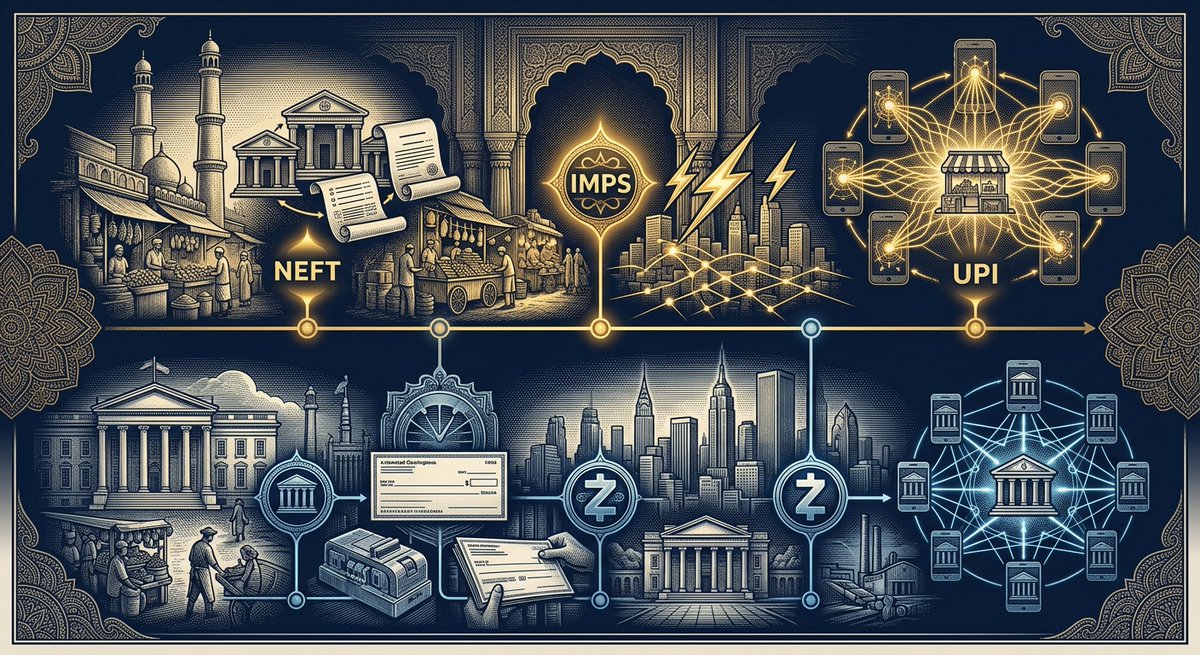
In 2004, sending ₹15,000 from Delhi to Pune meant paper forms in triplicate, correspondent banking, manual reconciliation, and 3-7 working days.
By 2006, NEFT did it same-day for ₹5.
By 2020, it was free.
By 2024, it runs 24x7x365 in half-hourly batches.
Same system. Scaled
The most elegant thing about NEFT's design:
SBI owes HDFC ₹50cr. HDFC owes SBI ₹42cr.
Instead of moving ₹92cr, the system nets it to ₹8cr.
Same outcome. A fraction of the liquidity required. Multiply across dozens of banks. That's how you build payment infrastructure
India launched a national electronic funds transfer system in 2005.
The US launched its first real-time payment system (FedNow) in 2023.
India's payments infrastructure story is not about playing catch-up. It never was.
@SwiggyCares@Swiggy@SwiggyCares . Please refund my membership money, in my 10 years of using this Platform. The sheer amount of disdain your team showed today, is beyond me.
Not renewing again.
@SwiggyCares@Swiggy
What's the point of having a BLCK membership, If I only have to talk to a AI bot, your customer call no won't connect and your agent won't respond.
Only one option of all the 12 options you have actually is letting you talk to an agent.
Extremely Poor
In the Paytm Payments Bank case, investigators found a single PAN card linked to over 1,000 accounts. Hundreds of thousands of accounts had missing or fabricated KYC details.
India's CKYC registry holds 700 million records. The promise: verify your identity once and never again. The reality: a huge chunk of those records have 2016 addresses. Banks pull the data, find it stale, and ask you to upload Aadhaar again.
The database exists. The data quality?
8+ months and ₹1L+ of my hard-earned money is stuck as an income tax refund.
ITR-2 filed & verified on 27-Aug-2025. Still not processed. No demand. Valid bank. Just… nothing.
@IncomeTaxIndia@nsitharaman — would appreciate some accountability here.
#ITRefund#IncomeTaxIndia
Wrote the full version of this — the KYC stack explained floor by floor, the Paytm Payments Bank story, and why regulatory friction sometimes builds better infrastructure: https://t.co/ncxB5a2SfQ
A migrant worker in Mumbai tried to open a bank account. He had a job, a salary, and a reason to send money home. The bank said no — his Aadhaar showed his village address in Jharkhand.
The wildest part: the 2018 Supreme Court ruling that killed Aadhaar eKYC for private companies actually forced better systems. Offline XML, Virtual IDs, Sub-KUA licensing. The constraint produced more privacy-respecting design than what existed before.
It also powers Jeevan Pramaan — the system that proves pensioners are alive without requiring a government office visit. Small feature, large downstream effect.
What's a technical detail in Indian infrastructure that solved a bigger problem than anyone expected?
Aadhaar Face Authentication lets you verify identity without an OTP. No linked mobile number needed. Sounds minor until you realize millions of Indians registered for Aadhaar years ago without a phone number attached.