The descendants of Ọbàtálá and Olúfọ̀n were displaced when Odùduwà ushered in the present epoch in Yorùbáland. Many of the groups we identify today as Oyo, Ìjẹ̀bú, Ìjẹ̀ṣà, Ẹ̀gbá, Owu, and others had already existed for a very long time before the rise of Odùduwà.
The reign of Ọbàtálá’s lineage in Ufe is what we refer to as Ufẹ̀ Oòyè. If one studies many ancient Yorùbá towns carefully, it becomes clear that the present Ọba of a town is, in many cases, neither the original founder nor an aboriginal descendant of that place. In fact, one may even find a kind of parallel structure in which the original inhabitants maintain their own king, a figure who still commands considerable respect and a measure of autonomy within the town.
I have written before about the use of àròkọ and àmì Ọlọ́fin, and about the processes through which Yorùbá polity developed mechanisms for effecting institutional change on a broad scale.
Such was the case with Odùduwà and Ọ̀rànmíyàn. After the displacement of the Ọbàtálá dynasty in Ufe, there appears to have been a period in which many kingdoms aligned themselves with the new order, either through marriage alliances, as in the case of Owu, or through the outright restructuring of monarchy, whereby princes were sent into these regions with new mandates. Oyo was one of the places where the institution itself was thoroughly transformed. The descendants of Olúfọ̀n, who had formed the previous ruling class, were displaced, and the Odùduwà lineage assumed power. Hence, in the oríkì, there is reference to taking the crown of Òrélú (Ifón) and giving it to Alaafin.
A proprietary model that predicts whether long term Treasury yields are likely to rise or fall, without forecasting the magnitude of the move, and demonstrates statistically significant out of sample accuracy.
#OsoMaloGuild 🐆✍🏿
@waa_sere “Aligning private motives with public actions is essential; any dissonance is quickly exposed in a society of sharp perception.”
https://t.co/P1OsZIUIjd
😂 I get where you’re coming from; let’s skip the “I told you so” and treat this as a learning moment about reputational and integrity risk.
My main takeaway is the importance of reputational risk management for leaders. As I wrote recently:
“Aligning private motives with public actions is essential; any dissonance is quickly exposed in a society of sharp perception.”
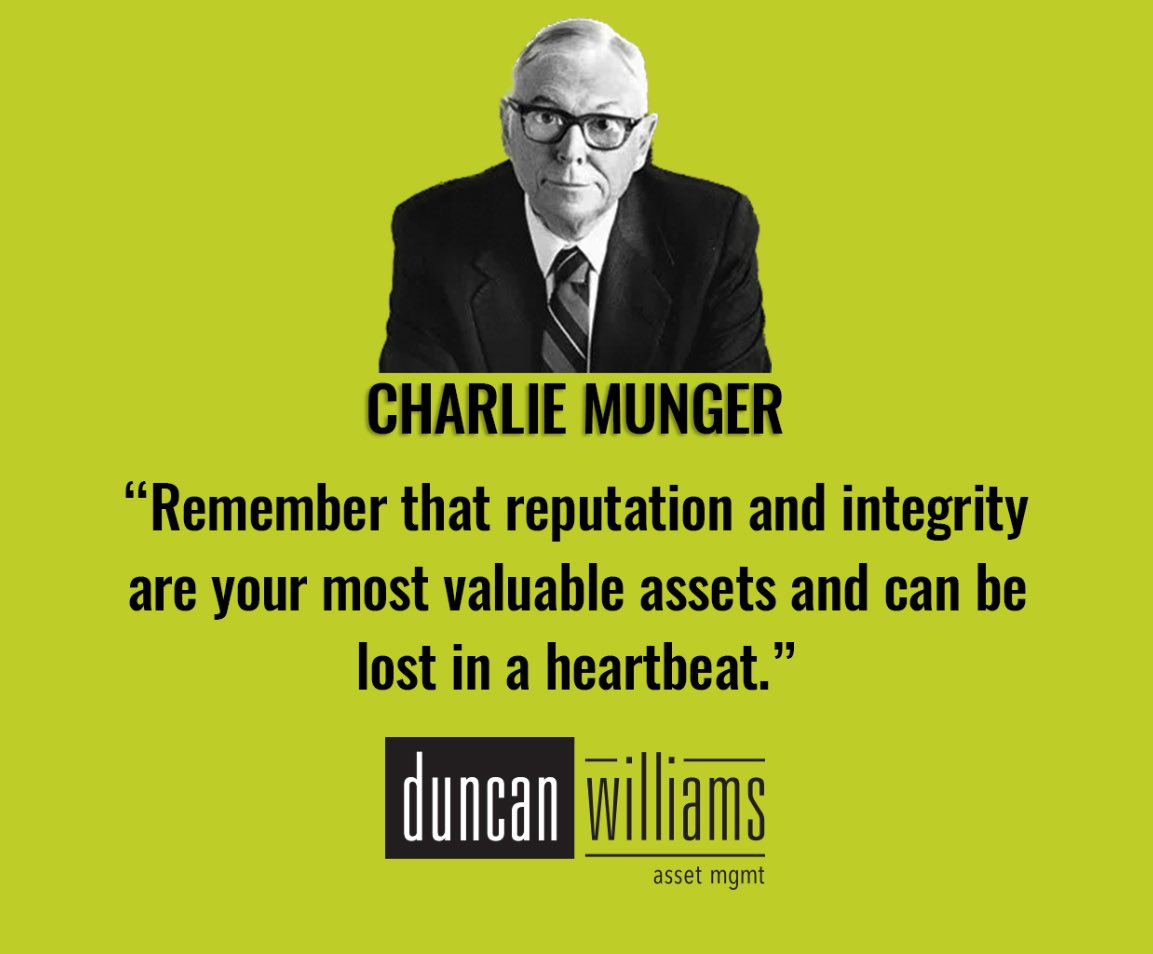
Seasoned leaders protect their integrity relentlessly. In many cases that vigilance, more than tweets or likes, is what earns you a seat at the real decision‑making table. Charlie Munger said it best:
“It takes 20 years to build a reputation and five minutes to ruin it.”
Rest small. Jesus didn’t bring Christianity to your fathers. It was institutions that sought to turn them into submissive slaves for perpetual servitude.
Rest small. Jesus didn’t bring Christianity to your fathers. It was institutions that sought to turn them into submissive slaves for perpetual servitude.
There's a reason our fathers left their powerless idols to worship Jesus. Talk, they say is cheap. And if mere talks could convince them, then your deities are not as seemingly powerful as you think. We will continue to expose the works of darkness to the glory of God.
Sickening and disturbing propaganda to say the least. Yoruba spirituality that has nothing to do with your biblical stories are somehow the ones that are repeatedly painted negatively in their narrative framing. They do not have the effrontery as Black Africans to play the roles of good or evil characters in the biblical stories they believe in. Very despicable behaviour!
Mike Bamiloye, Mount Zion, and others like them are essentially modern-day glorified minstrel shows……an unfortunate disgrace to Yorùbá artistic and cultural heritage.
With time, you will come to understand the saying “Your rights ends where mine begins.” in a democratic system. The deeper layer of your shared belief with MZ is that it is permissible to attain personal profit at the cost of social harm without any form of accountability. The portrayal of light vs darkness, where Yoruba spirituality is the face of darkness is nothing more than a product being sold. The entire economy built around indigenous spiritual practice all absorb the downstream cost of someone else’s box office numbers. MZ externalizes the damage and internalizes the profit. That’s the whole business model; to extract value from defaming a people’s belief system.
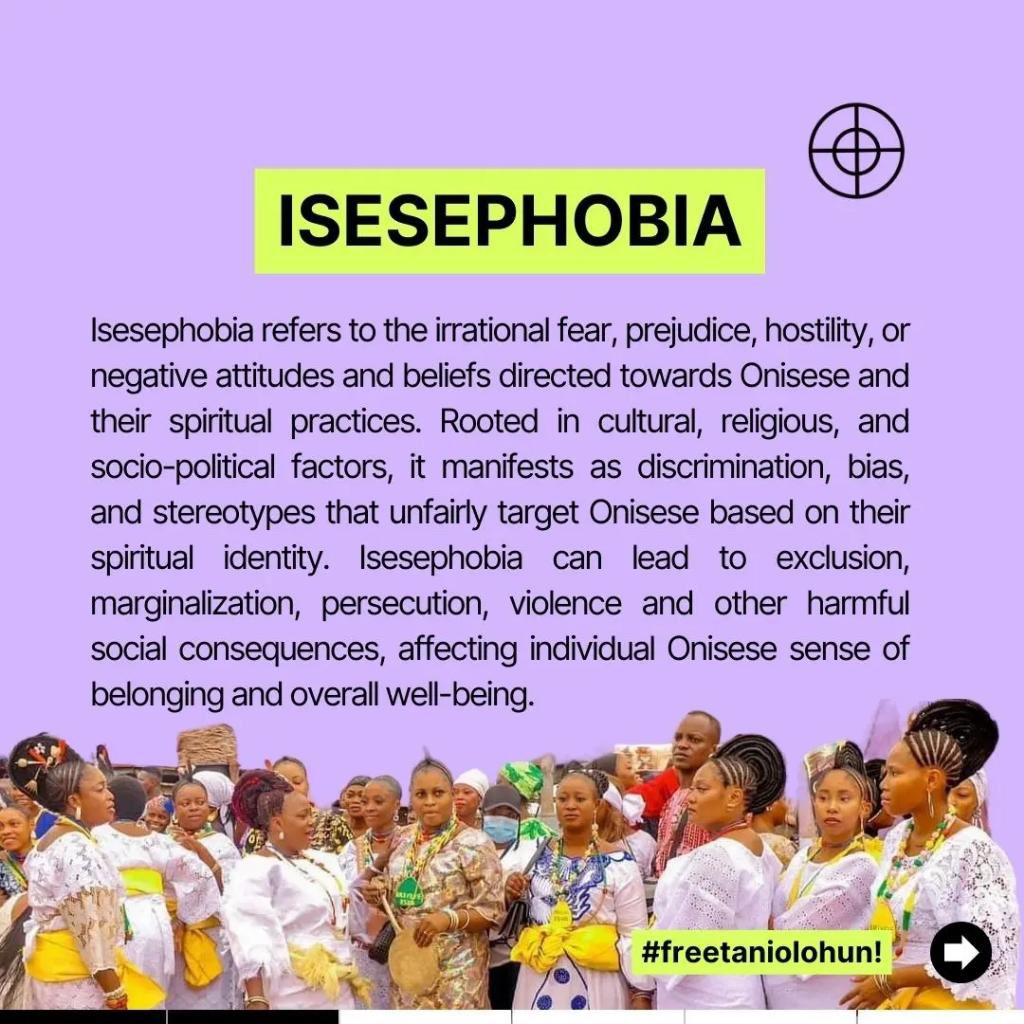
Call it Light vs Darkness all you want and dress it up as ministry but your right to profit off a film ends where it starts reshaping how millions of people perceive, fear, and DISCRIMINATE against a living spiritual tradition that millions partake in.
The burden of these portrayals is meant to place Yoruba spiritualist under the presumption of guilt and shame. Traditional practitioners lose clientele because demand collapses under manufactured shame. Yoruba peoples spiritual and cultural systems are stigmatized and made the shorthand for evil in popular imagination. Cultural custodians can’t monetize their own knowledge systems because the market has been pre-poisoned against them.
While MZ can buy land, purchase properties and manufacture products in alignment with their religious belief, Yoruba spiritualist in Nigeria are left to look to Benin republic and across the ocean, watching their cousins draw tourism revenue, watching Ifá itself get inscribed by UNESCO as intangible heritage while back home it’s still treated as the villain in a Sunday matinee.
Aboru, Aboye, Abosise 🐆
“Here we go again” and yet you couldn’t get through one paragraph without misrepresenting what Mount Zion actually does. Let me help.
MZ doesn’t demonize Yoruba culture. It celebrates it; the colors, the language, the proverbs, the royalty. Eg. Abejoye became a born-again Christian while still speaking deep Yoruba, bowing before his king, and dropping proverbs that’ll make your grandfather nod. Nobody took his culture. The Gospel just took the throne in his heart.
You framed this as “Yoruba spirituality vs foreign religion.” We never did. We frame it as Light vs Darkness and Darkness has no nationality. We’ve called it out in boardrooms, cities, and yes, in the villages. Location doesn’t exempt it.
“Profiting from portrayals” MZ has 200+ films. Less than 30% are traditional settings. Your entire argument is built on a minority of the catalog, filtered through a lens of cultural grievance. That’s not analysis, that’s a feeling dressed up as a fact.
People are asking questions? Good. Watch the films. The full ones. From start to finish.
AGBARA NLA drops OCT 1. 🔥 The name of Jesus is still above every other name, in 1993 and in 2026.
Nupe history is non-negotiable if one intends to understand “Yorùbá” culture/history. If Tapa or Ẹ̀npe are absent from your analysis, then you are not yet engaging the subject seriously.
In fact, the very term “Yorùbá” itself is best understood through a careful study of Nupe, as well as the Egba/Owu and Oyo historical trajectories.
@Idaranyan His analysis is wrong Ketsa is just Okesha. Nupe is Yoruba of the Oseremagbo pedigree. They are ancient Yoruba stock comparable to only the likes of Ijesa.
https://t.co/aoPed69GD1
Nupe history is non-negotiable if one intends to understand “Yorùbá” culture/history. If Tapa or Ẹ̀npe are absent from your analysis, then you are not yet engaging the subject seriously.
In fact, the very term “Yorùbá” itself is best understood through a careful study of Nupe, as well as the Egba/Owu and Oyo historical trajectories.
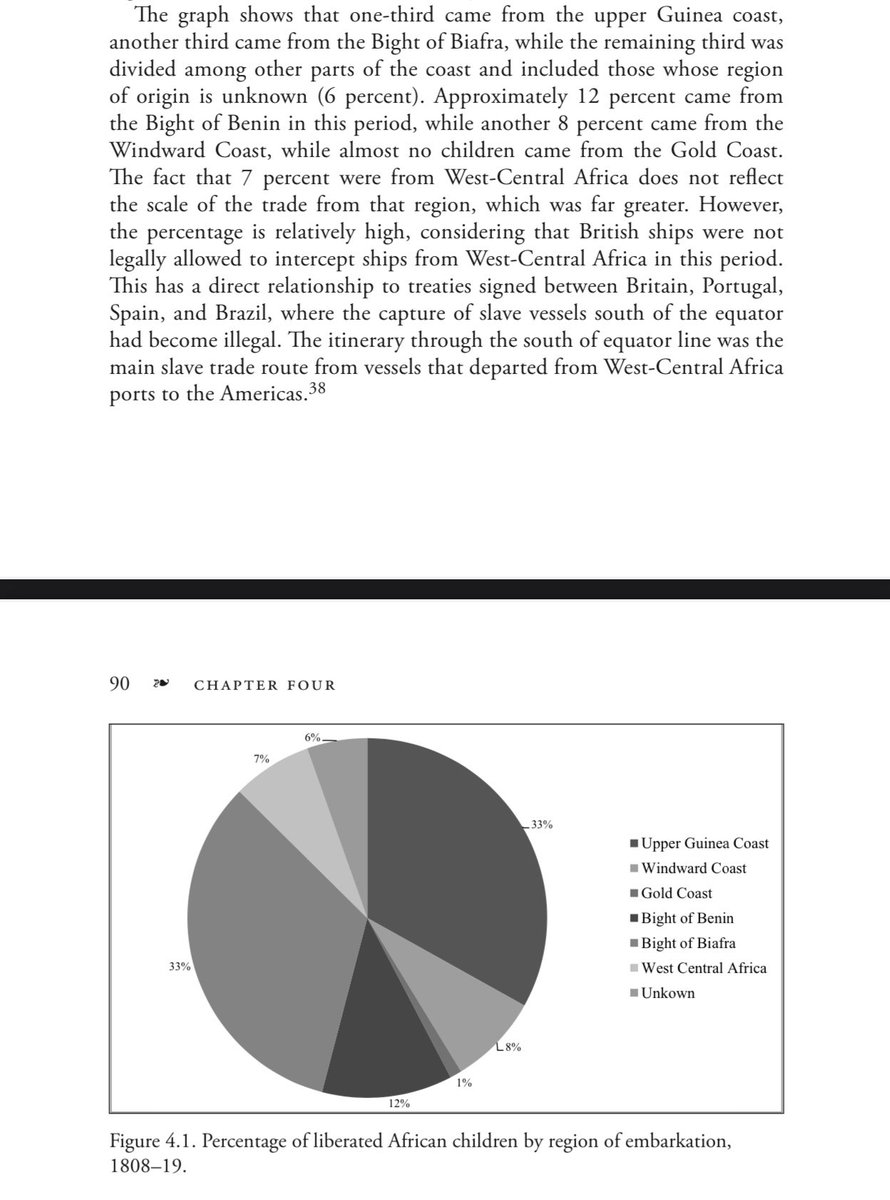
I can’t wait to listen in on this debate. It’s interesting to note that the majority of the Saro (or Liberated Africans) from Sierra Leone came from the Upper Guinea Coast, while about one-third originated from the Bight of Biafra.
The root of agbada is not Sahel derived. The textile, weaving technology, and styles are locally developed within West African communities, with deep historical roots in indigenous textile traditions. Though trade routes certainly facilitated the exchange of materials like silk and influenced style variations over centuries, the fundamental weaving structures, pattern systems, and garment construction methods are indigenous innovations.
Your envy and contempt for Yorùbá civilization have led you into historical ignorance .
The ríga and zénne (plaid) sold in Kano were not described as Hausa manufactures. The source here explicitly states:
“there is a considerable commerce carried on here with the cloth manufactured in Nýffí or Núpe.”
It further notes:
“The tobes brought from Nýffí are either large black ones, or of mixed silk and cotton.”
The mention of mixed silk and cotton indicates high-value textiles associated with long-distance trade.
The author then remarks:
“I am unable to say why the Kanáwa are not capable of manufacturing them themselves…”
In other words, these garments were recognized as Nupe products, not Kano products.
The same passage identifies the ríga sáki, called fílfil by the Arabs, as one of these Nupe textiles that entered Kano and circulated across the Sahara.
As for Nupe or Tapa, If you know anything about their background, you will know they are a Yoruba subgroup. The tradition of these specialized textiles was taught to them by the Yoruba. No Nupe person on the planet will deny this, unless they want to hear the exact Ifá corpus describing how they received the secrets of cotton from Èṣù Olá Ìlú.
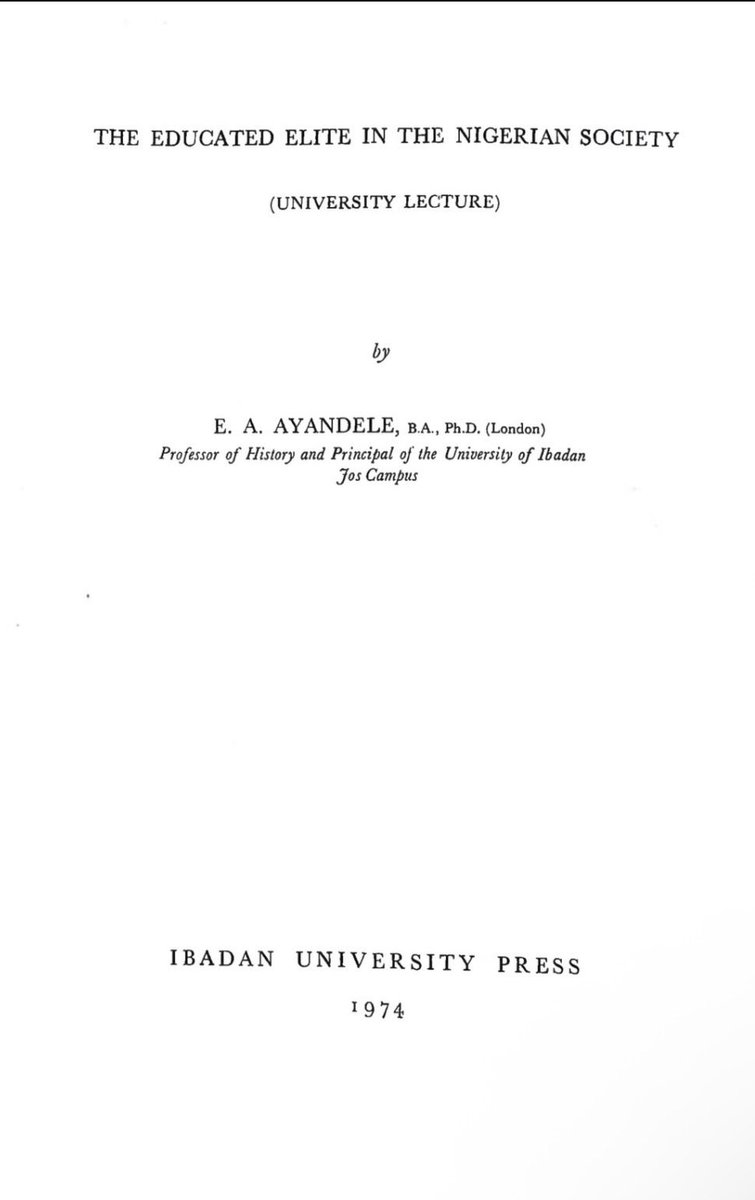
“Like all Nigerians today inducted in the Western-style education and exposed to the white man's cultural heritage, the Saro were lost selves. They had not been taught, but indoctrinated.” - Ayandele, 1974
The contempt of these “deluded hybrids” for indigenous institutions is not new. If anything, it has deepened with free education policy, producing minds more familiar with foreign traditions than their own.
What passes for enlightenment is often nothing more than cultural alienation.
Death by Safe Rate
How Elevated Safe Rates Drain Risk Capital
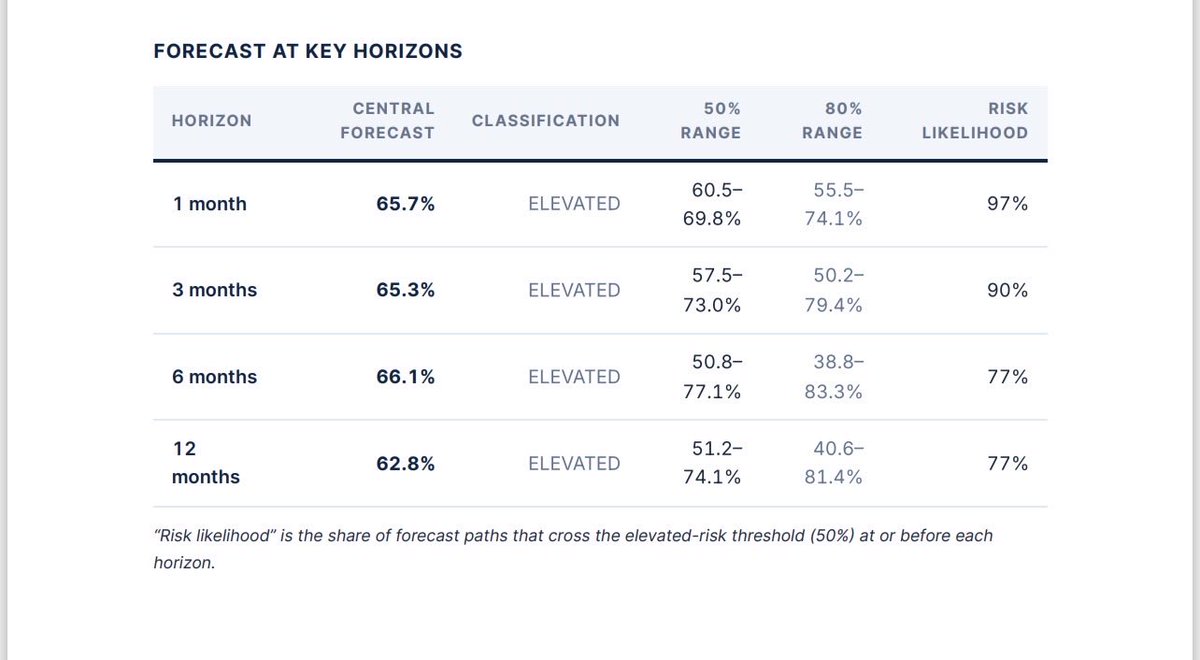
As the Fed continues to inject liquidity through Treasury bill issuance, front-end restrictions remain a latent risk, albeit a benign one for now. The greater concern is that elevated front-end rates become a source of systemic tightening through safe-rate suction.
When risk-free assets offer returns materially above overnight funding costs, the opportunity cost of risk-taking rises. Banks, money funds, and corporate treasurers can earn attractive returns simply by holding bills, lending in repo, or remaining within the safe-asset complex. Capital is consequently drawn away from credit creation, balance-sheet intermediation, and productive investment.
The key distinction is between a rich tenor and a rich surface. A single elevated basis can reflect market microstructure. A broadly positive basis surface signals that the safe rate itself has become elevated across maturities, creating a system-wide pull toward safety. Liquidity migrates from risk-bearing assets into Treasuries, money market funds, and related instruments, tightening financial conditions independently of changes in the policy rate.
This process is self-reinforcing. Flows into safe assets support their relative attractiveness, encouraging further migration of capital. As liquidity leaves risk channels, funding conditions tighten, hurdle rates rise, and risk-asset valuations face pressure from a higher effective discount rate.
Importantly, safe-rate suction is not a funding accident. It is not characterized by repo dislocations, SOFR blowouts, or sudden market stress. Rather, it is the slow, cumulative tightening of financial conditions that gradually suppresses credit growth, weighs on economic activity, and compresses risk premiums. Funding accidents are abrupt and visible. Safe-rate suction is gradual, systemic, and often more consequential.
#Osomaloguild 🐆✍🏿