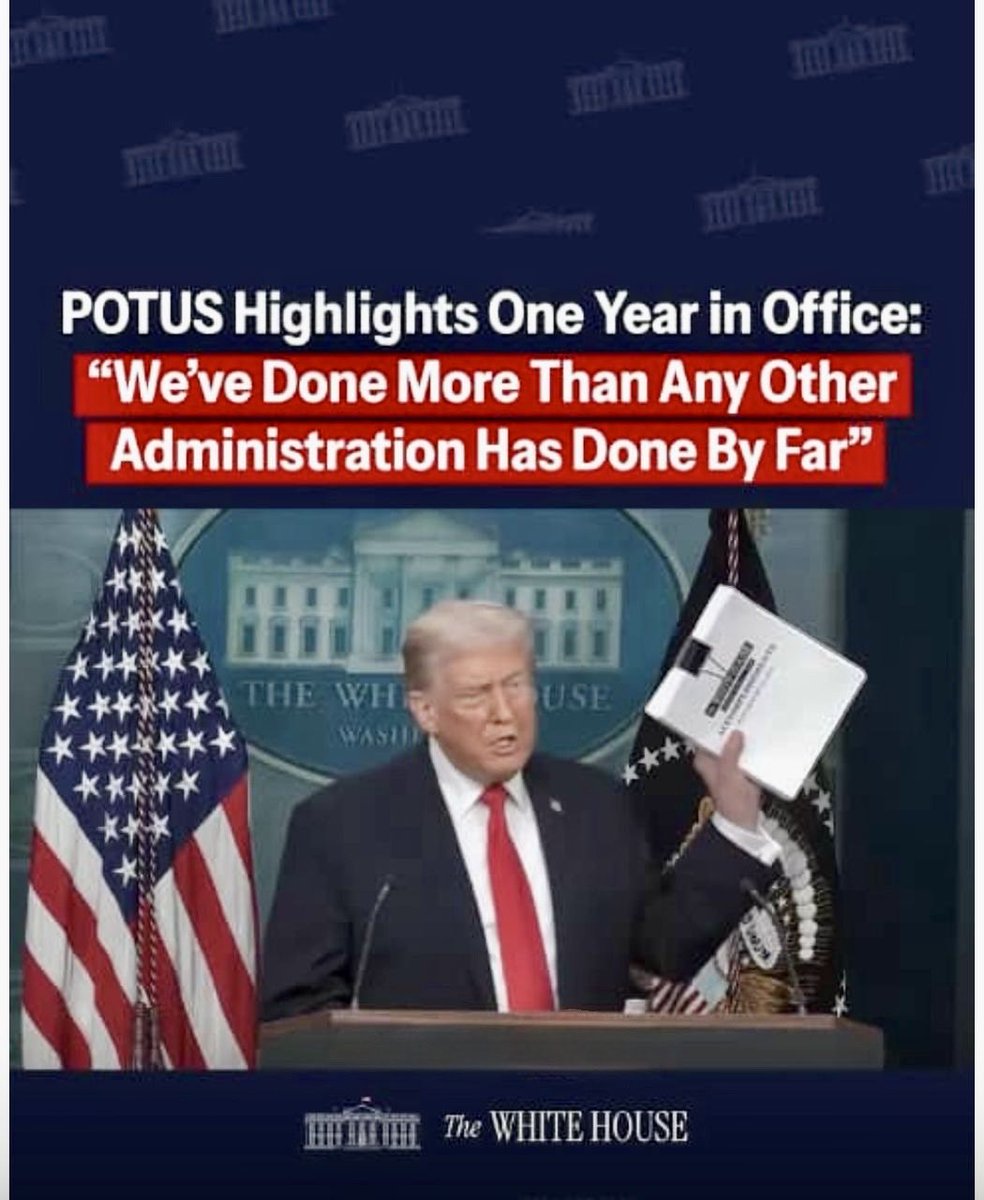
365 days of Trump felt like a decade.
In just one year, the world saw decisive leadership return to the center stage. Borders were enforced, not debated. Global trade was renegotiated with national interest first. Energy independence was restored, anchoring economic confidence. America spoke plainly again, without apology or ambiguity.
Beyond its borders, the message was equally clear: Strength deters chaos. Allies adjusted. Adversaries recalibrated.
That posture echoed far beyond Washington. Even in Africa, it mattered. In Nigeria, renewed diplomatic engagement and security cooperation reaffirmed that strategic partnerships still count, especially in confronting insecurity, instability, and economic disruption.
This was not about style. It was about resolve. Not noise, but impact.
Love him or loathe him, one truth stands: some leaders manage time. Others redefine it. History always remembers the latter.
Happy One Year Anniversary - Donald Trump.
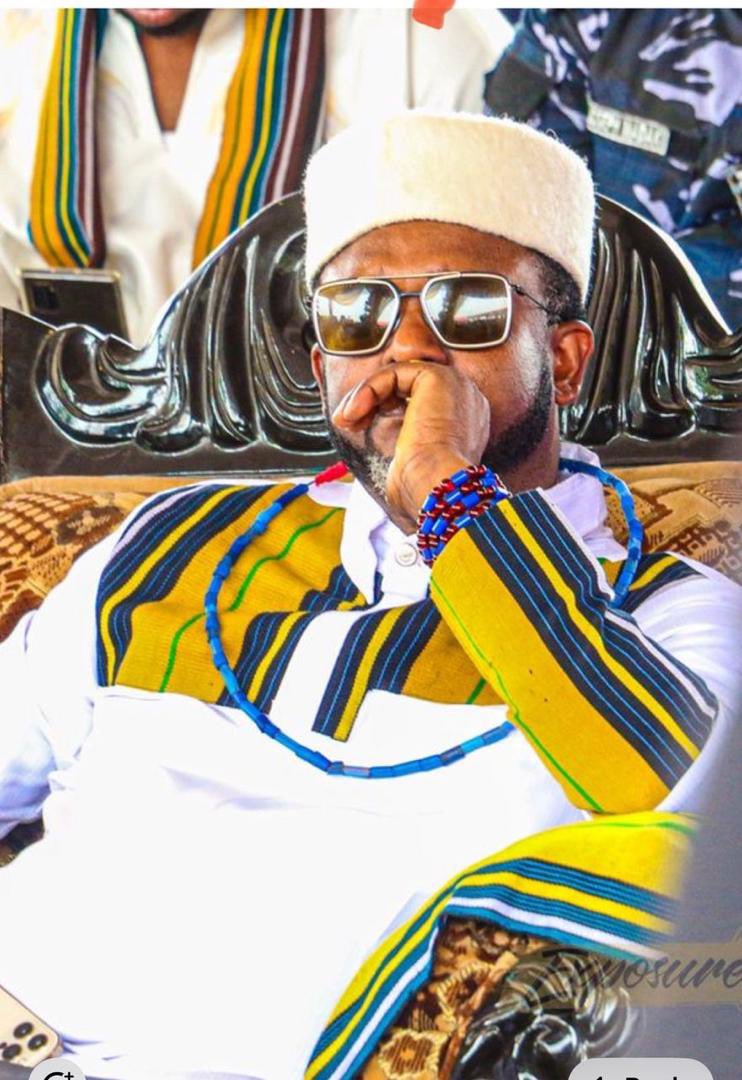
In a nation where the twin, hydra-headed monsters of tribalism and religious nepotism have long stifled our collective potential, one man reminded us of what too many have failed to show: HUMANITY FIRST.
Though our tribes and creeds may differ, in true brotherhood we stand. That is the Nigeria we must choose. That is the Nigeria we must build.
We will get there. It is only a matter of time. These monsters will fall, sooner than many think.
We pray that Almighty God grants him eternal rest and perfect peace in paradise.
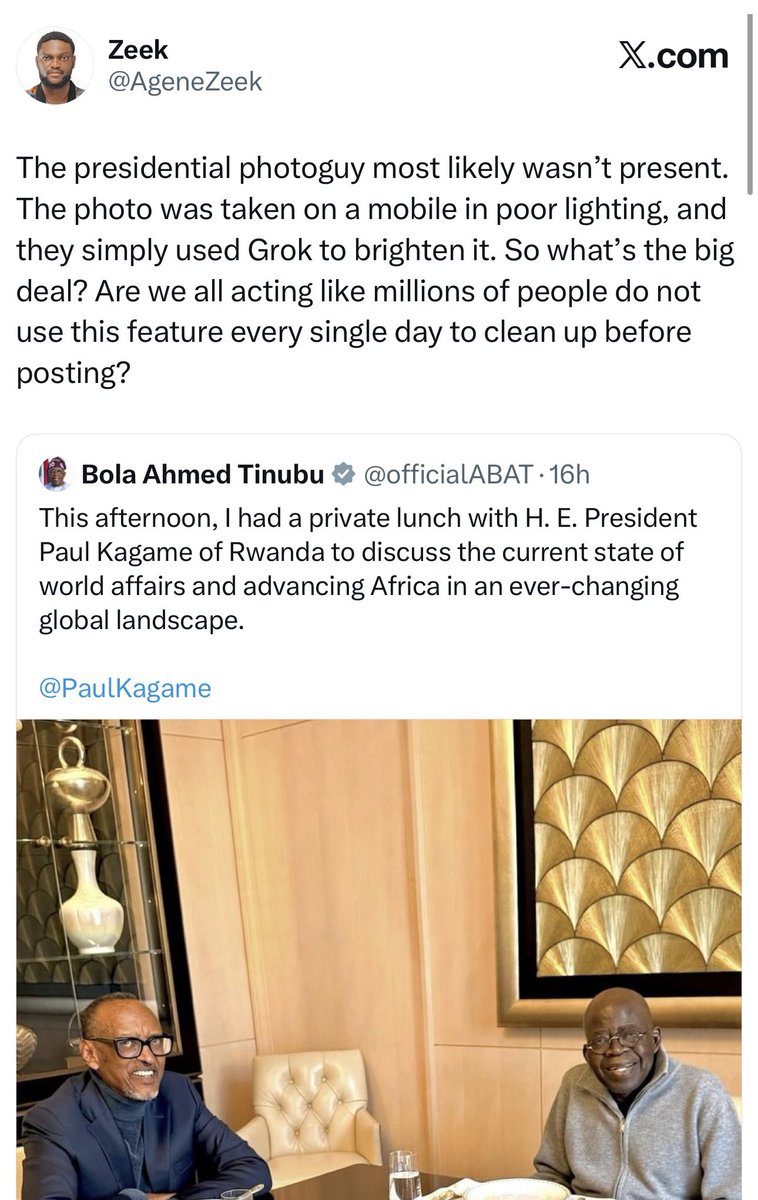
Thanks @AgeneZeek for your expert and accurate opinion on the false narrative being pushed.
We need more of you around this season.
https://t.co/Epow9eeF74
I enter the new year with faith in Nigeria and confidence in her people. The journey has not been easy, but resilience is our strength and hope is in sight.
This year 2026 , may unity deepen, trust grow, and our collective sacrifices yield visible progress in our nation.
Nigeria will rise,because we the people never gave up.
Happy New Year.
@ed_onoja Hitting the control room changes the game, let's focus on the bigger picture not just headlines. We need more of this thoughtful approach.
Thank you Your Excellency.
I’m no authority on security matters, but there is a basic truth about how threats are neutralised that is being missed in the debate around the Sokoto strike.
You do not always hit the loudest battlefield first. You hit the brain that coordinates the chaos.
Sokoto is not just a dot on the map. It has evolved into a strategic nerve point. When you strike the head of the snake, the body weakens everywhere else. That is the logic behind the action taken.
In every serious security operation, there are locations deliberately kept quiet. No constant firefights. No daily headlines. Those spaces exist so command, coordination, financing, and movement can happen without attention. They often escape public debate, but they do not escape serious intelligence systems. What looks calm on the surface can very well be the control room of a much wider operation.
When that control room is hit, confusion spreads across the network. Structures are disrupted. Coordination is shaken. That does not mean violence ends overnight, but it changes its character.
We may see improvements over time, but nothing here should be sold as instant peace or guaranteed calm. Like a snake whose head is severed, we may still see incidents in different spots and locations. That is the kick of a drowning monster, not a sign of strength.
Quiet precision today does not promise perfection tomorrow, but it gives the country a better chance of preventing many loud tragedies down the line.
Finally, I urge all Nigerians of every creed, tongue, and background to rise above suspicion and stand in the gap for our country. This is not a moment for division or cynicism, but for unity, vigilance, and a shared commitment to Nigeria’s survival and ultimate victory.
The Lone Refiner & Reformer.
“One courageous man, standing firm, can turn decades of failure into a future of possibility.” CEDO 2025
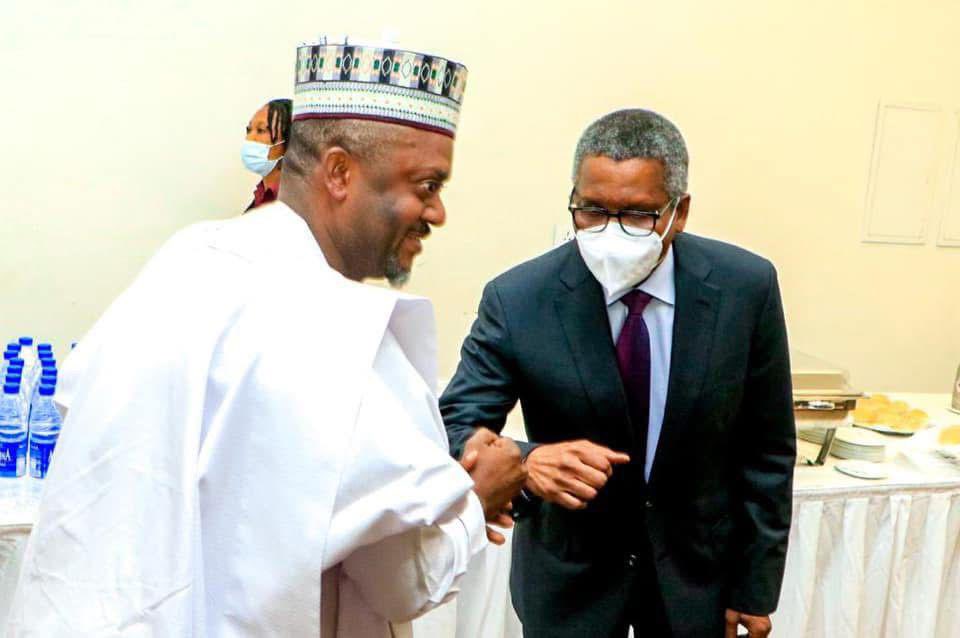
For nearly 30 years, Nigeria’s refineries stood as symbols of failure. Our state owned refineries stopped producing for almost a decade before Dangote’s breakthrough. They were crippled by fraudulent turnaround maintenance that consumed hundreds of billions of naira and delivered nothing. That deep rooted systemic fleecing is now under investigation.
Many tried to fix the system. Most walked away. Aliko Dangote stayed.
After buying the Port Harcourt refinery under Obasanjo and having it reversed under Yar’Adua, Dangote chose a harder path. He invested over 20 billion dollars of his own money to build a world class refinery from scratch.
What followed was resistance at every turn. Regulatory attacks later disproved. Crude oil supply denied, forcing imports from the United States. Union pressure driven by old rent seeking habits. Strikes. Even alleged sabotage. The project was tested repeatedly.
Presidential intervention later ensured crude supply in naira, but challenges continued. Dangote adapted. He acquired thousands of CNG tankers, restructured operations, and pushed the refinery to full production.
Today, the refinery produces petrol, diesel, aviation fuel and petrochemicals. It exports to Africa, Asia and the United States, earning vital foreign exchange for Nigeria.
This success did not happen in isolation. It reflects an enabling environment under the APC led administration, strong and fast tracked support from the Lagos State Government, and timely intervention by Mr President when it mattered most.
It also rests on the discipline of refinery staff who keep the system running, the patriotic investments of Dangote, BUA and others who chose Nigeria, and citizens who continue to stand for what is right.
The choice before us is simple. Support local value creation. Stop systemic sabotage. Let those fighting Nigeria’s economic battles finish the job.
@ed_onoja@AlikoDangote@AlikoDangoteFdn Thank you Your Excellency. Nigeria is blessed to have leaders like Aliko Dangote who prioritize education and the future of our youth.
Aliko Dangote’s commitment of ₦100 billion yearly to education is a landmark act of private philanthropy. Over 10 years, that becomes ₦1 trillion invested directly into the future of over a million Nigerian students.
By supporting STEM learners, vocational and technical trainees, and the girl child in secondary schools, the Dangote Foundation is unlocking opportunities that can reshape a generation. This is the kind of leadership that accelerates national growth.
Nigeria is blessed with many successful private individuals and corporations, and this gesture shows how powerful their impact can be when directed toward education. Dangote has set an admirable pace. Others can join in lifting the dreams of our young people and our nation’s future.
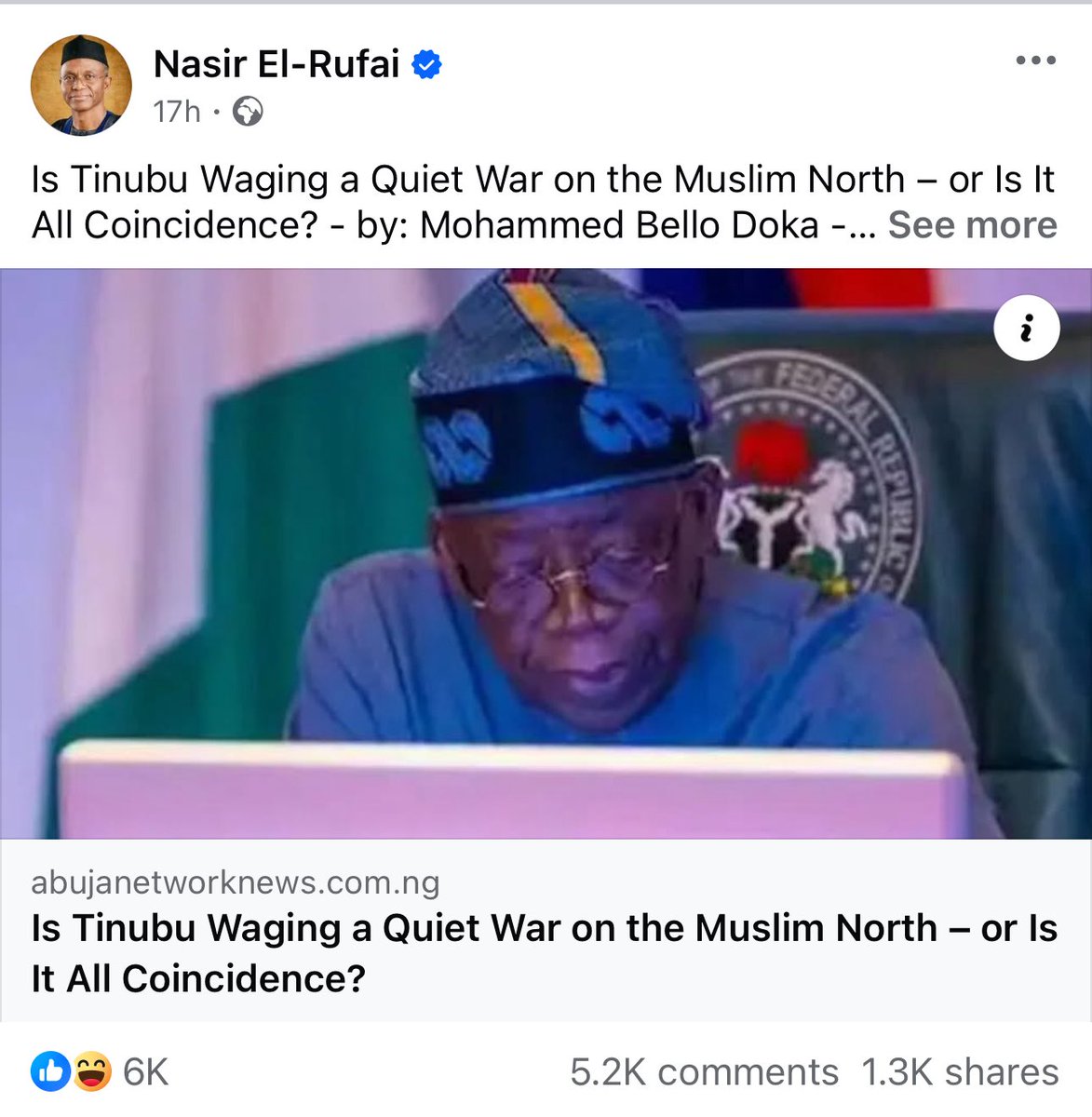
The writeup raises serious questions, but many of its claims rely more on suspicion than on facts. It links unrelated political transitions and frames them as a deliberate pattern, when these same transitions happen in every administration.
The idea that the “Muslim North” is being sidelined is misleading. The North has never been a religious bloc. Christians and Muslims across Borno, Katsina, Gombe, Bauchi, Niger, Kano, Kaduna, Plateau, Benue, Taraba, Adamawa, Nasarawa, Kogi and others have always been Northerners together. They have lived, traded and shaped the regions politics despite differences. Turning the region into rigid religious blocs is dangerous. We must see ourselves as Nigerians and Northerners first, before Muslim or Christian.
The claim that certain groups “make kings” also distorts reality. No region or religion determines power. People mobilise and vote, but leadership ultimately comes from God. Reducing politics to religious lines misrepresents our history and our faith.
On appointments, the idea of calculated displacement does not align with facts. When Kemi Adeosun resigned under Buhari, she was replaced by Zainab Ahmed from Kaduna. No one linked it to religion. When Adams Oshiomhole left as APC Chairman, Mai Mala Buni from Yobe replaced him without controversy. Even Gandujes exit simply returned the office to North Central where it was originally zoned. That was the fair and balanced thing to do. These are normal political corrections, not signs of a quiet war.
On insecurity, every region faces its own challenges. Yet defence and security now take the largest share of the national budget at about twelve percent, almost double the seven percent average of past administrations. That contradicts the narrative of a lukewarm posture toward Northern insecurity.
The Lagos Calabar coastal highway is also misrepresented. It is not a Lagos road. It spans eight states including Lagos, Ogun, Ondo, Delta, Bayelsa, Rivers, Akwa Ibom and Cross River. Many of these are oil producing states that remain the economic backbone of the country. Investing in infrastructure along this corridor is logical, just as increasing defence spending is logical given national insecurity. Both priorities can coexist.
Negotiations with bandits did not begin today. Northern governors have adopted similar approaches in previous years. Presenting this as a new federal agenda against the North ignores that record.
As for foreign pressure or online rhetoric, Nigeria is governed by its constitution, not by tweets or external commentary. Supporters posting provocative views do not represent government policy. And no President seeking re election can ignore Northern votes, both Christian and Muslim. Every serious political actor understands this.
What is most concerning is how the narrative encourages Northerners to distrust one another. It tells Christians they are outsiders and tells Muslims they are victims, quietly fracturing a region that is strongest when united in purpose even with internal differences. This does not defend the North. It weakens it.
Nigeria needs less religion in politics and more focus on building a cohesive nation. At this point in our national life, leaders, stakeholders and citizens must push through both words and actions for national integration, peace and unity for the sake of the country regardless of region, religion or political leaning.