What I truly liked about Japan's 5-2-3/5-3-2 OOP (out-of-possession) mechanism were the trigger points of each line.
1. Initially, the emphasis was on either a low-press or no press (former preferred though) to block passing channels for Swedish facilitation and force the keeper to go long.
- However, if the Japanese front-line was within their own half, then the press would be much more intense. Trigger point? As soon as Sweden enter their half, the press intensifies.
2. The pivot of Kamada and Tanaka was always engaged in a high-press, battling in duels with the Swedish midfielders, operating in a pivot too.
3. Heavy man-marking at the back, which stems from the expectation that the goalkeeper will be forced long owing to the movement and placement of the Japanese front-line without the ball. The goalkeeper goes long, and then it's all about those Japanese defenders to engage with their man to recycle possession.
Three different phases, distinct triggers for each kind of press, and vertical channel blockage. Loved it.
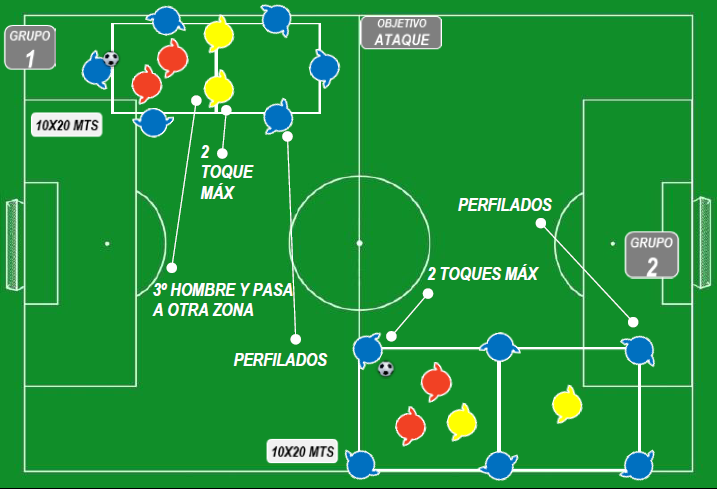
Mismos objetivos, distintas estructuras.
-Atraer en misma zona: Sin límites de pases.
-Generar tercer hombre y pasar a la otra zona.
-2 toques máx. y al recuperar cambios por parejas.
-Los reinicios a zona contraria.
⚽️ Empeza o teu camiño como adestrador co Dépor
👉🏻 Prácticas no Dépor
👉🏻 Abono gratuíto
👉🏻 Método Dépor
🔈 Últimos días de prazo de inscripción para o nivel 1, ata o 25 de xuño‼️
ℹ️ https://t.co/4khbvZh5tt
Argentina essentially don't need "width" to exploit their opponents (as their game isn't entirely possession-based), it's all about verticality and transitional exploitation.
El 3-1-6 (o 3-1-5-1) de Alemania 🇩🇪
Julian Nagelsmann tiene claro cómo quiere atacar: ocupar los cinco carriles y llenar el último tercio de futbolistas.
La duda no está en la estructura, sino en los intérpretes. ¿Son los perfiles adecuados para cada función?