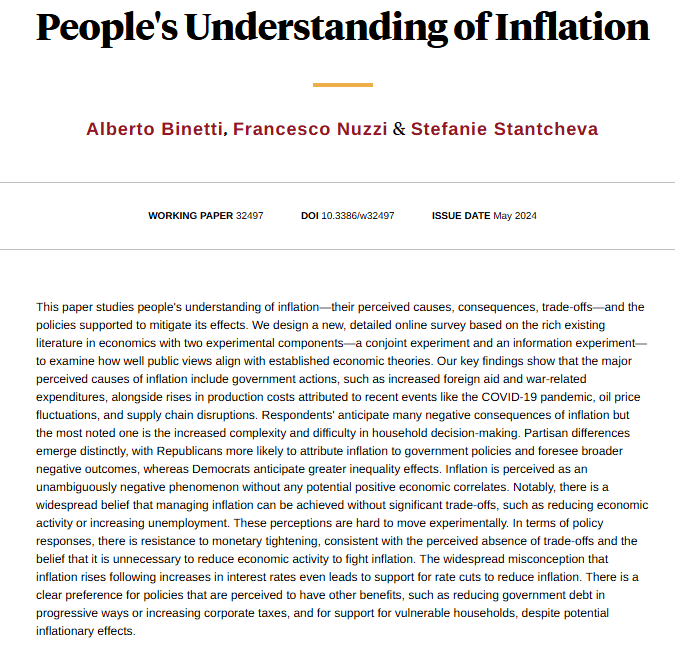
📈Inflation is hard to understand! It has complex causes, consequences & trade-offs. Our new paper with @FraNuzzi98 & @Al_Bi99studies how people understand inflation & what they want the government to do to fight it. Short summary thread 🧵👇
https://t.co/Ilfmlqlep4 1/
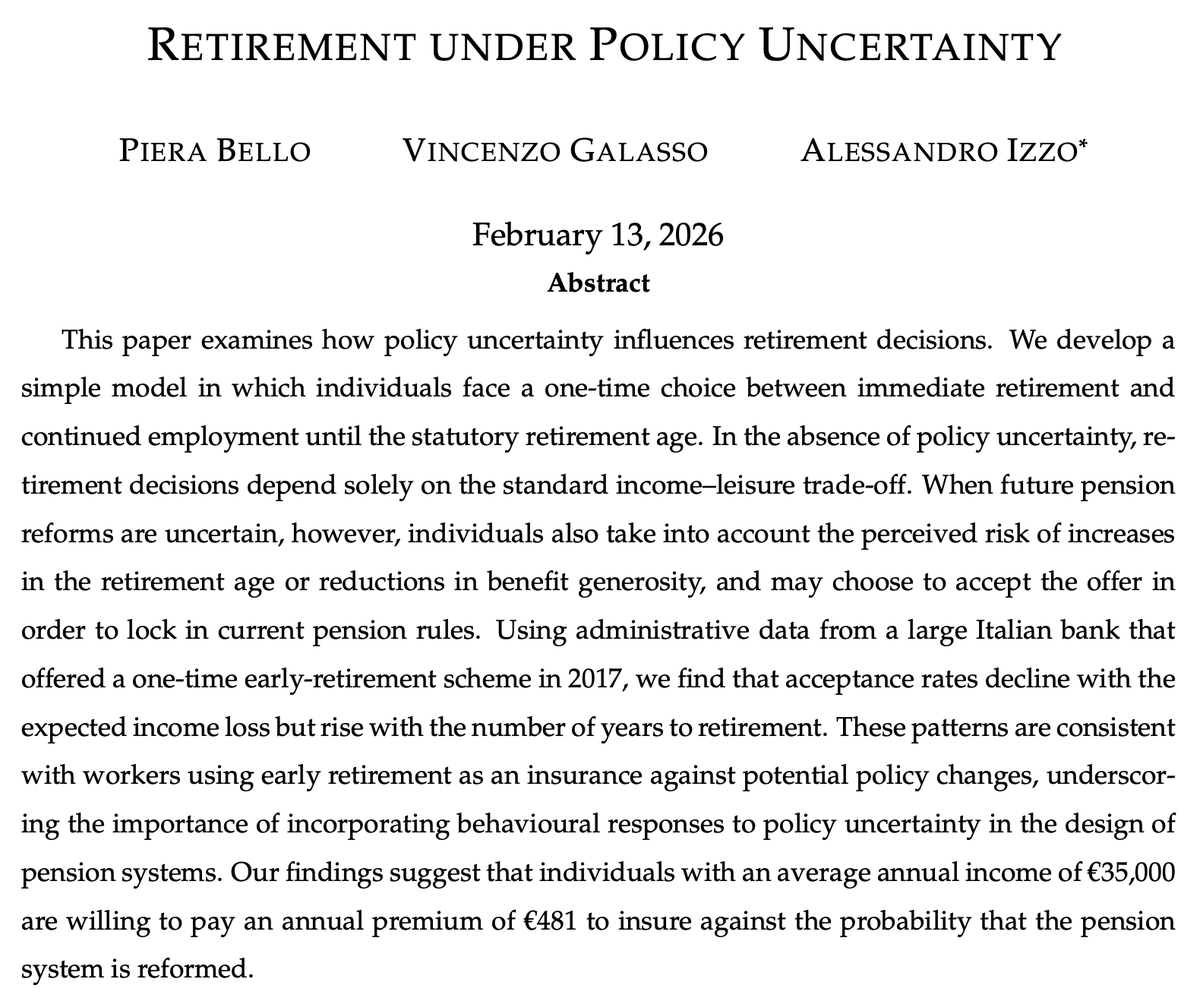
Do workers retire early because they fear pension reforms? In this paper with @PieraBello and @vingalasso we study how policy uncertainty shapes retirement decisions. A summary thread🧵1/9 https://t.co/ZvreijSxL1
🚀I am on the #EconJobMarket!
My JMP asks a classic question:
Do large, dominant firms foster or hinder innovation?
To study this, I turn to the Great Merger Wave (1895–1904), when >2,600 U.S. firms combined into corporate giants like U.S. Steel and DuPont.
A JMP 🧵👇 (1/13)
Excited to be on the job market!
This paper is part of my broader agenda to understand AI adoption through a behavioral economics lens. Thanks to Alex for the guidance and support!
@PrincetonEcon is proud to present the Ph.D. candidates on this year's economics job market.
Learn more about their research, fields of study, and more on our website: https://t.co/i3SKokvEU7
Understanding causality vs. correlation is genuinely hard especially on complex topics like inflation. Our research finds that 60% of Americans think high interest rates cause high inflation & support rate cuts to fight it. But high rates usually respond to inflation,not cause it
🚨 New data alert! Curious about how people really understand inflation—its causes, impacts & what governments should do about it? 📊 You can dive into the data from our project "People's understanding of inflation" here: https://t.co/eXS4YgSFPq Excited to see new analyses!
Thrilled to share my new paper for my Coase Lecture @LSEnews. I outline my thinking on perceptions & mindsets shaping our policy views- on taxation, climate change, inflation & trade. A wonderful opportunity to share recent research which I am grateful for https://t.co/eFzYL7HFcr
This paper by Binetti, Nuzzi, Stantcheva helps to explain the role of inflation aversion and educational polarization:
The college educated (who vote for Dems) think inflation is sign of a good economy and is not worth increasing unemployment for
-People perceive inflation as unambiguously negative.
-tend to resist rate hikes, support rate cuts
-Support corporate tax hikes, assistance for vulnerable households, tax hikes top incomes
-Partisan differences: Republicans more likely to attribute inflation to govment policies
I thrilled to share my first arXiv WP: "A short note on Event-Study SDID" . It comes with a Stata package, sdid_event, available on Github (see footnote 1)!
Many thanks to @DanielPailanir and Damian Clarke for their feedback and inspiring work on SDID!
https://t.co/gQiyQEdkYw
A new survey sheds light on how people understand the causes, consequences, and trade-offs of inflation, and how they think inflation should be managed, from @Al_Bi99, @FraNuzzi98, and @S_Stantcheva https://t.co/vRTDeYsTbI
HCEO member @S_Stantcheva and colleagues illuminate people's understanding of where inflation comes from. They find the most common perceived negative consequence of inflation is increased complexity and difficulty in household decision-making. https://t.co/g7vhf9mECk
Great papers on inflation in the Covid era and beyond, today and tomorrow at the @nberpubs conference . Livestreamed too! https://t.co/81BODT7LB6 Excited to be presenting our new paper on "People's Understanding of Inflation" (joint with @FraNuzzi98 and @Al_Bi99).