There is certainly a lot of untapped potential around early detection and treatment. But early detection does not mean a patient is in the clear. Most often, patients are still forced toward chemo/radiation - non-curative treatments with brutal side effects. We need technologies that give more patients access to surgery - the gold standard cure for most cancers. Bonus: surgery allows us to bypass the biological complexity issue altogether.
There are two paths to "curing cancer":
1) better late-stage drugs – real progress, and hopefully much more with AI, but we're still far from curing most metastatic cancers (the biology is brutally complex), and
2) detecting cancer early, when existing treatments (surgical resection & therapeutics) can actually cure it.
Right now ~80% of cancers are found late. Flip that ratio and you save enormous numbers of lives now with tools we already have.
Multi-cancer early detection (MCED) screening tests, like GRAIL Galleri and and Exact Sciences CancerGuard are available today. I was the founding CEO of GRAIL; re: AI: GRAIL was an entirely enabled by AI/machine learning/deep learning with data generated by the largest clinical study program ever undertaken.
We should absolutely keep pushing on AI-enabled new cancer therapeutics, but early detection can save lives today and make future AI therapeutics more effective.
@GrailBio@GalleriTest@ExactSciences
I was reading Sid Sijbrandij cancer journey, the GitLab founder in his forties who went “founder mode” on his own cancer, and it reminded me of why we started Current Surgical. If you ever have a cancer diagnosis, you only want to hear: your cancer is operable. My thoughts: 👇
Every few months traditional media runs another hit piece on "tech billionaires" funding science…then complains about politicized public funding.
A look at private funding's historical role in breakthroughs and what we stand to gain by encouraging it again. Link below:
My contrarian take for 2026: give the FDA more resources, specifically to streamline breakthrough medical technologies and therapeutics. The innovations that will actually move the needle on longevity, quality of life, and healthcare costs all require regulatory approval. We can’t be afraid to do the hard things or incentivized not to.
So pleased that our first face-to-face meeting with the FDA this week was really positive. This is an important milestone for us and helpful confirmation that we’ve outlined the right path forward. I was especially encouraged by the quality of the conversation/engagement. Meetings like this are important to build up trust and ensure ‘regulatory risk’ doesn’t end up being an actual risk.
Agreed, a new mindset is needed for this space—founders and investors. Most people don't appreciate that some of the early medical technologies have had the biggest impact on longevity in human existence (pacemakers, ultrasound, CT, MRI, stents, and the list goes on and on).
Just met with an elite tier founder starting a techmed company that will create massive value for patients, physicians, and investors.
This space is 100x more exciting than medtech and is going to produce several $100B+ companies in the next ten years.
Key quote: “It’s astonishing that in our day and age, so many stillbirths happen with no identified risk factors. We have watches that track our sleep and stress, but we can’t always tell when a pregnancy is in trouble.”
https://t.co/OBYNotun5E
This is personal for us and reflects what we have been discovering over the last year:
Sweeping new study confirms U.S. stillbirth rates are higher than reported: 1 in 147 births vs. CDC's 1 in 175.
30% of stillbirths in the U.S. happen with no identifiable risk factors. Even when risk factors are known — there aren’t adequate tools for prevention.
Behind every statistic is a family's unimaginable loss. We need to do better.
The biggest bottleneck in American hard tech isn’t capital, it’s non-consensus conviction. Most investors want frontier returns without frontier risk. Those betting on the overlooked will be rewarded.
This is a great advancement from @GrailBio! We must now pair up early detection with curative treatments. There is this growing gap, where our ability to treat with curative intent has not kept pace with diagnosis. Treating cancer should be no more stressful than taking care of a cavity. Excited to be solving this problem @CurrentSurgical!
Results from the PATHFINDER 2 study demonstrate the Galleri multi-cancer early detection test helped increase cancer detection more than seven-fold when added to recommended screenings for breast, cervical, colorectal, and lung cancers. Learn more: https://t.co/aM5Lc620j7 #ESMO25
I've been reflecting on how this great article by @deenamousa applies to surgery.
Similar to radiology, AI & automation will have transformational effect on surgery. We want to turn more clinicians into expert surgeons. And at the same time we want to make more curative surgeries possible and more efficient for more patients—thus growing the number of patients and clinicians (i.e. Javons paradox in surgery).
Another takeaway: It's not surprising that the approved models in radiology are struggling in real clinical settings as the data is not broad enough. This is where I believe 'native-ai' tech will win out in healthcare. Training on generic data sets has its limitations.
In 2016 Geoffrey Hinton said “we should stop training radiologists now" since AI would soon be better at their jobs.
He was right: models have outperformed radiologists on benchmarks for ~a decade.
Yet radiology jobs are at record highs, with an average salary of $520k.
Why?
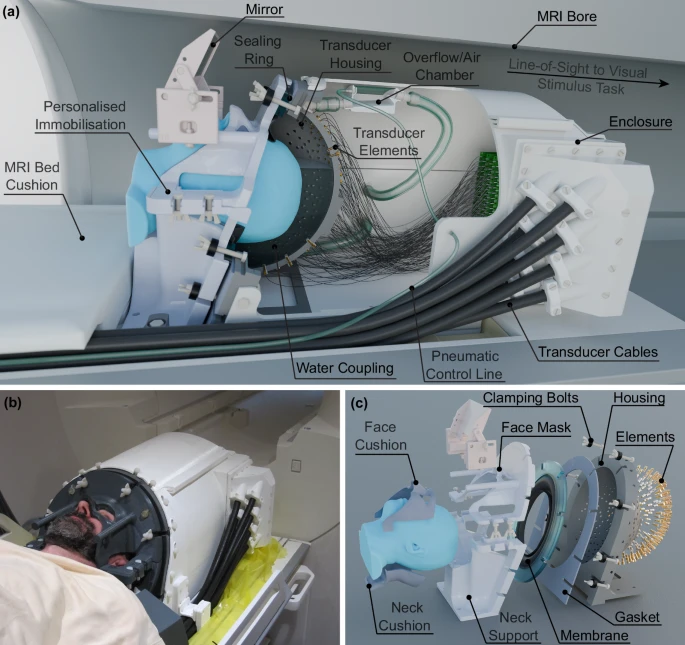
Inspiring to see work in the focused ultrasound space by other scientists and entrepreneurs! FUS in neuro applications is hot right now. Excited about the opportunity, will be interesting to see if the solution ends up geared for research hospitals (due to large equipment, need for MRI, etc.).
Looking at the heft of the image below, I’m even more impressed that our team @CurrentSurgical has been able to pack all of this technology into a super thin needle!
Co-founder vesting should be 6 years.
The only founder who isn’t happy with that, is the one who leaves.
I talk to so many founders who wish they did this.
We’re focused on keeping jobs and businesses in high-growth industries in DC.
The 9 Vitality and Growth Fund awardees will:
📈 Create 250 new jobs
📈 Retain 72 jobs
📈 Invest $4M in capital improvements
DC is investing in growth and open for business.
The House Ways and Means Committee passed a bill earlier this week that gives breakthrough devices 4 years of Medicare coverage. This is a great step for patients - and a great incentive for companies taking bold bets in developing life-saving technologies.