We’ve been working with AlphaGenome for a while — today we’re sharing two updates:
• alphagenome-ft: a lightweight structured fine-tuning wrapper
• MPRA fine-tuning results with SOTA performance
Adapting AlphaGenome's JAX/Haiku stack to new assays isn’t trivial. 1/8
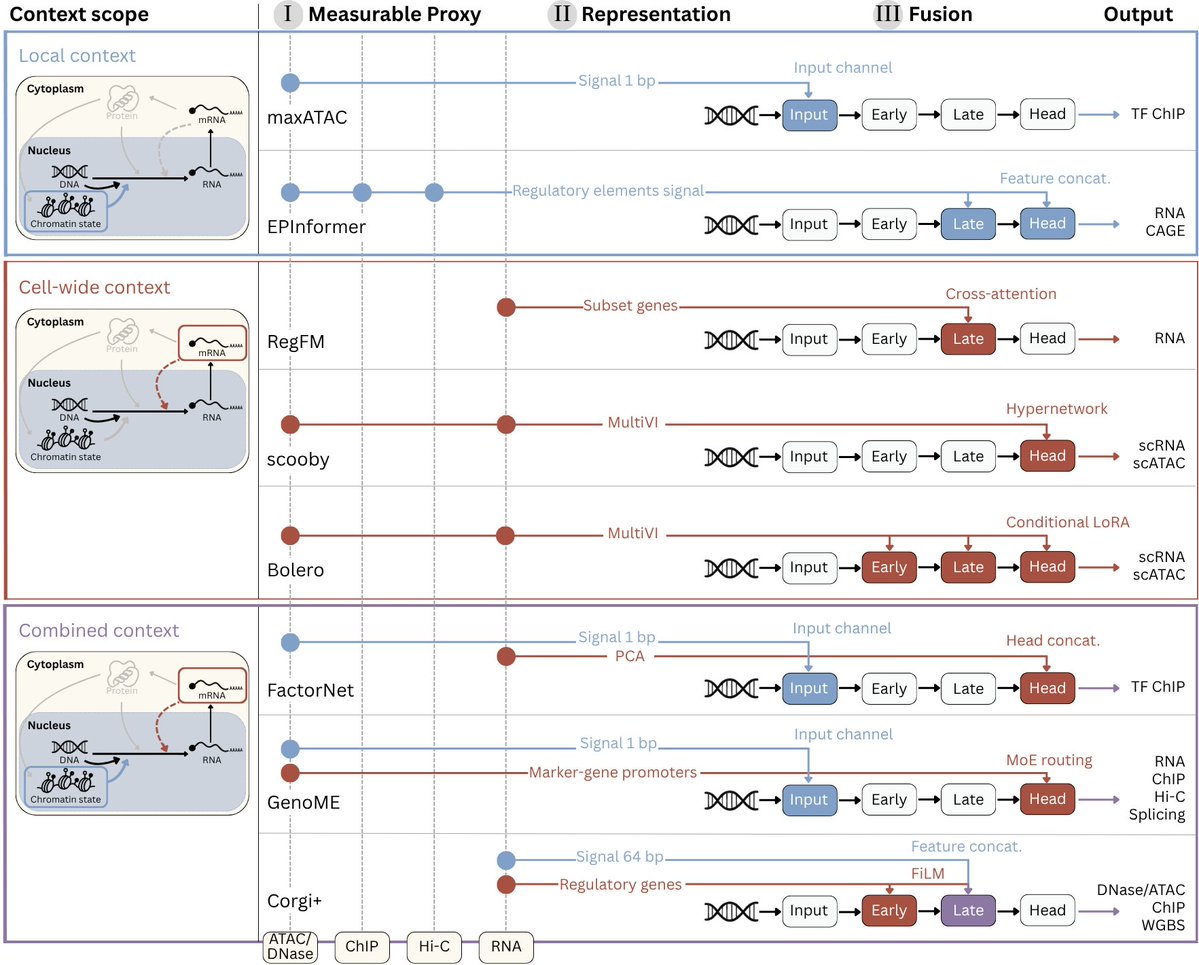
Our new review on cell state generalization in computational regulatory genomics is out!
Published open source on the Genomics x AI blog
https://t.co/OnWl6NDFLS
Check out our new Review on "Modeling gene regulation across cellular contexts with deep learning"
This Review covers the next stage of seq2fun evolution:
cell state models + seq2fun -> context-aware seq2fun models
It's open access on Genomics x AI Blog!
https://t.co/VAyiuIs3uy
This project led to some great discussions. I learnt a lot from my co-authors, and I think we mapped the field well together. Joint work with @ekinda and Selin Jessa, and with @rrastogi02, @wunniess, @em6wong, @mariabrbic, @anshulkundaje and @pkoo562.
https://t.co/sY0p4tFPf4
8/8
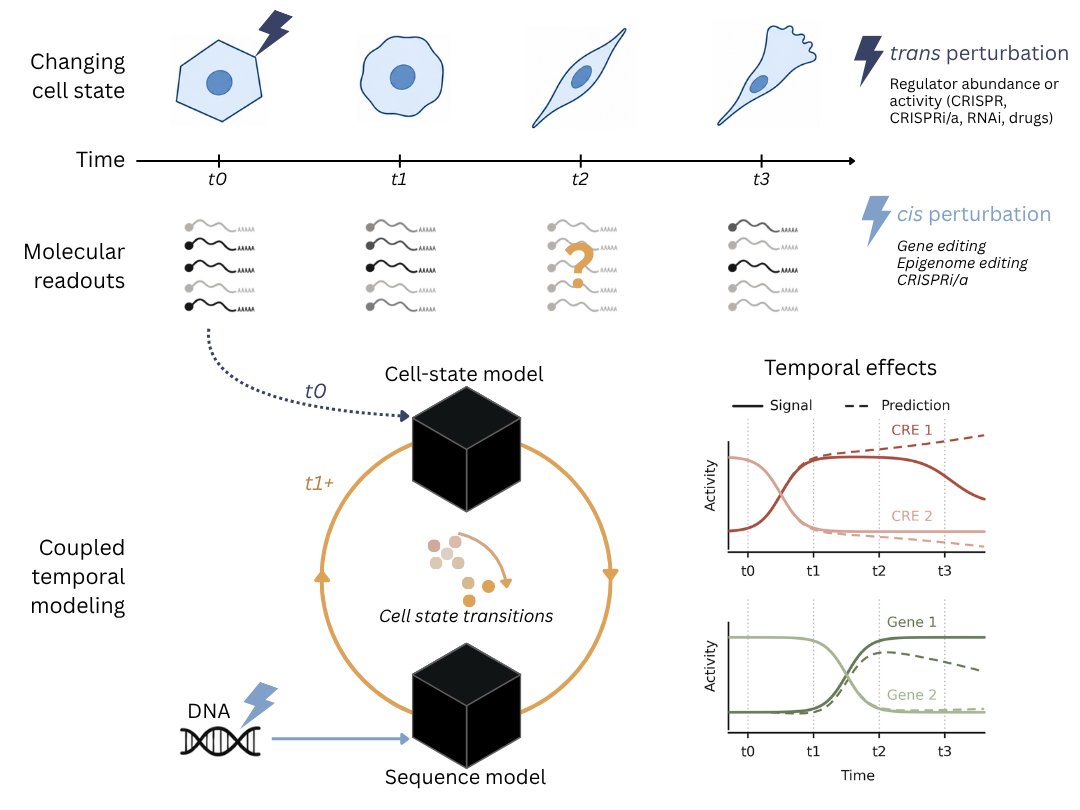
Seq2func models predict regulatory activity from DNA, only in cellular contexts seen in training. But what happens when a perturbation or signal changes cellular state?
Context-aware models add an input proxy for it, e.g. RNA. In theory, they can predict as cellular state changes
Finally, cells respond to perturbations and stimuli over time, yet a context-aware model needs each new cellular state measured. We think the next goal is to forecast that trajectory: couple the model to a dynamical one that updates the cellular state after each prediction.
7/8
At the MLCB panel this week, we were asked for concrete advice for trainees who are trying to navigate these difficult times.
Unfortunately, there are no universal rules to follow, but hopefully some of this is helpful:
Happy to see the perspective on securing AI-driven biological sequence design is now out: https://t.co/sRznGAVjSQ.
There is a lot of good ideas around governance of training data and DNA synthesis and better model scoring. Congrats Max and all the team!
MLCB 2026 is finally here! The premier ML x Bio hybrid meeting will be on Mon (11/16) and Tue (11/17) from ~9a-6:30p ET.
Registration is full but will be streamed via zoom and youtube live w/ links posted on MLCB website shortly before it starts
https://t.co/JV7zVc761Z
JOIN US!
A benefit of our Genomics×AI blog is posts are living, versioned, updatable documents. So I've updated our enhancer benchmark with NTv3's revised release, Cerberus and AlphaGenome 2. Cerberus ties Borzoi overall but is worse on proximal and (maybe) better on distal enhancers
1/2
New post w/@pkoo562: we test Enformer, Borzoi, NTv3 & AlphaGenome on K562 CRISPRi enhancers, extending Karollus 2023.
Performance has improved with newer seq2func models, but all still underpredict distal CREs. Distal perturbations remain an open problem!
https://t.co/EupR4X4cbg
@adamgayoso Cheers Adam, fair point! I've updated the blog to just reflect the assayed (non-imputed) tracks - cool though the summary stats didn't change at all with or without them!
UPDATE on Genomics x AI blog!
AlphaGenome 2 is now SOTA on a quantitative, zero-shot CRISPRi benchmark for seq2fun models.
This is “unpublished” research shared fast with rapid engagement followed by corrections — essentially improving the work with real-time peer-review! 🧨💥
@RanjakAnurag You could but ABC and rE2G take K562 chromatin data as input, while this post compares models that predict from DNA sequence alone (seq2func). rE2G is also a classifier trained on these same CRISPRi screens (so not zero-shot in that way), and ABC was developed on the Fulco data.