We have not asked you to support continuity because his name is Asiwaju @officialABAT. He could just as well have been named Peter Atiku Tinubu, and it would make no difference to our argument.
This is not about a name. It is about a national project.
Our plea is simple: give Nigeria the opportunity to continue this journey of national rebirth. The process is underway. Its effects are beginning to emerge, and the ambition is for its benefits to reach every Nigerian, everywhere. There is still work to be done, and the hardship many people face must never be dismissed. But we must not confuse the pain of transition with the failure of the journey.
What we ask is that you look beyond the noise, think deeply, examine the direction of the country, and interrogate the records of those who now offer themselves as alternatives. What exactly are they proposing? How does it differ from what is being done? What did they do when they had the opportunity? And, most importantly, can their promises withstand the scrutiny of their own records?
Nigeria cannot afford to make consequential decisions on the strength of slogans, sentiments, personalities or political resentment. We must judge ideas by their substance, leadership by its record, and policies by their outcomes.
The argument is not that everything is perfect today. The argument is that the work of rebuilding Nigeria must be judged honestly, and the journey must be given the opportunity to deliver its full promise.
That is why we ask you to look again, think deeply, and consider the national interest above every other sentiment.
This is bigger than Asiwaju. It is about Nigeria, the country we must rebuild for ourselves and the generations coming after us.
Otunba Segun Showunmi
The Alternative.
Over the past few days, servicemen and women of the Armed Forces have shared what the recent pay increase means for them and their families. I am glad it is making a difference.
This week, the Nigerian Army @HQNigerianArmy operationalised new formations in Zamfara, Kebbi, Oyo and Osun. Our troops are now closer to vulnerable communities in these areas, strengthening our ability to respond swiftly and decisively when our people are threatened.
We are also fast-tracking the construction of new barracks and depots in Abuja, Ekiti, Ebonyi and Kogi, with Osun already completed. As we demand more from our men and women in uniform, we must do more to support them and their families.
Every deployment is a sacrifice made by a family too.
As our Armed Forces stand watch over Nigeria, my duty as Commander-in-Chief is to ensure they have the resources and support to do their job, and that Nigeria stands firmly behind the families waiting for them at home.
Bola Ahmed Tinubu, GCFR
President and Commander-in-Chief of the Armed Forces
Federal Republic of Nigeria
@NGRPresident@NigeriaGov
Over the past few days, servicemen and women of the Armed Forces have shared what the recent pay increase means for them and their families. I am glad it is making a difference.
This week, the Nigerian Army @HQNigerianArmy operationalised new formations in Zamfara, Kebbi, Oyo and Osun. Our troops are now closer to vulnerable communities in these areas, strengthening our ability to respond swiftly and decisively when our people are threatened.
We are also fast-tracking the construction of new barracks and depots in Abuja, Ekiti, Ebonyi and Kogi, with Osun already completed. As we demand more from our men and women in uniform, we must do more to support them and their families.
Every deployment is a sacrifice made by a family too.
As our Armed Forces stand watch over Nigeria, my duty as Commander-in-Chief is to ensure they have the resources and support to do their job, and that Nigeria stands firmly behind the families waiting for them at home.
Bola Ahmed Tinubu, GCFR
President and Commander-in-Chief of the Armed Forces
Federal Republic of Nigeria
@NGRPresident@NigeriaGov
Nigeria at 66: Looking Back, Looking Forward
Fellow Nigerians,
Today we mark the sixty-sixth anniversary of our independence. It ought to be a day of celebration and thanksgiving to God Almighty for the gift of life and for the immense blessings He has bestowed on our nation—our diversity, our abundant human and natural resources, our vast agricultural potential, and the relative absence of devastating natural disasters.
It should also be a day of appreciation and patriotism: a day to remember our founding fathers and all those who made selfless, and in many cases supreme, sacrifices for the birth, survival and growth of our dear nation. We must acknowledge the efforts of past and present leaders who have laboured, however imperfectly, to build a better Nigeria.
Yet independence anniversaries must never be reduced to mere celebration. They are moments for honest national reflection. We must look back, examine where we stand today, and ask ourselves whether we are moving in the direction our founding fathers envisioned.
In national planning and strategy, every serious nation must continually ask three fundamental questions:
Where are we today?
Where do we want to be?
How do we get from where we are to where we want to be?
These questions are especially urgent now. Despite the enormous promises made by the APC-led government in 2023, our nation continues to face deepening challenges across virtually every critical sector of national life.
Today we stand before the world as a nation:
With an extraordinarily large population living in poverty and severe hardship; over 140M
With one of the largest populations of out-of-school children in the world; over 18M
Where insecurity, terrorism, banditry and kidnapping continue to threaten lives and livelihoods, just recently 37 young Nigerians in their productive age lost their lives
Where millions of Nigerians struggle with hunger and food insecurity; over 40M Nigerians will be in extreme hunger by the end of 2026.
With unacceptably high rates of infant and maternal mortality; Nigeria today is the worst place to be born.
Where youth unemployment and underemployment remain alarmingly high; over 35M
Where drug abuse and substance misuse increasingly threaten our young population; today 14% as against global average of 6%
Where life expectancy remains among the lowest globally, today 54 years against global average of 74 years
And the list goes on.
This reality demands serious, sober and honest reflection. Socrates taught that “the unexamined life is not worth living.” By the same principle, an unexamined nation cannot successfully chart its future. We must therefore ask ourselves: Are we cursed, or have we become the curse through the choices we have made and the failures we have tolerated?
The answer cannot be that Nigeria is cursed. We are a nation immensely endowed and blessed. Our greatest problem is not a lack of resources; it is the failure to convert our enormous resources into human development, productivity, security and shared prosperity.
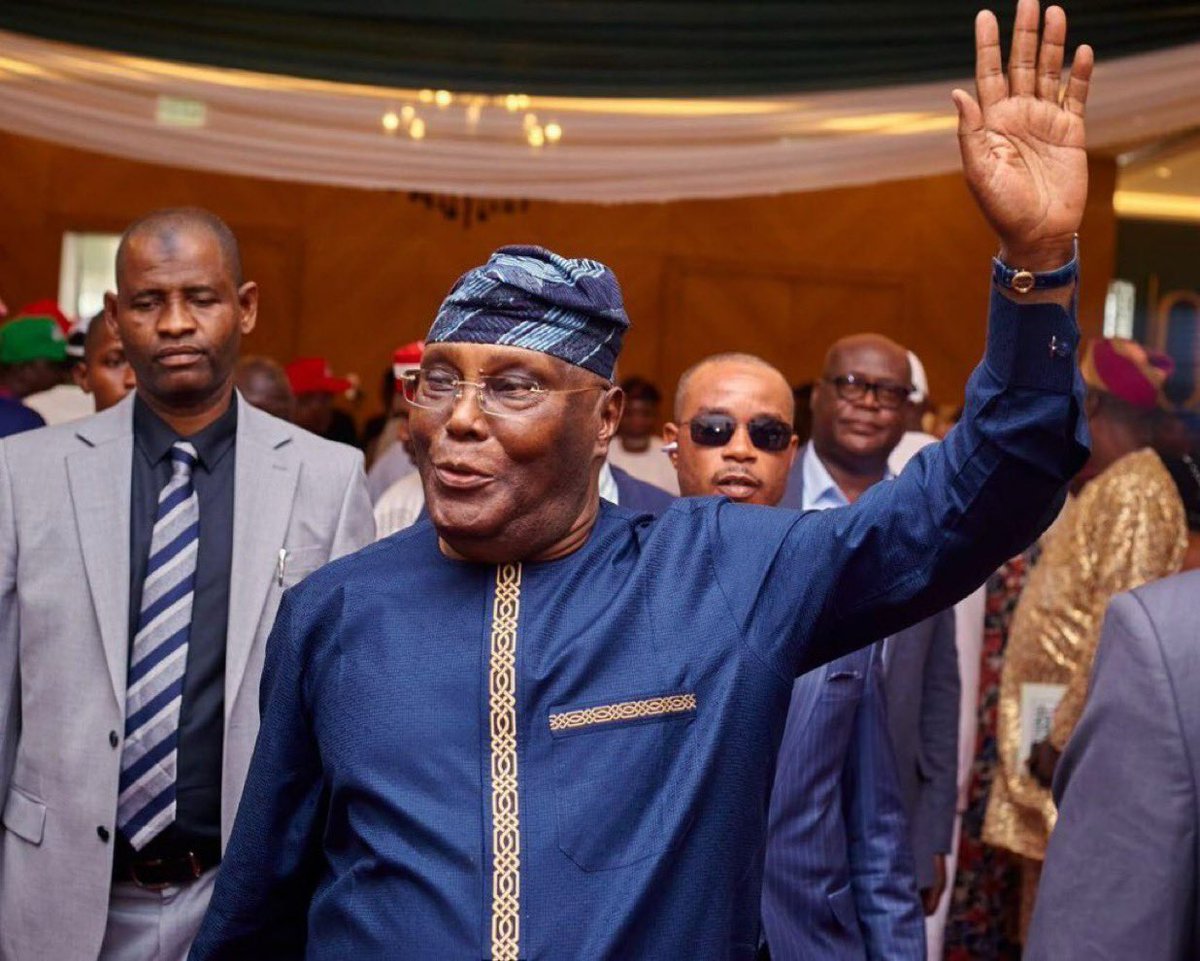
Only yesterday, Senator Rabiu Kwankwaso and I returned from a two-day visit to Sokoto State. We held extensive consultations with people from different parts of the state on insecurity, out-of-school children, poverty, youth unemployment, drug abuse and other challenges confronting our people.
In concluding the visit, we went to the Internally Displaced Persons camp at Ramin Kura within Sokoto metropolis. What we saw was deeply troubling. Thousands of women and children live in deplorable conditions, displaced from their homes and deprived of the basic necessities of life. Many of the children have no access to education. Mothers and children have limited access to basic healthcare. These are Nigerians who should be living in their communities, going to school, farming their land, conducting their businesses and contributing to the economy. Instead, they live as displaced persons in their own country.
Regarding NELFUND:
The Tinubu-led APC government wants applause for university degrees while offering no corresponding jobs.
The more degrees young Nigerians accumulate without jobs, the more frustration they accumulate.
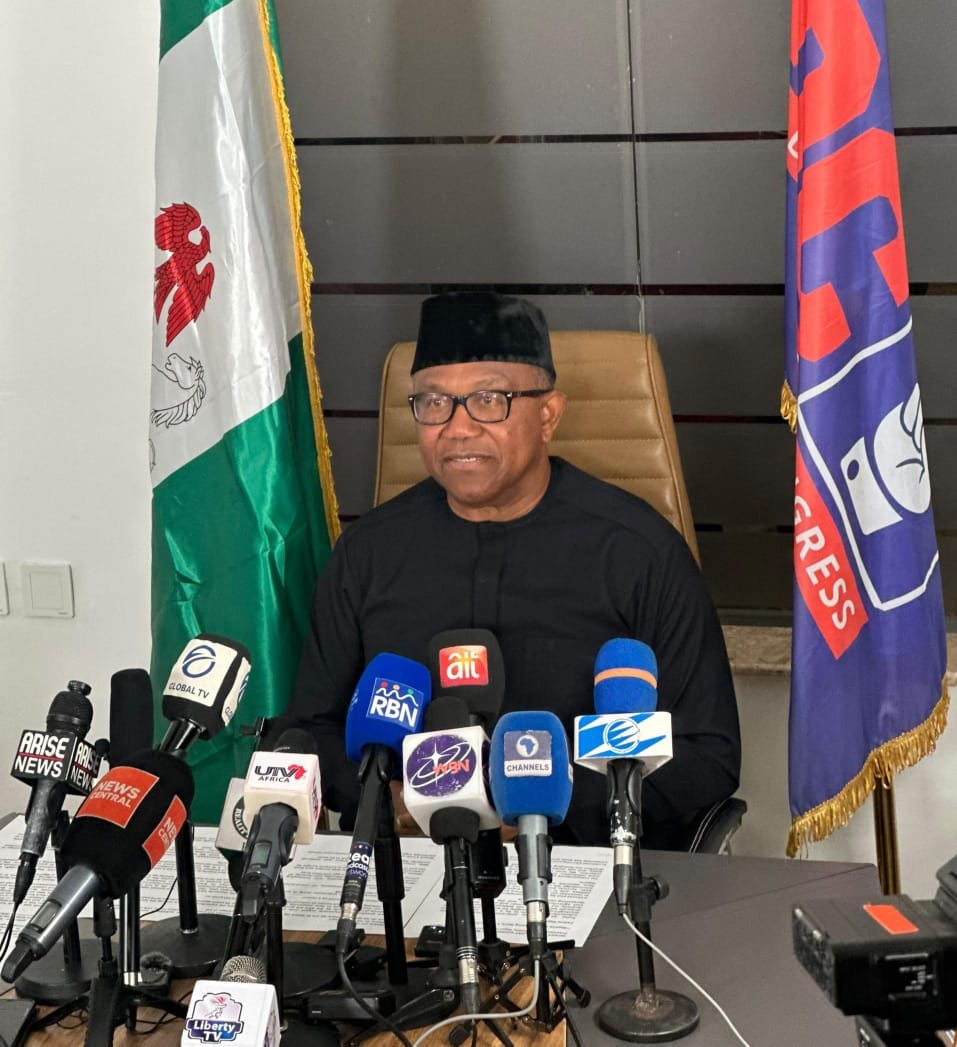
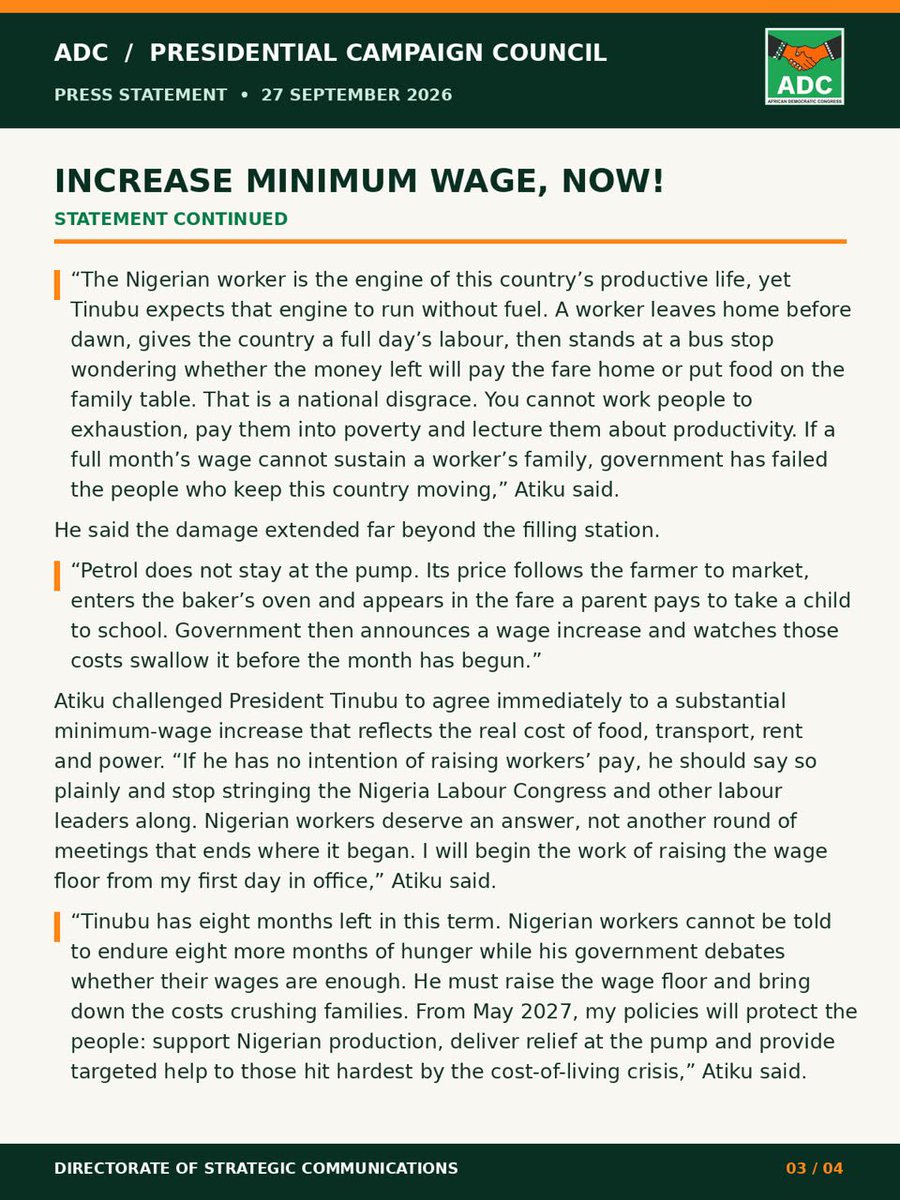
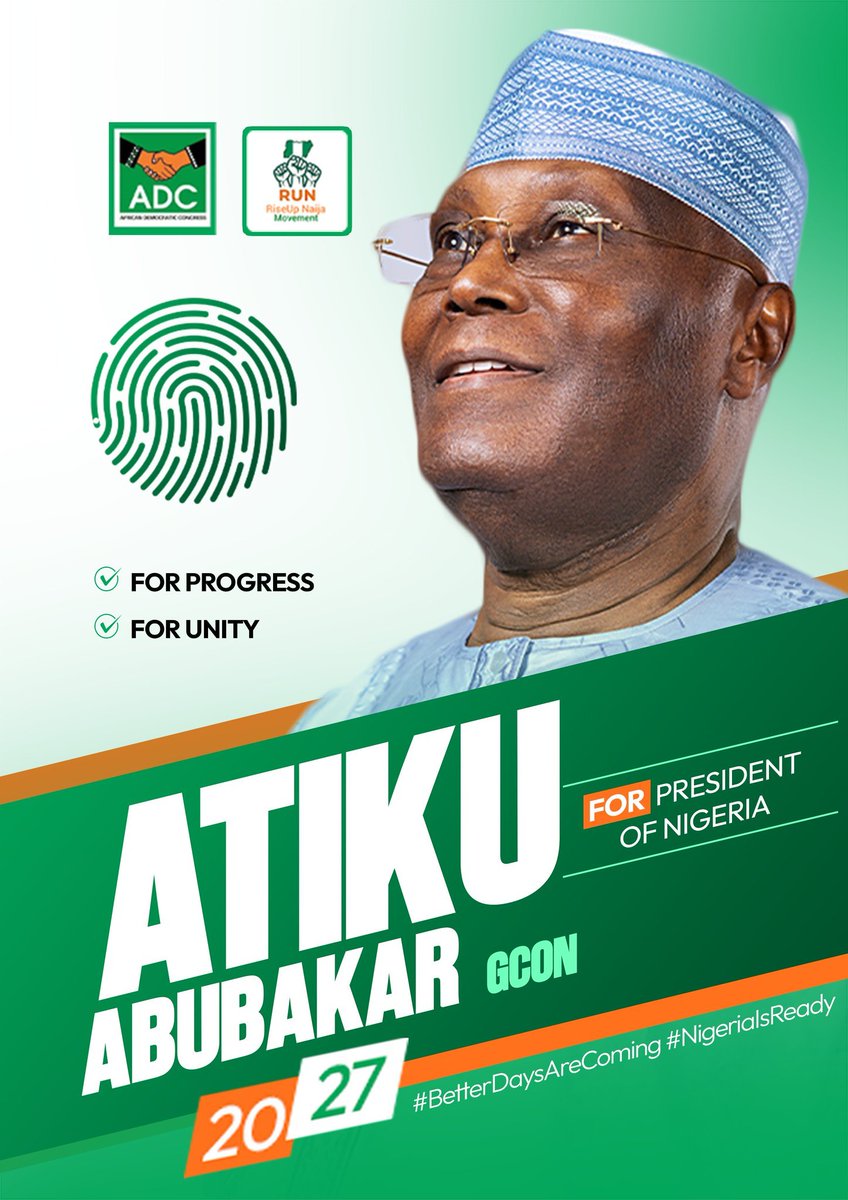
His Excellency Atiku Abubakar, GCON, Waziri Adamawa, Vice President of Nigeria (1999–2007), will address an International Press Conference to mark the 66th Independence Anniversary of the Federal Republic of Nigeria.
The press conference is scheduled for tomorrow, Thursday, October 1, 2026, at 10:00 a.m., at the Conference Hall of the National Secretariat of the African Democratic Congress (ADC), 121 Adetokunbo Ademola Crescent, Wuse II, Abuja.
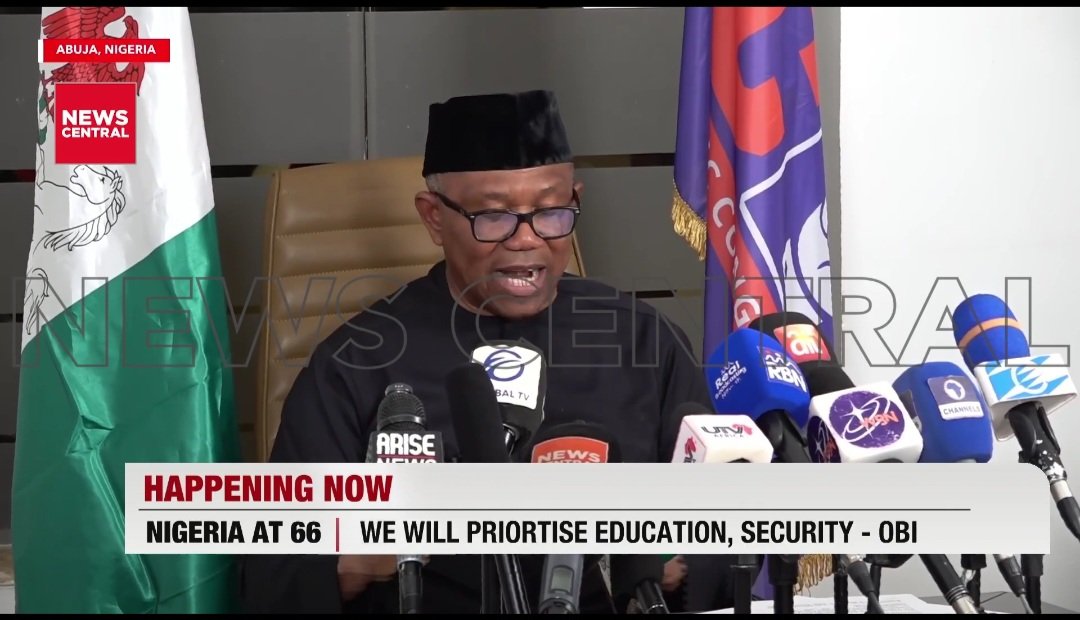
On this day October 1st 2027 His Excellency Peter Gregory Obi gave his first Independence Day speech.
And Nigerians across ethnic lines roared in rapturous joy
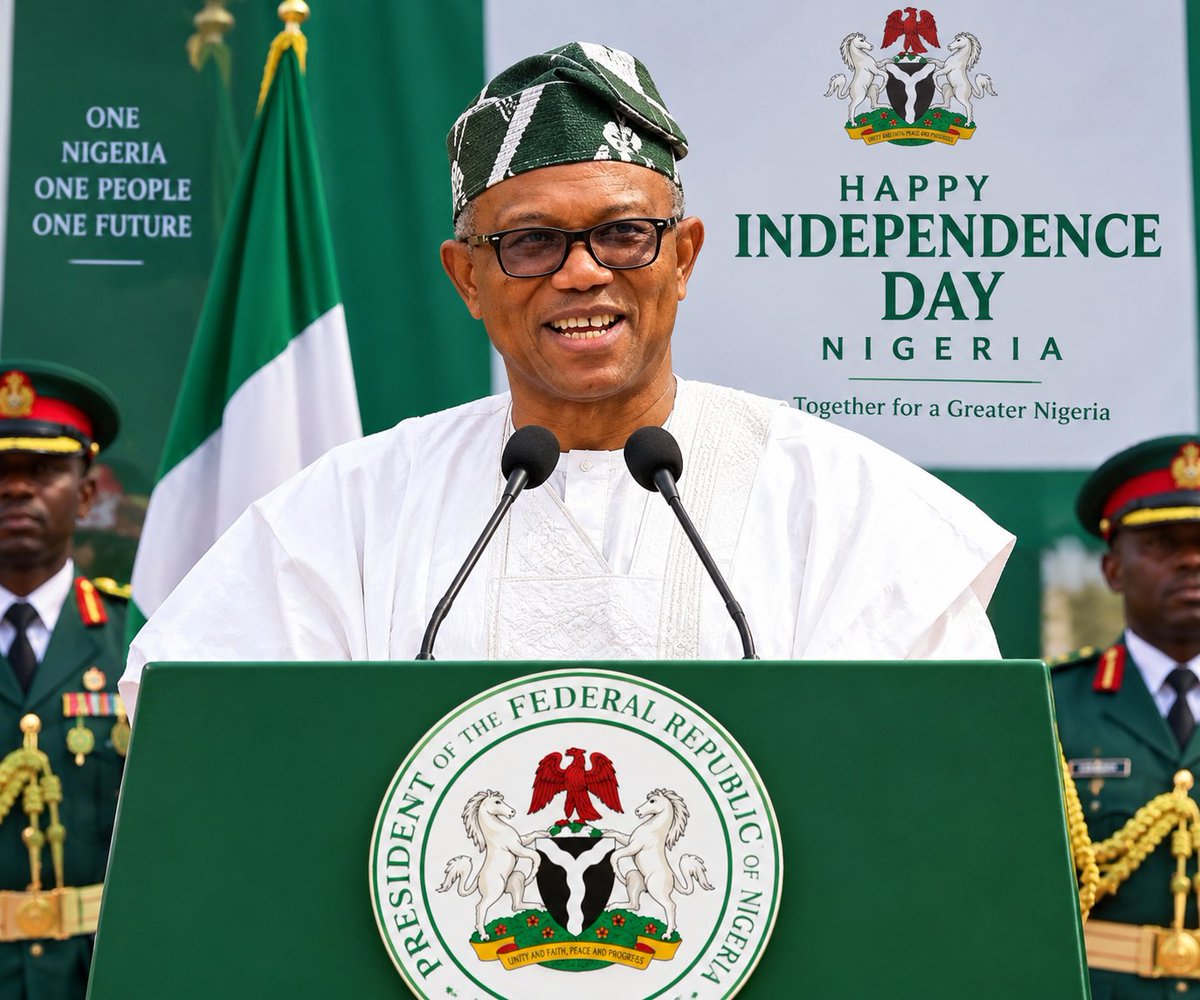
2026 INDEPENDENCE DAY ADDRESS: FROM REFORMS TO PROSPERITY
My fellow Nigerians,
Sixty-six years ago today, our flag was raised, for the first time, over a free and sovereign nation. Since then, we have journeyed together as one nation, bound by our collective trust in the great promise of Nigeria: that a country of our size, our bountiful resources, our cultural diversity and, above all, our extraordinary people can build a giant in Africa; that in this blessed and fertile land we can build a united, strong and prosperous nation; a land of regional authority and global consequence.
Our journey has not always been easy. In truth, it has generally been too hard for too many. We have known moments of great hope and periods of profound disappointment. We have endured war, military rule, economic crises, insecurity and political upheaval. Yet through it all, Nigeria, with the indomitable spirit of its people, has endured.
It has endured through the efforts of the farmer who rises before dawn to work his land. The trader who opens her shop each morning, hopeful for a productive day. The teacher who believes in the children entrusted to her care and the young entrepreneur who refuses to surrender ambition to circumstance. We are grateful for the men and women of our Armed Forces and security services who place themselves in harm's way so that the rest of us may live in peace.
Through every difficulty, generations of Nigerians have continued to believe in one thing: that this country of ours will be better.
This faith, which sustains us all, is the inheritance of independence. Our founding fathers did not struggle merely for a flag, an anthem or a place among the nations of the world. Independence carried a larger promise: that Nigerians would have the freedom to shape their own destiny and build a nation capable of providing opportunity, dignity and a better life for its people. Sixty-six years later, Almighty God has made it our responsibility to deliver that promise.
Today, as we celebrate our independence, we must speak honestly about the journey so far, the choices we made, and the country we are determined to build from here.
For too long, the promise of Nigeria was undermined by choices that postponed difficult decisions and allowed deep economic distortions to grow.
By 2023, poverty was rising, and hope was nearly gone. The country's situation was darker than ever. We had no choice but to act.
Nigeria was like a sick patient who receives the terrible news that he has cancer. His doctor explains that the treatment will be difficult and painful, but that it offers a strong prospect of recovery. The patient has a choice. He can begin treatment, endure its discomfort and fight the disease. Or he can ask only for morphine, dull the pain and leave the cancer to spread.
For too long, Nigeria's leaders chose morphine while praying for a miracle that never came.
They focused on symptoms while allowing the disease to take hold deep within the fabric of our society. We spent enormous sums sustaining inefficient arrangements that were never intended to last. We hid from difficult truths and passed the consequences from one generation to the next.
When this Administration assumed office, we resolved to do things differently. We chose to excise the cancer. The reforms that followed were difficult. The side effects were real. Yet, we must never confuse the medicine with the disease.
Our reforms did not create the weaknesses in our economy. They confronted them. Now, as certain influential but regressive voices would have us abandon the treatment and return ourselves to the abuse of addictive subsidies, we must resist their siren song. We must remember why we began this journey and how far we have already come.
Nigeria’s move towards a credit-based economy is strategically important. NCGC has issued ₦21.59bn in guarantees, enabling ₦46.95bn in loans to 67,512 borrowers. The leverage is significant: every ₦1 in guarantees has unlocked about ₦2.17 in credit. More importantly, 33.5% of beneficiaries are first-time formal borrowers.
This is how financial inclusion can become economic infrastructure. But the real measure of success will be what these loans produce: businesses that expand, workers who gain employment, borrowers who build credible credit histories and enterprises that become bankable without government guarantees. Credit guarantees should open the door to finance; productivity and repayment must keep that door open.
Where Is Nigeria’s President?
The dynamic President of Ghana, John Dramani Mahama, delivered a remarkable address at the 81st United Nations General Assembly. The international community has commended his leadership and the substance of his address. It is a reminder of what leadership can produce when competence, capacity, compassion, commitment and character come together in the service of a nation.
Against this background, many are asking: Where is the President of Africa’s most populous nation, a country of more than 200 million people - more than Ghana - whose leader has been absent from the global stage for three consecutive UNGAs?
Nigeria’s President, who ought to be representing the country and providing leadership for Africa at the international level, has not attended any of these three global gatherings. Where is he, particularly at a time when the country faces significant challenges, both domestically and internationally?
Although our Vice President, Kashim Shettima, was present, the question remains: Where is the President? Let us continue to pray for his return and for his leadership in addressing the many challenges confronting the nation.
A new Nigeria is POssible. -PO
Check out this video, "ghana president at un" https://t.co/p4LsxEPiOq
Debunking the Phantom Debts and Ecological Loan Fallacy
My attention has been drawn to trending claims by the Anambra State Government that my administration left behind inherited debts, including a ₦2 billion ecological loan, contractor liabilities, and unpaid salaries, gratuities, and pensions. This is completely false.
We systematically liquidated historical gratuities and arrears dating back several years, amounting to over ₦35 billion. At the point of handover, the state owed nothing in salaries, gratuities, or pensions, nor did we owe anything to any contractor for projects duly executed and certified.
The ₦2 billion ecological fund in question was released barely three months before the end of my tenure for the Oko/Umuchiana erosion crisis. Despite pressure to spend the money, I refused, insisting that it should be left for my successor because government is a continuum and the funds were tied to a specific project.
The money was therefore left 100 per cent intact in First Bank, in Account No. 2018779464, with a balance of over ₦2.13 billion.
It is important to stress that funds tied to specific projects or set aside for particular purposes were not even included in the over ₦75 billion in savings we left behind.
If anybody can establish anything to the contrary, I will stop campaigning. -PO