Vol @alzheimerssoc @AlzSocResearch @beatdementia @ReMemBrgroup. PPI Kings College @HSCWRU. My Story @NHSat70. Member @demrescommunity. Lived Experience Speaker.
Such an important topic (yes declare interest) having experienced during Caring journey for family member. Delighted to be part of the Team, as PPI Co-Applicant.
Delighted to introduce our new 30-month research project at @hscwru starting this month. With a focus on homecare & role expansion, this timely work is at the interface of health & social care, funded by @NIHRresearch.
Read more on our project webpage: https://t.co/D2WHhyygqU
Research is key to better dementia diagnosis and care🩺
If you are a health and care professional, read our blog on how you can encourage patients to get involved - from starting early conversations to sharing real-life stories.
Find out more ⬇️
https://t.co/m3vUnLKsY7
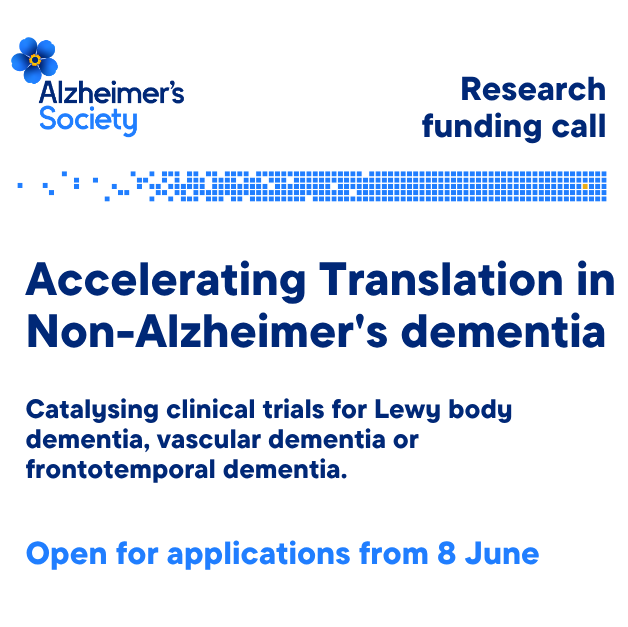
Announcing our new strategic funding call: Accelerating Translation in Non-Alzheimer's dementia
This exciting new research initiative aims to unlock progress towards late-stage clinical studies to advance treatments in Lewy body, frontotemporal and vascular dementia.
While we know promising drug candidates exist for non-Alzheimer’s dementias, we also know without a significant amount of clinical evidence they can’t move to later stages of clinical trials.
That’s why we’re launching a new strategic funding call to give research teams the support they need to build the infrastructure necessary to increase the number of clinical trials in non-Alzheimer’s dementia.
We will be accepting applications for up to £2million to support a research programme for up to 5 years.
The call will open for outline applications on 8 June 2026: https://t.co/qRRbtxzswt
Sign up for our applicant webinar for more information:
https://t.co/EewtcVDDJh
💜How can we change the narrative around dementia and end-of-life care?
As part of our #NIHR20 celebrations, Dr Lesley Williamson, NIHR Dementia Research Fellow at @KingsCollegeLon, explores how we can better support people dying with dementia at home.
In this talk from the Social Care Research Conference, Dr Williamson introduces the PALLDEM Homecare Project. By moving away from reactive hospital admissions and focusing on a holistic, person centred palliative care approach, she highlights how we can better support the homecare workforce with the tools they need to deliver proactive and dignified care.
📺 Watch now: https://t.co/eRCSXaXB88
❔Is dementia a disease or do only older people get dementia?
These are some commonly asked questions about dementia and we answer these questions to help separate fact from fiction.
Read more 🔗https://t.co/G3f4YaVL6H
🔔 Check your smoke alarm expiry date!
Most smoke alarms have a date showing when they should be replaced. While replacing them every 10 years is a good rule of thumb, they may need changing sooner if they’ve been activated often or have built up dust and contaminants.
To get free home fire safety advice, take the check today - https://t.co/YTxl7nBQ7O
📢 Update: A letter from Wes Streeting, the Secretary of State for Health and Social Care, to Baroness Casey details commitments to dementia.
The announcement today from Wes Streeting that he is accepting the recommendations from Baroness Casey to prioritise dementia is a pivotal moment and brings hope that dementia will at last receive the attention that is so desperately needed and much overdue.
At Alzheimer’s Society we are demanding better for everyone with dementia. We have worked alongside Baroness Casey to represent people with dementia and set out the change that needs to happen. We are confident that the introduction of a dementia tsar to lead the government’s plan on dementia is an important step in driving this change.
The Modern Service Framework for Dementia and Frailty must now commit to an ambition to reduce the number of people dying from dementia, and ultimately set us on course towards a world in which dementia no longer devastates lives.
Further commitments, including for the UK to lead the way on dementia trials and for the government to publish an interim version of the Modern Service Framework in September are welcome. People have waited long enough having a timeline for this progress is essential. It is vital that bold steps to improve diagnosis are central to these plans.
We are grateful to Baroness Casey for being the voice of people with dementia and bringing dementia to the forefront, where it should be. We will continue to work tirelessly to ensure these plans come to fruition and change the lives of people with dementia now and in the future.
A privilege to be at @alzheimerssoc@AlzSocResearch Annual Research and Innovation Showcase last evening at Royal Society of Chemistry. Hearing from Professor Stuart Allan from DTC Manchester and having a conversation in person too. An all round event building on Help & Hope.
@beatdementia 11 years in October of joining JDR. Many activities over the years - remembering JDR Champions time - through to current day. Together We Can Make A Difference. Time indeed to Celebrate.
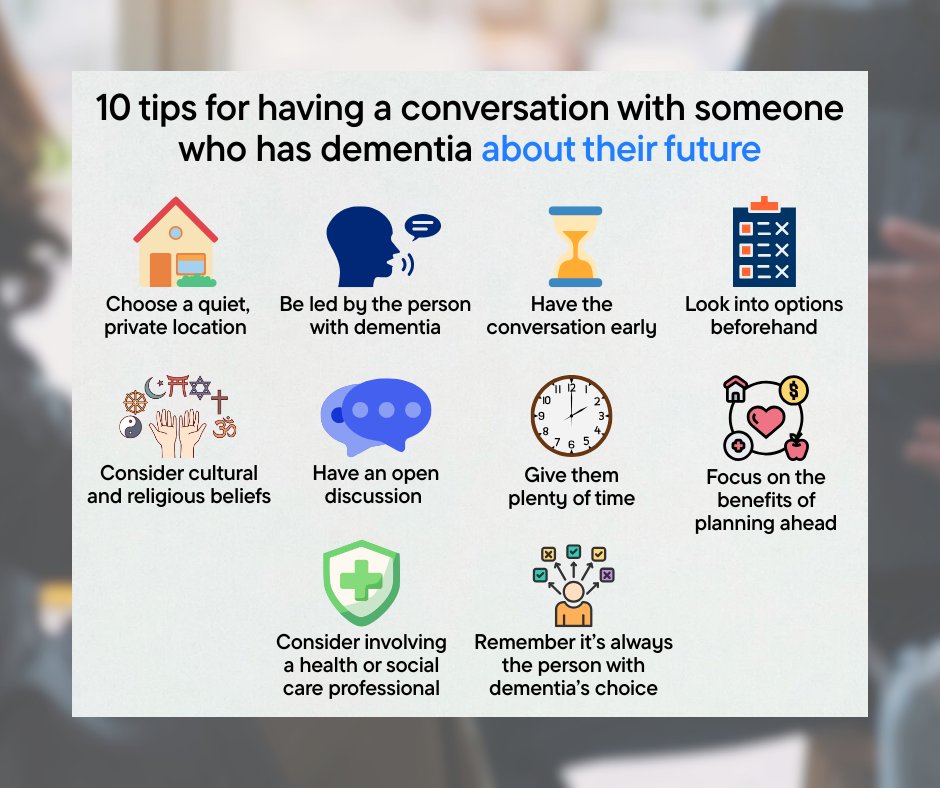
Dementia can make it tough to talk about the future.
As the condition progresses, people with dementia are likely to need support. This could include having someone who can help manage their finances, arrange care or make medical decisions on their behalf.
It can be difficult to think and talk about these things. Some people find it reassuring, while others would rather not think about it. Everyone is different.
But there can be real benefits to having these conversations, even when they’re not easy.
Talking about the person’s wishes through to the end of their life can help family, friends, and medical professionals understand and respect those wishes.
It can also help give back a feeling of control at what can be an uncertain time.
It’s also worth remembering that some legal steps, like making a will or setting up lasting power of attorney, require the person to have the ability (known as mental capacity) to make those decisions. So it’s a good idea to have a discussion about these early after diagnosis, if you can.
Here’s our advice for how to have this conversation.
And if you have any other tips from your own experience, make sure to share them in the comments.
On dark nights, help make it easier for us to find you 👇
✅ Check that your house number can be seen from the road
✅ If safe, have someone meet our #TeamSWASFT crews outside
✅ Switch on outside and inside lights to guide crews to your door
#HelpUsToHelpYou
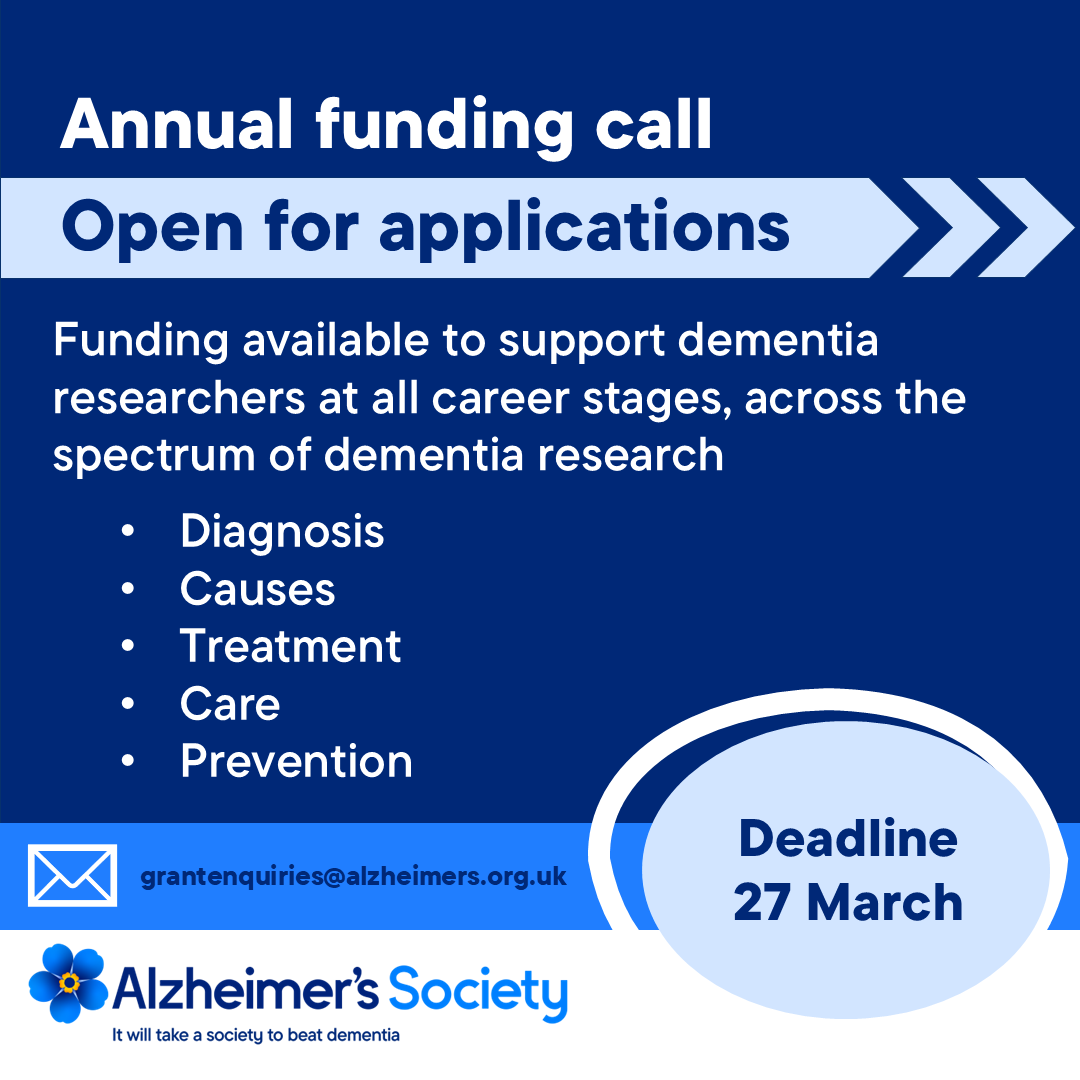
Our annual grant round is open for outline applications: https://t.co/6vDBkB8DLx
It will take a society to beat dementia so we have a wide range of funding schemes available to support researchers, clinicians and health and social care professionals, from the beginning of their careers through to supporting their transition to academic independence.
Gifts in Wills currently fund over a third of our work. By choosing to include a gift in your Will, you’ll partner with us to tackle dementia from every angle - research, support and campaigning.
Learn more: https://t.co/Q9qFHNh0Lu
A record high of almost 5,000 callers contacted our Dementia Support Line over the festive period.
This highlights the challenges people affected by dementia face over the season.
Some people may have noticed, for the first time, changes in a loved one that could indicate dementia, while others faced increased care demands for someone already living with the condition. 1/2
Time for a leisurely sea front walk today after hectic spell of Research for @AlzSocResearch. It is the little things that can mean so much to so many people. Seasons Greetings to All.
A time for me walk on prom this afternoon in Weston-super-Mare looking to Wales. Full week in person and later part of week online for @alzheimerssoc@AlzSocResearch Grants Advisory Panel as Volunteer. So much Help and Hope coming forward in applications. So good to be Involved.
Welcome to the first cohort of PhD students to join our Alzheimer’s Doctoral Training Centre for Integrated Care. The centre will focus on how to provide care for people with dementia that is easy to access, ensures choice and independence, and works from diagnosis to end of life
📣 Great to hear more from the Minister of State for Care, @SKinnock MP, on the Government's upcoming Modern Service Framework for Frailty and Dementia.
Earlier this week, we hosted a fantastic event with colleagues at @DHSCgovuk and people with lived experience of dementia to talk through the future of dementia care.
During the session, we heard directly from the Minister about his ambitions for the Modern Services Framework.
This is a real opportunity to take action to improve dementia care and work towards a future where dementia is not only treatable, but preventable.
But this change must be rooted in lived experience, and we're pleased to be working with DHSC in ensuring the voices of those affected by dementia are heard 💙