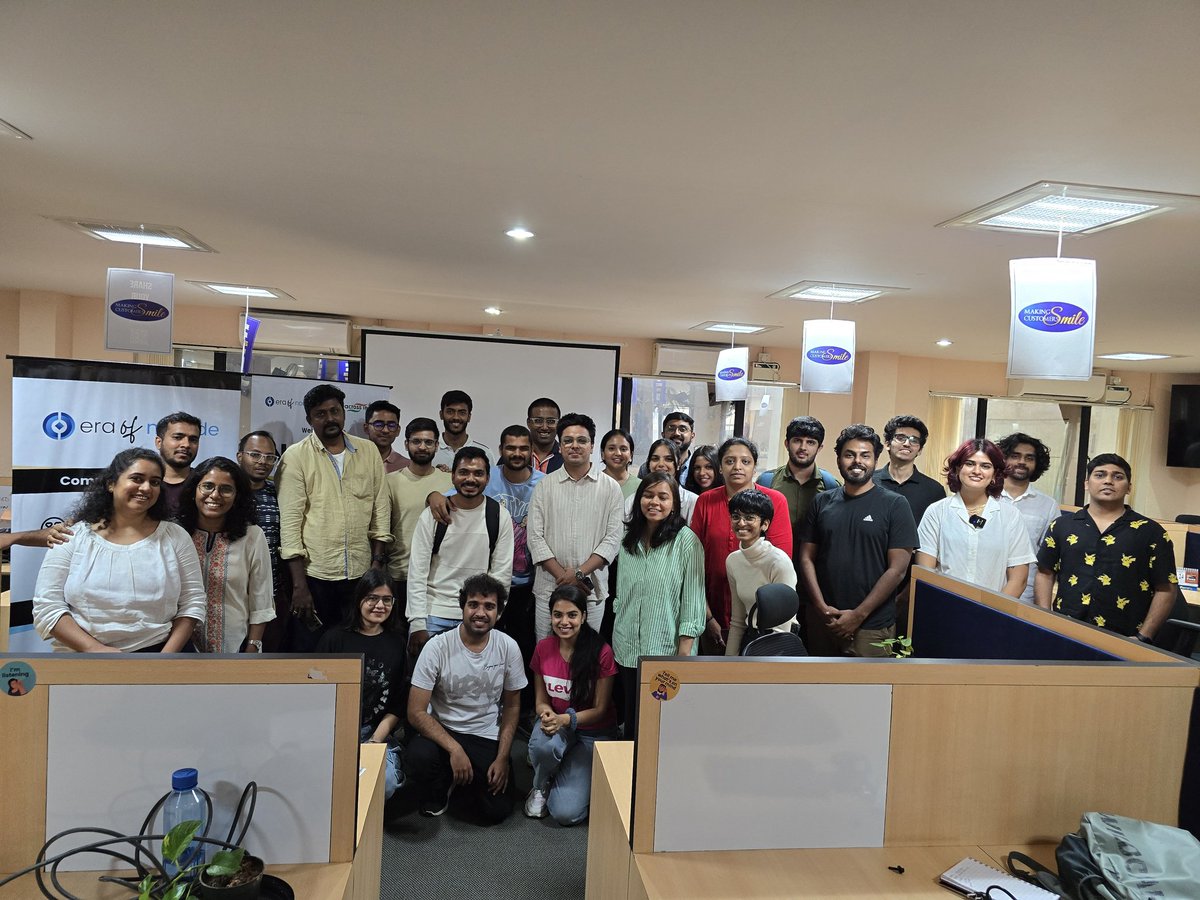
Excited to get started with Coding with AI on @MavenHQ by @100schoolHQ 🚀
Can't wait to learn about Replit Agent, Cursor, v0 and the like over the next 2.5 weeks 🔥
Here we go! #CodingWithAI
To aid the humanitarian efforts of @OPOliveBranch_ in Gaza 🇵🇸, I have built an app using @glideapps . This app syncs with the spreadsheet maintained by OOB helping donors access the fundraising data easily.
Need help connecting with the #OperationOliveBranch team. Please share
Calling all @bubble Developers 👇
I want to talk to you for 10-15 minutes :)
Your strengths, your journey, etc - I wanna talk about it.
Ultimately, creating a spot where I know you personally.
While, helping others know you concretely for bigger things!
Say "Hi" below!
📢 Exciting update
The countdown to @bubble India Summit 🇮🇳 has begun, and we're thrilled by the overwhelming response so far
Our website is LIVE! Explore all the event details, schedule, and registration information at https://t.co/tkxP6BRxCD
#BubbleIndiaSummit
And there you have it 😉! By following above steps, you can successfully identify, design, and depict one-to-many relationships within your database structure.
Non-tech devs often find it challenging to grasp one-to-many relationship DBs 😣. Regardless of code or no-code, the app's backbone lies in the database, which must be designed with scalability in mind.🚀
✨Here is 5 Step breakdown to understand it better
✨Step 5: Indicate the One-to-Many Relationship
To specify the one-to-many relationship, we can use symbols like crow's foot notation.
- Customer ---< Order
- Car ---< Showroom
- Student --- Course --< Student_Course_Relation
After 100s of positive feedbacks, here's my decision:
My Bubble course will be free for everyone!
Go ahead and :
1. Like
2. Retweet
3. Comment "Bubble"
And I'll DM the course to you.
Happy @bubble'ing!