🧠 Want to understand how LLMs really work? Build one from scratch.
Meet MiniMind — an impressive open-source project that makes training your own language model accessible, affordable, and surprisingly practical.
Instead of treating AI as a black box, MiniMind lets you explore the entire LLM development process, step by step.
🚀 What makes MiniMind interesting?
✅ 64M parameters — a lightweight language model you can train and experiment with.
✅ Built from scratch with PyTorch — understand the algorithms instead of relying on high-level abstractions.
✅ Complete training pipeline — from tokenization and pretraining to supervised fine-tuning (SFT).
✅ Advanced AI techniques — explore LoRA, DPO, PPO, GRPO, model distillation, and Mixture of Experts (MoE).
✅ Agent capabilities — learn about tool calling, reasoning, and agentic reinforcement learning.
✅ Developer-friendly — supports popular ecosystems including Hugging Face, Ollama, llama.cpp, and vLLM.
💡 The fascinating part?
The project reports that one epoch of SFT can be completed in approximately 2 hours on a single NVIDIA RTX 3090, with an estimated GPU rental cost of just ¥3. Full training from scratch requires additional steps.
The goal isn't to compete with GPT or DeepSeek in performance. It's something arguably more valuable for learners:
Making the technology behind modern AI understandable, reproducible, and accessible.
Whether you're an AI engineer, researcher, student, or simply curious about how language models actually work, MiniMind is worth exploring.
⭐ GitHub: https://t.co/cHx0OguTJV
Sometimes, the best way to understand a powerful technology is to build a small version of it yourself.
#OpenSource #MiniMind #LLM #ArtificialIntelligence #MachineLearning #DeepLearning #PyTorch #GenerativeAI
🚀 Google Stitch Skills: Bridging the Gap Between AI Design and Code
Google Labs has open-sourced Stitch Skills, a collection of Agent Skills that brings AI-powered UI/UX design workflows directly into your coding agents.
Instead of constantly switching between design tools and your IDE, you can connect Google Stitch to tools like Claude Code, Codex, Cursor, Gemini CLI, and Antigravity.
🔥 What can you do with Stitch Skills?
🎨 AI-Powered UI Design
Generate beautiful UI screens from natural language.
Modify existing designs and explore multiple variations.
Convert existing React/Vue interfaces into editable Stitch designs.
💻 Design-to-Code Workflows
Turn Stitch designs into React or React Native components.
Integrate with shadcn/ui and React + Vite.
Generate UI walkthrough videos using Remotion.
🧠 Smarter Design Systems
Extract design tokens into structured DESIGN.md files.
Maintain consistent typography, colors, and components.
Improve vague prompts with AI-assisted design optimization.
🔄 Autonomous Website Generation
One particularly interesting feature is stitch-loop, which enables agents to iteratively generate multi-page websites with automated validation.
Why does this matter?
AI coding agents are getting remarkably good at writing code, but creating polished, consistent interfaces remains challenging.
Stitch Skills offers a more structured workflow:
Idea → AI Design → Design System → Frontend Code → Iteration
It's another step toward making AI agents capable of handling both the design and development sides of a project.
🛠 Get started:
npx skills add google-labs-code/stitch-skills
You'll also need to configure the Google Stitch MCP server.
🔗 GitHub: https://t.co/tRVSfdyALp
⭐ Open source under Apache 2.0.
The interesting shift isn't just AI generating better interfaces. It's design and coding agents starting to work together in one continuous workflow.
#GoogleStitch #StitchSkills #AIAgents #ClaudeCode #Codex #Cursor #VibeCoding #UIDesign #OpenSource #WebDevelopment
🚀 Google's Gemini API CLI: Give Any AI Coding Agent Access to Gemini's Multimodal Superpowers!
Google has an interesting open-source project: Gemini API CLI (gemini-api) — a command-line tool that lets AI agents like Claude Code, Codex, Antigravity, and OpenClaw tap directly into Gemini's models and capabilities.
💡 The big idea?
Your favorite AI agent doesn't need to do everything itself. It can use Gemini as an additional tool for specialized tasks — all through simple shell commands.
🔥 What can it do?
✅ Text & Reasoning — Generate content, analyze problems, and get a second opinion from Gemini models.
🎨 Image Generation & Editing — Create visual assets directly inside your development workflow.
🎬 Video, Audio & Music — Generate videos, voiceovers, and music from the terminal.
📄 Multimodal Understanding — Analyze PDFs, images, audio, videos, and other files.
🎙️ Transcription — Turn recordings into text or subtitles.
🤖 Agent Delegation — Launch Gemini managed agents for complex tasks and retrieve their results asynchronously.
⚡ Built for AI Agents
What makes this project particularly interesting is its agent-friendly design:
Stateless, scriptable commands
Structured JSON output
Self-discoverable commands and schemas
Dry-run validation
Integration with existing coding agents and CI workflows
A quick example:
gemini-api image "A futuristic AI robot mascot" --out ./assets/
One command, and Gemini generates an image directly into your project.
🎯 Why this matters
We're moving toward a world where AI agents orchestrate other AI models and specialized services, rather than relying on a single model for everything.
Imagine Claude Code writing your application, Gemini generating its visual assets, and a managed research agent investigating technical decisions — all within one development workflow.
Gemini API CLI makes this kind of multi-model orchestration much more accessible.
The project is currently experimental/beta, so expect changes as it evolves.
🔗 GitHub: https://t.co/3wVqDjhvbn
⭐ Open source | Apache 2.0 | macOS, Linux & Windows
The future of AI development may be less about choosing the best single model — and more about getting the best models to work together.
#Gemini #GoogleAI #ClaudeCode #Codex #AIAgents #OpenSource #DeveloperTools #AgenticAI
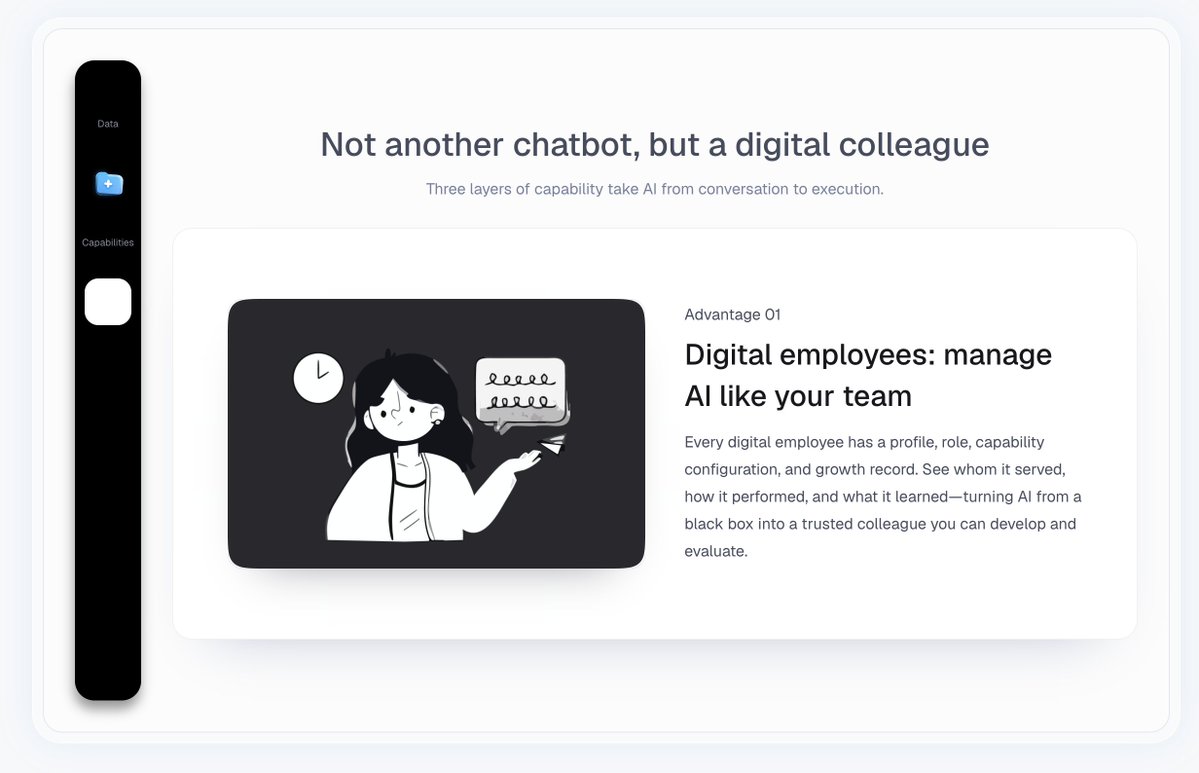
🚀 Meet StaffDeck: An Open-Source Platform for Building AI Digital Employees
What if AI could do more than answer questions or generate content? What if it could actually become part of your organization's workforce?
Meet StaffDeck, an open-source enterprise digital employee platform developed by OpenBMB and its collaborators.
Unlike traditional AI chatbots, StaffDeck focuses on turning professional expertise, business processes, and organizational knowledge into AI-powered digital employees that can execute tasks, follow workflows, and continuously improve.
🔹 What makes StaffDeck interesting?
🧑💼 AI Digital Employees — Create and manage AI agents with defined roles, capabilities, permissions, and work histories.
🧩 SOP-Driven Automation — Convert natural-language instructions into structured workflows powered by state machines, making complex processes more predictable and repeatable.
📚 Knowledge-Aware Intelligence — Enable agents to navigate organizational documents, retrieve relevant information, and provide traceable, source-backed answers.
🔌 Real-World Task Execution — Connect agents to business systems through APIs and MCP, enabling them to perform actual operations rather than simply suggest actions.
🔄 Continuous Improvement — Combine long-term memory, execution traces, human intervention, and feedback to help digital employees evolve over time.
🤝 Multi-Agent Collaboration — Support multiple digital employees working together across organizational workflows.
💡 Why does this matter?
The next stage of enterprise AI may not be about giving every employee a smarter chatbot.
It may be about creating reusable, manageable, and continuously improving AI capabilities that become part of how organizations operate.
StaffDeck offers an interesting open-source approach to that vision, bridging the gap between AI agents, business process automation, and enterprise knowledge management.
The project also supports local deployment, desktop applications, and a CLI, making it worth exploring for developers and organizations building agent-based workflows.
🔗 GitHub: https://t.co/nsqb3vhrlk
🌐 Website: https://t.co/Etn1NcexSZ
⭐ If you're interested in AI agents, digital employees, or the future of enterprise automation, this project is worth a look.
The shift from AI assistants to AI digital employees is just beginning.
#AI #AIAgents #OpenSource #StaffDeck #OpenBMB #AgenticAI #DigitalEmployees #EnterpriseAI #Automation #MCP
🚀 Meet Astryx: Meta’s Open-Source Design System Built for Humans and AI Agents
What if your UI component library was designed not just for developers, but also for the AI coding agents working alongside them?
Meta has open-sourced Astryx, a powerful, fully customizable design system that has evolved over eight years of internal development.
According to the project, Astryx has powered 13,000+ applications inside Meta and is now available to the wider developer community under the MIT license.
✨ What makes Astryx interesting?
🔹 150+ Accessible Components — Production-oriented React components for building consistent, accessible interfaces.
🔹 AI Agent Ready — Documentation, APIs, and CLI tooling designed to help AI coding agents understand and use the system effectively.
🔹 Fully Customizable — Brand-level theming through CSS variables, with seven ready-made themes and dark mode support.
🔹 No Styling Lock-in — Built with StyleX internally, but compatible with Tailwind CSS, CSS Modules, and plain CSS.
🔹 Own Your Components — Export internal building blocks or use the CLI to bring component source code directly into your project.
🔹 Modern React Stack — Built for React 19+, TypeScript, and modern frontend development.
🤖 Why does this matter?
Traditional design systems were built primarily for human developers.
But software development is changing. AI coding agents are increasingly generating interfaces, assembling components, and maintaining frontend code.
Astryx approaches this shift by treating AI agents as first-class participants in the development workflow.
Its CLI can provide component documentation, templates, and project-specific instructions through files such as AGENTS.md and CLAUDE.md.
The goal is simple: humans and AI agents working from the same design conventions, component APIs, and documentation.
⚡ Getting started
npm install @astryxdesign/core @astryxdesign/theme-neutral @stylexjs/stylex
npm install -D @astryxdesign/cli
npx @astryxdesign/cli init
Astryx is currently in beta, but its combination of mature internal experience, flexible architecture, and AI-friendly tooling makes it an interesting project to watch.
The next generation of design systems may not just help developers build faster — they may help humans and AI agents build better together.
🔗 GitHub: https://t.co/xEDXMvGR2h
🌐 Documentation: https://t.co/WPByuGdHic
#OpenSource #Meta #Astryx #ReactJS #DesignSystem #AIAgents #FrontendDevelopment #WebDevelopment #AITools
🚀 Meet Open Code Review — Alibaba's Open-Source AI Code Reviewer
AI can write code faster than ever. But who's reviewing all that AI-generated code?
Alibaba has open-sourced Open Code Review, an AI-powered code review tool originally developed for internal use at Alibaba and refined at massive engineering scale.
Unlike general-purpose AI coding agents, Open Code Review combines deterministic engineering pipelines with LLM-powered analysis to deliver more precise, structured, and actionable feedback.
🔍 What makes it interesting?
✅ Context-aware reviews — Goes beyond Git diffs to inspect surrounding code and understand dependencies.
✅ Precise line-level feedback — Pinpoints potential bugs directly in the relevant code.
✅ Built-in security and quality rules — Detects potential issues involving null pointers, thread safety, SQL injection, XSS, and more.
✅ Efficient architecture — Uses intelligent file grouping, parallel review agents, and targeted rules to reduce unnecessary token consumption.
✅ Flexible AI integration — Works with OpenAI- and Anthropic-compatible models and integrates with Claude Code, Codex, Cursor, and other coding agents.
✅ Developer-friendly workflows — Supports CLI reviews, full-repository scans, and CI/CD integration.
💡 The interesting idea: AI code review doesn't have to rely entirely on prompts. Combining deterministic workflows with agentic reasoning can make reviews more consistent, efficient, and trustworthy.
Get started:
npm install -g @alibaba-group/open-code-review
Configure your model with ocr config provider and ocr config model, then run ocr review.
⭐ Open source under Apache 2.0.
🔗 GitHub: https://t.co/6ip6Ddc4eP
#OpenSource #AI #CodeReview #AIAgents #DeveloperTools #ClaudeCode #Codex #SoftwareEngineering
🎬 One photo + one prompt = a fully produced AI digital human video!
Meet Digital Human Koubo, an open-source AI Agent Skill that automates the creation of professional talking-head videos — from scriptwriting and lip-sync to editing, subtitles, and final production.
Instead of manually juggling multiple AI video tools, you can let an AI agent handle the entire workflow.
🚀 Key features:
🧑 AI digital humans — Turn a single photo into a consistent virtual presenter.
🎙️ Lip-sync & voice processing — Generate speech-driven videos with automated audio cleanup.
🎨 5 editing styles — Adapt videos for tutorials, product promotions, explainers, and more.
✨ 48 professional editing components — Animated captions, motion graphics, overlays, and visual effects.
🌍 Multilingual support — Create videos in multiple languages.
🤖 Agent-powered automation — Integrates with Claude Code and supports workflows using Codex and other compatible AI agents.
🎞️ Automated post-production — Uses tools including Renoise MCP, Whisper, FFmpeg, and Remotion.
What makes this interesting isn't just AI-generated presenters — it's the end-to-end production workflow, including quality checks, cost estimates, editing, and rendering.
💡 Imagine turning a simple idea into a polished educational video, product demo, or marketing clip without filming yourself or manually editing every scene.
The project is open-source under the MIT license, with video-generation credits required for the underlying service.
🔗 GitHub: https://t.co/XWvmxXGs7F
⭐ Worth exploring if you're building AI content workflows or experimenting with autonomous creative agents.
#AI #OpenSource #DigitalHuman #AIAgents #ClaudeCode #Codex #AIVideo #GenerativeAI #VideoAutomation
🚀 Plannotator: A Visual Review Tool for AI Coding Agents
If you're using Claude Code, Codex, or other AI coding agents, you've probably experienced this:
Your AI generates a lengthy implementation plan, and you're expected to review it in the terminal, type your feedback, and hope everything gets implemented correctly.
Then comes the code review—scrolling through endless diffs to figure out what actually changed.
Plannotator makes this entire process more visual, interactive, and intuitive.
🔗 GitHub: https://t.co/5U4eqozYZu
💡 What Is Plannotator?
Plannotator is an open-source visual review and annotation tool for AI coding agents.
Instead of reviewing plans and code entirely through terminal output, it provides a browser-based interface where you can highlight, annotate, and provide structured feedback directly to your AI agent.
Think of it as bringing the experience of reviewing a design document or GitHub pull request into your AI coding workflow.
🔥 Key Features
1️⃣ Visual Plan Review
Review AI-generated implementation plans in your browser. Highlight specific sections, leave comments, suggest changes, and send structured feedback back to your agent.
2️⃣ Interactive Code Review
Inspect code changes with line-by-line diffs, add contextual comments, and focus your attention on the changes that matter most.
3️⃣ Visual Annotations Beyond Code
Annotate Markdown documents, technical specifications, HTML pages, and even locally running websites.
4️⃣ Plannotator Inbox for Multi-Agent Workflows
Manage review requests, questions, decisions, and other items from multiple AI agents in one place—without constantly switching between terminal sessions.
5️⃣ Support for Multiple AI Coding Tools
Integrates with popular coding agents, including Claude Code, OpenAI Codex, Gemini CLI, OpenCode, GitHub Copilot CLI, and Pi.
⚡ Quick Installation
On macOS, Linux, or WSL:
curl -fsSL https://t.co/A5uABJrxzn | bash
The installer detects supported agents and configures the relevant integrations.
🎯 Why This Matters
AI coding agents are becoming increasingly autonomous. But greater autonomy also creates a bigger challenge:
How do developers stay informed and maintain control without slowing down the entire workflow?
Plannotator addresses this by making AI-generated plans and code changes easier to inspect, discuss, and refine.
It's not necessarily about making AI write code faster.
It's about making human-AI collaboration more effective.
The future of AI-assisted development may look less like:
Prompt → Code
And more like:
Plan → Review → Feedback → Execute → Code Review → Iterate
As coding agents become more capable, tools that improve visibility, feedback, and human oversight will become increasingly important.
⭐ Check out the project: https://t.co/5U4eqozYZu
#Plannotator #ClaudeCode #OpenAICodex #AICoding #AIAgents #OpenSource #DeveloperTools #VibeCoding
🎮 From a Simple Prompt to a Playable 3D Game — Meet Guizang Game Skill
What if you could ask an AI coding agent to build a complete 3D action game, including characters, combat mechanics, animations, visual effects, music, and boss fights?
That's exactly what Guizang Game Skill (歸藏 Game Skill) aims to make possible.
Created by @op7418, this open-source Agent Skill helps Claude Code, OpenAI Codex, and other AI coding agents build playable browser-based 3D action games using Three.js and AI-generated assets.
🚀 What makes it interesting?
Instead of simply generating game code, Guizang provides a structured development workflow:
🎨 AI-generated assets: Create character concepts, 3D models, environments, and animations using tools such as Tripo and image generators.
⚔️ Real combat mechanics: Combos, dodging, blocking, parrying, hit reactions, and multi-phase boss battles.
🌄 Cinematic environments: Dynamic grass, fog, lighting, shaders, and visual effects powered by Three.js and WebGL.
🤖 Agent-driven testing: Automated screenshots, debugging tools, and iterative visual verification.
📦 One-file deployment: Package models, textures, audio, and game logic into a single HTML file that can run in a browser.
📱 Cross-device support: Build experiences for desktop, mobile, and constrained web containers.
🕹️ There's already a playable demo!
The project includes 《雾锁山门》 (Mist-Shrouded Mountain Gate), a Chinese fantasy-inspired 3D action game featuring multiple characters, combat encounters, special abilities, voice acting, and a boss battle.
The demo demonstrates what's possible with an AI-assisted workflow: a complete playable experience rather than just a static prototype.
Even more impressive, the standalone version packages the game into an approximately 33 MB HTML file.
🎮 Try the game: https://t.co/NiRTKIXriO
🛠️ How to get started
Install the Skill:
git clone https://t.co/tdxIrb0U4v ~/.claude/skills/guizang-game-skill
Then give your AI coding agent a prompt like:
"Build a top-down 3D fantasy action game with one level, several enemies, a boss fight, and responsive combat mechanics."
The Skill guides the agent through planning, asset creation, animation, combat development, testing, and packaging.
💡 Why this matters
The exciting part isn't just AI generating code.
It's AI agents increasingly handling entire creative production workflows, bringing together programming, 3D modeling, animation, game design, visual effects, and testing.
Guizang isn't a magic one-prompt game generator. Human feedback and iteration are still essential, and the workflow has so far been fully demonstrated on one game.
But it's a fascinating example of where agentic game development is heading.
Could the next generation of indie games be built by tiny teams working alongside AI agents?
⭐ GitHub: https://t.co/tdxIrb0U4v
#AI #GameDevelopment #ClaudeCode #OpenAICodex #ThreeJS #AIAgents #IndieGameDev #OpenSource #VibeCoding #GenerativeAI
🎮 GoofyFish — An Open-Source Playground Where AI Helps You Build Browser Games!
What if creating a playable game were as simple as describing an idea in plain English?
Meet GoofyFish, an open-source collection of tiny, fun browser games created by Kamran Ahmed, with an AI-powered workflow that lets anyone contribute their own games using Claude Code.
🚀 What makes GoofyFish interesting?
🕹️ Instant gameplay: Simple, addictive mini-games that take just seconds to learn.
🎯 One-input controls: Tap, hold, swipe, or aim — no complicated mechanics.
🌐 Browser-based: No downloads, installations, accounts, or ads.
🤖 AI-powered game creation: Describe your game idea to Claude Code and let it help build, test, and generate a thumbnail.
🔄 Community contributions: Submit your creation through a pull request, and once merged, it becomes part of the collection.
💻 Open source: Built with Astro and TypeScript, and released under the MIT license.
💡 How easy is it to create a game?
Clone the repository, install dependencies, launch Claude Code, and describe what you want:
"Make a GoofyFish game where you keep a balloon in the air."
Claude Code handles the implementation, testing, and thumbnail generation. You can play the result, request changes, and submit it to the project.
✨ Why this project matters
GoofyFish is more than a collection of casual games. It's an interesting example of how AI coding agents can lower the barrier to creative software development.
Instead of spending days building an entire game development pipeline, creators can focus on gameplay ideas, experimentation, and iteration.
Sometimes, the best way to explore AI-assisted development is to build something small, silly, and fun.
🔗 GitHub: https://t.co/oXDg5j3gZP
🎮 Play online: https://t.co/JeoUpNX3QU
⭐ If you're interested in AI coding, creative development, or browser games, this project is worth exploring!
#OpenSource #GitHub #ClaudeCode #AIAgents #GameDevelopment #VibeCoding #IndieDev #WebGames
🚀 Turn Claude into your Instagram content strategist with 13 open-source AI skills!
Just discovered Instagram Agent Skill, an interesting open-source project by Jake Schincariol that brings an AI-powered content workflow to Instagram creators.
Instead of simply generating generic captions, it equips Claude with 13 specialized skills covering almost the entire content creation process.
🔥 What can it do?
🎬 Reels Generator — Create scripts using 26 proven hook formulas, score your hooks, and generate timed video scripts.
🔍 Viral Research — Analyze high-performing content in your niche and identify patterns worth learning from.
✍️ Caption Optimizer — Write engaging captions and preview what users actually see before tapping “more.”
🎨 Carousel Creator — Generate swipe-friendly content with compelling opening slides.
📊 Profile Audit — Evaluate your Instagram profile using a 100-point scoring system.
📅 Content Planner — Plan your weekly content strategy and engagement activities.
🤖 AI Humanizer — Remove robotic AI writing patterns and make content sound more natural.
💬 Engagement Assistant — Draft thoughtful comments, replies, and DM conversations.
💡 What makes it interesting?
✅ 100% free and open source (MIT license)
✅ Works with Claude and Claude Code
✅ No Instagram API key or account connection required
✅ Includes local Python tools for content analysis
✅ Keeps humans in control: AI prepares content, you approve and publish
The bigger picture: AI agents are evolving from simple chatbots into specialized workflows that help creators research, plan, produce, and optimize content.
This project is a great example of that shift.
🔗 GitHub: https://t.co/jHTvNTiNxM
⭐ Worth exploring if you're a content creator, marketer, indie hacker, or AI automation enthusiast.
#OpenSource #AIAgents #ClaudeAI #InstagramMarketing #ContentCreation #AItools
🎨 Reverse-Engineer AI Image Prompts from Any Reference Image!
Ever come across an amazing AI-generated image and wondered, "What prompt could recreate this style?"
Meet Image Prompt Reverse — an open-source Codex Skill that analyzes reference images and transforms them into detailed, high-fidelity AI image-generation prompts.
Instead of simply describing what's in an image, it breaks down the visual elements that make the image unique.
🔍 What makes it interesting?
✅ Deep Visual Analysis — Examines composition, camera angles, lighting, colors, materials, textures, depth, and artistic style.
✅ Multiple Creative Styles — Supports photography, illustrations, anime, 3D renders, product designs, posters, logos, and characters.
✅ High-Fidelity Prompt Generation — Identifies the 3–5 most important visual features that influence similarity.
✅ Bilingual Prompts — Generates detailed positive prompts in Chinese and English.
✅ Negative Prompts Included — Provides 10–15 negative prompt terms to help avoid unwanted visual elements.
✅ Built for Codex — Install it as a Skill and invoke it using $image-prompt-reverse.
💡 Why does it matter?
Writing effective image-generation prompts can be challenging, especially when trying to reproduce a specific visual aesthetic.
This project helps bridge the gap between visual inspiration and precise prompt engineering, making it useful for AI artists, designers, content creators, and anyone experimenting with generative visuals.
It won't recover the exact original prompt, but it offers a structured way to understand and recreate the visual characteristics of a reference image.
🔗 GitHub: https://t.co/Yf03T9D5eP
⭐ Open source | GPL-3.0
#AI #GenerativeAI #PromptEngineering #AIArt #ImageGeneration #OpenSource #Codex #DesignTools
🚀 Meet OpenSRE — An Open-Source AI Agent for DevOps & Site Reliability Engineering
What if your infrastructure could help diagnose and fix its own problems?
Meet OpenSRE, an open-source AI-powered SRE agent designed to take incident response and CI/CD reliability to the next level.
Instead of manually digging through logs, switching between monitoring dashboards, and troubleshooting failed deployments, OpenSRE helps automate the investigation.
🔍 What can OpenSRE do?
✅ Automated Root Cause Analysis — Investigates failures using logs, metrics, traces, and deployment history.
✅ AI-Powered Incident Response — Understands incidents described in natural language and helps identify potential fixes.
✅ CI/CD Self-Healing — Analyzes failed pipelines, distinguishes infrastructure issues from code failures, and can propose fixes for review.
✅ 60+ Integrations — Connects with Kubernetes, AWS, Grafana, Datadog, GitHub, PostgreSQL, Slack, PagerDuty, and more.
✅ Bring Your Own LLM — Supports OpenAI, Anthropic, Gemini, Ollama, and other model providers.
✅ Self-Hosted & Open Source — Deploy on your own infrastructure, with an Apache 2.0 license.
💡 Why is this interesting?
Traditional monitoring tells you something is wrong.
AI-powered observability helps explain what went wrong.
Agentic SRE takes things further by investigating why it happened and what can be done about it.
That's the direction OpenSRE is exploring: moving from passive monitoring toward intelligent, actionable operations.
⚠️ OpenSRE is currently in public alpha, so it's worth evaluating carefully before using it in production environments.
🔗 GitHub: https://t.co/aj4bQfYztz
🌐 Website: https://t.co/nnNoddwU0l
The future of DevOps isn't just better monitoring. It's systems that can investigate, explain, and help resolve their own failures.
#OpenSource #OpenSRE #DevOps #SRE #AIAgents #AIOps #Kubernetes #Observability #PlatformEngineering #Automation
🎬 AI Video Generation on Your Own Computer? Meet FreeVideo! 🚀
What if you could generate AI videos locally, without relying on expensive cloud GPUs or subscription-based video generators?
Meet FreeVideo, an open-source project bringing powerful AI video generation to consumer hardware.
Powered by MiniMax H3 and Video DeltaNet (VDN), FreeVideo makes local video generation more accessible than ever.
🔥 What makes it interesting?
✅ Low hardware requirements — Runs with as little as 8 GB VRAM + 16 GB RAM.
✅ Local AI generation — Generate videos on your own machine.
✅ Multiple input modes — Supports text prompts, images, video and audio references, plus first/last-frame control.
✅ Long-form video — Supports generating videos over one minute long.
✅ ComfyUI integration — Visual workflows, LoRA support, batch generation and timeline editing.
✅ AI agent support — Integrates with coding agents such as Claude Code and Codex to automate video creation.
✅ Cross-platform — Windows, Linux and experimental Apple Silicon Mac support.
✅ Image generation too! — The latest release introduces local image generation at resolutions up to 16 MP.
💡 Why does this matter?
AI video generation has traditionally demanded serious GPU resources or cloud infrastructure.
FreeVideo takes a different approach: optimizing memory usage, dynamically adapting to available hardware, and making sophisticated video models accessible to more people.
It's an interesting step toward a future where AI content creation happens directly on personal computers.
🔗 GitHub: https://t.co/CwFCzIQasv
⭐ If you're exploring local AI, ComfyUI, generative video or autonomous creative agents, this is a project worth checking out.
Note: Actual performance depends on hardware and settings. The code is Apache-2.0 licensed, while model weights have separate licensing restrictions.
#OpenSource #AI #AIVideo #FreeVideo #ComfyUI #GenerativeAI #LocalAI #MiniMax #AIAgents #GitHub
A wild report from China reveals the bizarre, messy reality behind "Ego-Centric" data—first-person video footage used to teach embodied AI how to work in the physical world.
To train a capable robot model, AI companies estimate they need 100 million hours of real-world data. Teleoperating robots costs billions, so vendors found a shortcut: strap cheap cameras onto human factory and service workers like "dashcams for humans."
Here is how the gold rush played out in less than a year:
The 3-Month Gold Rush: Early on, data sold for 200+ RMB (~$28)/hour. Factory bosses took a cut to offset labor costs, and workers got a 25–50% pay bump just for wearing a headband. Within months, the market flooded, prices crashed by 70%+, and payment terms stretched to 90 days.
From Real Work to "Performing Labor": Because ~80% of raw footage gets filtered out—and buyers enforce rigid, unnatural QA rules (e.g., strict left-hand-then-right-hand sequences, or rejecting clips over a stray hair)—vendors started renting empty supermarkets and hotels. They now hire full-time "data actors" (about 20% are college grads) to mimic labor in slow motion to game hourly payouts. Some even use plastic prop eggs instead of real ones.
2026 AI, 2006 Ops: Behind the futuristic hype, the hardware overheats and fries SD cards, there are no live dashboards, and vendors are still mailing physical hard drives and tracking hours by hand.
The Human Cost: Workers wearing these rigs for up to 15 hours a day aren't worried about AI replacing them—they mostly ask if the devices cause radiation, and accept the neck strain and blocked vision for an extra $10/day. Worse, because the cameras lack clear recording indicators, workers have accidentally filmed themselves in restrooms or had downward-angled lenses capture intimate areas—with zero compensation.
The original goal was to distill the physical world for AI. Instead, commercial incentives turned human labor into a staged performance—and treated the "teachers" of AI as disposable.
Source: https://t.co/snkoYNOXAG
#AI #Robotics #EmbodiedAI #FutureOfWork #TechNews
🎧 Meet SubCast — Turn Podcasts & YouTube Videos into an AI-Powered Learning Experience!
Ever found an amazing podcast or YouTube video but struggled with language barriers, long episodes, or finding the key insights?
SubCast (声渡) is an open-source desktop app that makes international podcasts and YouTube content easier to understand, explore, and learn from.
🚀 Key Features:
🌍 Bilingual Subtitles — Follow along with original-language and translated subtitles, powered by automatic speech recognition and translation.
🤖 AI-Powered Q&A — Ask questions about an entire episode and get answers with clickable timestamps linking directly to the source.
📝 AI Summaries & Deep Reads — Quickly discover key insights, timelines, important quotes, and recommended listening segments.
🎙️ Multiple Content Sources — Subscribe to YouTube channels, Apple Podcasts, Xiaoyuzhou, and RSS feeds.
🔒 Local AI Support — Use on-device speech recognition and connect your preferred AI models, including OpenAI, Claude, DeepSeek, Gemini, or Ollama.
💻 Cross-Platform — Available for macOS, Windows, and Linux.
🛠️ Open Source — Built with Tauri 2, Rust, React, and TypeScript, and licensed under AGPL-3.0.
Why it's interesting:
SubCast goes beyond traditional podcast players. It transforms passive listening into an interactive learning experience — combining language learning, knowledge discovery, and AI-assisted research in one application.
Perfect for language learners, researchers, podcast enthusiasts, and anyone who wants to learn from global content without language barriers.
🔗 GitHub: https://t.co/uoAPzC093o
🌐 Website: https://t.co/gbyLIsTqma
⭐ If you find it useful, consider starring the repository and supporting the developer!
#OpenSource #AI #SubCast #Podcast #YouTube #LanguageLearning #SpeechToText #Productivity #GitHub
🎬 What if AI could act as your entire film production team?
AI video generation is evolving rapidly. Tools like Seedance are making it easier to create impressive visuals, but producing a coherent short film or animated series still requires much more than a good prompt.
You need consistent characters, structured scripts, camera movements, storyboards, action choreography, and quality control.
That's where this interesting open-source project comes in:
🎥 Manju Laoli Skill (漫剧老李) — An AI Short-Drama Director Suite
It's a comprehensive AI agent skill system designed to turn creative ideas into structured, production-ready video generation prompts.
What makes it interesting?
✅ End-to-end production workflow — From concept development and scriptwriting to storyboarding, prompt generation, and quality checks.
✅ 1 Director + 10 Specialized Skills — A modular architecture coordinating different stages of AI filmmaking.
✅ Character & Scene Consistency — Asset-first workflows to help maintain visual continuity across scenes and episodes.
✅ Intelligent Storyboarding — Structured camera movements, shot composition, emotional pacing, and transitions.
✅ Specialized Action Choreography — Dedicated engines for cinematic combat, fantasy battles, and realistic fight sequences.
✅ Video Model Integration — Structured seven-part prompts designed for Seedance 2.5 and 2.0.
✅ Automated Quality Control — Validation scripts and production checkpoints to catch inconsistencies before generation.
✅ Offline Storyboard Dashboard — Exportable production materials to help organize the filmmaking process.
💡 The bigger idea: AI filmmaking needs more than powerful generative models. It needs a production system.
Instead of treating each video as an isolated prompt, this project approaches AI filmmaking like a real production pipeline, with reusable skills, specialized agents, consistency rules, and quality gates.
It doesn't generate the finished videos by itself. It helps orchestrate the creative process and prepare structured instructions for video generation tools.
For anyone exploring AI filmmaking, animated short dramas, AI agents, or automated content production, this is an interesting project worth studying.
🔗 GitHub: https://t.co/YKFwmkjmtf
⭐ Open source (MIT License).
Are we moving from AI-generated clips toward fully AI-orchestrated film production? 🎥
#AIFilmmaking #AIVideo #AIAgents #Seedance #GenerativeAI #AIGC #AIAnimation #ShortDrama #OpenSource #CreativeAI