The leopard tortoise’s spotted shell provides camouflage in African vegetation. When threatened, it withdraws its head and legs into the shell for protection.
Beautiful little raptor: The Black-shouldered Kite is a common South African bird of prey, with grey and white plumage, black shoulders, a white breast, a black bill, bright yellow legs, and dark red eyes framed by a small black mask.
Feeding on green grass, African buffalo are large herbivores that graze mainly in the morning and evening. They eat tall, coarse grasses, as well as leaves, shrubs, and herbs.
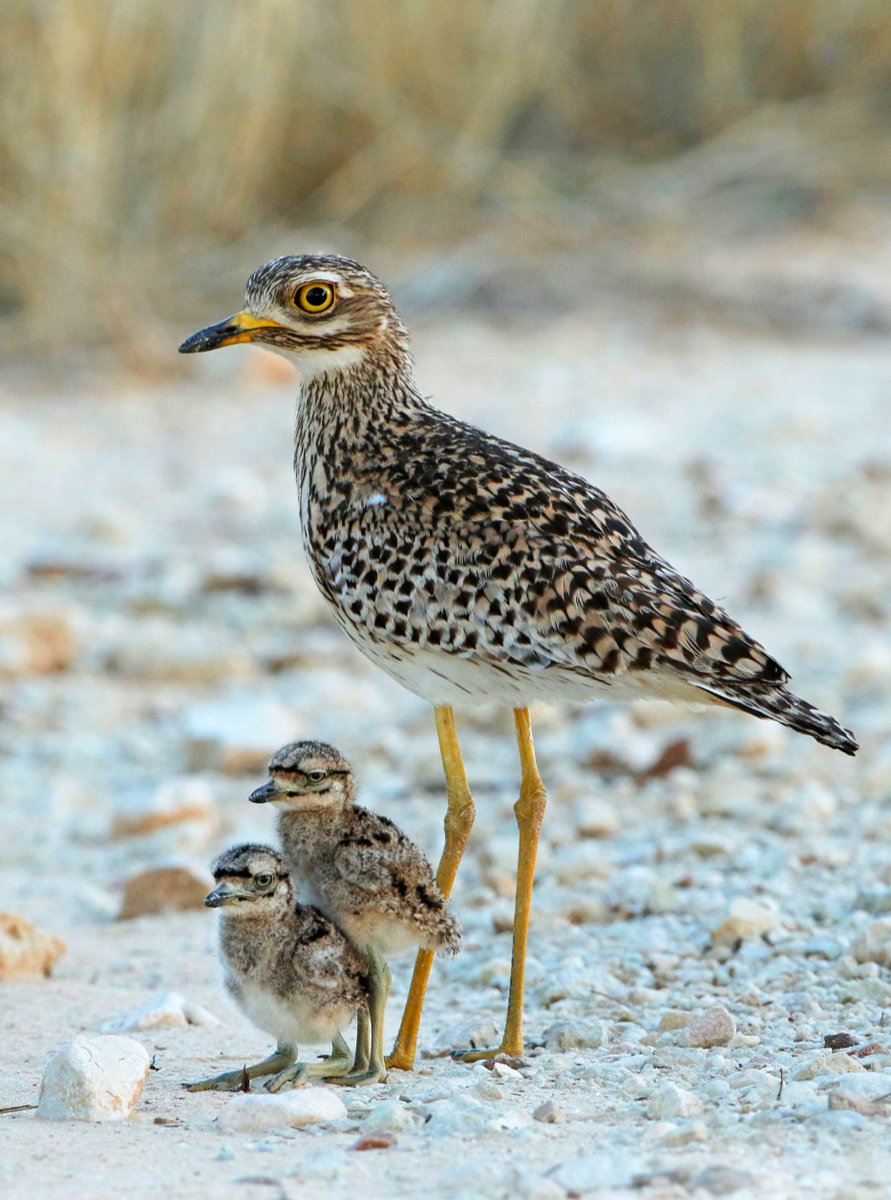
Spotted Dikkop and chick—the Spotted Dikkop is a mainly nocturnal, ground-dwelling bird known for incredible camouflage, large yellow eyes, and speckled brown plumage.
The White-backed vulture is Africa’s most common large vulture, an accomplished scavenger feeding on large animal carcasses. Unable to smell, it finds food by sight alone.
An intense affair: Mating occurs about every 15 minutes over several days, lasting less than a minute each time. It is nonstop, marked by uneasiness and violence.
The beautiful Egyptian goose is a striking bird, with pale brown and greyish-tan feathers and rich brown or chestnut markings around its eyes and neck.
It’s all in the feathers. Male Burchell’s sandgrouse soak their specialized belly feathers to carry up to 25 ml of water across the arid Kalahari to their chicks—an incredible adaptation for survival.