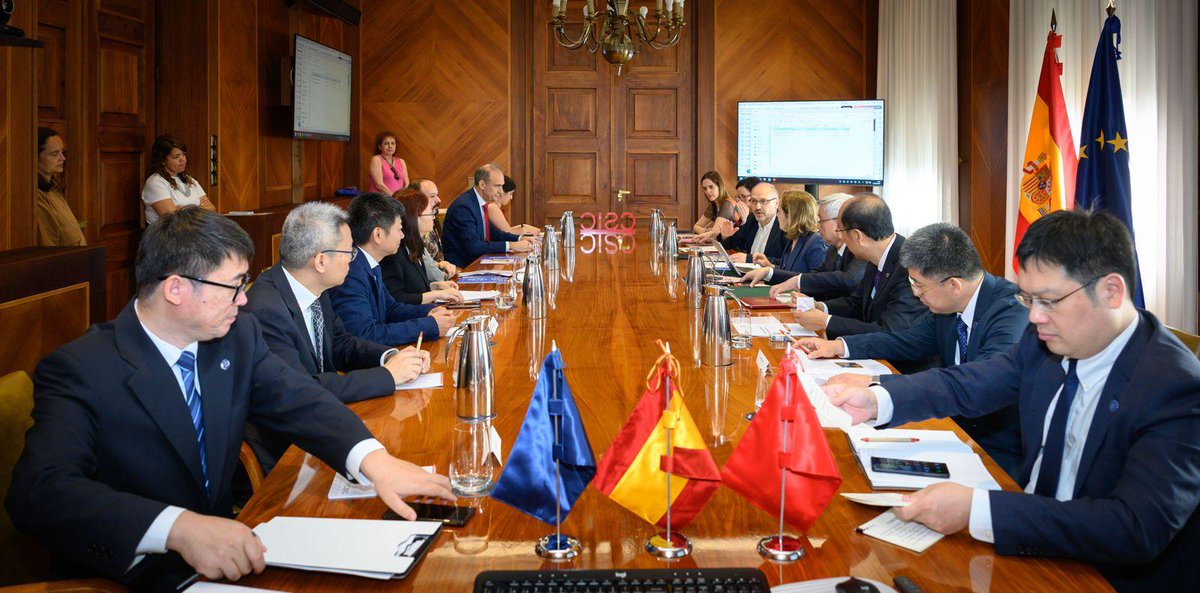
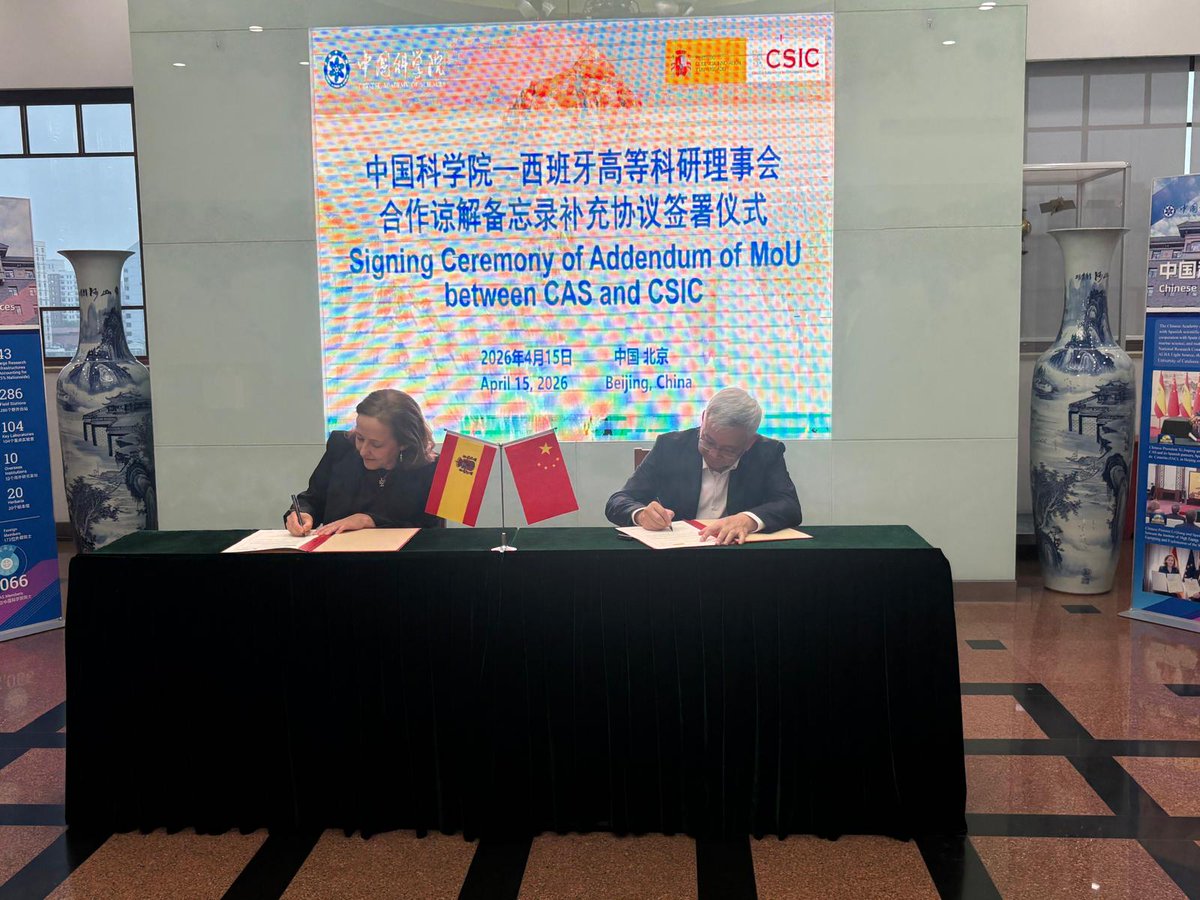
🤝 @CSIC firma un acuerdo con la Academia de Ciencias China
La negociación comenzó en 2025, con el Presidente de CAS, Jianguo Hou en Madrid
Ha dado lugar al intercambio de 4 grupos de investigación en agricultura y medioambiente
@IRNAS_CSIC@ICMCSIC@CBGP_Madrid@CidEinvestiga
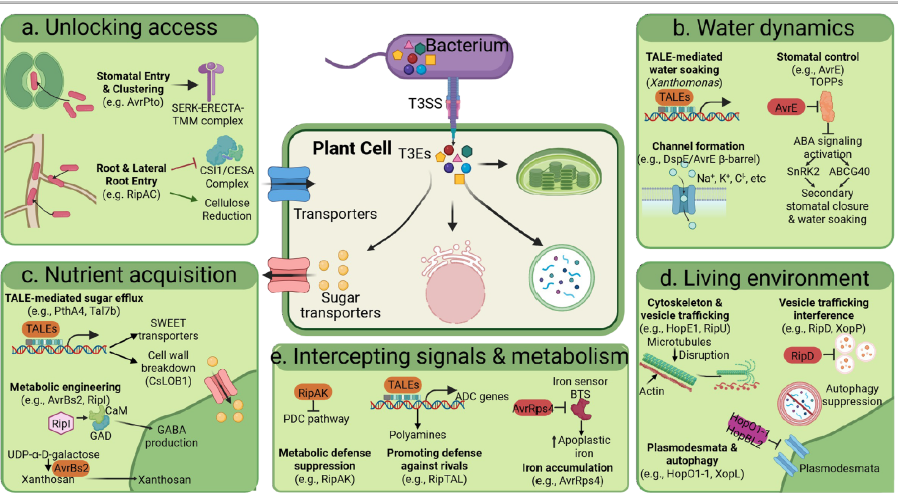
@AlbertoPMacho and I summarize advances in understanding how T3Es modulate cellular
processes beyond immune signaling for colonization in COPB. Sabotage behind enemy lines: Bacterial hijacking of plant cellular fun... https://t.co/emXAsmrSbw
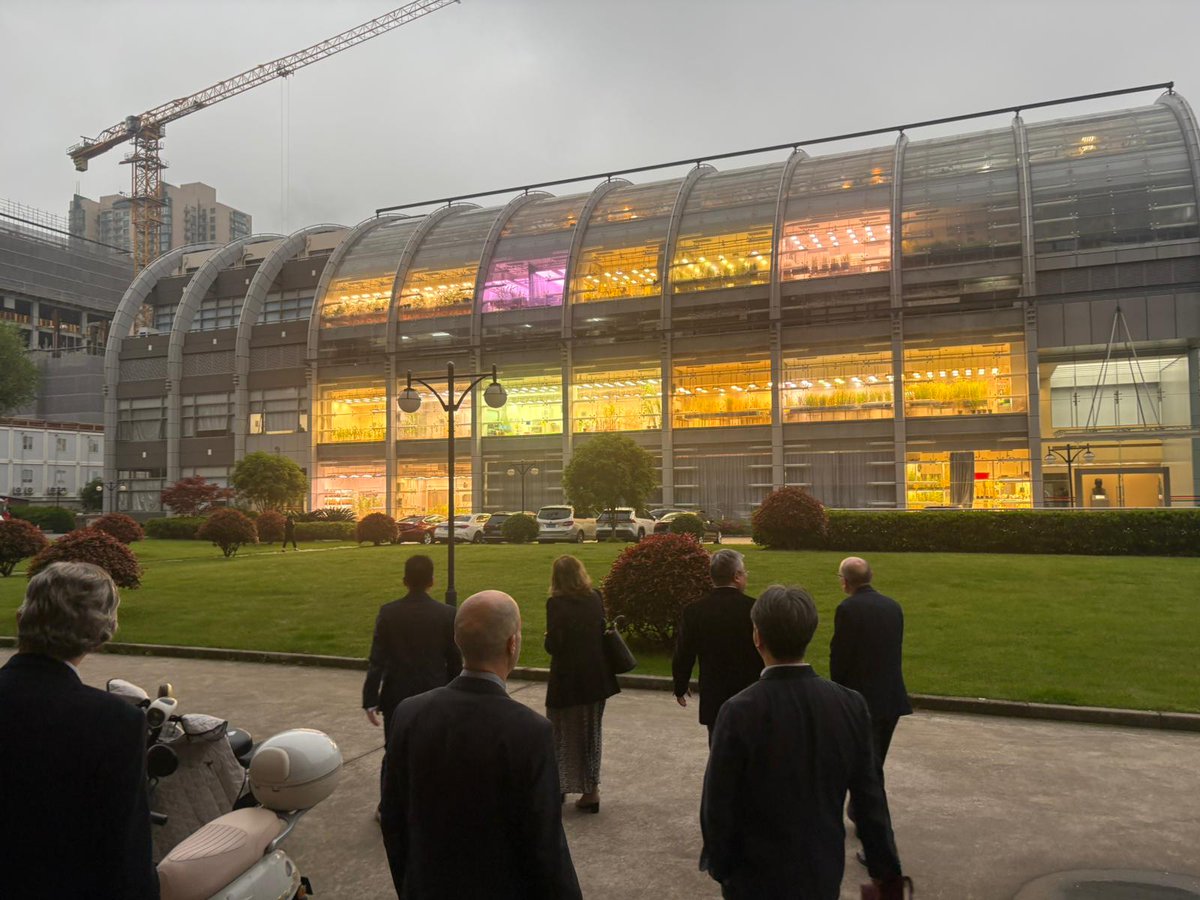
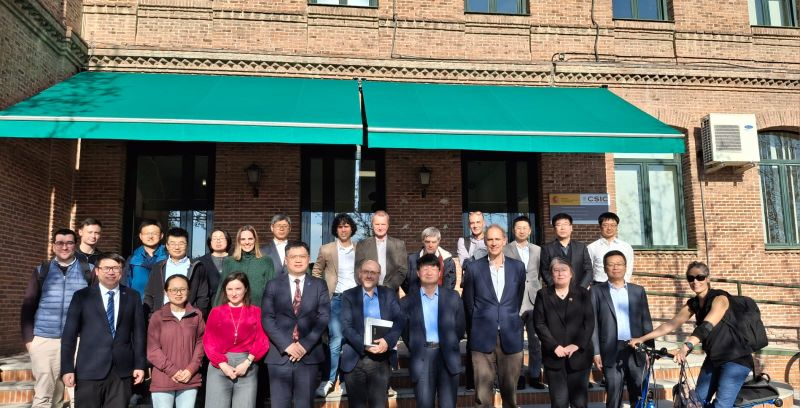
Para finalizar el día, hemos mantenido una interesantísima reunión en 1 de los 120 institutos de la Chinese Academy of Science:
Center for Excellence in Molecular Plant Sciences
Sus investigador@s trabajan con 4 institutos @CSIC. Vamos reforzar el vínculo
El @CSIC activa su programa de movilidad con la Chinese Academy of Sciences, su homóloga, q se firmó hace unos meses
Iniciativa importante para estrechar la colaboración en proyectos científicos y publicaciones de 1er nivel. España aún firma poca ciencia con China, Heitor Report
Together with our previous report earlier this year (Yu et al, PLoS Pathogens, 2025), this work suggests that hijacking plant kinases is an important strategy for bacterial effectors to promote their own phosphorylation and stability in plant cells
https://t.co/K3E821uV3M
Our latest paper is now online at New Phytologist!
Phosphorylation-dependent association of a bacterial effector with plant 14-3-3 proteins enhances effector stability and bacterial virulence
https://t.co/E4eiTqEcQf
@NewPhytol
These phosphorylation sites seem to be important for RipBM contribution to virulence in tomato, reflecting an effector strategy to promote its own stability and contribute to bacterial virulence
Our new paper is out in New Phytologist! We describe how the Ralstonia solanacearum effector RipAV suppresses plant immunity by directly interfering with key defense regulators. 🧵👇
https://t.co/ONbL30dnVe
🎉 Thrilled to announce that CoBEPP — Using conserved bacterial effectors to probe plant-pathogen interactions — has been funded by @AgEInves & @cienciaGob!
Grateful for the support to launch my first project at @IHSM_CSIC_UMA, exploring how pathogens affect plant biology! 🌱🔬
Hopefully, the information that heterologous PRR expression can confer novel PAMP recognition could provide new information for the design of synthetic immune receptors with expanded recognition of polymorphic pathogen elicitors
Our latest article is now online!
@PlantBiotechJ
Expression of Arabidopsis FLS2 in N. benthamiana confers responsiveness to Ralstonia flg22 and activation of anti-bacterial immunity
https://t.co/t3fFgZtzTQ
By Meng Li, Yujiao Chen, and Yali Wei
(@albertopmacho.bsky.social)
Long story short, it seems that AtFLS2, when expressed in N. benthamiana, associates with NbSERKs and mediate a “partial” complex activation that leads to some downstream responses (MAPK, gene expression), but not others (ROS). Eventually, this enhances disease resistance
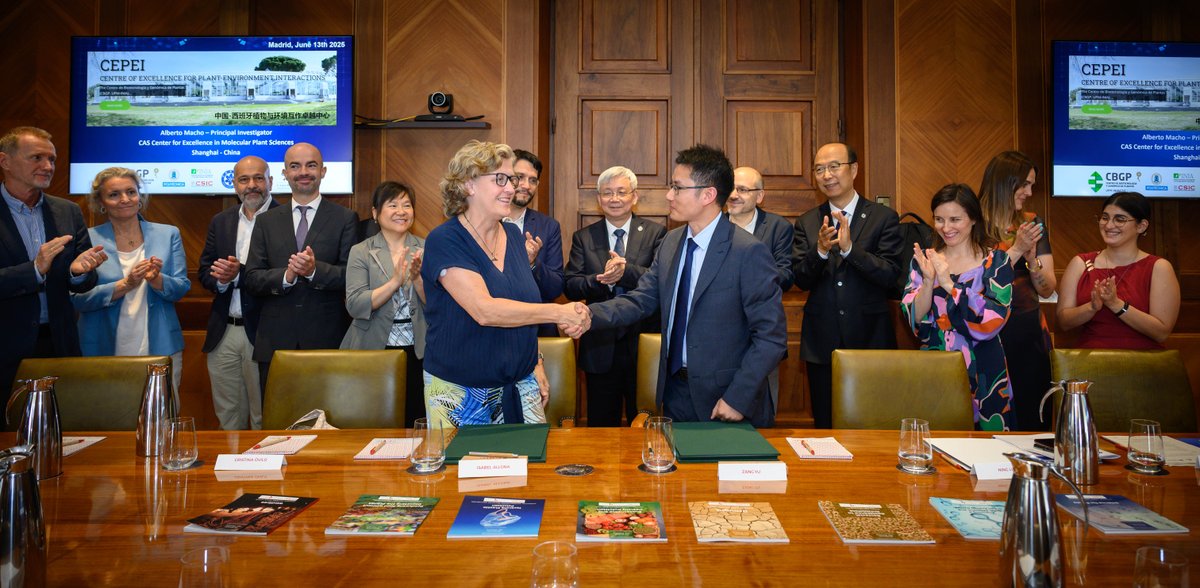
📜 El #CSIC firma dos memorándums de entendimiento con la @CAS__Science
🏛️ Ambas instituciones promoverán la cooperación científica centrada en proyectos sobre agricultura sostenible, alimentación y cambio climático
👉 https://t.co/foKGXQCdVF
🇨🇳🇪🇸La ciencia es un lenguaje universal
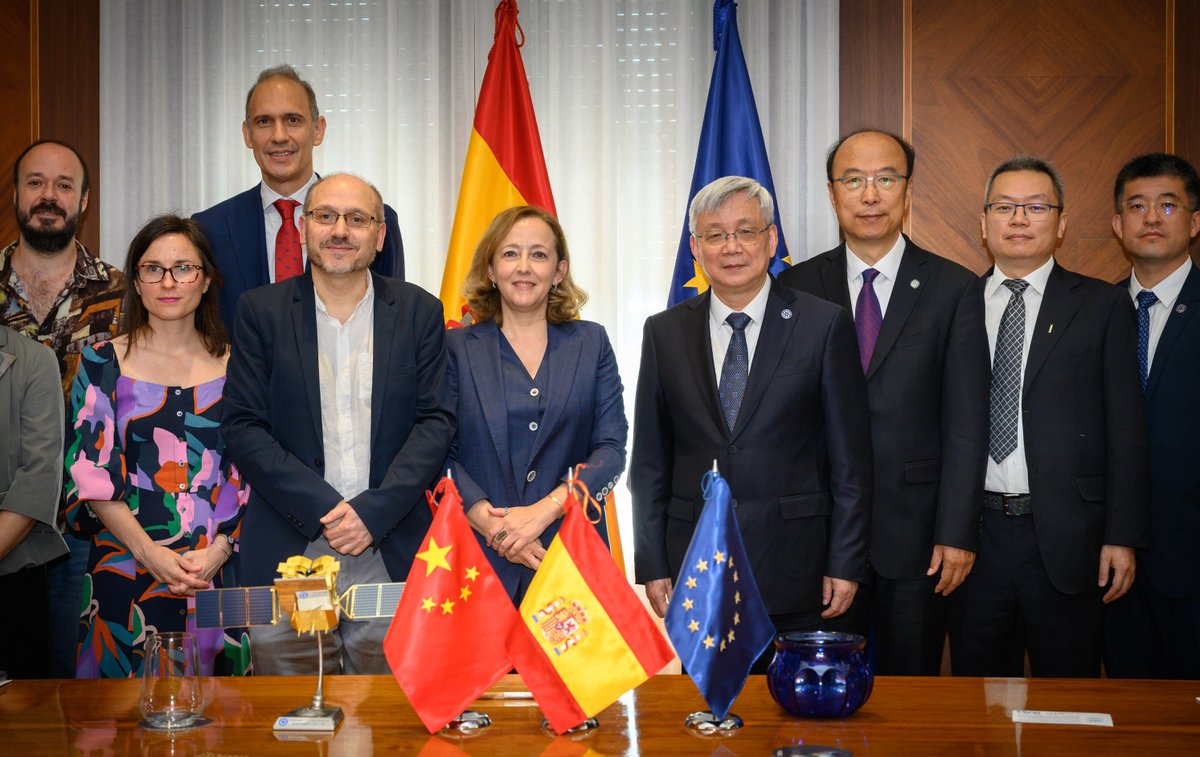
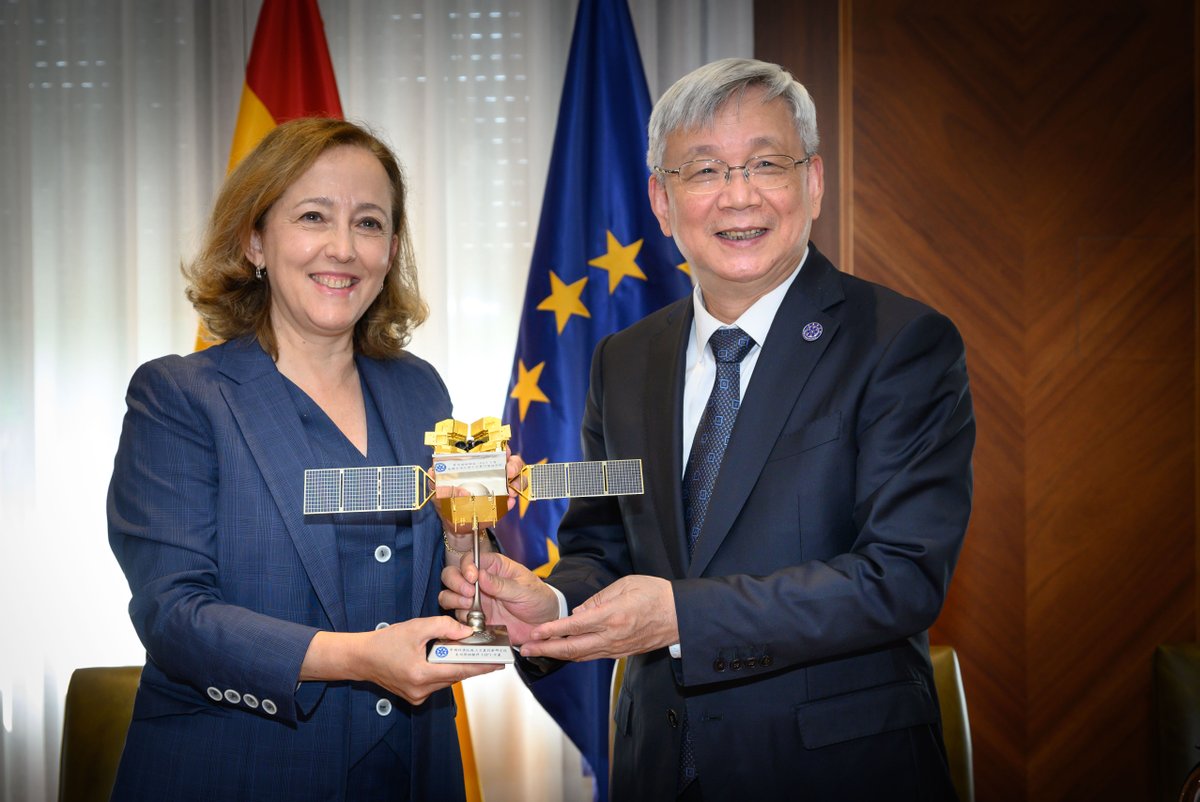
Hoy el @CSIC ha firmado un acuerdo de colaboración con el principal organismo científico chino, CAS, y la activación inmediata de un programa de intercambio de investigador@s entre las 2 instituciones
Gracias al Presidente Hou Jianguo!
📋 New paper from our researchers Carmen Beuzón, Javier Ruiz-Albert, Nieves López-Pagán and José Rufián!
Published at @NatureMicrobiol
More information here! ⬇️
https://t.co/g5ZPN8L3MC
@InfoUMA@CSIC