Autumn leaves will soon replace summer flowers, such as those in this field of zinnias. Each color comes from a different molecule:
Yellows from anthchlors (marein) and aurones (maritimein) 🟨
Oranges from beta-carotene 🟧
Pinks and reds from anthocyanidins (pelargonidin and cyanidin) 🟥
The sugars appended to the color-producing parts of the molecules increase the pigments’ water solubility in the cell.
Anthocyanidins give blueberries, red cabbage, berries, and many, many flowers their colors, which can change with pH.
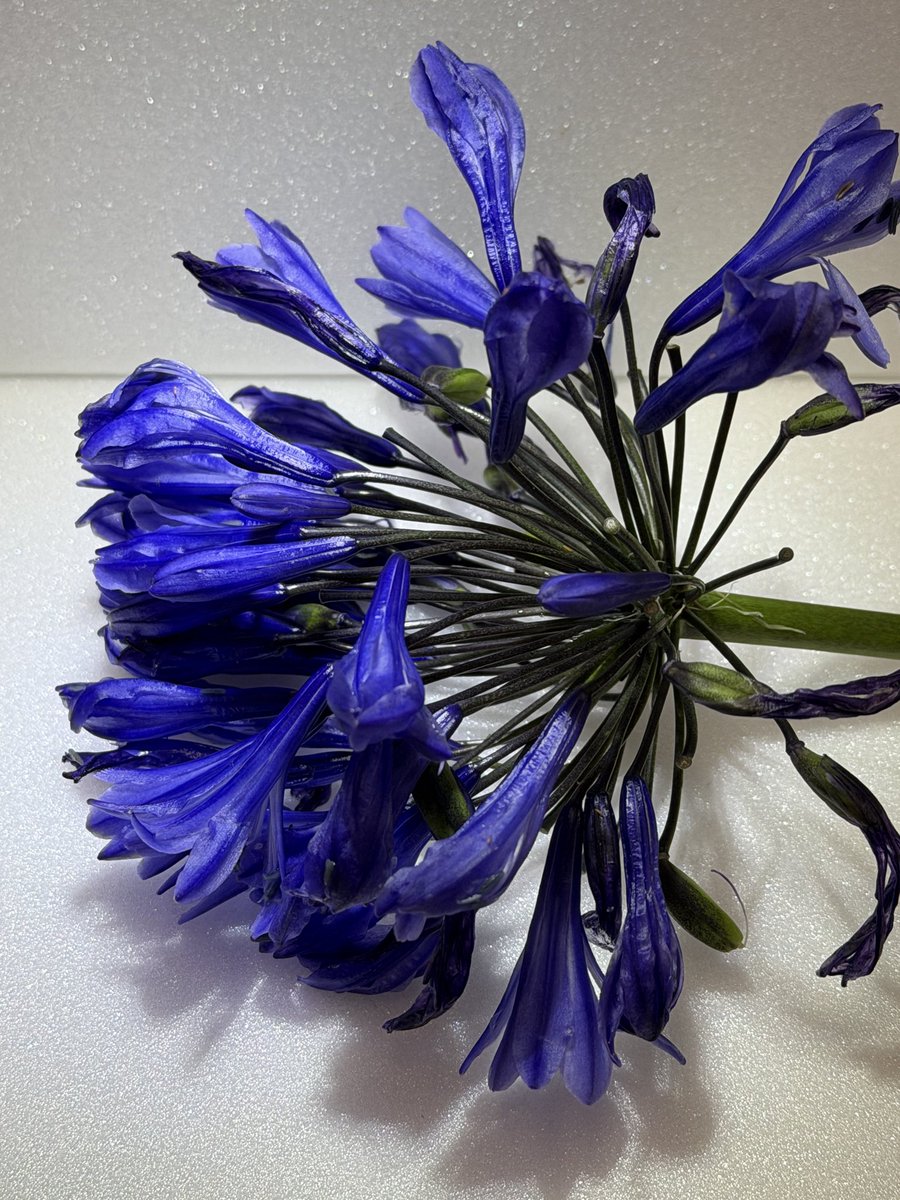
We received nice colourful gift today, agapanthus flowers! The extraction was fairly easy, beautiful blue extract in water and very pretty purple extract when the petals were soaked in dilute HCl. Hopefully a video will be ready soon. #Gardenindicators
I was caught short of fancy kit in a small town, so I went into the supermarket and asked for an empty cardboard box, made a hole in it using a pen nib, and entertained some innocent passers-by with these fuzzy images on the side of a snack wagon. #Éclipse#pinholecamera
Today is Monday but also #MoonDay which marks the anniversary of the first moon landing as part of the Apollo 11 mission on 20th July 1969. 🚀
A few years ago we wrote a short thread of how scrap metal from #Orkney may just have ended up on the moon! 👇
https://t.co/oDG5oGZZ7L
Really excited for the 13th International Symposium on Microscale Chemistry on Wednesday. Getting ready for my #DropletArt session. Come and have a go! Here’s a purple petunia extract pH1-13 #13ISMC26#GardenIndicators
The world’s entire manufactured supply of radium was produced between 1898-1960s, we only have really been making radium on a commercial scale for roughly 50 years.
In the U.S alone (even before production fully ramped up) about 70 grams of radium was sold just for radioluminescent paint used in consumer items between 1913-1920. Public demand for radium was so crazy that by the 1930s, doctors were complaining there wasn’t enough left over for medical and scientific work.
Only around a few thousand grams were ever produced worldwide across that period. Every bit of it still exists in some form today (thanks to its 1,600 year half-life like you mentioned) but we only know the exact location of roughly 2–5% of it. The rest is scattered everywhere. Over 40% of global radium output was sold directly to the public in luminous compounds for quack medicines, pocket watches, alarm clocks, paint kits, light switches, pull chains and all other sorts of novelty items like you see me posting.
Another 20–30% went to the military for luminous paint applications. The British Navy was one of the biggest users, their standard allowed up to 250 µCi of radium per gram of paint because I guess they REALLY wanted to see in the dark.
Anyways, that makes it the ultimate treasure hunt for me and I’ll gladly contribute some of my space in life for helping preserve some of it.
haha, radium go brrrrrrr ☢️
(I just bought this watch, btw)
@historycalendar Interesting story. I knew a zoology technician at Edinburgh who was tasked to preserve the skeleton of a deceased giraffe from the zoo. She recounted its long neck draped up the stairs and wondering where to start. You may like this ... https://t.co/TZ7pGZU48f
From Dingwall to Dundee, this @WoodBlocX elephant at @DundeeBotanics today. In 1706 a pet elephant evicted from an Edinburgh flat ended its days in Dundee after the baker below grew tired of dung in the dough. The sad tale is told here... https://t.co/ImlHzYsDBV
The rescue poinsettia thinks it's November. Back in 2024 @iain_smellie bought a sorry looking specimen. I put a cutting in some water. It did nothing much for months then in July it suddenly shot out roots overnight and started growing new foliage. Look what appeared yesterday.
The rescue poinsettia thinks it's November. Back in 2024 @iain_smellie bought a sorry looking specimen. I put a cutting in some water. It did nothing much for months then in July it suddenly shot out roots overnight and started growing new foliage. Look what appeared yesterday.