This picture of Hutch may go unnoticed by some, but pay attention to the Latin words on his shirt, “Resurget Cineribus” — To Rise from the ashes.
History Lesson:
For those who may find this puzzling, in 1805, the entire city of Detroit burned to the ground, leaving only one building standing. In the aftermath, Territorial Judge Augustus Woodward devised a street plan modeled after Washington, D.C. The layout mirrored the design of the nation’s capital, featuring diagonal streets radiating like the spokes of a wheel.
On the Detroit City Flag, the inscription reads, “Speramus meliora; resurget cineribus,” translating to “We hope for better things; it will arise from the ashes.” The City of Detroit literally rose from the ashes, symbolizing rebirth and resilience.
The city motto and the sports teams share a profound connection, especially in recent years with the consistent rebuilding efforts of each team. The Lions embody the essence of the motto, “Rise from ashes.” Just three years ago, the Detroit Lions had a first-year coach, an underrated quarterback, and a dismal 3-13-1 record. Today, they stand just one game away from a Super Bowl appearance.
So when the nation wonders why this Lions’ journey is so extraordinary, it’s because it mirrors the unique spirit of Detroit. Through unwavering determination and hard work, we rebuild until the product is perfected. Throughout history, there have been moments when Detroit moved the world, and now, once again, the city and its football team rise from the ashes to inspire us all.
History via Detroit Historical Society
📸 Via Detroit Lions/ Jeff Nguyen
#ALLGRIT
You’re not going to leave me speechless very often. This did. I LOVE Tim Robinson and @ITYSL and @Detroiters. Thanks to @HammerFox2 and my family for making this happen during @Lions Game Day Live. Now let’s win and get some #SloppySteaks. 💙💙 💙💙
Today marks Ross Ulbricht's 10th year in prison. In the past decade, Bitcoin has printed millionaires, cannabis stocks feature on CNBC, and psilocybin is accepted as medicine. Yet Ulbricht sits in a cage, in a world that otherwise celebrates the disruptive forces he championed through Silk Road.
Arrested just days after the Breaking Bad finale, Ross became the media's perfect anti-hero—an Eagle Scout who broke bad. Charged under a Kingpin Statute usually reserved for cartel bosses, he got two life sentences plus 40 years (El Chapo only received one). Ross’s mother, Lyn Ulbricht, told me, “The sentence shocked everyone. The prosecutors weren’t even asking for it. The judge gave him a death sentence. There was an audible gasp in the courtroom…It sets a terrible precedent.”
Ross now lives in a high-security federal prison in Tucson. The prison prohibits computer usage, but he is an avid reader and artist. USP Tucson permits weekend visits, which Ross typically spends with his fiancée—whom he met several years ago through exchanging letters. Ross finds fulfillment in life through the few avenues afforded to him in prison: he is a suicide watch volunteer, an inmate tutor, and is pursuing his master’s in psychology.
Ross's dull prison life sharply contrasts with the exciting drama found in the stories written after his arrest. Truthfully, Ross’s personal life always erred on the boring side. Ross lived with three roommates when he was arrested. He had no car and spent most of his time assiduously working on Silk Road. He had several changes of clothes and a pair of shoes that his mother had bought him two years prior—a slight improvement over his current wardrobe at USP Tucson. Despite his life sentence that offers no chance of parole, he tries to focus on the present. When conversations with his mother inevitably drift back to the regrets of the past, or the hopes of the future, he warns her, “Let’s not go down that path…It’s a torment if you do.”
Lyn Ulbricht can’t help it—she’s serving her own life sentence as a prisoner of hope. At 74 years old, Lyn spends her time running FreeRoss, a nonprofit she started a decade ago to advocate for his release. It’s a Sisyphean task, as she knows all too well. “Honestly, there are times where I’m like, oh my god, how am I going to keep going?” she told me. It's hard, she says, but she can't stop. "I can't leave Ross to die in there."
In the eyes of many, Ross’s punishment is well deserved. By the time Ross was arrested, Silk Road hosted over 145,000 buyers. Although the most common purchase on Silk Road was marijuana, the platform also featured more serious substances such as heroin and cocaine. The federal indictment alleged that Ross used his earnings to pay over $730,000 in murder-for-hire deals targeting several people that allegedly threatened to reveal his enterprise. Notably, no one was actually murdered. And Ross Ulbricht seems to be the person who regrets the platform’s existence the most. In his letter to the judge before his sentencing, he says, “Silk Road turned out to be a very naive and costly idea that I deeply regret…In creating Silk Road, I ruined my life and destroyed my future…I see that now but it is too late.”
Supporters of Ross claim that he wasn’t granted a fair trial. Carl Force and Shaun Bridges, two federal agents who built the government’s case against Ross Ulbricht, were later convicted on corruption charges related to their conduct in the case. The two agents used the account of an arrested Silk Road administrator to steal over 21,000 Bitcoin from Silk Road—worth over $400 million today—which they deposited into their personal accounts. After framing the administrator for that theft, Force then staged the first alleged murder-for-hire against that administrator. He later used an alias to sell information to Ross about the government’s investigation, playing the role of a double agent. To cover their tracks, these agents abused their subpoena power to erase evidence of their corruption. Shockingly, the judge screened the agents’ wrongdoing from Ross’s jury. And despite the absence of murder-for-hire allegations in the official charges, the prosecution was allowed to speak about them to the jury. Noam Chomsky called the case a "shocking miscarriage of justice.”
Ross is now serving his eleventh year in prison—over a quarter of his life. I can’t help but reflect on his story—one of idealism, naïveté, and ultimately tragedy. I think about how the world has changed in that decade while he remains stuck in the same place. When Ross started Silk Road in 2011, online privacy was still merely endangered—not extinct like it is today. A decade ago, fierce battles were fought over legislation like the Stop Online Privacy Act (SOPA). Only a month before Ross founded Silk Road, Aaron Swartz was arrested on MIT’s campus for downloading millions of articles from JSTOR. Later in 2013, NSA surveillance programs revealed by Edward Snowden confirmed the longstanding suspicions of techno-libertarians like Ross Ulbricht.
In the early 2010s, the media viewed Bitcoin as a strange cryptocurrency, synonymous with crime. Bitcoin’s advocates whispered about the currency in hushed tones and discussed its merit on pseudonymous forums. Today, cryptocurrencies are a trillion-dollar market, with institutional investors and respected corporations eagerly lining up for a slice of the pie. Prominent figures involved in the Silk Road cases now hold leading positions in the industry. Katie Haun, who established the U.S. government's first-ever “cryptocurrency task force,” raised a $1.5 billion fund to invest in crypto—the largest initial fund ever raised by a solo female venture capitalist. One could imagine a present-day Ross Ulbricht announcing a seed round for his new crypto startup, backed by prominent venture capitalists, rather than an indictment featuring a litany of federal charges.
When Ross was arrested in 2013, medical cannabis—let alone recreational use—remained illegal in most states. Today, marijuana companies trade on public stock exchanges and receive billions of dollars from private equity funds. California—where Ross was arrested—now reaps over a billion dollars every year in tax revenue from the legal sale of cannabis. Similarly, the public once associated illegal psychedelics with burnt-out hippies. Now, academic journals openly discuss the therapeutic use of psilocybin mushrooms—the first item sold on Silk Road and grown by Ross himself—and a wave of jurisdictions decriminalized their use. Even more serious drugs like heroin are often used in public without fear of prosecution in cities like San Francisco, Los Angeles, and New York—in conditions much less safe than those offered by Silk Road.
Ross’s legacy weaves inseparably with this wave of change. When Ross started Silk Road in February 2011, Bitcoin was worth $1.00. It reached $27 within a week of Gawker publishing a story about Silk Road in June of that year and $145 by the time Ross was arrested in October 2013. As Lyn Ulbricht told me, “I think there is a consensus, that what he did, for better or worse…catapulted [Bitcoin] into the consciousness of people…It was the plaything of geeks before.”
While he’s been punished severely for his crimes, I can’t help but wonder if the world has also been punished as a result. Ross's sentence does more than imprison one man; it cages innovation itself. As his mother says, "Let's use our geeks."
We may never know what Ross could have accomplished had he been given a second chance. Ross has no possibility of parole, and his inmate page reads, “Release Date: Life.”
1776-1933 - major bank crisis every 10 years
1930s - FDR bank rules enacted
1930s-1980s - no major crisis
1980s - rules rolled back
1980s-2010 - major crisis every 10 years
2010 - Dodd-Frank rules enacted
2010-2018 - no major crisis
2018 - rules rolled back
2023 - crisis?
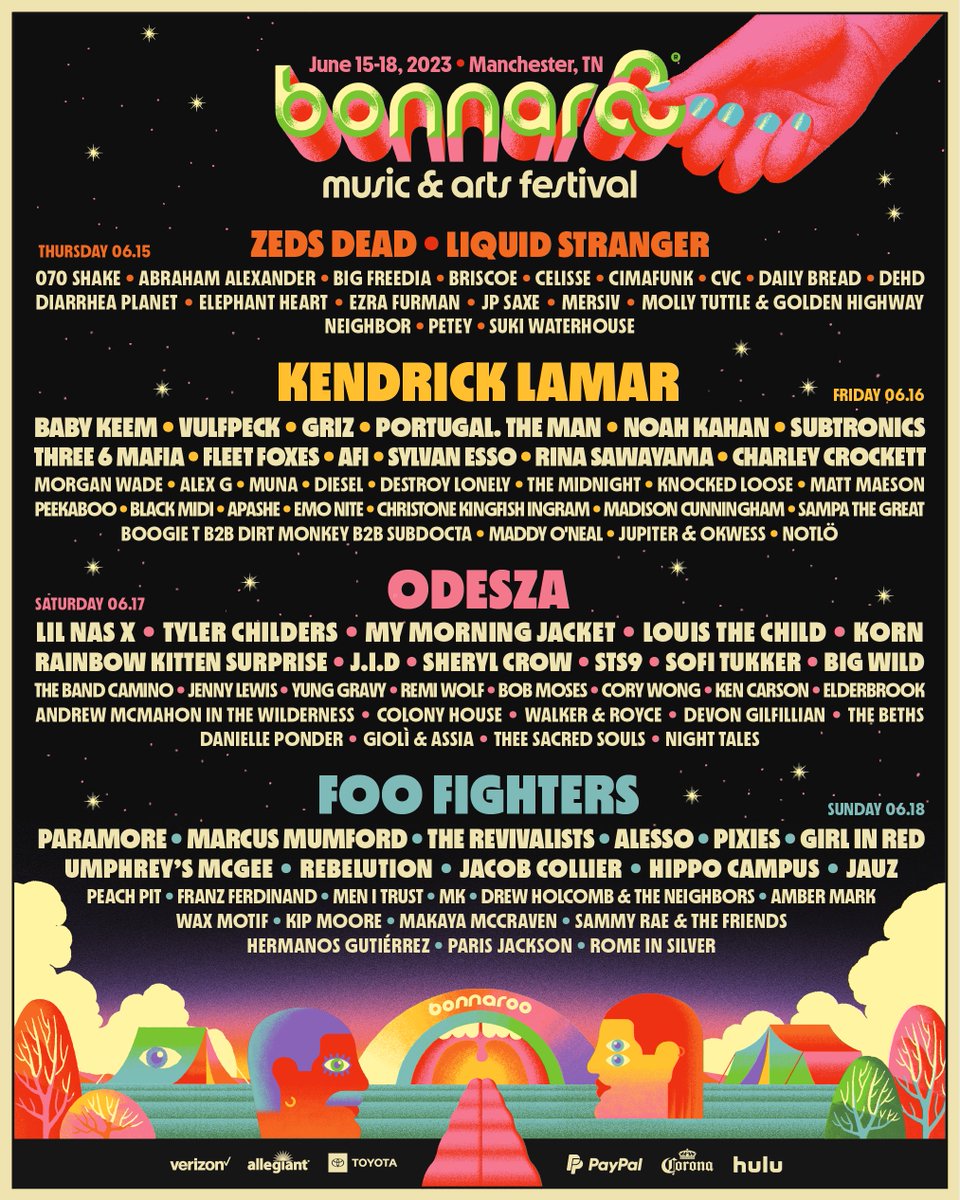
BACKSTAGE GIVEAWAY — @Bonnaroo reveals 2023 lineup: @FooFighters, @KendrickLamar, @ODESZA + more.
ENTER NOW for a chance to win (2) VIP tickets + a sold out Area 931 Backstage camping pass. 👇
To enter:
1. Follow @TheFestiveOwl
2. RT this tweet
Bonus 👉 https://t.co/4CL6qC0wtX


![PatrickJBlum's tweet photo. Today marks Ross Ulbricht's 10th year in prison. In the past decade, Bitcoin has printed millionaires, cannabis stocks feature on CNBC, and psilocybin is accepted as medicine. Yet Ulbricht sits in a cage, in a world that otherwise celebrates the disruptive forces he championed through Silk Road.
Arrested just days after the Breaking Bad finale, Ross became the media's perfect anti-hero—an Eagle Scout who broke bad. Charged under a Kingpin Statute usually reserved for cartel bosses, he got two life sentences plus 40 years (El Chapo only received one). Ross’s mother, Lyn Ulbricht, told me, “The sentence shocked everyone. The prosecutors weren’t even asking for it. The judge gave him a death sentence. There was an audible gasp in the courtroom…It sets a terrible precedent.”
Ross now lives in a high-security federal prison in Tucson. The prison prohibits computer usage, but he is an avid reader and artist. USP Tucson permits weekend visits, which Ross typically spends with his fiancée—whom he met several years ago through exchanging letters. Ross finds fulfillment in life through the few avenues afforded to him in prison: he is a suicide watch volunteer, an inmate tutor, and is pursuing his master’s in psychology.
Ross's dull prison life sharply contrasts with the exciting drama found in the stories written after his arrest. Truthfully, Ross’s personal life always erred on the boring side. Ross lived with three roommates when he was arrested. He had no car and spent most of his time assiduously working on Silk Road. He had several changes of clothes and a pair of shoes that his mother had bought him two years prior—a slight improvement over his current wardrobe at USP Tucson. Despite his life sentence that offers no chance of parole, he tries to focus on the present. When conversations with his mother inevitably drift back to the regrets of the past, or the hopes of the future, he warns her, “Let’s not go down that path…It’s a torment if you do.”
Lyn Ulbricht can’t help it—she’s serving her own life sentence as a prisoner of hope. At 74 years old, Lyn spends her time running FreeRoss, a nonprofit she started a decade ago to advocate for his release. It’s a Sisyphean task, as she knows all too well. “Honestly, there are times where I’m like, oh my god, how am I going to keep going?” she told me. It's hard, she says, but she can't stop. "I can't leave Ross to die in there."
In the eyes of many, Ross’s punishment is well deserved. By the time Ross was arrested, Silk Road hosted over 145,000 buyers. Although the most common purchase on Silk Road was marijuana, the platform also featured more serious substances such as heroin and cocaine. The federal indictment alleged that Ross used his earnings to pay over $730,000 in murder-for-hire deals targeting several people that allegedly threatened to reveal his enterprise. Notably, no one was actually murdered. And Ross Ulbricht seems to be the person who regrets the platform’s existence the most. In his letter to the judge before his sentencing, he says, “Silk Road turned out to be a very naive and costly idea that I deeply regret…In creating Silk Road, I ruined my life and destroyed my future…I see that now but it is too late.”
Supporters of Ross claim that he wasn’t granted a fair trial. Carl Force and Shaun Bridges, two federal agents who built the government’s case against Ross Ulbricht, were later convicted on corruption charges related to their conduct in the case. The two agents used the account of an arrested Silk Road administrator to steal over 21,000 Bitcoin from Silk Road—worth over $400 million today—which they deposited into their personal accounts. After framing the administrator for that theft, Force then staged the first alleged murder-for-hire against that administrator. He later used an alias to sell information to Ross about the government’s investigation, playing the role of a double agent. To cover their tracks, these agents abused their subpoena power to erase evidence of their corruption. Shockingly, the judge screened the agents’ wrongdoing from Ross’s jury. And despite the absence of murder-for-hire allegations in the official charges, the prosecution was allowed to speak about them to the jury. Noam Chomsky called the case a "shocking miscarriage of justice.”
Ross is now serving his eleventh year in prison—over a quarter of his life. I can’t help but reflect on his story—one of idealism, naïveté, and ultimately tragedy. I think about how the world has changed in that decade while he remains stuck in the same place. When Ross started Silk Road in 2011, online privacy was still merely endangered—not extinct like it is today. A decade ago, fierce battles were fought over legislation like the Stop Online Privacy Act (SOPA). Only a month before Ross founded Silk Road, Aaron Swartz was arrested on MIT’s campus for downloading millions of articles from JSTOR. Later in 2013, NSA surveillance programs revealed by Edward Snowden confirmed the longstanding suspicions of techno-libertarians like Ross Ulbricht.
In the early 2010s, the media viewed Bitcoin as a strange cryptocurrency, synonymous with crime. Bitcoin’s advocates whispered about the currency in hushed tones and discussed its merit on pseudonymous forums. Today, cryptocurrencies are a trillion-dollar market, with institutional investors and respected corporations eagerly lining up for a slice of the pie. Prominent figures involved in the Silk Road cases now hold leading positions in the industry. Katie Haun, who established the U.S. government's first-ever “cryptocurrency task force,” raised a $1.5 billion fund to invest in crypto—the largest initial fund ever raised by a solo female venture capitalist. One could imagine a present-day Ross Ulbricht announcing a seed round for his new crypto startup, backed by prominent venture capitalists, rather than an indictment featuring a litany of federal charges.
When Ross was arrested in 2013, medical cannabis—let alone recreational use—remained illegal in most states. Today, marijuana companies trade on public stock exchanges and receive billions of dollars from private equity funds. California—where Ross was arrested—now reaps over a billion dollars every year in tax revenue from the legal sale of cannabis. Similarly, the public once associated illegal psychedelics with burnt-out hippies. Now, academic journals openly discuss the therapeutic use of psilocybin mushrooms—the first item sold on Silk Road and grown by Ross himself—and a wave of jurisdictions decriminalized their use. Even more serious drugs like heroin are often used in public without fear of prosecution in cities like San Francisco, Los Angeles, and New York—in conditions much less safe than those offered by Silk Road.
Ross’s legacy weaves inseparably with this wave of change. When Ross started Silk Road in February 2011, Bitcoin was worth $1.00. It reached $27 within a week of Gawker publishing a story about Silk Road in June of that year and $145 by the time Ross was arrested in October 2013. As Lyn Ulbricht told me, “I think there is a consensus, that what he did, for better or worse…catapulted [Bitcoin] into the consciousness of people…It was the plaything of geeks before.”
While he’s been punished severely for his crimes, I can’t help but wonder if the world has also been punished as a result. Ross's sentence does more than imprison one man; it cages innovation itself. As his mother says, "Let's use our geeks."
We may never know what Ross could have accomplished had he been given a second chance. Ross has no possibility of parole, and his inmate page reads, “Release Date: Life.”](https://pbs.twimg.com/media/F7YGGxCboAA5Eev.png)
![PatrickJBlum's tweet photo. Today marks Ross Ulbricht's 10th year in prison. In the past decade, Bitcoin has printed millionaires, cannabis stocks feature on CNBC, and psilocybin is accepted as medicine. Yet Ulbricht sits in a cage, in a world that otherwise celebrates the disruptive forces he championed through Silk Road.
Arrested just days after the Breaking Bad finale, Ross became the media's perfect anti-hero—an Eagle Scout who broke bad. Charged under a Kingpin Statute usually reserved for cartel bosses, he got two life sentences plus 40 years (El Chapo only received one). Ross’s mother, Lyn Ulbricht, told me, “The sentence shocked everyone. The prosecutors weren’t even asking for it. The judge gave him a death sentence. There was an audible gasp in the courtroom…It sets a terrible precedent.”
Ross now lives in a high-security federal prison in Tucson. The prison prohibits computer usage, but he is an avid reader and artist. USP Tucson permits weekend visits, which Ross typically spends with his fiancée—whom he met several years ago through exchanging letters. Ross finds fulfillment in life through the few avenues afforded to him in prison: he is a suicide watch volunteer, an inmate tutor, and is pursuing his master’s in psychology.
Ross's dull prison life sharply contrasts with the exciting drama found in the stories written after his arrest. Truthfully, Ross’s personal life always erred on the boring side. Ross lived with three roommates when he was arrested. He had no car and spent most of his time assiduously working on Silk Road. He had several changes of clothes and a pair of shoes that his mother had bought him two years prior—a slight improvement over his current wardrobe at USP Tucson. Despite his life sentence that offers no chance of parole, he tries to focus on the present. When conversations with his mother inevitably drift back to the regrets of the past, or the hopes of the future, he warns her, “Let’s not go down that path…It’s a torment if you do.”
Lyn Ulbricht can’t help it—she’s serving her own life sentence as a prisoner of hope. At 74 years old, Lyn spends her time running FreeRoss, a nonprofit she started a decade ago to advocate for his release. It’s a Sisyphean task, as she knows all too well. “Honestly, there are times where I’m like, oh my god, how am I going to keep going?” she told me. It's hard, she says, but she can't stop. "I can't leave Ross to die in there."
In the eyes of many, Ross’s punishment is well deserved. By the time Ross was arrested, Silk Road hosted over 145,000 buyers. Although the most common purchase on Silk Road was marijuana, the platform also featured more serious substances such as heroin and cocaine. The federal indictment alleged that Ross used his earnings to pay over $730,000 in murder-for-hire deals targeting several people that allegedly threatened to reveal his enterprise. Notably, no one was actually murdered. And Ross Ulbricht seems to be the person who regrets the platform’s existence the most. In his letter to the judge before his sentencing, he says, “Silk Road turned out to be a very naive and costly idea that I deeply regret…In creating Silk Road, I ruined my life and destroyed my future…I see that now but it is too late.”
Supporters of Ross claim that he wasn’t granted a fair trial. Carl Force and Shaun Bridges, two federal agents who built the government’s case against Ross Ulbricht, were later convicted on corruption charges related to their conduct in the case. The two agents used the account of an arrested Silk Road administrator to steal over 21,000 Bitcoin from Silk Road—worth over $400 million today—which they deposited into their personal accounts. After framing the administrator for that theft, Force then staged the first alleged murder-for-hire against that administrator. He later used an alias to sell information to Ross about the government’s investigation, playing the role of a double agent. To cover their tracks, these agents abused their subpoena power to erase evidence of their corruption. Shockingly, the judge screened the agents’ wrongdoing from Ross’s jury. And despite the absence of murder-for-hire allegations in the official charges, the prosecution was allowed to speak about them to the jury. Noam Chomsky called the case a "shocking miscarriage of justice.”
Ross is now serving his eleventh year in prison—over a quarter of his life. I can’t help but reflect on his story—one of idealism, naïveté, and ultimately tragedy. I think about how the world has changed in that decade while he remains stuck in the same place. When Ross started Silk Road in 2011, online privacy was still merely endangered—not extinct like it is today. A decade ago, fierce battles were fought over legislation like the Stop Online Privacy Act (SOPA). Only a month before Ross founded Silk Road, Aaron Swartz was arrested on MIT’s campus for downloading millions of articles from JSTOR. Later in 2013, NSA surveillance programs revealed by Edward Snowden confirmed the longstanding suspicions of techno-libertarians like Ross Ulbricht.
In the early 2010s, the media viewed Bitcoin as a strange cryptocurrency, synonymous with crime. Bitcoin’s advocates whispered about the currency in hushed tones and discussed its merit on pseudonymous forums. Today, cryptocurrencies are a trillion-dollar market, with institutional investors and respected corporations eagerly lining up for a slice of the pie. Prominent figures involved in the Silk Road cases now hold leading positions in the industry. Katie Haun, who established the U.S. government's first-ever “cryptocurrency task force,” raised a $1.5 billion fund to invest in crypto—the largest initial fund ever raised by a solo female venture capitalist. One could imagine a present-day Ross Ulbricht announcing a seed round for his new crypto startup, backed by prominent venture capitalists, rather than an indictment featuring a litany of federal charges.
When Ross was arrested in 2013, medical cannabis—let alone recreational use—remained illegal in most states. Today, marijuana companies trade on public stock exchanges and receive billions of dollars from private equity funds. California—where Ross was arrested—now reaps over a billion dollars every year in tax revenue from the legal sale of cannabis. Similarly, the public once associated illegal psychedelics with burnt-out hippies. Now, academic journals openly discuss the therapeutic use of psilocybin mushrooms—the first item sold on Silk Road and grown by Ross himself—and a wave of jurisdictions decriminalized their use. Even more serious drugs like heroin are often used in public without fear of prosecution in cities like San Francisco, Los Angeles, and New York—in conditions much less safe than those offered by Silk Road.
Ross’s legacy weaves inseparably with this wave of change. When Ross started Silk Road in February 2011, Bitcoin was worth $1.00. It reached $27 within a week of Gawker publishing a story about Silk Road in June of that year and $145 by the time Ross was arrested in October 2013. As Lyn Ulbricht told me, “I think there is a consensus, that what he did, for better or worse…catapulted [Bitcoin] into the consciousness of people…It was the plaything of geeks before.”
While he’s been punished severely for his crimes, I can’t help but wonder if the world has also been punished as a result. Ross's sentence does more than imprison one man; it cages innovation itself. As his mother says, "Let's use our geeks."
We may never know what Ross could have accomplished had he been given a second chance. Ross has no possibility of parole, and his inmate page reads, “Release Date: Life.”](https://pbs.twimg.com/media/F7X_njDbQAAD2aV.png)




![PatrickJBlum's tweet photo. Today marks Ross Ulbricht's 10th year in prison. In the past decade, Bitcoin has printed millionaires, cannabis stocks feature on CNBC, and psilocybin is accepted as medicine. Yet Ulbricht sits in a cage, in a world that otherwise celebrates the disruptive forces he championed through Silk Road.
Arrested just days after the Breaking Bad finale, Ross became the media's perfect anti-hero—an Eagle Scout who broke bad. Charged under a Kingpin Statute usually reserved for cartel bosses, he got two life sentences plus 40 years (El Chapo only received one). Ross’s mother, Lyn Ulbricht, told me, “The sentence shocked everyone. The prosecutors weren’t even asking for it. The judge gave him a death sentence. There was an audible gasp in the courtroom…It sets a terrible precedent.”
Ross now lives in a high-security federal prison in Tucson. The prison prohibits computer usage, but he is an avid reader and artist. USP Tucson permits weekend visits, which Ross typically spends with his fiancée—whom he met several years ago through exchanging letters. Ross finds fulfillment in life through the few avenues afforded to him in prison: he is a suicide watch volunteer, an inmate tutor, and is pursuing his master’s in psychology.
Ross's dull prison life sharply contrasts with the exciting drama found in the stories written after his arrest. Truthfully, Ross’s personal life always erred on the boring side. Ross lived with three roommates when he was arrested. He had no car and spent most of his time assiduously working on Silk Road. He had several changes of clothes and a pair of shoes that his mother had bought him two years prior—a slight improvement over his current wardrobe at USP Tucson. Despite his life sentence that offers no chance of parole, he tries to focus on the present. When conversations with his mother inevitably drift back to the regrets of the past, or the hopes of the future, he warns her, “Let’s not go down that path…It’s a torment if you do.”
Lyn Ulbricht can’t help it—she’s serving her own life sentence as a prisoner of hope. At 74 years old, Lyn spends her time running FreeRoss, a nonprofit she started a decade ago to advocate for his release. It’s a Sisyphean task, as she knows all too well. “Honestly, there are times where I’m like, oh my god, how am I going to keep going?” she told me. It's hard, she says, but she can't stop. "I can't leave Ross to die in there."
In the eyes of many, Ross’s punishment is well deserved. By the time Ross was arrested, Silk Road hosted over 145,000 buyers. Although the most common purchase on Silk Road was marijuana, the platform also featured more serious substances such as heroin and cocaine. The federal indictment alleged that Ross used his earnings to pay over $730,000 in murder-for-hire deals targeting several people that allegedly threatened to reveal his enterprise. Notably, no one was actually murdered. And Ross Ulbricht seems to be the person who regrets the platform’s existence the most. In his letter to the judge before his sentencing, he says, “Silk Road turned out to be a very naive and costly idea that I deeply regret…In creating Silk Road, I ruined my life and destroyed my future…I see that now but it is too late.”
Supporters of Ross claim that he wasn’t granted a fair trial. Carl Force and Shaun Bridges, two federal agents who built the government’s case against Ross Ulbricht, were later convicted on corruption charges related to their conduct in the case. The two agents used the account of an arrested Silk Road administrator to steal over 21,000 Bitcoin from Silk Road—worth over $400 million today—which they deposited into their personal accounts. After framing the administrator for that theft, Force then staged the first alleged murder-for-hire against that administrator. He later used an alias to sell information to Ross about the government’s investigation, playing the role of a double agent. To cover their tracks, these agents abused their subpoena power to erase evidence of their corruption. Shockingly, the judge screened the agents’ wrongdoing from Ross’s jury. And despite the absence of murder-for-hire allegations in the official charges, the prosecution was allowed to speak about them to the jury. Noam Chomsky called the case a "shocking miscarriage of justice.”
Ross is now serving his eleventh year in prison—over a quarter of his life. I can’t help but reflect on his story—one of idealism, naïveté, and ultimately tragedy. I think about how the world has changed in that decade while he remains stuck in the same place. When Ross started Silk Road in 2011, online privacy was still merely endangered—not extinct like it is today. A decade ago, fierce battles were fought over legislation like the Stop Online Privacy Act (SOPA). Only a month before Ross founded Silk Road, Aaron Swartz was arrested on MIT’s campus for downloading millions of articles from JSTOR. Later in 2013, NSA surveillance programs revealed by Edward Snowden confirmed the longstanding suspicions of techno-libertarians like Ross Ulbricht.
In the early 2010s, the media viewed Bitcoin as a strange cryptocurrency, synonymous with crime. Bitcoin’s advocates whispered about the currency in hushed tones and discussed its merit on pseudonymous forums. Today, cryptocurrencies are a trillion-dollar market, with institutional investors and respected corporations eagerly lining up for a slice of the pie. Prominent figures involved in the Silk Road cases now hold leading positions in the industry. Katie Haun, who established the U.S. government's first-ever “cryptocurrency task force,” raised a $1.5 billion fund to invest in crypto—the largest initial fund ever raised by a solo female venture capitalist. One could imagine a present-day Ross Ulbricht announcing a seed round for his new crypto startup, backed by prominent venture capitalists, rather than an indictment featuring a litany of federal charges.
When Ross was arrested in 2013, medical cannabis—let alone recreational use—remained illegal in most states. Today, marijuana companies trade on public stock exchanges and receive billions of dollars from private equity funds. California—where Ross was arrested—now reaps over a billion dollars every year in tax revenue from the legal sale of cannabis. Similarly, the public once associated illegal psychedelics with burnt-out hippies. Now, academic journals openly discuss the therapeutic use of psilocybin mushrooms—the first item sold on Silk Road and grown by Ross himself—and a wave of jurisdictions decriminalized their use. Even more serious drugs like heroin are often used in public without fear of prosecution in cities like San Francisco, Los Angeles, and New York—in conditions much less safe than those offered by Silk Road.
Ross’s legacy weaves inseparably with this wave of change. When Ross started Silk Road in February 2011, Bitcoin was worth $1.00. It reached $27 within a week of Gawker publishing a story about Silk Road in June of that year and $145 by the time Ross was arrested in October 2013. As Lyn Ulbricht told me, “I think there is a consensus, that what he did, for better or worse…catapulted [Bitcoin] into the consciousness of people…It was the plaything of geeks before.”
While he’s been punished severely for his crimes, I can’t help but wonder if the world has also been punished as a result. Ross's sentence does more than imprison one man; it cages innovation itself. As his mother says, "Let's use our geeks."
We may never know what Ross could have accomplished had he been given a second chance. Ross has no possibility of parole, and his inmate page reads, “Release Date: Life.”](https://pbs.twimg.com/media/F7YIxuBaoAAmWFi.png)