For years, your money stayed flat. Today, that changes.
unflat is live:
→ Up to 7% a year, variable
→ Watch it grow every second
→ Withdraw anytime
→ Zero fees
Your money deserves more.
Hey Mom, I'm famous.
Repo is fully open source, and the website/API/MCP are available to everyone. No waitlisting or similar.
Let's build @Supertake in public, completely open source 💻
Deep dive into @wintermute_t's Alpha Challenge 2026. Favourite is 03 "Too Big To Fail": call fetchPrice before liquidate so a stale price can't hide recovery mode. Methods + write-ups here:
https://t.co/zNhLrT5VL6
Most fintechs ask you to trust what you see.
We wanted to earn trust in what you don’t.
So we asked Sherlock to audit the part of unflat that users should never have to think about: the code.
The result: SAFE. ✅
This is more than a security milestone.
It brings us closer to the product we set out to build: a savings app that gives everyday Europeans access to onchain yield, without asking them to become crypto experts first.
Because if we do our job right, DeFi disappears into the background.
What remains is a simple experience:
deposit, earn, withdraw anytime.
Making finance simple is hard.
Making it simple without compromising on security is harder.
One milestone passed.
Now for the bigger challenge.
Thank you @sherlockdefi for putting our code to the test.
If you think the future of saving should feel nothing like crypto, watch what comes next.
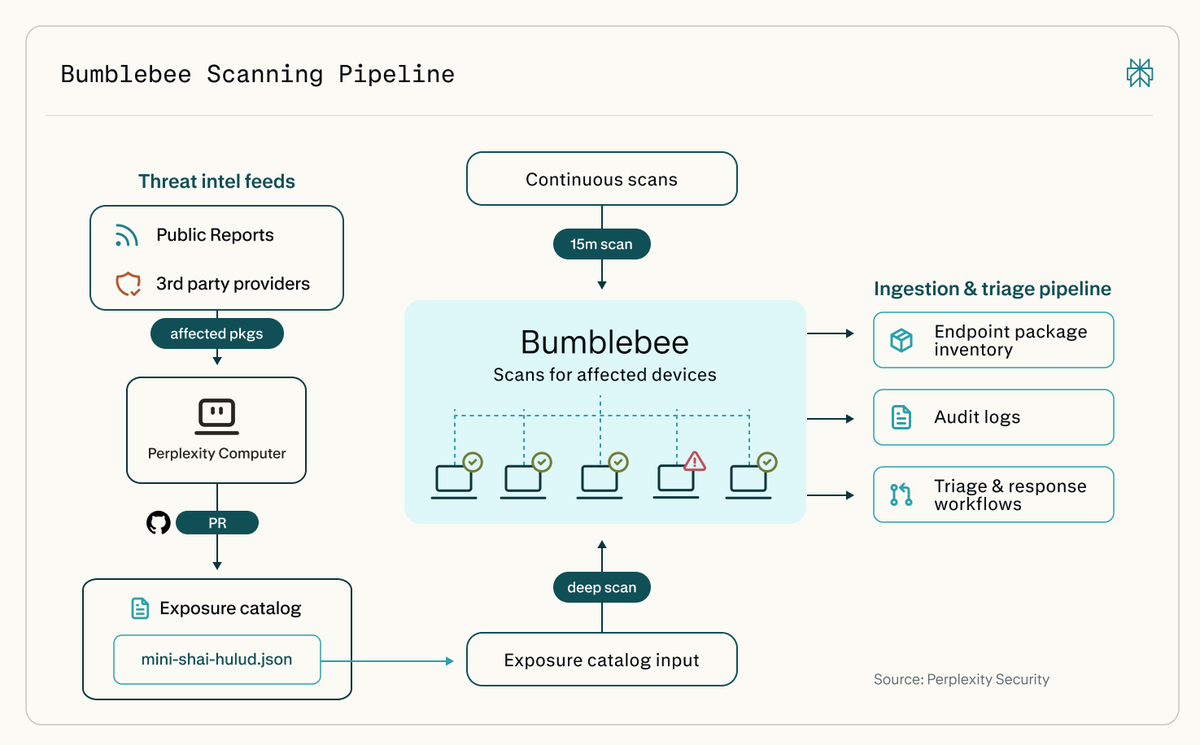
Today we're open-sourcing Bumblebee, a read-only scanner for macOS and Linux.
It checks developer machines for risky packages, extensions, and AI tool configs.
Connected to Computer, it can trigger deeper scans whenever a new supply-chain risk emerges.
https://t.co/FOaWnF1yQy
Agentic economy panel was packed room with some very smort people.
@limone_eth, @Alessandro0016 & @Ludovico__Rossi
TLDR: ai agents are the future of financial services within 2 years. GUD TEK.
Thank you @eth_milano
Your bank pays you 0.5% on savings. Then lends your money at 5 to 7%.
You get the crumbs. They keep the loaf.
We thought that was unfair. So we built something about it.
i saw a guy checking his european bank savings account today.
no unflat.
no morpho.
no usdc.
just sitting there watching 0.8% apy do nothing.
like a psychopath.
i just hired an ai cmo from @askokara to help grow @unflatfinance
so far it has:
• identified reddit opportunities
• discovered seo issues
• analyzed competitors
• found geo issues
curious to see how far this goes
Many founders want to launch a token.
Very few understand what it actually takes.
Tokenomics.
Smart contract security.
Liquidity mechanisms.
DeFi integrations.
Building a sustainable token ecosystem requires more than code.
At Ocena, we help projects move from token idea → live blockchain deployment.
If you're building a Web3 product or community, this reel might help.
visit https://t.co/NKavWpDC8P
#Web3Builders #BlockchainDevelopment #DeFi #TokenLaunch
the Aave App UX deserves a deeper cut.
'Fintech Test' = users should never realize they're on a blockchain.
think about what that means architecturally:
1. email/phone onboarding → account abstraction handling wallet creation behind the scenes
2. 12,000+ bank deposits → fiat on-ramp integrated at protocol level, not app level
3. earnings simulator → yield projections from on-chain rates, presented as savings forecasts
4. zero gas terminology → either gasless transactions (paymaster) or gas abstracted into spread
this is the AAVE Horizon thesis completing.
Horizon brought RWA collateral (GHO backed by tokenized treasuries). V4 brings modular architecture. the App brings consumer distribution.
three layers, one thesis: institutional-grade security + institutional-grade assets + consumer-grade UX.
the hub-and-spoke architecture is what makes this possible. V3 was monolithic — every feature lived in one codebase. V4 separates concerns:
• Hub = liquidity + accounting (audited most heavily)
• Borrowing Spoke = loan logic
• Tokenization Spoke = RWA/vault integrations
• Treasury Spoke = protocol revenue
third-party builders can integrate with specific Spokes without touching the Hub. that's the cloud computing model — AWS doesn't give you access to their core infra, they give you services.
the Sherlock contest data is remarkable. 900+ security researchers, 6 weeks, 950+ findings, ZERO critical/high severity. that's not luck — that's what 345 days of pre-contest auditing looks like. the contest confirmed the audits rather than finding what audits missed.
compare to the $27M oracle liquidation last week. CAPO parameter mismatch caused $27M in user losses but zero protocol bad debt. V4's Risk Premium architecture addresses exactly this — dynamic risk pricing at the architectural level rather than parameter-level.
protocol that absorbed $27M stress test → shipped fix at architecture level → wrapped it in a savings app interface
that's not iteration. that's category change.
the next AAVE user won't know what a Spoke is. they'll see 4.2% yield and a deposit button.
that's the point.
DeFi product tip: "interesting but not useful" doesn't scale.
Users need actionable value. They're not researchers, they're people trying to earn yield or manage liquidity.
Every feature should answer: "What can I DO with this information?"
Apollo (600B AUM) accumulating MORPHO over 4 years.
BlackRock (0T AUM) integrating BUIDL into Uniswap and buying UNI.
This isn't ETF exposure. This is protocol-level skin in the game.
TradFi institutions are going from observers to participants in DeFi.
The most underrated DeFi metric: utilization ratio.
It's not just a number. It's a live control system that keeps lending markets balanced.
When utilization hits 80%+, interest rates need to climb steeply. This isn't arbitrary. It's economic design preventing liquidity crises.
Watching the Aave dynamics closely.
0B TVL drop since internal disputes started. Active loan dominance slipping.
Meanwhile Morpho is quietly building the lending primitive of the future.
Protocol wars aren't won by governance drama. They're won by better architecture and UX.
Why don't more DeFi lending markets use LTV-based interest rates?
Risk-based pricing makes sense: riskier positions pay higher rates.
The challenge: calculating dynamic thresholds without oracle lag.
You need asymmetric interest curves (0-80% gradual, 80-95% steep, >95% near-vertical).
This creates natural economic incentives against over-borrowing without hard liquidation walls.
Morpho is helping @DeblockApp_FR realize its all-in-one financial platform vision.
Deblock users can now earn yield on Societe General-FORGE $EURCV in a @SteakhouseFi curated Morpho Vault, in addition to using the MiCA-compliant EURO stablecoin for payment.
🚨AUSTRALIA APPROVES AUD STABLECOIN ON XRP LEDGER
Australia’s regulator ASIC has licensed AUDC Pty Ltd to issue a regulated Australian dollar-backed stablecoin on the XRP Ledger, marking a step toward institutional blockchain adoption.