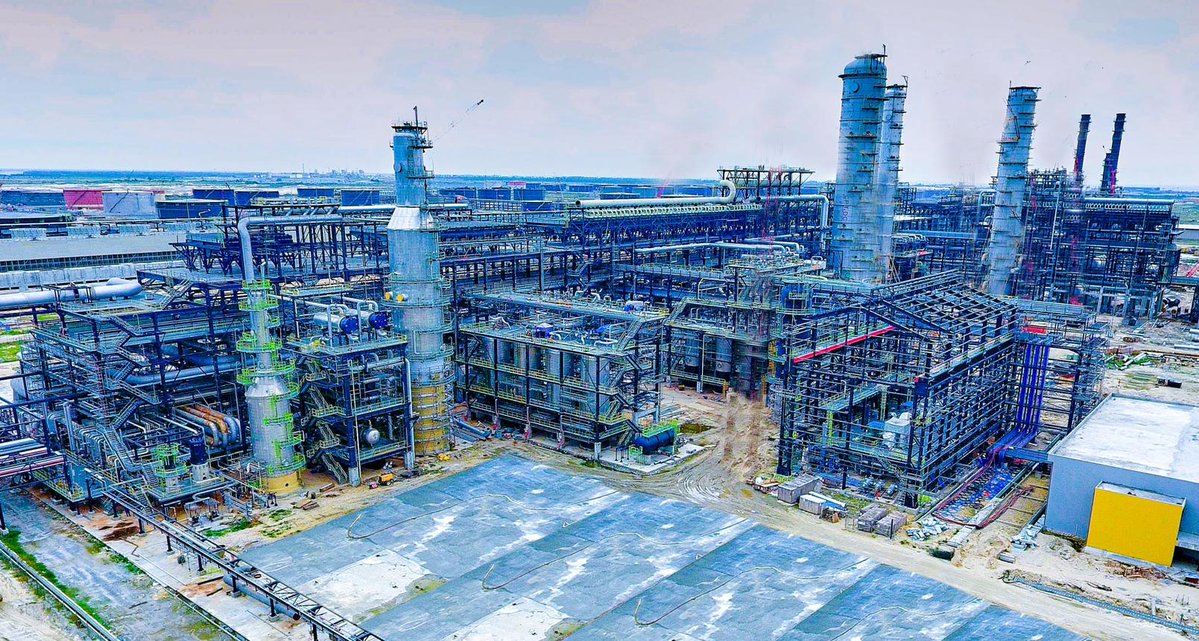
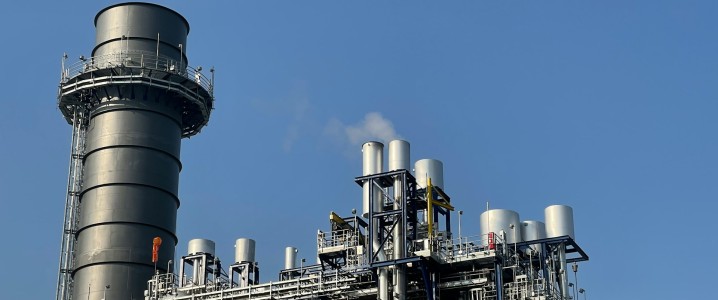
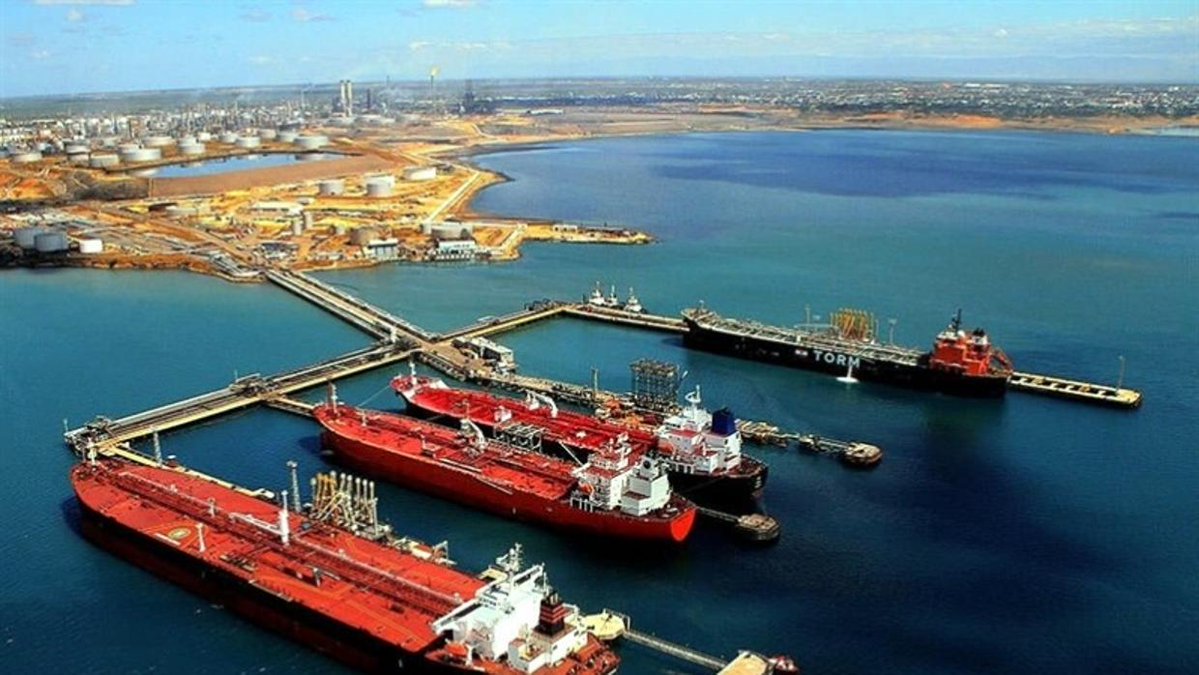
Nigeria, Africa's largest oil producer, intends to outpace major global markets like the US, Iran, China, and Iraq with the world's most ambitious grassroots refinery pipeline. According to data from downstream sector roadmaps, the country is implementing strategies to expand its domestic refining capacity to 2.64 million barrels per day (bpd) by the end of 2030 through the construction of 24 new refineries.Key Drivers of Nigeria's Refining AmbitionEnding Import Dependence: For decades, Nigeria exported raw crude oil only to buy back expensive, imported refined petroleum products. This massive expansion aims to process crude locally and secure domestic energy independence.The Dangote Catalyst: The foundation of this shift is the landmark Dangote Petroleum Refinery, a 650,000 bpd facility that operates as the world’s largest single-train https://t.co/7WYPJjs8uZ Market Disruption: “The Dangote Refinery, now Africa's largest, has enabled Nigeria to become a net exporter of gasoline and a major supplier of jet fuel to Europe.” according to data tracked by Business Insider Africa.Modular Strategy: While mega-refineries grab headlines, industry analysts note that flexible, modular refineries will make up the vast majority of the 24 planned pipeline projects.Shift to Continental PowerhouseNigeria is leveraging this infrastructure boom to rewrite the economics of African energy. The country has initiated plans to establish a West African fuel price benchmark to reduce reliance on foreign pricing indices. Concurrently, neighboring oil-producing nations like the Republic of Congo are actively negotiating supply and logistics partnerships to source their fuel from Nigeria's expanding network rather than Western Europe or the Middle East
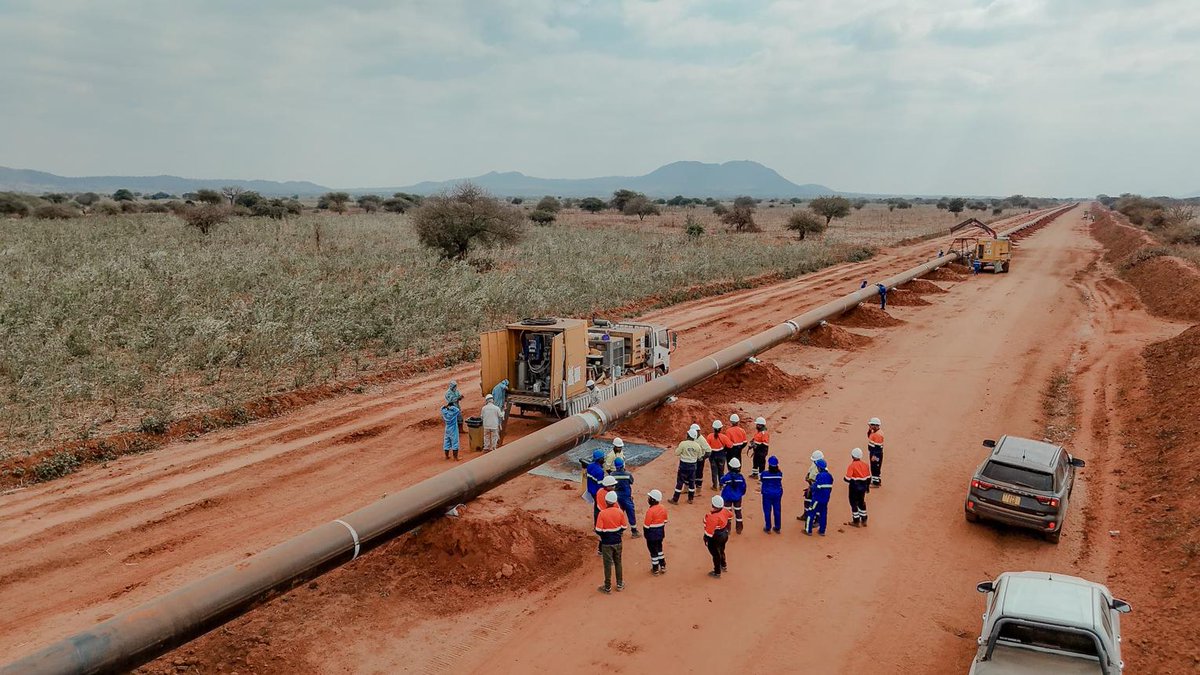
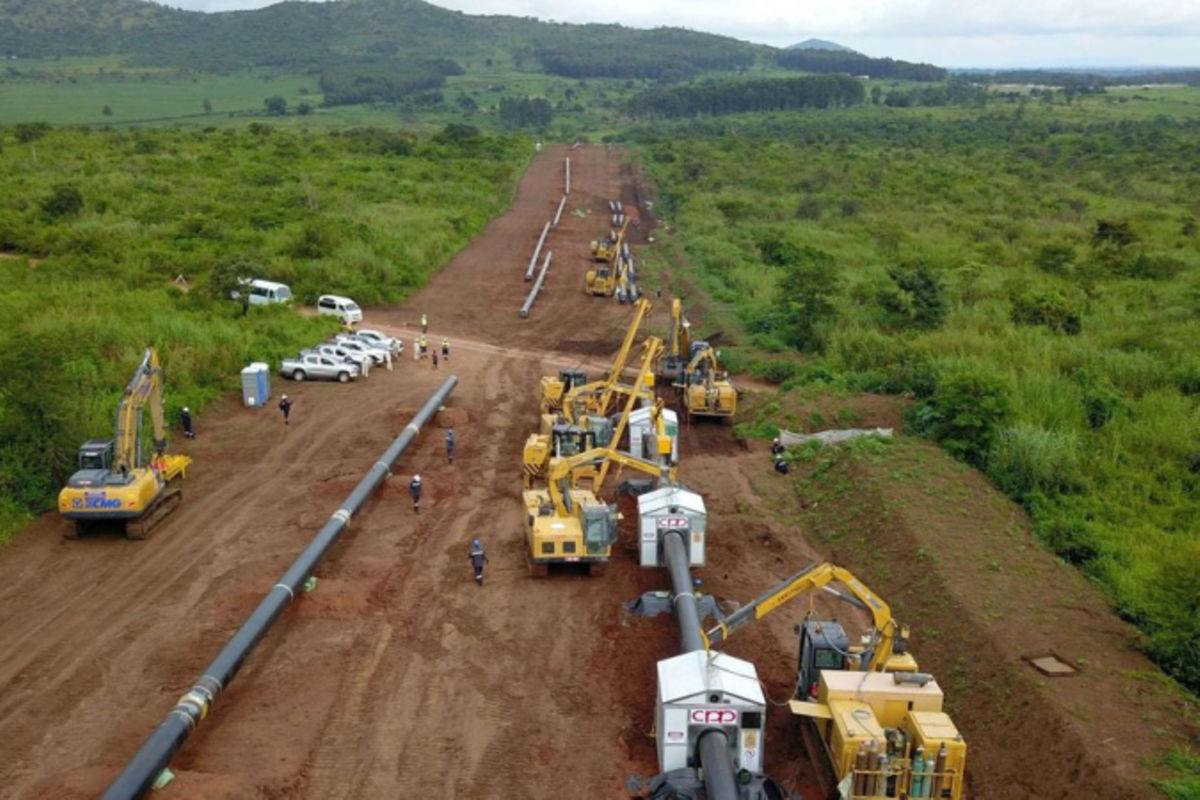
As of July 2026, the East African Crude Oil Pipeline (EACOP) connecting Uganda and Tanzania has reached 90% overall progress, with over 1,443 kilometres of pipeline welded across both nations. The project is right on the verge of its crucial technical start-up ahead of first crude oil exports.
Construction Milestones
Pipeline Progress: The overall midstream infrastructure stands at 90% completion as of late July updates from the Petroleum Authority of Uganda.
Upstream Readiness: The oil fields feeding the pipeline are also nearly finished. The Tilenga project is 74% complete with 234 wells drilled, and the Kingfisher project has reached 79% completion.
Timeline to First Oil: System testing and technical readiness remain on track for mid-2026, with the official first commercial oil exports expected to flow to the Port of Tanga in October 2026.
Legal and Environmental Resistance
Despite structural advancements, the project faces ongoing pressure:
UK High Court Case: In early July 2026, four Ugandan farmers filed a lawsuit in London’s High Court against EACOP Ltd. Backed by environmental groups, the lawsuit claims the UK-registered project developer violated Ugandan environmental laws protecting citizens' rights to a healthy ecosystem.
Ecological Concerns: New spatial analyses continue to warn about the risk of pipeline leaks affecting Africa's major freshwater networks, including Lake Victoria and Lake Alber
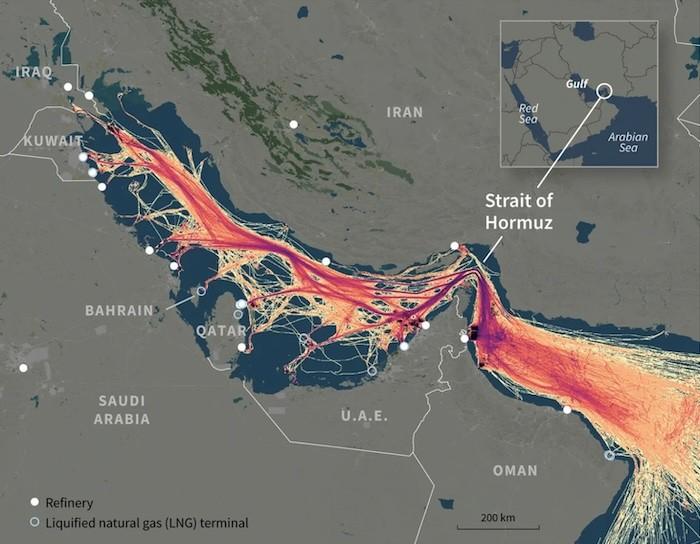
🇮🇷 Iran has rejected Oman's proposal to share control of the Strait of Hormuz, insisting it should oversee most of the vital shipping lane. The move comes as renewed attacks in the region fuel tensions and push oil prices higher.
🇮🇹 Eni more than doubled Q2 profit to €2.33B ($2.65B), beating estimates as higher oil & gas prices and stronger production boosted earnings. The company also raised its 2026 share buyback program to €3.4B ($3.9B).
🏗️ A U.S.-Saudi consortium plans to build a $5B, 200,000 bpd refinery in the Gulf, outside the Strait of Hormuz. The project will include a deepwater port, storage and export facilities, aiming to strengthen regional fuel security amid ongoing Middle East disruptions.
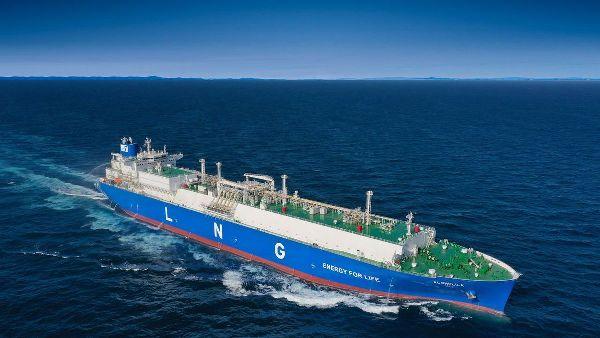
🇦🇪 UAE LNG exports continue despite rising risks in the Strait of Hormuz. An ADNOC tanker reportedly exited the chokepoint with its tracking system switched off, while another loaded at Das Island, highlighting resilient Gulf LNG flows amid heightened regional tensions.
🇦🇪 The UAE continues exporting LNG despite escalating risks in the Strait of Hormuz. An ADNOC tanker reportedly exited the chokepoint with tracking turned off, while another vessel loaded at Das Island—underscoring strong global LNG demand despite regional tensions.
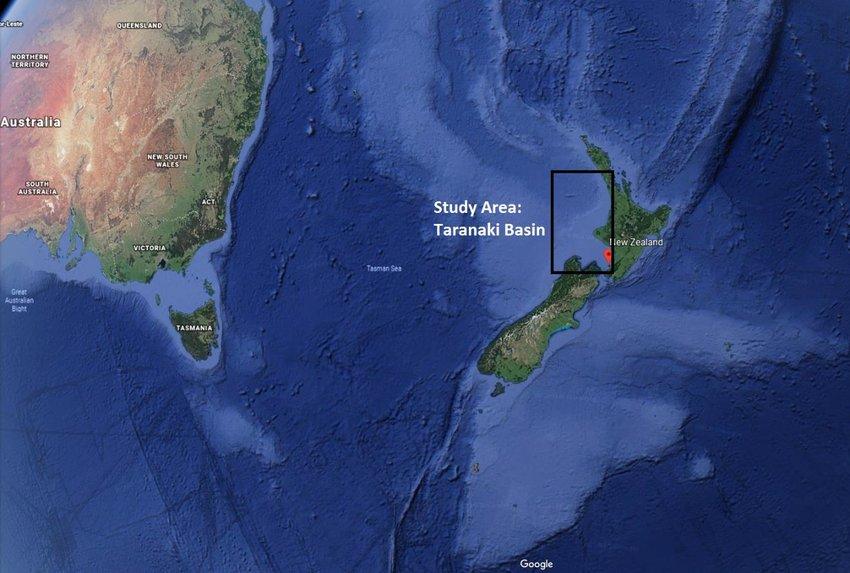
🇳🇿 New Zealand has awarded its first offshore oil & gas exploration license since lifting the drilling ban in 2025. EnZed Energy will explore the Taranaki Basin as Wellington shifts its focus toward energy security amid declining domestic gas production.
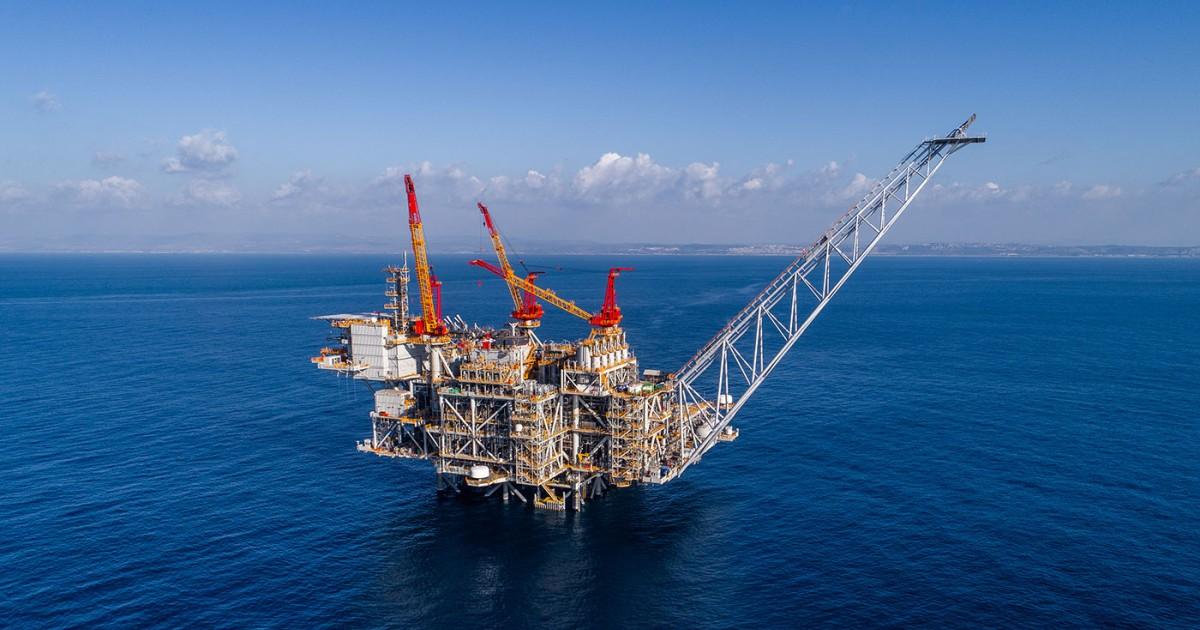
Energy majors TotalEnergies and Eni have officially taken the Final Investment Decision (FID) to develop the deep-water Cronos gas field offshore Cyprus. This milestone marks Cyprus' very first commercial gas development project, establishing a critical new energy route to help bolster Europe's long-term energy security.Project Overview & LogisticsInfrastructure Synergy: Instead of building new onshore processing plants, gas from the Cronos field will be piped directly via a subsea pipeline to Egypt.Liquefaction & Export: The gas will utilize the offshore facilities of Egypt's Zohr field, transit inland, and be liquefied at the Damietta LNG plant on the Mediterranean https://t.co/TcZ5Culg3w Market: Once converted into Liquefied Natural Gas (LNG), the supply will be distributed equally between the portfolios of TotalEnergies and Eni, primarily earmarked to diversify European energy sources.Key Figures & TimelineEstimated Reserves: The deep-water field holds more than 3 trillion cubic feet (Tcf) of gas initially in place.Production Timeline: First gas delivery and production start-up is projected for 2028.Output Plateau: Production is targeted to reach a plateau of 500 million standard cubic feet per day (Mcf/d).LNG Equivalency: The daily output translates to roughly 2.8 million tonnes per annum (mtpa) of exportable LNG.Strategic ImpactBy capitalising on existing Egyptian infrastructure, the 50/50 joint venture partners are utilizing a "fast-track" methodology that vastly reduces initial capital costs and lowers the carbon footprint of production. The deal also provides a critical structural lifeline to Egypt’s energy economy by allowing it to resume structural LNG exports to Europe following domestic shortages. Furthermore, the framework opens up viable avenues to develop adjacent, un-appraised gas discoveries situated within Block 6 in the near future.
🇨🇳 China plans to re-export its first U.S. LNG cargo in over a year instead of importing it, avoiding a 25% tariffwhile capitalizing on higher global prices. The move highlights Beijing's preference for alternative LNG supplies despite rising summer demand.
🛢️ Oil extended losses as a fourth straight night passed without new U.S.-Iran attacks. Brent fell to $86.80 and WTI to $80.98 amid renewed diplomacy hopes. Prices remain elevated as Red Sea shipping risks persist, while signs of weaker fuel demand add downward pressure.
🇸🇦 Saudi Aramco may raise crude prices to Asia by up to $5/bbl as Houthi threats force exports onto the longer Suez-Africa route. Rerouting from Yanbu via Egypt adds weeks to voyages and could cost ~$10M per cargo, increasing freight and supply costs.
🇦🇺 Australia has launched a feasibility study for its first new oil refinery in 60 years to strengthen fuel security after the Hormuz crisis exposed import vulnerabilities. The move aims to reduce reliance on imported fuels and improve resilience against future supply shocks.
🇯🇵 Japan plans to invest in overseas oil pipeline projects—particularly in the Middle East—to reduce dependence on the Strait of Hormuz.
After the conflict exposed its reliance on Gulf crude, Tokyo is diversifying supply routes while increasing imports from the U.S. and Russia to strengthen energy security. #Oil #Japan #Energy
🇨🇾 Eni and TotalEnergies have approved the Cronos gas project offshore Cyprus—the country’s first hydrocarbon development.
⛽ The field holds 3+ Tcf of gas, with first production targeted for 2028. Gas will be processed in Egypt and exported as LNG to Europe, strengthening regional energy security. #LNG #NaturalGas #Cyprus
Russia says its fuel crisis is easing as several refineries restart operations, improving gasoline and diesel supplies.
However, shortages persist in parts of Siberia, while Ukrainian drone strikes continue targeting refineries, Black Sea export terminals, and fuel infrastructure, keeping pressure on Russia’s energy sector. #Oil #Russia #Energy
Macroeconomic BenefitsRevenue Generation: Expected to bring the Ugandan government roughly $2 billion annually assuming a conservative oil baseline price of $50 per barrel.Local Employment: The project employs thousands of citizens, including 1,498 Ugandans directly stationed at the Kingfisher https://t.co/FpYRMTWJEJ Security: The infrastructure will isolate and process liquefied petroleum gas (LPG), reducing local dependency on charcoal and wood fuel.
Development in the Albertine Graben is split into two massive upstream extraction projects feeding into a shared downstream transport network:The Tilenga Project: Operated by TotalEnergies in the Buliisa and Nwoya districts. It features roughly 400 wells drilled across 31 locations, aiming to pump 190,000 barrels per day at peak production.The Kingfisher Project: Operated by CNOOC on the southeastern bank of Lake Albert in Kikuube district. The facility is over 99% complete and targets a peak output of 40,000 barrels per day.East African Crude Oil Pipeline (EACOP): A 1,443-kilometre electrically heated pipeline that connects the Albertine fields to the marine terminal at the Port of Tanga, Tanzania. It is currently 84% complete.Uganda Oil Refinery: A planned 60,000 barrel-per-day facility located in Kabaale village, Hoima. It will refine a portion of the Albertine crude for domestic and regional usage.
The Lake Albert Development Project in Uganda's Albertine Graben holds an estimated 6.5 billion barrels of oil reserves, with 1.4 billion barrels deemed economically recoverable. Managed through a joint venture between TotalEnergies (56.67%), CNOOC (28.33%), and the Uganda National Oil Company (UNOC, 15%), the project is in its final commissioning phases. First oil is scheduled to flow in September 2026, with commercial exports ramping up via international pipeline networks by October 2026.The geographic distribution of the extraction fields, treatment plants, and transport routes across the Albertine rift is detailed below.
Indian refiners are scrambling for crude beyond the Middle East as Hormuz disruptions trap term supplies.
🇮🇳 BPCL is testing new crude grades from Angola and Venezuela, while HPCL says it received almost none of its contracted Middle East cargoes. Some state refiners have also suspended Iraqi loadings as security risks escalate. #Oil #India #Energy